REVIEW · GOA
Capital City, Churches & Forts Of Goa, Old Goa Churches, Panaji City.
Book on Viator →Operated by Crossmiles Travel Pvt. Ltd. · Bookable on Viator
Old Goa can teach you more than any beach day. This private tour strings together Portuguese history and classic Goa streets in one smooth outing. I especially like the guided pacing through Panaji’s old quarters and the way the churches at Old Goa connect to the wider colonial story. The one drawback: you’ll be on your feet and in a car most of the day, so plan for walking time and heat.
What makes this work is the “all-in” structure. You get pickup (when offered), comfortable private transportation, and a local guide to explain what you’re looking at instead of leaving you to guess. It runs about 6 to 8 hours with a small group (up to 15), which helps the conversation stay real.
At $100 per person, it’s not a budget-only bargain, but it’s strong value for a private guide plus paid entry at key fort stops. Lunch isn’t included, so you’ll want to plan an easy meal on your own afterward.
In This Review
- Key things to know before you go
- Panaji Heritage Walk: getting your bearings fast
- Fontainhas: Panaji’s Portuguese Latin Quarter on foot
- Old Goa (Goa Velha): UNESCO churches and the Portuguese footprint
- Reis Magos Fort: a frontier post with big views
- Fort Aguada: 1612 defenses and a ship-orientated role
- How private transport and a local guide change the day
- The pace: a cultural day, not a slow museum crawl
- What to wear and what to plan for lunch
- Value check: why $100 can make sense here
- Who this tour fits best
- Should you book this Goa history tour?
- FAQ
- How long is the Capital City, Churches & Forts of Goa tour?
- Is pickup offered?
- What’s the group size?
- What does the price include?
- Is lunch included?
- Are there admission fees at every stop?
- What if the weather is bad?
- What’s the cancellation policy?
- What if the minimum number of travelers isn’t met?
- Is it easy to get to where the tour starts?
Key things to know before you go

- Small group size (up to 15) helps you move at a human pace and ask questions.
- Private transportation saves time and stress versus hopping between locations on your own.
- Old Goa plus forts gives you more than churches; you also see how the Portuguese watched shipping and defended territory.
- Some stops are free (heritage walks in Panaji and Fontainhas), while fort admissions are included.
- No lunch included, so build in a meal plan for the end of the day.
- Good weather matters; if conditions are poor, the tour can shift dates or be refunded.
Panaji Heritage Walk: getting your bearings fast
Panaji (Panjim) sits on the Mandovi River, and you feel that geography right away. This first leg is built like a warm-up: you walk the historic parts so the city stops feel connected, not random.
Expect an easy introduction to Panaji’s character—cobblestone lanes, older buildings, and the sense that the capital has always been a crossroads. A guide also helps you notice the small stuff you might otherwise miss, like which buildings feel Portuguese-era and why that matters.
This is also a smart time to do photos and orientation. After you’ve seen the “shape” of Panaji, the later stops in Old Goa and along the coast make more sense.
You can also read our reviews of more city tours in Goa



Fontainhas: Panaji’s Portuguese Latin Quarter on foot
Next comes Fontainhas, the old Latin Quarter of Panaji. The big value here is architecture and street texture: the area keeps Portuguese influence in its building style, color, and overall vibe.
You’ll do this as a walking section, so wear shoes you can handle for an hour. The streets are compact, and walking lets you slow down enough to really register what’s different from modern Goa.
If you like history but hate standing in lines, Fontainhas is the sweet spot. It’s not just a “see it, leave it” moment. It’s a neighborhood walk that helps you understand how colonial influence lived in everyday life, not only in big monuments.
Old Goa (Goa Velha): UNESCO churches and the Portuguese footprint

Old Goa—also called Velha Goa—is where the story gets heavy in the best way. This was the former capital of Portuguese India, and the churches and cathedrals are where that era becomes physical.
You’ll spend a focused block here, with a guide tying together the sites into one timeline. The most important takeaway for you: these aren’t isolated sights. The churches are part of a whole religious and political system that shaped the region.
Also, Old Goa sits beside the Mandovi River, so you can feel the relationship between river life and colonial power. Even if you’re not a church superfan, the setting and the architectural style make it worth your time.
Practical tip: plan to dress for churches—covered shoulders and respectful clothing are a good idea. Even when entry is free for parts of the route, you’ll still want to look the part and move smoothly through the sites.
Reis Magos Fort: a frontier post with big views
Then the day turns from city streets to defense and navigation. Reis Magos Fort started as an armed outpost in 1493 tied to the Adil Shah of Bijapur. Later, when the Portuguese took over the area in 1541, the fort was built up in connection with the local church.
That mix matters. You’re not just visiting a ruin; you’re seeing how control changed hands and how fortifications became part of community life.
The fort also gives you a coastal/river perspective, which is key in Goa. You can often sense why ships would matter so much—this wasn’t just about looking impressive. It was about spotting movement and protecting key approaches.
The included fort admission means you get there without extra hassle. Expect another hour here, which is usually enough to take in the structures and learn the purpose behind them.
Fort Aguada: 1612 defenses and a ship-orientated role
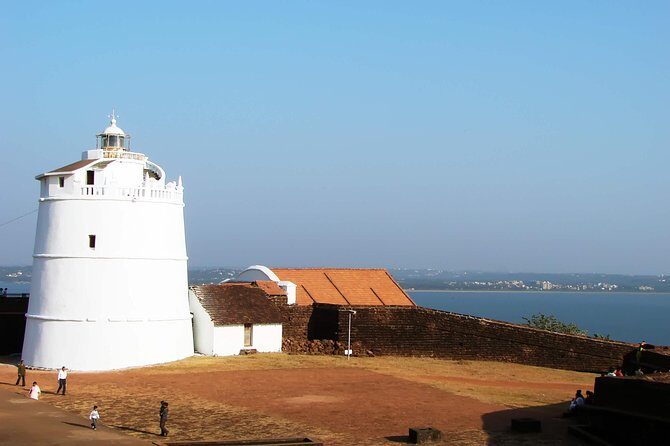
After Reis Magos, you’ll reach Fort Aguada, one of the most “why was this built here?” places in Goa. This Portuguese fort was constructed in 1612 to guard against the Dutch and the Marathas, and it also served as a reference point for vessels coming from Europe.
So you’re seeing a fort with two jobs at once: defense and navigation. The guide’s context turns the stonework into a story about sea routes, trade, and the constant pressure of regional rivals.
Fort Aguada sits by the beach south of Calangute, and the coastal setting helps explain its strategic placement. Even if you don’t linger for long, the viewpoint direction makes the history feel real.
Admission for this stop is included, which is a quiet win. You’re paying for a guide and transport anyway, so having the ticket handled saves time and keeps the schedule tight.






How private transport and a local guide change the day
Goa traffic can be a sport—especially when you’re bouncing between river, old quarters, and coastal forts. The private transportation on this tour matters because it keeps you from losing energy on logistics.
A local guide is also the difference between a “photo day” and a real history day. In the tour teams that have run this route, guides like Stanley and Ashwin have been highlighted for strong local insight and safe navigation, while other named guides in past departures include Sachin, Manual, and Antonio. Drivers like Nicolas also get credit for keeping things moving on Goa roads.
Here’s why that matters to you: when you’re in a place like Old Goa, it’s easy to get overwhelmed by names, eras, and architectural styles. A good guide gives you the anchor points—what matters, what connects, and what you can safely skip if you’re getting tired.
The pace: a cultural day, not a slow museum crawl
This is listed as about 6 to 8 hours, and the schedule is built around short “blocks” at each stop. That helps, because the day isn’t one long stretch of waiting.
Still, you should prepare for:
- Several hours in a mix of walking and standing
- Sun exposure and humidity
- Church etiquette moments (dress respectfully)
- Fort time where you’ll want to look around from different angles
If you’re used to walking at home, you’ll likely be fine. If you’re new to travel pace, consider bringing a light scarf or layer and slowing down during photo stops—your guide can usually help you find the best angles quickly.
What to wear and what to plan for lunch

Since this tour blends heritage walking with forts and churches, pack like it’s a day in the city plus a coastal visit. Comfortable shoes are non-negotiable for the walking sections.
For clothing, aim for breathable fabric and respectful coverage for churches. A hat helps in Panaji and Fontainhas. If you’re prone to getting cold in air-conditioned cars, bring a light layer too.
Lunch is not included, so don’t rely on the tour to solve your food plan. A simple strategy: eat earlier or plan a meal after the final fort stop, when you’ll have time to find something easy nearby.
Value check: why $100 can make sense here
At $100 per person, the value depends on what you’d pay if you planned it solo. You’d likely spend money on:
- Private transport or multiple taxis
- A guide (or hours of self-guided reading)
- Ticket costs at fort sites
This tour bundles the guide and private transport, and it includes admissions for Reis Magos Fort and Fort Aguada. Meanwhile, the heritage walk areas in Panaji, Fontainhas, and Old Goa are listed as free for admission.
So the money isn’t just paying for “seeing places.” It’s paying for a structured route, transport that avoids hassle, and the narrative context that makes church and fort stops coherent.
If your goal is culture and history—plus a break from Goa’s beach rhythm—this tour is one of the more efficient ways to do it.
Who this tour fits best
This works especially well if:
- It’s your first trip to Goa and you want the Portuguese story without guesswork
- You like history but prefer a human guide to explain connections
- You want an organized day away from beaches
- You’re traveling with friends or family and want small-group comfort
It’s also a good match if you’re the type who enjoys neighborhoods like Fontainhas, not only big-ticket monuments.
If you want a purely relaxed day, you might find the walking and tight routing a little much. But if you’re okay with a steady day and like learning, you’ll enjoy how the route links the city to the coast and the past to daily life.
Should you book this Goa history tour?
I’d book it if you want a real cultural day in Goa with solid structure. The combination of Panaji heritage, Fontainhas architecture, Old Goa churches, and forts like Reis Magos and Fort Aguada gives you variety without wasting time.
I would hesitate only if you strongly prefer a low-effort itinerary (lots of beach lounging, minimal walking) or you’re trying to fit in too many stops on a tight schedule. This tour is active enough to feel like a day trip, not a quick half-day wandering session.
If your ideal Goa includes churches, street history, and sea-fort context, this one delivers.
FAQ
How long is the Capital City, Churches & Forts of Goa tour?
It runs about 6 to 8 hours.
Is pickup offered?
Pickup is offered.
What’s the group size?
The tour has a maximum of 15 travelers.
What does the price include?
It includes all fees and taxes, private transportation, and a local guide. Fort admissions at Reis Magos Fort and Fort Aguada are included. Mobile tickets are provided.
Is lunch included?
No, lunch is not included.
Are there admission fees at every stop?
Not at all stops. The Panjim Heritage Walk, Fontainhas, and Old Goa segments list free admission, while Reis Magos Fort and Fort Aguada include admission.
What if the weather is bad?
This experience requires good weather. If it’s canceled due to poor weather, you’ll be offered a different date or a full refund.
What’s the cancellation policy?
Free cancellation is available up to 24 hours in advance for a full refund.
What if the minimum number of travelers isn’t met?
If it’s canceled because the minimum isn’t met, you’ll be offered a different date or a full refund.
Is it easy to get to where the tour starts?
The tour notes it is near public transportation.