REVIEW · MUMBAI
Mumbai: Public Transportation Tour
Book on GetYourGuide →Operated by Mystical Mumbai · Bookable on GetYourGuide
Mumbai feels like it’s moving all the time. This public transportation tour is a smart way to experience the city’s big landmarks through the way locals actually travel, starting at Chhatrapati Shivaji Maharaj Terminus (CST).
I love that the route mixes “see-it-on-a-map” sights with real daily movement. I also love the contrast between Dhobi Ghat’s open-air laundry scenes and the offbeat shopping chaos of Chor Bazaar.
One thing to consider: it’s a tight 3 hours with short walks and multiple vehicle changes, so you’ll want comfy shoes and a calm attitude toward crowds and heat.
In This Review
- Key points to know before you go
- Why this Mumbai transit loop feels more real than a bus-only day
- Meeting at Regal Cinema, Colaba: the simple start that sets the tone
- Chhatrapati Shivaji Maharaj Terminus (CST): UNESCO architecture plus a film connection
- The bus-to-train rhythm and the Dadar flower market pause
- Dhobi Ghat in Mahalaxmi: seeing laundry work in full view
- Black cab time to Chor Bazaar: the flea market side of Mumbai
- Churchgate and the dabbawalas: the lunchbox delivery system
- Price and value: what $38 buys in 3 hours
- Who this tour is best for (and who should rethink it)
- Guides in English: why Aarti, Dave, and Dev matter to your day
- Should you book this Mumbai public transportation tour?
- FAQ
- What is the duration of the Mumbai Public Transportation Tour?
- Where does the tour start?
- What time does the tour meet?
- How much does the tour cost?
- What transportation is included during the tour?
- What’s included in the price besides transportation?
- Is hotel pick-up and drop-off included?
- Is food included?
- What languages are available for the tour?
Key points to know before you go
- CST first, then train travel: you begin with a UNESCO-class photo stop and keep moving by public transport instead of just hopping in a car.
- Dhobi Ghat is watchable work: you see laundry being done in full view, with the street-life energy right there beside it.
- Flower market stop adds sensory color: Dadar’s flower area is a quick, photogenic pause with garlands and lots of rose colors.
- Churchgate for dabbawalas lunch logistics: you get a look at the hot-lunch delivery and return system that runs in Mumbai.
- Chor Bazaar is for browsers and bargain hunters: plan to spend time looking, not just snapping photos.
- English live guide and included transport: tea and bottled water are included, and you don’t have to organize the transit leg-by-leg.
Why this Mumbai transit loop feels more real than a bus-only day
Mumbai can be overwhelming. Traffic, crowds, noise, and schedules all pile up fast. What I like about this tour is that it uses the city’s own rhythm instead of treating it like a series of isolated photo stops.
You’re not just looking at Mumbai from the outside. You’re riding its public systems—bus, train, then short taxi/black cab legs—so you get a feel for how the day flows for regular people. That practical approach makes the sights easier to understand, because you’re seeing them in the same “moving world” where they function.
It also helps that this is a private group. You’re less likely to get swallowed by other groups, and the guide can pace the walk-and-photo rhythm. The tour is short, but it doesn’t feel like a checklist—more like a compressed orientation to how Mumbai connects its neighborhoods.
You can also read our reviews of more tours and experiences in Mumbai.


Meeting at Regal Cinema, Colaba: the simple start that sets the tone
You meet at Regal Cinema in Colaba, near the Gateway of India area, at 9:00 AM. That early-ish start matters. It gives you better odds of seeing the morning work pace in places like the flower market and Dhobi Ghat, where timing changes the feel of the scene.
The meeting point is also convenient because Colaba is a natural “hub” area for first-time visitors. If you’re trying to avoid decision fatigue, this is a good move: show up, meet your guide, and let the route handle the logistics.
The tour runs from the nearby central address at 32, Chhatrapati Shivaji Maharaj Marg, and you return there at the end. That means you’re not stuck figuring out how to get back across town after a tight 3-hour schedule.
Tip: since you’ll be hopping between transport and walking segments, use the morning to wear breathable clothes and comfortable shoes. You’ll thank yourself later.
Chhatrapati Shivaji Maharaj Terminus (CST): UNESCO architecture plus a film connection
Your first major stop is the Chhatrapati Shivaji Maharaj Terminus, widely called CST. It’s a UNESCO World Heritage Site, and it’s also a classic “arrival station” that instantly signals this city has ambition.
You’ll start with a bus ride (about 15 minutes), then you get a guided sightseeing and photo stop for about 20 minutes, plus a short walk. The time is brief, but it’s enough to look up, not just across the tracks. In other words: you can actually notice the station’s scale and details rather than rushing through.
There’s also a special extra layer: CST was used as a filming location for Slumdog Millionaire. Even if you’re not a big film person, it helps you connect the station to something familiar and cinematic. It turns a place you might otherwise see as just transit into a recognizable landmark.
Practical note: stations mean crowds. You’ll want to keep your phone secure and be ready for foot traffic at photo-stop pace.
The bus-to-train rhythm and the Dadar flower market pause
After CST, you move by train for about 15 minutes. That train leg is where the tour starts doing something most first-day sightseeing plans don’t: it turns “travel” into the experience. You’re learning Mumbai’s geography by feeling it.
Then you reach the flower market area in Dadar for about 15 minutes of guided sightseeing and walking. This stop is simple but effective. The flower environment is visual and immediate—garlands, bouquets, and lots of rose colors (white, pink, red, yellow are specifically mentioned), plus other flowers.
Why it’s valuable: flower markets aren’t just decorative stops. They’re part of everyday life—weddings, offerings, home rituals, and gifts. Even in a short visit, you get a sense of how people prepare for ceremonies and celebrations.
Drawback to plan for: markets can get crowded quickly, and you might be jostling a bit while trying to take photos. Go slow, keep your space, and focus on what’s near you rather than chasing shots across the crowd.
Dhobi Ghat in Mahalaxmi: seeing laundry work in full view
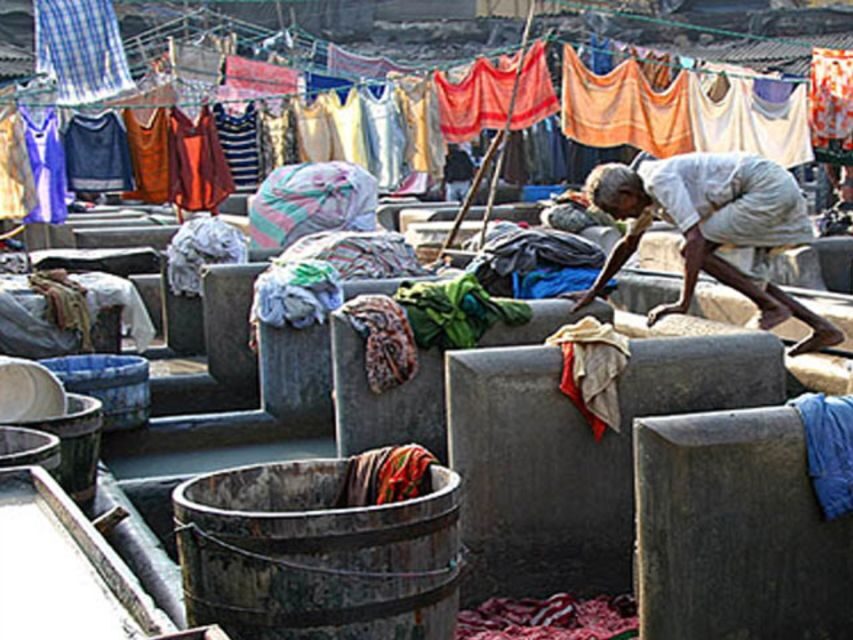
Next comes the tour’s most distinctive experience: Dhobi Ghat in Mahalaxmi, where clothes are washed in full view of the public. You’ll ride again by train (about 15 minutes), then spend around 20 minutes at Dhobi Ghat for photos and guided viewing.
This isn’t a museum scene. It’s active, working life. You’ll see the daily reality of laundry operations as something happening in the open, not hidden behind closed doors.
What I like about this stop is the immediacy. It’s easy to understand what’s going on because the action is right there. It also gives you a different kind of “Mumbai insight”—one that comes from watching routine labor alongside the city’s public spaces.
Possible consideration: because it’s a working area, you may feel like you’re watching people do their jobs. The best way to handle this is respectful distance—short photos, no blocking, and follow your guide’s cues. You’re there to understand the place, not to turn it into a show.





Black cab time to Chor Bazaar: the flea market side of Mumbai
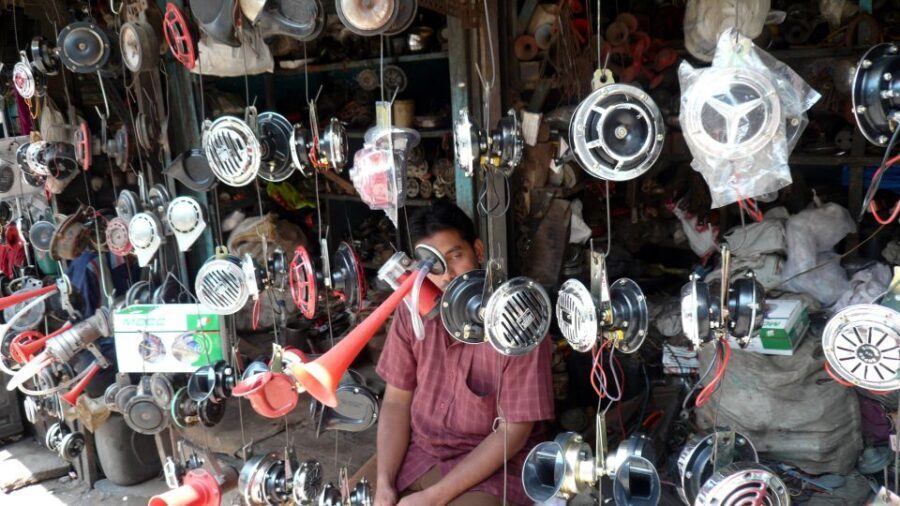
After Dhobi Ghat, the tour switches to taxi mode—about 20 minutes—to Chor Bazaar, one of the largest flea markets in the entire country.
You’ll spend around 20 minutes with a guided walk and time to browse and shop. Chor Bazaar is known for its high-energy mix of items, vendors, and bargain-driven browsing. This is a stop that rewards curiosity. Even if you don’t buy anything, it helps you understand how Mumbai’s street commerce works.
What to do here: treat it like a looking game. Slow down. Compare prices in your head. Ask your guide if you want help finding the right stall or category. And don’t expect everything to be neatly organized the way a store is.
One drawback: flea markets can be a bit chaotic. If you’re uncomfortable in crowded settings, set your expectations. You’ll get in, you’ll walk, you’ll see what it’s like, then you’ll move on—there’s no promise of a calm, quiet shopping stroll.
Churchgate and the dabbawalas: the lunchbox delivery system
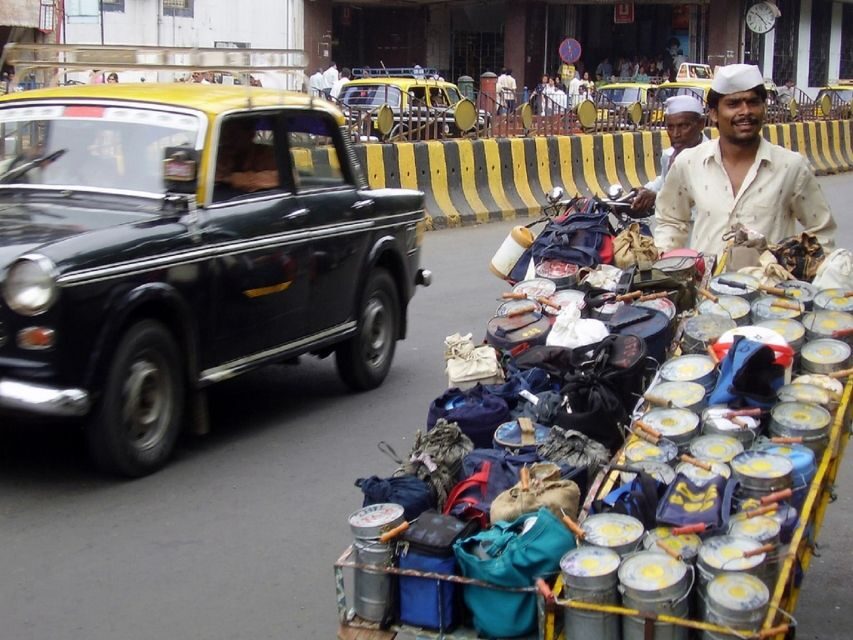
Then you roll toward Churchgate (another black cab transfer, about 10 minutes) to see the Mumbai dabbawalas at work. The time at Churchgate is about 20 minutes for guided sightseeing.
The dabbawala system is a hot-lunch delivery and return system that moves meals from homes and restaurants to people at work in Mumbai. It’s not described as a tourist show. It’s described as a functioning system—part logistics, part daily routine—and that’s the key to why it’s worth including.
I like this stop because it answers a question many visitors have after a day in Mumbai: how does everything keep running? Seeing the lunch delivery system gives you a practical slice of urban order.
What you might notice: quick movements, teamwork, and efficiency. Even with a short visit, you can sense that this isn’t about flashy technology. It’s about daily coordination.
Price and value: what $38 buys in 3 hours
At $38 per person for a 3-hour tour, this isn’t a “just get me to the next landmark” price. You’re paying for several things that normally cost time (and sometimes money) when you do it on your own: local transportation, guided interpretation, and planning support across different neighborhoods.
What’s included:
- Fare for all transportation used during the tour
- Local guide (English live guide)
- Tea and bottled water
What’s not included:
- Hotel pick-up/drop-off
- Food and drinks unless specifically provided
My value take: if you’re short on time and you’d otherwise be juggling how to get from CST to Dadar to Mahalaxmi to Churchgate, the included transit fare helps a lot. It also helps you spend those 3 hours on the experiences instead of on figuring out routes, ticketing, and meeting points.
Also worth knowing: the tour includes a skip-the-ticket-line benefit and is listed as a private group experience. For many people, that combination is what turns “complicated city” into “manageable morning.”
Who this tour is best for (and who should rethink it)
This tour fits best if you want a first taste of Mumbai that goes beyond “big buildings and monuments.” You’ll enjoy it if you like:
- using public transport as part of your sightseeing
- seeing workplace life up close, like Dhobi Ghat
- getting a quick introduction to street markets, especially Chor Bazaar
- understanding how daily systems work, like the dabbawalas
You might skip it if:
- you’re not comfortable with crowds or short walks between stops
- you need a slower pace with lots of free time
- you’re traveling with very young children (it’s noted as not suitable for babies under 1 year)
One more small tip: because you don’t have a lot of time, don’t plan a long breakfast-to-lunch gap. Grab something light beforehand, since food isn’t included unless specified.
Guides in English: why Aarti, Dave, and Dev matter to your day
The quality of a short tour depends heavily on the guide, because you’re compressing a lot into 3 hours. In the feedback for this route, Aarti, Dave, and Dev show up as names tied to strong guiding—helpful, engaging, and focused on connecting what you see with how Mumbai works.
Even if your guide is different on your date, the repeated theme is the same: the guide helps you notice what matters, not just where to stand for photos. That can be the difference between a tour that feels like motion and one that feels like understanding.
If you’re the sort of traveler who likes questions, bring them. Guides in this route are used to making the sights make sense fast.
Should you book this Mumbai public transportation tour?
If you want a practical, human-scale introduction to Mumbai—and you don’t mind a tight schedule—this is a strong booking choice. The value is in the mix: CST’s UNESCO level landmark, the sensory stop at the Dadar flower market, the open-air working life at Dhobi Ghat, the busy browsing energy of Chor Bazaar, and a real look at how the dabbawalas keep lunch moving.
Book it if:
- you’re excited to ride bus and train as part of the sightseeing
- you want both landmark architecture and everyday work life
- you want an English guide to connect the dots fast
Skip it if:
- you need long rests, lots of downtime, or a slow pace
- you want a pure “monument only” itinerary without workplace scenes
If you’re on the fence, I’d think of it like this: you’re not just collecting sights. You’re borrowing a guide’s plan for how to move through Mumbai smartly in just 3 hours.
FAQ
What is the duration of the Mumbai Public Transportation Tour?
The tour lasts 3 hours.
Where does the tour start?
You meet at Regal Cinema, Colaba, near the Gateway of India.
What time does the tour meet?
The tour guide meets you at 9:00 AM.
How much does the tour cost?
The price is $38 per person.
What transportation is included during the tour?
The tour uses a bus/coach, train rides, and black cab/taxi transfers between stops.
What’s included in the price besides transportation?
The local guide is included, along with tea and bottled water.
Is hotel pick-up and drop-off included?
No. Hotel pick-up and drop-off are not included.
Is food included?
Food and drinks are not included unless specified.
What languages are available for the tour?
The tour is available in English.