REVIEW · MUMBAI
Mumbai Private City Sightseeing with Slum Tour
Book on Viator →Operated by Linda Tours Mumbai · Bookable on Viator
Mumbai hits you fast.
This private tour strings together Mumbai’s biggest landmarks and a serious look at Dharavi, with a private guide and driver handling the whole day in an air-conditioned car with Wi‑Fi. I like that you get smart pacing across South Mumbai and the historic core, plus practical stops that many first-time visitors miss, like Dhobi Ghat and Mani Bhavan. I also like how often guides keep things clear and safety-minded, from answering questions to managing where you go. One drawback to keep in mind: it’s a lot of stops in a limited window, so expect some time on the move and standing in public areas.
If you only have a short trip, this format is a lifesaver. You don’t need to plot routes through traffic or figure out where things are. The day runs about 5–6 hours, includes bottled water, and wraps back at the same meeting spot near Mahim, which makes planning around it easier.
In This Review
- Key points before you go
- A tight 5–6 hour plan with pickup that actually helps
- From Gateway of India to Flora Fountain: the South Mumbai opener
- Chhatrapati Shivaji Terminus and Rajabai Clock Tower: architecture with purpose
- Dhobi Ghat and Mani Bhavan: ordinary work and Gandhi’s Mumbai base
- Hanging Gardens and Marine Drive: viewpoints with low friction
- Dharavi slum tour: real industries, real life, and the need to go respectfully
- Who this tour suits best (and who should consider another plan)
- Price and value: why $35.20 can be fair here
- Guides that made the difference: what to look for
- Quick practical tips before you book
- Should you book this Mumbai private city + Dharavi tour?
- FAQ
- How long is the Mumbai private city sightseeing with slum tour?
- Is pickup included?
- Where does the tour meet?
- Is this a private tour or a shared group?
- Are admission tickets included?
- What’s included in the price?
- Are meals included?
- Does the car have Wi‑Fi and air conditioning?
- What is the cancellation policy?
Key points before you go
- Private guide + driver means you can ask questions and get context on the fly.
- AC vehicle with Wi‑Fi keeps long road stretches more bearable.
- Admission tickets are included for every listed stop, so you’re not calculating entry fees.
- You’ll see more than icons, including Dhobi Ghat laundry life and Mani Bhavan Gandhi Museum.
- Dharavi gets real time (about 1.5 hours) instead of a quick photo stop.
A tight 5–6 hour plan with pickup that actually helps
Mumbai is big, and time gets chewed up fast. This tour is built for people who want to see, but also want to understand what they’re seeing. The private setup matters because it removes the guessing: your English-speaking guide and driver manage the timing, the turns, and the sequence.
Pickup is offered, and the tour starts at a specific meeting location: Third Wave Coffee, Tip Road, Unit no. 58, Ground, Ram Mahal, Senapati Bapat Marg, Marinagar Colony, Station, Mahim (Mumbai 400016). The tour ends back at the meeting point. For a first-time visit, that “back where you started” detail is handy.
You also get a few comfort perks that add up in a city like Mumbai: air-conditioned transportation, Wi‑Fi on board, and bottled water. Those sound small, but on a day packed with walking and looking, they help you stay focused on the sights instead of overheating.
You can also read our reviews of more city tours in Mumbai



From Gateway of India to Flora Fountain: the South Mumbai opener
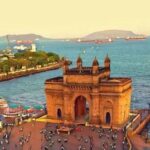
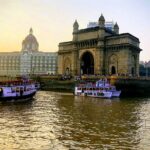
The day begins at the Gateway of India. This is a basalt arch monument in Indo-Saracenic style, about 26 meters high, built to commemorate the 1911 arrival of King-Emperor George V and Queen-Empress Mary. Construction was completed in 1924, and later it served as a ceremonial entry point for viceroys and governors of Bombay. It’s the kind of place that teaches you how Mumbai once saw itself: important, connected, and watched by the world.
You’ll then head to Flora Fountain at Hutatma Chowk (Martyr’s Square). The fountain dates to 1864 and blends water, architecture, and sculpture. It depicts the Roman goddess Flora, sitting in the Fort business district on Dadabhai Naoroji Road (the so-called Mile Long Road). This stop is short, but it’s a good reset after the grand scale of the Gateway—more details, more people, and a sense of everyday city energy.
A practical note: both stops are in central South Mumbai, where crowds can gather. Your guide’s job here is more than facts. They help you move efficiently so you aren’t stuck waiting for everyone to catch up.
Chhatrapati Shivaji Terminus and Rajabai Clock Tower: architecture with purpose
Next up is Chhatrapati Shivaji Maharaj Terminus, a UNESCO World Heritage train station. It was formerly known as Victoria Terminus, and it’s one of those Mumbai landmarks that feels like a city within a building. Even if you’re not planning to ride trains, seeing the station gives you a better feel for how Mumbai grew around rail and trade.
From there, you’ll visit the Rajabai Clock Tower, completed in the 1870s. It’s tied to the University of Mumbai and modeled after the clock tower of the Palace of Westminster in London. The building is 85 meters tall with five storeys, and at about 9.1 meters from the ground you can see eight statues representing Indian castes—an uncomfortable detail for some visitors, but historically important. A good guide will help you read what you’re seeing without turning it into a lecture you didn’t ask for.
Time here is limited, so don’t expect deep exploration. What you can expect is the big picture, plus a route that keeps you moving to the next stop before the day starts slipping.
Dhobi Ghat and Mani Bhavan: ordinary work and Gandhi’s Mumbai base
This part of the day is where the tour becomes more than sightseeing.
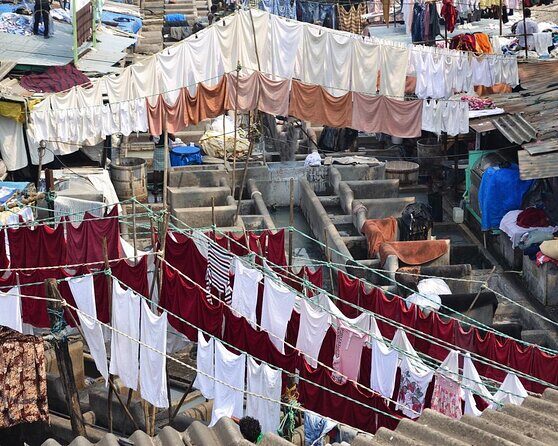
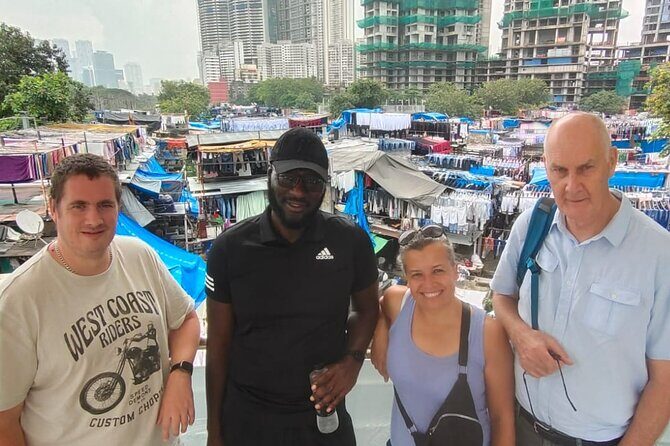
At Dhobi Ghat (Mahalaxmi Dhobi Ghat), you’ll see an open-air laundromat where dhobis (launderers) wash clothes for Mumbai’s hotels and hospitals. The site was constructed in 1890, and the idea is simple: work happens in the open, and the city’s services depend on it. It’s a powerful contrast to the monumental buildings earlier in the day. It also gives you a sense of how infrastructure works in Mumbai—systems are human-scale, and they’re right there in front of you.
Then you’ll go to Mani Bhavan Gandhi Museum. This is Gandhi’s Mumbai headquarters from about 1917 to 1934, during years when major movements like Non-Cooperation and Satyagraha were launched. It’s tied to the nonviolent methods and also to the swadeshi and khadi movements. Gandhi’s connection to the charkha began there in 1917 while he stayed at Mani Bhavan. The site also has a modern footnote: Barack Obama became one of the first high-profile international visitors to tour Mani Bhavan in 2010 after a decades-long quiet stretch of attention.
The museum stop is about 20 minutes, so think of it as an orientation stop. The value is that it sets political and social context while you’re already in the city’s historical core.
Hanging Gardens and Marine Drive: viewpoints with low friction
After the heavier cultural stops, the tour turns scenic.
At the Hanging Gardens (also called Pherozeshah Mehta Gardens), you’ll find terraced gardens on top of Malabar Hill’s western side, opposite Kamala Nehru Park. The design includes hedges shaped into animal forms. The payoff is views out toward the Arabian Sea, with sunset-friendly timing.
Then it’s on to Marine Drive, a 3.6-kilometer boulevard with a famous C-shaped road along the coast linking Nariman Point and areas near Malabar Hill. It’s a classic Mumbai promenade—easy to understand, easy to enjoy, and perfect for a photo without turning the whole day into one long photo shoot.
These two stops are shorter, which is good. You get air and views without losing the day to walking between distant neighborhoods.
You can also read our reviews of more private tours in Mumbai




Dharavi slum tour: real industries, real life, and the need to go respectfully
Now for the part that makes this tour different.
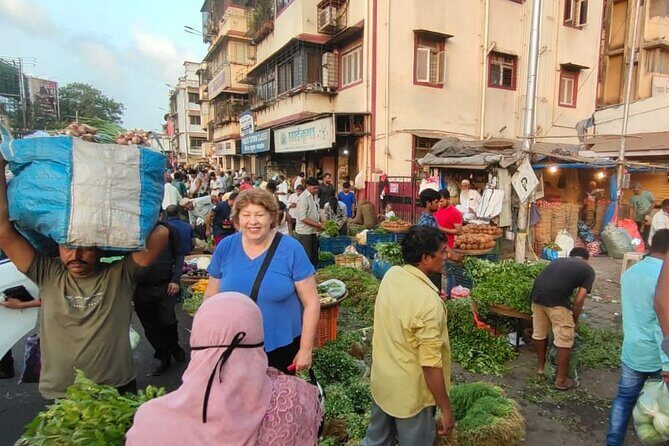
You’ll spend about 1.5 hours in Dharavi, a dense urban area often shown in films, but known here for its working economy. Dharavi’s industries include calfskin, earthenware, pottery, dyeing, and plastic recycling. That list matters because it reframes Dharavi away from a single story of poverty and toward a place where production, labor, and skills drive everyday life.
Your guide will walk you through narrow alleys and show you residential areas and working sections. The best tours here are the ones that don’t feel like a shortcut. In the feedback, guides like Shruti and Sharon were praised for being very mindful about safety and for keeping the experience grounded. Other guides—Abhishek, Shivam, and Diva in particular—were noted for explaining life in Dharavi from firsthand perspective. That makes a difference. A guide who knows the neighborhood doesn’t just point. They help you understand how people live and work, and why the area functions the way it does.
A simple reality check: Dharavi is a sensitive place. The right tone is quiet curiosity. Keep your questions respectful, follow your guide’s direction, and be cautious with photos—ask your guide what’s appropriate before you start shooting.
Also, your comfort level matters. If you’re expecting a theme park version of a slum tour, you may be disappointed. This is more like a guided walkthrough of a working neighborhood.
Who this tour suits best (and who should consider another plan)
This tour fits best when you’re trying to solve a specific problem: you have limited time, and you want broad Mumbai plus one deep social stop. If you’re in Mumbai for a business trip or just a short visit, the private transport and packed route make sense.
It’s also a strong pick if you value safety and clear guidance. Multiple people highlighted that their guides drove and led them in a way that felt safe and well managed—especially during the Dharavi portion. If you like asking questions, you’ll probably enjoy how guides respond while moving between sites.
You might want a different plan if you prefer slow museum time or if you strongly dislike crowded public spaces. The tour is designed to cover a lot in one day, so it’s not built for long stays at any single stop.
Price and value: why $35.20 can be fair here
At $35.20 per person, this tour is priced like a budget-friendly “best of” day—yet the structure gives it real value.
Here’s why the math often works:
- You get a private guide and private transportation (not a shared bus setup).
- The vehicle is air-conditioned with Wi‑Fi.
- Bottled water is included.
- All fees and taxes are included in the package.
- Admission tickets are included for every listed stop.
So you’re not paying separate entry costs that can add up quickly in a city full of monuments. The tradeoff is meals. Breakfast, lunch, and dinner are not included, so you’ll want to plan snacks or eat before/after. If you’re prone to getting cranky when hungry (same), budget time for food.
Compared with piecing together separate tickets plus hiring transport plus paying for guiding, this package is often a practical shortcut. You’re paying for time-saving and context.
Guides that made the difference: what to look for
A standout pattern in the feedback is that the guide shapes the whole day. People repeatedly praised guides for being friendly, flexible, and able to answer questions without turning the day rigid.
Some guide names you’ll see in strong feedback include:
- Shruti for knowledge and helpful answering of questions
- Sharon for safety-minded guidance on the city and Dharavi portion
- Yash for lots of city knowledge and kindness
- Abhishek for a fast, interesting slum experience with strong explanation
- Shivam for explaining Dharavi life and showing residential plus working areas
- Diva for an inside perspective and community-focused approach
- Lucas and Prem (noted in related experiences) for friendly, guided touring and smooth logistics
The practical takeaway for you: when your guide shows they can steer you confidently, keep you safe, and explain what you’re seeing, the day clicks. If your guide feels rushed or uncomfortable, ask for clarity. This tour model works best when you can communicate.
Quick practical tips before you book
- Wear shoes that handle sidewalks and uneven public spaces.
- Bring a light layer if you run cold in the car with AC.
- Plan for meals since they’re not included.
- Bring a respectful mindset for Dharavi. Quiet, careful curiosity goes a long way.
- If you’re sensitive to crowds, give yourself grace in the central landmarks areas.
Should you book this Mumbai private city + Dharavi tour?
If you want an efficient Mumbai sampler that doesn’t skip the most important “on the ground” moment, I think this is a smart booking. The big reason is the balance: you get major landmarks like Gateway of India and Chhatrapati Shivaji Maharaj Terminus, plus meaningful context at Mani Bhavan and a real look at Dharavi’s industries and daily life.
Skip it only if you want a slow-paced day, long museum time, or you dislike socially challenging destinations. Otherwise, the private setup, included admissions, and comfort perks (AC, Wi‑Fi, bottled water) make it an easier way to get good value for a short visit.
FAQ
How long is the Mumbai private city sightseeing with slum tour?
The tour runs about 5 to 6 hours.
Is pickup included?
Pickup is offered, and the tour starts at the meeting point listed on the booking details.
Where does the tour meet?
It starts at Third Wave Coffee, Tip Road, Unit no. 58, Ground, Ram Mahal, Senapati Bapat Marg, Marinagar Colony, Station, Mahim, Mumbai 400016.
Is this a private tour or a shared group?
It is a private tour/activity, meaning only your group participates.
Are admission tickets included?
Yes. Admission tickets are included for the listed stops.
What’s included in the price?
Bottled water, air-conditioned vehicle, private transportation, Wi‑Fi on board, English-speaking guides, and all fees and taxes are included.
Are meals included?
No. Breakfast, lunch, and dinner are not included.
Does the car have Wi‑Fi and air conditioning?
Yes. The air-conditioned vehicle includes Wi‑Fi on board.
What is the cancellation policy?
You can cancel for a full refund if you do so up to 24 hours in advance of the experience’s start time.