REVIEW · NEW DELHI
4-Day Private Golden Triangle Tour: Delhi, Agra and Jaipur from Delhi
Book on Viator →Operated by Pacific Classic Tours India · Bookable on Viator
Three cities, one efficient itinerary. I love the private guide attention and the sunrise Taj Mahal timing, and the driver does a solid job keeping the schedule realistic. One drawback to plan for: this is a packed route, so you’ll be up early and on your feet a fair bit.
This trip is built for first-timers who want the big hitters—UNESCO sites, iconic forts, and classic city views—without juggling tickets and timing yourself. In past tours, guides have included people like Sinul in Delhi, Mahesh in Agra, and Ashok in Jaipur, and drivers such as DK, Brijesh, or Uma Shankar. You also get an exclusive air-conditioned vehicle and unlimited bottled water, which matters on long drives.
You’ll cover a lot in just 4 days: Humayun’s Tomb, Qutub Minar, Delhi’s Old City stops, the Taj Mahal, Agra Fort, Chand Baori near Jaipur, and key Jaipur monuments like Amber Fort and Jantar Mantar—plus photo time at Jal Mahal and Hawa Mahal. My only heads-up: your Taj Mahal sunrise visit depends on weather, so keep expectations flexible.
In This Review
- Key things that make this tour work well
- Delhi’s first half-day: Humayun’s Tomb, Qutub Minar, Lotus Temple, and Old Delhi
- Agra Fort and Mehtab Bagh: your first evening in Taj country
- Taj Mahal sunrise: the big moment (and what can affect it)
- Abhaneri and Chand Baori: the stepwell detour that surprises people
- Amber Fort, Jal Mahal, City Palace, and Jantar Mantar: Jaipur’s must-sees, paced right
- Transportation and guides: why this feels easier than DIY
- Price and value: what $328 covers (and what it doesn’t)
- Practical tips so the schedule doesn’t bite you
- Should you book this private Golden Triangle tour?
- FAQ
- What time does the tour start?
- Is this a private tour?
- How long is the tour?
- Does the price include hotel accommodation?
- Are entrance fees included?
- Do I need tickets for the Taj Mahal sunrise visit?
- What if the weather is bad for sunrise?
- What about meals during the tour?
- Are there any extra costs I should expect?
- Is there a dress code?
- Do I need a passport?
Key things that make this tour work well
- Taj Mahal sunrise with early-entry energy: a timing win that helps you see it at its best light (weather permitting).
- Private, named guide service: you’re not stuck with a herd; guides in the rotation have included Sinul, Mahesh, and Ashok.
- UNESCO hits in every city: Humayun’s Tomb, Qutub Minar, the Taj Mahal, Agra Fort, and Jantar Mantar.
- Agra Fort plus Mehtab Bagh evening photo time: you don’t just rush in and out of Taj country.
- Comfort details that add up: exclusive air-conditioned car and unlimited bottled water for the whole run.
- Optional add-on costs you can skip: bicycle rickshaw in Old Delhi and an Amber Palace jeep ride (when applicable).
Delhi’s first half-day: Humayun’s Tomb, Qutub Minar, Lotus Temple, and Old Delhi
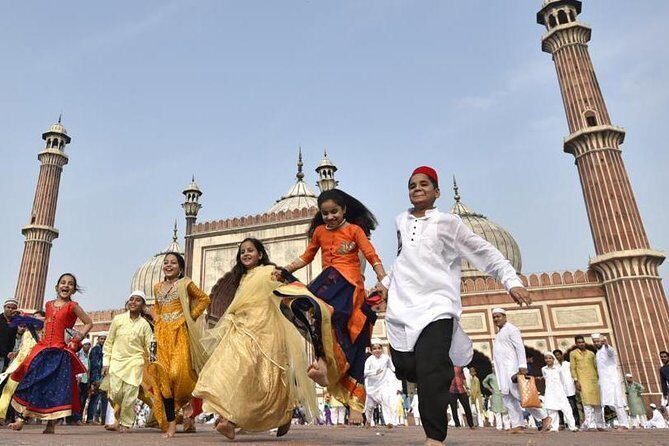
Your day starts with a 9:00 am pickup and then a whirlwind mix of Mughal, Sultanate, modern spirituality, and Old Delhi landmarks. The best part of this plan is the variety. You’re not doing one museum and calling it a day—you’re bouncing between styles and eras so Delhi stops feeling like one big blur.
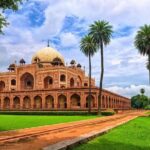
Humayun’s Tomb is the first stop. You’ll spend about an hour here, and it’s a strong introduction to Mughal architecture in Delhi. Next comes Qutub Minar (about an hour). This soaring victory tower and minaret is a UNESCO site, and it’s one of those places where you can actually feel the scale as you look up.
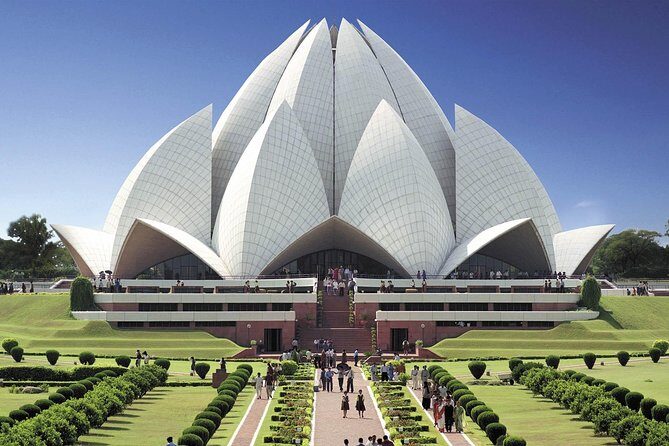
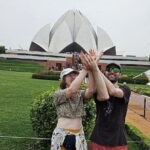
Then you shift gears with the Lotus Temple. It’s designed for quiet worship and is free to enter. Even if you’re not religious, the building’s clean, flower-like shape gives you a breather from traffic and crowds.
From there, you move to the big-city monuments: India Gate (about 30 minutes) and nearby landmarks associated with India’s capital government area, including time for views/photo moments around the Rashtrapati Bhavan area. The route then drops into Old Delhi with Jama Masjid. It’s the kind of stop that feels like a reset: huge, elevated, and calm once you get inside—though the streets around it are another story.
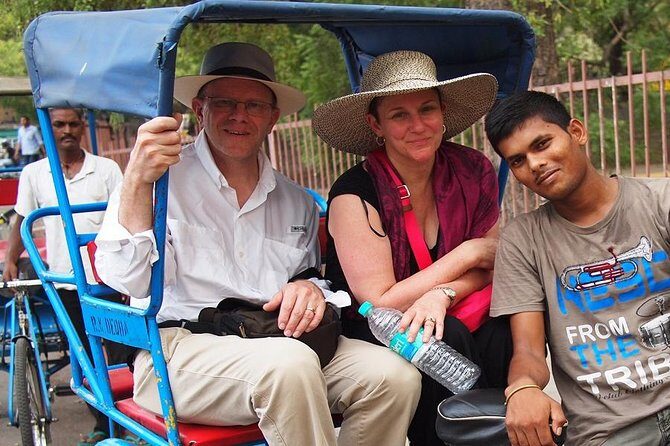
The Chandni Chowk section is where you get a small choice point. There’s a bike rickshaw ride through the old lanes for about 30 minutes, and it’s not included (listed at $4 per person). If you love street-level chaos and photos, it’s a fun way to cut through the neighborhood without walking every inch. If you prefer staying on your own two feet, you can still enjoy the area around it, just expect more time walking.
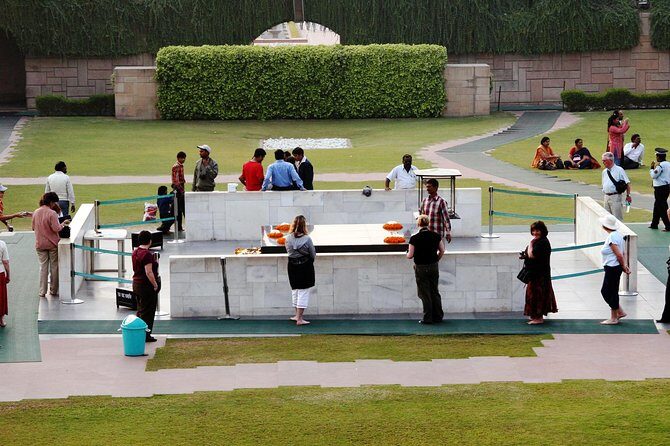
You also stop at Raj Ghat, the simple memorial on the Yamuna riverbank marking where Mahatma Gandhi was cremated. It’s free and only about 30 minutes, but it’s one of those spots that lands emotionally faster than you’d expect.
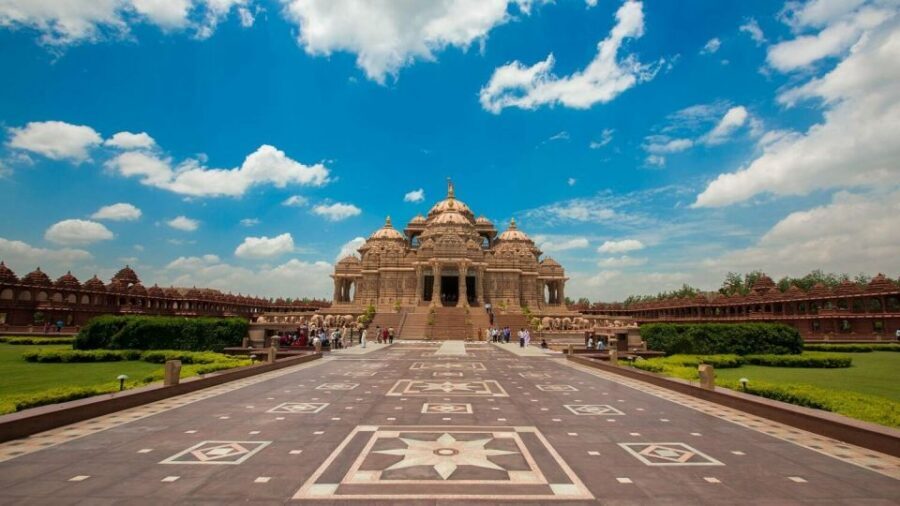
The day ends at Swaminarayan Akshardham (about 2 hours), though note it’s closed on Mondays. This is a newer temple complex (built in 2005), and it’s elaborate in design and craftsmanship. If your schedule hits Monday, you may want your guide to suggest a good alternative pace, since that specific stop won’t run.
Practical note: a dress code applies at places of worship and selected museums. Plan for covered knees and shoulders and no sleeveless tops or shorts. If you forget, you could lose time at the entrance.
You can also read our reviews of more private tours in New Delhi

Agra Fort and Mehtab Bagh: your first evening in Taj country
After breakfast, you drive about 3 hours from Delhi to Agra. That stretch is where the exclusive vehicle helps. You’re not trying to negotiate local transport after a long morning of sightseeing; you just reset in the car and let the schedule do the work.
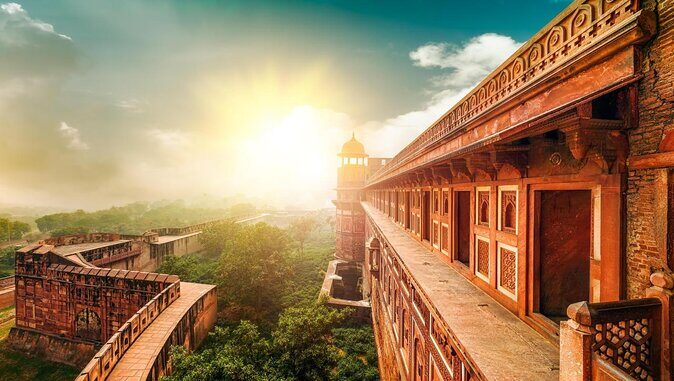
Once you check in at your pre-booked hotel, the afternoon focuses on Agra Fort, a UNESCO site along the Yamuna River. Plan on around an hour here, and it’s a meaningful complement to the Taj. The Taj is all about symmetry and romance. Agra Fort is about power and residence—Mughal emperors lived here, and it shows in the fort layout and riverfront presence.
In the evening, you go to Mehtab Bagh for a photo tour aimed at views of the Taj from across the river. It’s listed as about an hour with an included admission ticket, and it’s positioned as a quieter viewing angle away from the heaviest Taj foot traffic. Even if photos aren’t your main goal, it’s a good way to shift from daytime monument mode into nighttime anticipation.
This is also where I like the pacing of the tour. You’re not trying to do everything the first minute you arrive. You see Agra Fort, you catch a different Taj perspective, and then you earn the big sunrise moment for the next morning.
Taj Mahal sunrise: the big moment (and what can affect it)
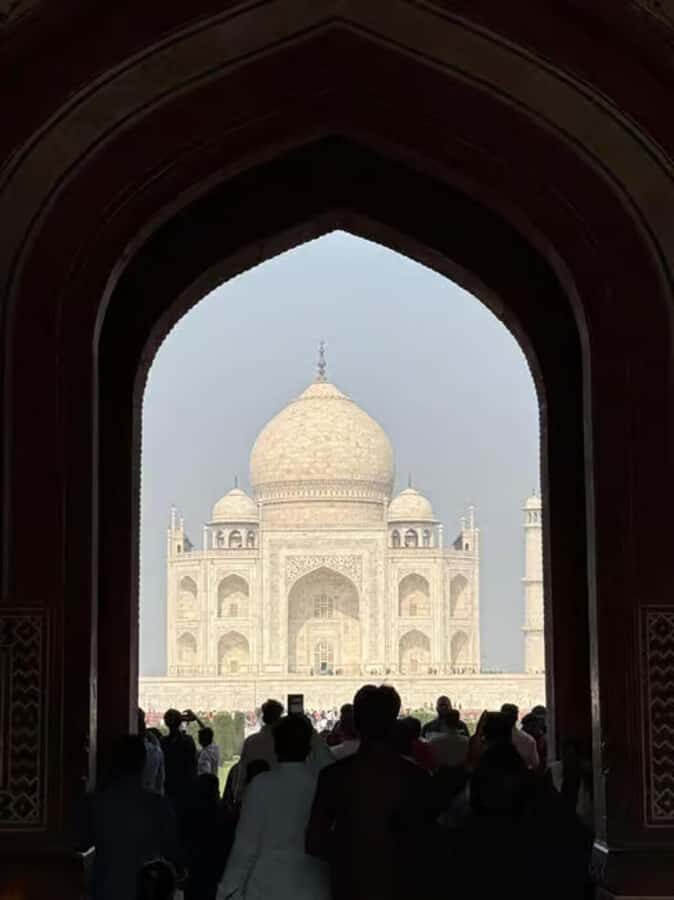
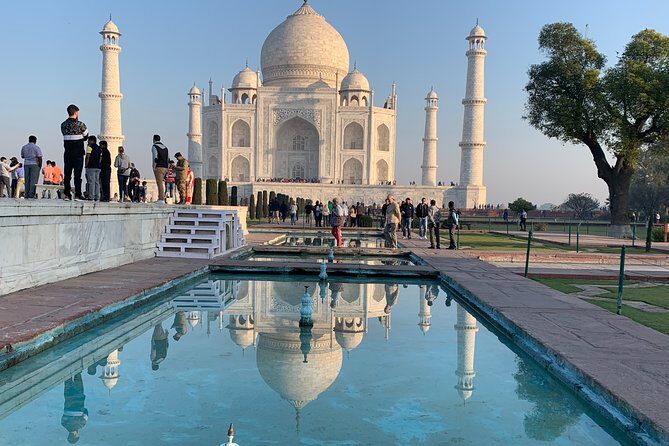
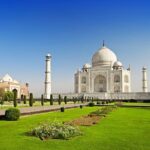
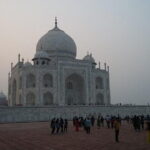
The highlight comes on Day 3. You’ll visit the Taj Mahal at sunrise, and you’re given about 2 hours at the site. It’s widely regarded as one of the most beautiful buildings in the world, and it was built by Shah Jahan as a memorial for Mumtaz Mahal. That fact alone gives you the emotional context, but it’s the light and symmetry at dawn that usually makes people stop talking for a minute.
One important reality check: this sunrise visit is subject to weather conditions. If weather is poor, the timing or experience may change. I treat sunrise plans like a best-case scenario and pack mentally for Plan B, even if you’re excited (and you will be).
Getting to and inside the Taj is also smoother than it looks on paper. The tour includes a battery bus/golf cart return ride from Taj Mahal parking. That saves walking time and energy, especially helpful if you’re doing a long day right after an early start.
For practical comfort: dress warmly if you’re out before daybreak. Wear shoes you trust for uneven stone and lots of standing. And don’t overpack your bag with stuff you won’t use—at sunrise, you’ll want your hands free for photos and quick movement.
My favorite part of doing Taj at sunrise with a private guide is the focus. Instead of scattering your attention across every corner, you get pointed at the details that actually matter. You’re there for the whole building, not just the postcard angle.
Abhaneri and Chand Baori: the stepwell detour that surprises people
On the way to Jaipur, the itinerary includes Abhaneri, a small town area famous for its step wells. You’ll spend around an hour here at Chand Baori, plus the Harshat Mata Temple nearby.
Chand Baori is one of those sights that works as a visual puzzle. You look down the structure and it’s like the architecture keeps repeating in a pattern, almost like a built illusion. It’s not just pretty—this kind of stepwell also tells you something about how people historically gathered water and managed heat, even though the tour won’t turn this stop into a lecture.
If you’re doing the Golden Triangle for big-brand monuments only, this detour might feel different. That’s a good thing. It breaks the Taj-to-fort-to-palace rhythm and gives you a Rajasthan-style architectural stop that feels more off the main highway.
Then you continue to Jaipur, the Pink City. You check in to the hotel, and that time is listed with a couple hours allocated before the next morning’s major sights.
Amber Fort, Jal Mahal, City Palace, and Jantar Mantar: Jaipur’s must-sees, paced right
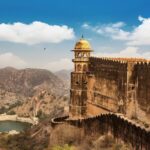
The Jaipur day starts with Amber Fort (Amber Palace) after breakfast. You’ll spend about 2 hours here. It rises from a rocky mountaintop and is described as honey-hued, with classic Rajput architectural style. It’s a big site, so expect walking and stair segments depending on how you tour the interior spaces.
There’s an optional jeep ride related to Amber Palace, but it’s not included. The tour data notes a jeep ride cost ($3 per person) applicable for groups of 5 and above. If you’re traveling with fewer people, you may not have that option offered the same way. Ask your guide early so you don’t waste time guessing at the ticket area.
After Amber, you get a quick photo stop at Jal Mahal (Water Palace). It’s listed as about 15 minutes. You won’t spend long inside (it’s a photo stop), but it’s a nice breather and a chance to see how Jaipur’s landscapes and water features show up in royal imagery.
Then comes Hawa Mahal, the Palace of Wind. Another 15-minute photo stop. It’s one of those buildings you’ve probably seen in pictures already, but seeing it in person helps you understand the design—pink facade with the honeycomb-like windows and vertical layering.
Next you head to the City Palace of Jaipur, where you’ll spend about an hour. The City Palace is the royal family residence complex—courtyards, gardens, and buildings from different eras. It’s not just one building; it’s a living museum footprint, and the blend of older and newer palace structures creates a sense of continuity.
Finally, you visit Jantar Mantar, the UNESCO observatory. You’ll have about an hour here. It’s all about geometric instruments built to measure movement of stars and planets. Even if you’re not a science person, it’s worth it because it shows how practical observation and design worked together centuries ago. It’s the kind of stop that makes your brain switch from sightseeing mode to pattern mode.
A few more New Delhi tours and experiences worth a look
Transportation and guides: why this feels easier than DIY
A lot of Golden Triangle problems aren’t about the sights—they’re about the logistics. This private setup helps with that.
You ride in an exclusive air-conditioned vehicle throughout the route. Transfer times are listed as approximate, but in practice that matters because Delhi traffic can turn a normal schedule into chaos if you’re winging it. A driver who knows the flow of roads is the difference between a day that feels doable and a day that feels like you’re stuck in a car park.
You also travel with professional local private tour guides. In the real-world examples from this same tour style, guides have included Sinul (Delhi), Mahesh (Agra), and Ashok (Jaipur). Drivers you might encounter have included DK, Brijesh, or Uma Shankar. The common thread is punctual meeting points and day-to-day helpfulness—getting you inside, explaining what you’re looking at, and keeping you moving at a human pace.
There’s also a comfort layer: unlimited bottled water. On these routes, you’ll notice how quickly thirst and heat can sap your energy. This small inclusion keeps you from bargaining with every roadside stall.
And since this is private, it’s just your group. That means fewer waits for late people and fewer awkward moments where you’re standing around while a big group makes up its mind.
Price and value: what $328 covers (and what it doesn’t)
At $328 per person for a 4-day private tour, the value comes from how much is handled for you. You’re not just paying for a car. You’re paying for planning, guides, site entry, and the private logistics across Delhi–Agra–Jaipur.
From the included list, you typically get:
- 3 nights accommodation with breakfast (twin sharing), if you booked the option that includes hotels
- exclusive air-conditioned transport
- professional local private tour guides
- entrance fees for sights mentioned
- battery bus/golf cart return from Taj Mahal parking
- unlimited bottled water
- breakfast (3)
What’s not included:
- Bicycle rickshaw in Old Delhi ($4 per person)
- Jeep ride at Amber Palace in Jaipur (listed for groups of 5+ travelers at $3 per person)
- Meals and drinks beyond breakfast
- Any gala dinner on Christmas Eve / New Year Eve is not included (and charged extra if required by your hotel)
So here’s how I think about the math. If you were trying to DIY this route, you’d still pay for hotels, intercity driving, and a string of entrance fees. What makes this price feel fair is that the guide time and the entry planning are built in—especially with Taj sunrise and the extra Taj-area viewing stop at Mehtab Bagh.
Practical tips so the schedule doesn’t bite you
This tour works best if you travel light and move fast when the group is moving. A few things to prepare for:
- Dress code: keep shoulders and knees covered at places of worship and selected museums. No shorts or sleeveless tops.
- Shoes: comfortable walking shoes matter. You’ll spend time standing and walking at forts, city palaces, and monuments.
- Weather for Taj sunrise: the sunrise visit depends on conditions. If it’s cloudy or rainy, plan for adjustments.
- Optional rides cost extra: the bicycle rickshaw in Old Delhi is $4 per person, and the Amber jeep ride is an extra fee that depends on group size.
- Transfers take time: the itinerary lists transfer durations as approximate, and traffic can stretch them, especially around Delhi.
A small mindset tip: don’t try to “win” the tour by seeing everything from every angle. Let the guide help you prioritize. You’ll remember fewer things more clearly.
Should you book this private Golden Triangle tour?
Book it if you want a straightforward first-timer route with the biggest monuments in Delhi, Agra, and Jaipur—and you value private guide time over a messy do-it-yourself plan. The Taj Mahal sunrise plus Agra Fort, then Jaipur’s Amber Fort, City Palace, and Jantar Mantar is a very efficient way to get the core sights without spending your vacation researching opening times.
Consider skipping or switching to a slower style if you hate early mornings, don’t enjoy lots of walking, or want long, deep museum time in each place. This tour is built to move.
Also, if you’re sensitive to weather changes, remember the sunrise visit is weather-dependent. If you can handle that flexibility, the payoff is real.
FAQ
What time does the tour start?
The tour start time is 9:00 am. Your pickup details depend on your location, and you’ll need to confirm your pickup and drop-off with the local operator after booking.
Is this a private tour?
Yes. It’s listed as a private tour/activity, so only your group will participate.
How long is the tour?
The duration is listed as 4 days (approx.).
Does the price include hotel accommodation?
Accommodation is included as 3 nights on twin sharing with breakfast, but only if you book with the option including hotels.
Are entrance fees included?
Entrance fees are included for the sights mentioned in the tour. Some stops have tickets listed as included or free, depending on the site.
Do I need tickets for the Taj Mahal sunrise visit?
The tour includes entry for the Taj Mahal sunrise visit, and it also includes the battery bus/golf cart return ride from Taj Mahal parking.
What if the weather is bad for sunrise?
The Taj Mahal sunrise visit is subject to weather conditions, so the experience may be affected depending on conditions.
What about meals during the tour?
Breakfast is included (3 breakfasts). Meals and drinks other than that are not included unless specified.
Are there any extra costs I should expect?
Yes. The bicycle rickshaw ride in Old Delhi is not included ($4 per person). There’s also a jeep ride at Amber Palace in Jaipur listed as $3 per person, applicable for groups of 5 and above.
Is there a dress code?
Yes. A dress code is required for places of worship and selected museums. Shorts and sleeveless tops are not allowed, and knees and shoulders must be covered.
Do I need a passport?
A current valid passport is required on the day of travel.
If you want, tell me your travel month and whether you’re booking the hotel option—I can suggest how to plan around sunrise timing and what to pack for the dress-code-heavy days.