REVIEW · MUMBAI
Mumbai Must See tour
Book on Viator →Operated by Be The Local Tours and Travel · Bookable on Viator
Mumbai moves fast, and this tour keeps up.
In just about four hours, you get a guided thread through South Mumbai’s waterfront and Fort-area architecture—Portuguese, Muslim, and British influences side by side—with sea views, Gothic landmarks, and a couple of places most first-time visitors would miss.
I love the private-group pace—short timed stops, smart sequencing, and time to actually look instead of rushing photo-to-photo. I also love that Mani Bhavan Gandhi Museum is included, so the Gandhi story connects to the city in a real way, not as a quick exterior.
One possible drawback: the route is compact, and it needs good weather, so if rain or heavy clouds roll in, you’ll want a backup day in mind.
In This Review
- Key highlights that make this tour worth it
- A tight 4-hour plan that actually helps you understand Mumbai
- Pickup and getting around without the stress
- Gateway of India: the waterfront “front door” of the city
- Nariman Point and Marine Drive: Art Deco sea views and city momentum
- Nariman Point
- Marine Drive
- Hanging Gardens and Parsee Bawdi: a park above the city’s quieter side
- The Tower of Silence (Parsee Bawdi)
- Dhobi Ghat from the bridge: seeing labor without needing a staged performance
- Mani Bhavan Gandhi Museum: the Gandhi years that shaped Mumbai politics
- Gothic train-station power: Chhatrapati Shivaji Terminus and nearby old-school institutions
- A couple of Fort-area Gothic stops
- Why the guide makes the difference (Umar, and others who know Mumbai)
- Price and value: what $59.99 gets you in real sightseeing time
- Practical tips so the day feels smooth
- Should you book the Mumbai Must See tour?
- FAQ
- How long is the Mumbai Must See tour?
- What does the tour include?
- Is pickup included?
- Are admission tickets included?
- Is this a private tour?
- What’s the meeting time?
- Can most people participate?
- What if the weather is bad?
- What is the cancellation policy?
Key highlights that make this tour worth it
- Private tour only for your group: easier to ask questions and set your own comfort level
- Easy South Mumbai “hit list”: Gateway of India, Marine Drive, Dhobi Ghat, and CST in one run
- Architecture lovers get their money’s worth: Art Deco seafront plus Victorian/Gothic revival landmarks
- Gandhi is not just a name here: Mani Bhavan covers his key Mumbai political years
- You’ll see daily life up close: Dhobi Ghat’s open-air laundry view from a bridge
- Most stops have free entry: Gateway of India, Nariman Point, Marine Drive, and Hanging Gardens list as free
A tight 4-hour plan that actually helps you understand Mumbai
Mumbai can feel like sensory overload—horns, crowds, heat, and a city rhythm that doesn’t slow down. This tour is built for that reality. You don’t try to “master” Mumbai. You get the key visual anchors and the human context that makes the rest click.
What makes the time work is the balance: landmark views for orientation, then a few stops that show how Mumbai runs day to day. You’ll walk enough to see details, but not so much that your brain feels fried by hour two.
And because it’s a private experience for only your group, the guide can tailor the pace. If you want more time staring at the architecture, you’re not fighting a large crowd for position.
You can also read our reviews of more tours and experiences in Mumbai.


Pickup and getting around without the stress
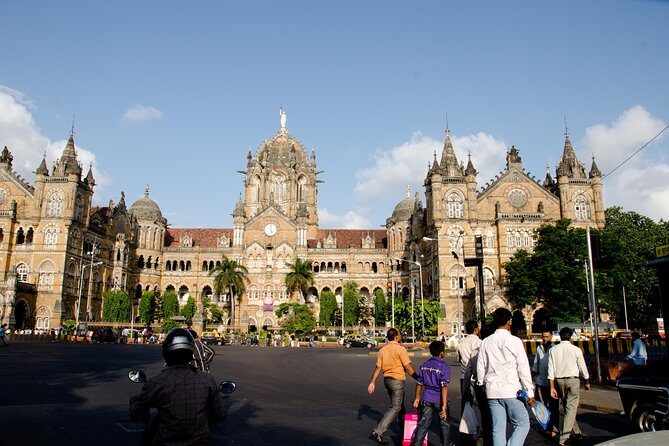
You’re offered pickup, which matters a lot in Mumbai. Even when you plan well, getting across neighborhoods by yourself can turn into a long waiting game. Here, the goal is simple: you spend your energy on the sights, not on figuring out the next hop.
The tour is also listed as near public transportation. That’s useful because it gives you options. If your day includes other plans, you’re not locked into a complicated meeting location far from everything.
Finally, you get a mobile ticket, which helps keep your day light. Less paperwork, fewer things to misplace in the rush of travel.
Gateway of India: the waterfront “front door” of the city
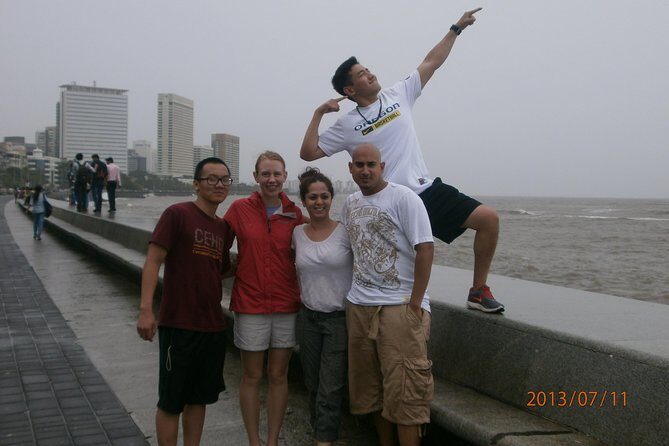
Your first major stop is the Gateway of India at Apollo Bunder, facing the Arabian Sea. This is the kind of landmark you can understand instantly: it’s monumental, it’s waterfront-facing, and it’s tied to how outsiders and visitors have imagined Mumbai for generations.
It’s often compared to a grand icon like the Taj Mahal of Mumbai, and that nickname makes sense. The structure reads like a symbol—something built to be seen from a distance and remembered.
You’ll have about 15 minutes here, and the point isn’t to spend your whole day at a monument. It’s to use the Gateway as a starting point for the rest of the city. From here, you can begin to see Mumbai as a port city—built around movement of people, goods, and ambition.
Practical tip: wear something comfortable for sea wind. The weather can change fast along the water, and your photos will thank you.
Nariman Point and Marine Drive: Art Deco sea views and city momentum
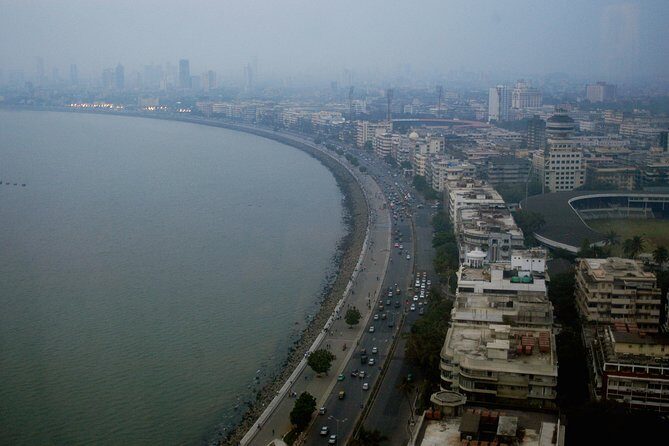
From the Gateway area, you move into the South Mumbai waterfront zone where the vibe shifts from historic port to modern business and promenade culture.
Nariman Point
At Nariman Point, the setting is all about offices and skyline energy, plus places where people linger for sunset drinks at sea-facing bars. You’ll also pass important cultural stops in the area, including the National Centre for the Performing Arts and the Piramal Art Gallery.
This stop is short—about 10 minutes—but it’s valuable because it shows you how Mumbai layers functions. It’s not just old buildings. It’s also global-facing institutions and contemporary visual arts, all along the same strip of city.




Marine Drive
Then you hit Marine Drive, one of the most recognizable promenades in Mumbai. You’ll see the Art Deco character clearly, with the kind of architecture that gives the street a uniform rhythm.
The tour frames Marine Drive as Mumbai’s “Miami of India” comparison—same idea, different place. Both are about a sea-facing promenade that mixes apartments, offices, and nightlife culture around a long stretch of walkway.
Marine Drive is also about perspective. It’s where you can stand back, look along the line, and get a sense of how the city stretches along the coast.
Keep expectations realistic: this is a quick look, not a long beach hang. But that quick look is enough to get your bearings.
Hanging Gardens and Parsee Bawdi: a park above the city’s quieter side
Next come the Hanging Gardens, also known as the Pherozeshah Mehta Gardens. These were first built in 1881, and the design is tied to the practical challenges of the city—protecting a main water reservoir from pollution.
That’s a smart reminder: Mumbai’s history isn’t only battles and kings. A lot of it is engineering choices and everyday problem-solving dressed up as public beauty.
You’ll have about 20 minutes here, which is perfect for slowing down. Take a moment. Look out, feel the shade, and connect the space to why it was built in the first place.
The Tower of Silence (Parsee Bawdi)
After the gardens, the route shifts to a very different mood: the Tower of Silence, also called Parsee Bawdi. This is a sprawling funeral site associated with the Parsee community, covering about 55 acres, where last rites are carried out for community members.
This stop is important because it adds depth to the city beyond the postcard layer. Mumbai’s identity is not one single religion or one single architectural style. It’s lived alongside many communities and traditions.
Note for planning: this part of the tour can feel heavy. If you prefer lighter sightseeing, just know you’re choosing a route that doesn’t shy away from the serious side of city life.
Dhobi Ghat from the bridge: seeing labor without needing a staged performance
Dhobi Ghat is one of those Mumbai sights that feels almost impossible until you see it. Dhobi means washerman, and ghat means laundry area—so yes, this is an area built around washing clothes.
The tour experience here is very specific: you get a view from a bridge into an open-air washing laundry scene.
That viewpoint matters. From ground level, you’d be in the workflow. From a bridge, you see the scale—rows of washing stations, water movement, and how the space is organized like a working system.
You’ll have about 20 minutes for this stop. Use that time to observe patterns: where people stand, how washing happens in sections, and how the whole operation fits into the city.
One consideration: this is an active work area. Keep your camera respectful and be mindful of people going about their day. Quick, polite observation beats long gawking.
Mani Bhavan Gandhi Museum: the Gandhi years that shaped Mumbai politics
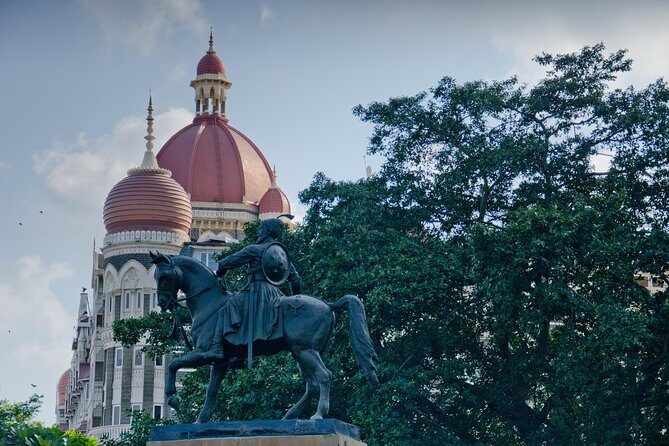
Now you get a stop with a strong narrative: Mani Bhavan Gandhi Museum. This is a museum and historical building dedicated to Mahatma Gandhi, and the guide context focuses on his political activities in Mumbai between 1917 and 1934.
You’re given about 30 minutes, and the key advantage is that the museum makes Gandhi’s time in Mumbai feel concrete. Instead of treating history like a list of dates, you connect it to places where the work happened.
This admission is included, which is a real value boost. Many “must-see” tours include big exterior sights but make you pay separately for the most meaningful indoor stop. Here, the one museum you want is already handled.
If your goal is to understand how Mumbai became a political and social engine—not just a commercial port—this museum helps you see the link.
Gothic train-station power: Chhatrapati Shivaji Terminus and nearby old-school institutions
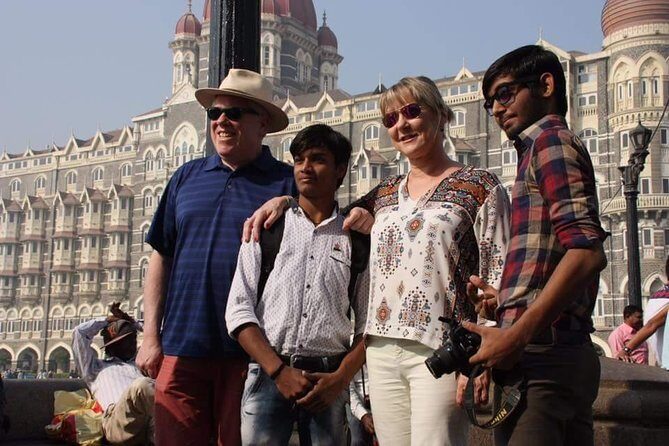
The final big architectural anchor is Chhatrapati Shivaji Terminus (formerly Victoria Terminus). It’s famous for Victorian Gothic Revival style blended with themes drawing from Indian traditional architecture.
You’ll have about 10 minutes here, and the time limit is both a drawback and a feature. It’s short enough that you won’t feel trapped, but it also means you need to come ready to look. This is a place where details matter: carvings, stonework, and the way the building reads as both landmark and working hub.
A couple of Fort-area Gothic stops
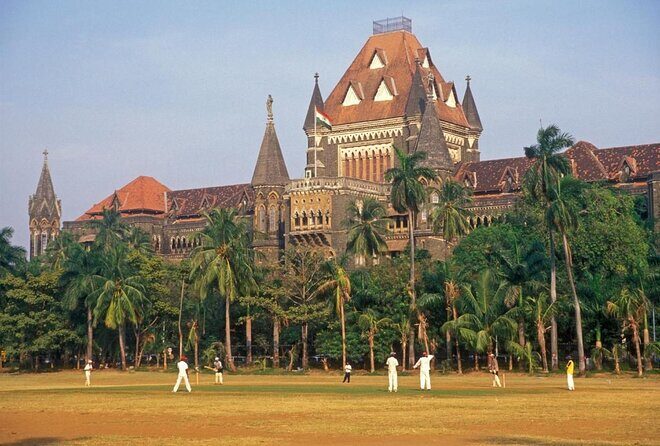
On the way toward CST, the tour includes Gothic revival buildings tied to older Mumbai institutions. One is a university administration complex founded in 1857 on about 14 acres, including a 280-foot clock tower. Another is a historic Gothic revival High Court building, described as one of the oldest High Courts in India.
Even if you only get quick exterior viewing, these stops add a big piece of the puzzle. They help you see the “British fragrance” vibe mentioned in the tour description—how colonial-era design choices shaped public buildings in this part of town.
If you’re an architecture fan, you’ll enjoy the contrast: a coastal Art Deco promenade on one side, then Gothic power structures on the other. It’s the same city, different mood.
Why the guide makes the difference (Umar, and others who know Mumbai)
A good tour guide can turn simple sight-seeing into city-reading. That’s the standout pattern in the feedback you shared: guides are praised for giving a real insight into Mumbai life, staying patient, and explaining how things work on the ground.
One guide name that comes up is Umar (also spelled Umer in one note). People highlight his fluency in English and his calm approach, which matters in a city that can overwhelm first-timers.
Another name that shows up is Tauseef, praised for being prepared and responsive. If you get a guide like that, you’re less likely to treat stops like checkboxes.
So when you choose this tour, you’re not only buying access to landmarks. You’re buying a way to connect them into a mental map: port history, colonial architecture, daily labor, and Gandhi’s Mumbai years.
Price and value: what $59.99 gets you in real sightseeing time
At $59.99 per person for about 4 hours, the value depends on what you’d otherwise pay and how much time you’d spend figuring out transport.
Here’s what you effectively get:
- A private format for your group
- Pickup offered, which saves effort (and in Mumbai, effort has a cost)
- A route packed with top South Mumbai icons
- Multiple stops that list admission as free (Gateway of India, Nariman Point, Marine Drive, Hanging Gardens)
- One key paid component handled for you: Mani Bhavan included
If you were to plan this solo, you’d likely spend more time coordinating than you’d like, and you’d still need a plan for the museum stop. Paying for a guided route at this price is often cheaper than losing half your day to transit and indecision.
The best value comes when you want a strong first-timer orientation without turning your trip into a scavenger hunt.
Practical tips so the day feels smooth
Mumbai days can change fast. Use these pointers to make the tour feel easy:
- Wear shoes you can walk in comfortably. Even with short stops, you’ll move.
- Bring a light layer. Sea areas can get breezy; indoor museums still feel cooler.
- If you’re sensitive to heat, plan to treat mid-day sun as your warning sign. The tour needs good weather and you’ll likely do most of the day’s sightseeing under it.
- If you want photos, treat each stop like a mini mission: look first, then photograph. Otherwise you’ll rush and miss details.
Also, since it’s listed as most travelers can participate, it’s generally set up for a broad range of people. Still, if you have mobility limitations, tell your guide where you need breaks so they can adjust.
Should you book the Mumbai Must See tour?
I’d book it if you want a smart, first-trip orientation to South Mumbai in one go. This is a route for travelers who like architecture, want sea-view context, and don’t want history reduced to a couple of selfies.
I’d think twice if you hate time limits and want long stays at every site. This tour moves. It’s designed to give you clarity, not full-day immersion. And because it requires good weather, you’ll want flexibility in your schedule.
If you’re visiting Mumbai for the first time and want a guided “map in motion,” this one is a strong choice.
FAQ
How long is the Mumbai Must See tour?
The tour is approximately 4 hours.
What does the tour include?
You’ll visit Gateway of India, Nariman Point, Marine Drive, Hanging Gardens, the Tower of Silence (Parsee Bawdi), Dhobi Ghat, Mani Bhavan Gandhi Museum, and Chhatrapati Shivaji Terminus, plus additional historic Gothic revival buildings in the Fort area.
Is pickup included?
Pickup is offered.
Are admission tickets included?
Admission is listed as free for Gateway of India, Nariman Point, Marine Drive, and Hanging Gardens. Mani Bhavan Gandhi Museum admission is included. Other stops are presented as view-based during the tour, but the inclusion of admission is only specified for Mani Bhavan and the stops listed as free.
Is this a private tour?
Yes. It’s private, and only your group will participate.
What’s the meeting time?
The tour is listed as available daily, with the schedule window shown as Monday through Sunday from 12:00 AM to 12:30 AM. Your exact time should be confirmed at booking.
Can most people participate?
The information states that most travelers can participate.
What if the weather is bad?
The experience requires good weather. If it’s canceled due to poor weather, you’ll be offered a different date or a full refund.
What is the cancellation policy?
Free cancellation is available. You can cancel up to 24 hours in advance for a full refund, based on local time.