REVIEW · NEW DELHI
3 Nights 4 Days Golden Triangle Delhi Agra Jaipur Tour By Car
Book on Viator →Operated by India Driver Tours · Bookable on Viator
A Golden Triangle tour hits the big names fast, without the stress of planning each leg. This private Delhi–Agra–Jaipur road trip is built around highlights, smart timing, and a driver who stays with you so your days don’t turn into a taxi scavenger hunt.
I like that you get round-trip transport based out of Delhi and a smooth, private AC car setup each day.
What I really like most is how the route stacks famous stops with a couple of places people often skip, like Fatehpur Sikri’s deserted vibe and Jaipur’s Monkey Temple area. The other win is the photo-focused pacing—one Agra guide even knew exactly where to stand so the shots looked better than expected.
One thing to plan for: entrance fees and monuments tickets are not included, and meals are also on you. If you hate budgeting surprises, keep a buffer for entry costs across Taj Mahal, fort complexes, and Jaipur’s main sights.
In This Review
- Key things that make this tour work
- What you’re really buying: a driver-led route with fewer moving parts
- Day 1 in Agra: Taj Mahal first, then Agra Fort
- Day 2 to Jaipur: Fatehpur Sikri’s ghost-town mood and Galtaji’s monkeys
- Day 3 in Jaipur: City Palace, Jantar Mantar, Hawa Mahal, Jal Mahal, then Amer Fort
- Day 4 back in Delhi: Qutub Minar, Red Fort, India Gate, Raj Ghat, Jama Masjid
- Hotels, tickets, and guides: how to budget without stress
- The driver makes or breaks it: Vijay, Avtar, Pawan, and the real value of patience
- Photo-ready pacing: how guides help you get better shots
- Price and value for up to 3 people
- Who this tour suits (and who should rethink it)
- Should you book this Golden Triangle by car?
- FAQ
- What cities does this Golden Triangle tour include?
- How long is the tour?
- Is pickup and drop-off included?
- Is this a private tour?
- How many people can be in a group?
- What’s included in the price?
- Are meals included?
- Are entrance fees included for monuments?
- Do I get a guide service included?
- What if the weather is bad?
- What’s the cancellation window?
Key things that make this tour work
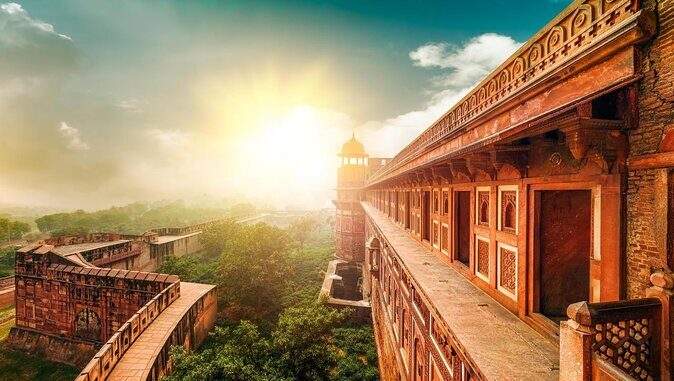
- Private door-to-door transport across all three cities, led by your own driver
- Stops grouped by day so you see more than you could efficiently on your own
- Fatehpur Sikri + Monkey Temple add variety beyond the usual Golden Triangle checklist
- Photo-friendly sight planning with help from local guides at key monuments
- Hotel choice is yours, with pickup/drop-off handled for the dates you travel
What you’re really buying: a driver-led route with fewer moving parts
This is not a “drop you at a bus stop and good luck” kind of trip. You’re in a private AC vehicle with an English-speaking friendly driver, and that driver handles the day-to-day driving and logistics while you focus on the sights. It also includes fuel, parking, tolls, and taxes, which is the unglamorous part of road travel that adds up quickly if you DIY.
Because the accommodation is up to you, you’re able to pick a hotel style and budget that fits your pace. In practice, that’s a big deal. Golden Triangle trips can feel either too rushed or too expensive depending on whether the tour locks you into a single hotel category.
The other practical win: you get hotel or airport pickup and drop-off. So whether you arrive by flight into Delhi or land in another way, you’re not left trying to solve the first-day puzzle.
A few more New Delhi tours and experiences worth a look

Day 1 in Agra: Taj Mahal first, then Agra Fort
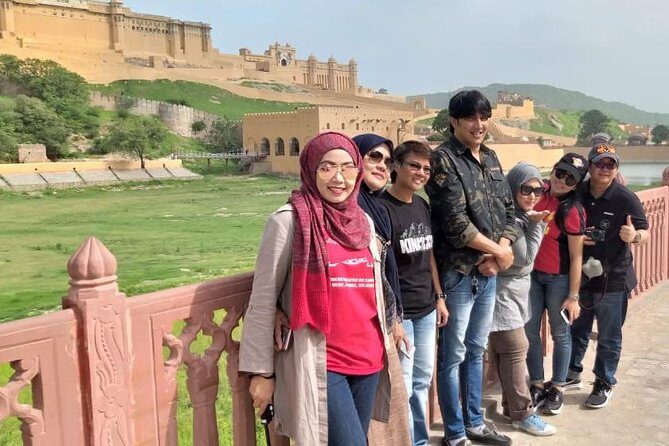
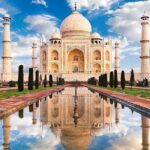
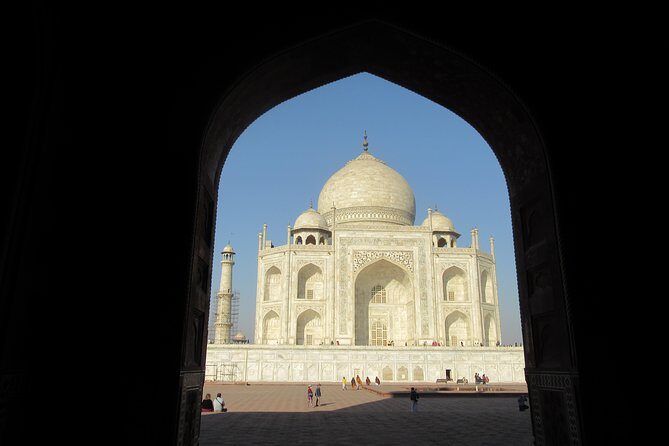
Day 1 centers on two heavy hitters in Agra, and that’s a good way to start. The Taj Mahal is iconic for a reason, but the experience is more than a postcard view. You’re walking through the kind of marble scale that makes the rest of the world feel oddly small.
At the Taj Mahal, admission tickets are not included in the tour price, so you’ll want to factor that cost in advance. The visit is listed for about two hours, which is usually enough time to see the main areas and still get a few clean photos without turning it into a sprint.
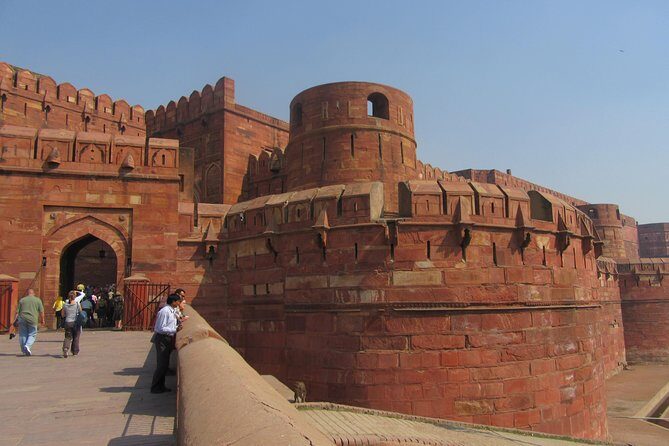
Next comes Agra Fort. This one has a different feel than the Taj Mahal—more stone-and-strength than romance-and-marble. It’s described as red sandstone on the banks of the Yamuna, and the fort layout gives you plenty to look at even if you’re not obsessing over every detail of the history.
One practical note: forts and palaces can involve uneven walking, steps, and some heat. Your tour requires moderate physical fitness, and Day 1 is usually when you’ll feel it most if you’re arriving tired.
Day 2 to Jaipur: Fatehpur Sikri’s ghost-town mood and Galtaji’s monkeys
Day 2 starts with a drive toward Jaipur after breakfast, but the route intentionally breaks up the long travel so you don’t lose the day to the car.
First stop is Fatehpur Sikri, described as a ghost town and noted as deserted. That’s exactly the kind of place that makes a Golden Triangle tour feel less generic. The atmosphere is built into the landscape: you’re not just visiting a monument, you’re experiencing a sense of abandonment that’s hard to replicate elsewhere.
The good news here is that the admission is listed as free and the visit is about one hour. Even if you’re not a “stand-and-read-every-sign” person, Fatehpur Sikri works well because you can still absorb the big structures and imagine the scale of what once operated here.
Then you roll into Jaipur for the Monkey Temple area, part of Galtaji near Khaniya-Balaji. It’s free, and the stop is short—about 30 minutes. This is one of those moments that feels instantly playful. The monkeys are the star, but you’re also getting a temple cluster and kunds (water tanks), which adds texture beyond just watching animals.
A quick practical thought: monkeys mean unpredictability. Keep belongings secure and don’t act like you’re feeding them a snack you forgot you had.
Day 3 in Jaipur: City Palace, Jantar Mantar, Hawa Mahal, Jal Mahal, then Amer Fort
If Day 2 feels like variety, Day 3 is your “Jaipur highlight stack.” It’s a full day with multiple stops, and the order matters because you’ll want to avoid backtracking.
Start at the City Palace complex. It’s tied to the founding of Jaipur and connected to Maharaja Sawai Jai Singh II, who moved his court to Jaipur in 1727. Admission isn’t included, and the time on site is listed at about one hour. I like City Palace as a first stop because it gives you a sense of how the city’s royal power shaped the layout you’ll see across the rest of the day.
Next is Jantar Mantar, a set of nineteen astronomical instruments built by Sawai Jai Singh II and completed in 1734. The stop here is short (about 30 minutes), and admission is not included. The instruments are the point, but also the scale of the thought behind them—this is science built into public space.
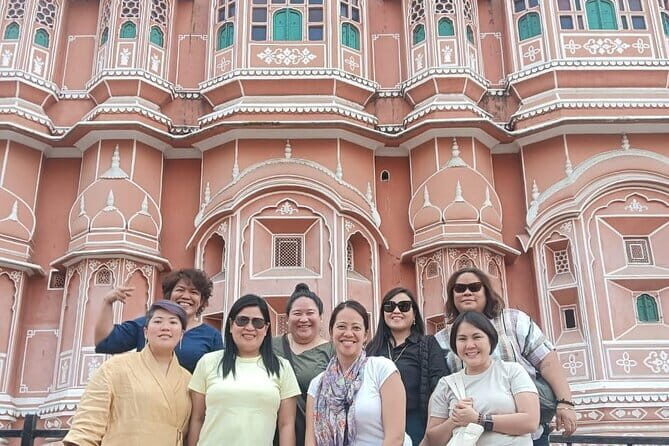
Then comes Hawa Mahal, also known as the Palace of Wind. The tour notes it’s dedicated to Lord Krishna, and that the building shape resembles Krishna’s crown. It’s listed at about 30 minutes with admission not included. This is one of the places where you’ll understand why people take so many photos. Even if you only do the main viewpoints, you’ll feel the “architecture as display” idea.
After that, you stop at Jal Mahal. The time is about 30 minutes and admission is not included, but the listing doesn’t give extra detail beyond the name. Still, it’s a nice visual break in the middle of the palace-and-fort rhythm. Even from a distance, it adds that water-and-palace contrast you don’t get at every Golden Triangle stop.
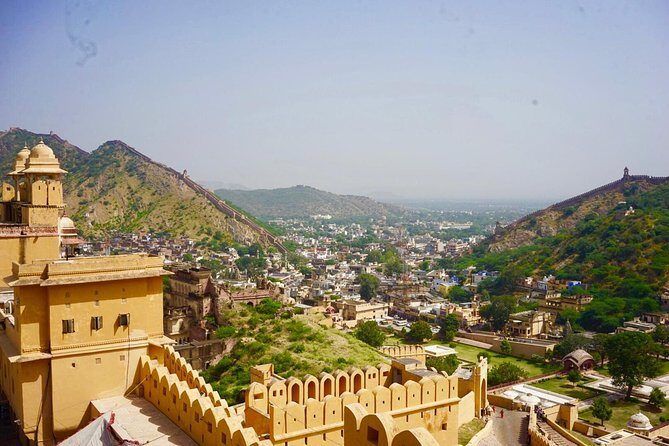
Finally, you close the day with Amer Fort. It’s about 11 km from the main city and sits on a hill, built with pale yellow and pink sandstone and white marble. The visit is listed at about two hours and admission tickets are not included. This is the big “I’m glad we didn’t skip it” finish. Amer Fort can feel expansive, and it’s usually where people slow down because the views and walls actually demand attention.
Day 4 back in Delhi: Qutub Minar, Red Fort, India Gate, Raj Ghat, Jama Masjid
Day 4 brings you back to Delhi and adds a mix of famous landmarks and quieter memorial space. It’s a long day, but the stops are grouped logically.
First up is Qutub Minar in the Qutb complex, a UNESCO World Heritage Site. It’s listed as a brief one-minute stop, but in practice you’ll at least get the landmark in your photos and your bearings for the complex area. Admission is not included.
Then comes Red Fort, described as the Mughal emperors’ main residence for nearly 200 years until 1856. You get about an hour. Admission isn’t included here either. Red Fort works well after you’ve already seen Qutub Minar because you can compare architectural eras and materials rather than treating Delhi as a random set of monuments.
Next is India Gate, a war memorial on Rajpath. The time is short (about 30 minutes), but it’s a good reset point because it feels more open and less “inside a structure.”
After that you visit Raj Ghat, the black marble platform marking the spot of Mahatma Gandhi’s cremation on 31 January 1948, with an eternal flame. It’s about 30 minutes, admission not included. This stop is the emotional brake pad on a day packed with architecture. Even if you’re not deep into politics, the space is straightforward and easy to reflect in.
Finally, you end at Jama Masjid, Delhi’s principal mosque. It’s described as the Friday communal prayer place, and the name is Arabic for Friday mosque. Admission is listed as free, and the stop is about an hour.
The overall rhythm of Day 4 is why I like this format: you see the “musts,” then you get one or two stops that change the mood without adding a full extra day.




Hotels, tickets, and guides: how to budget without stress
This tour includes transport and driver service, but it does not include meals, monument entrance fees, or guide service. You’ll want to treat your budget as two layers:
Layer one: what’s already covered
- Private AC vehicle with your English-speaking friendly driver
- Fuel, parking, tolls, and taxes
- Hotel/airport pickup and drop-off
Layer two: what you add
- Hotel cost (you choose it)
- Meals (not included)
- Monument tickets/entrance fees (not included in most listed stops)
That last part is the one people underestimate. The Taj Mahal, Agra Fort, and several Jaipur sites are explicitly marked as admission not included. Some places are free—Fatehpur Sikri, Monkey Temple, and Jama Masjid—but don’t count on everything being free.
On the guide question, the tour data says guide service is not included. Still, the experience can feel guide-supported at key sights depending on what you arrange locally. The important thing for you is this: if you want a local guide at major monuments, plan extra budget. If you don’t, bring a phone with offline maps and accept a more self-guided pace at a few stops.
The driver makes or breaks it: Vijay, Avtar, Pawan, and the real value of patience
In a road trip, the car is your base. And that’s where this experience earns points. A lot of the best feedback centers on drivers being punctual, safe, and helpful, with people calling out names like Vijay and Avtar for their competence and calm.
You’ll also hear about Pawan as a responsible driver. One set of comments even stressed careful driving with children, which tells me the company values safety and steadiness, not just getting you to the next stop.
A practical bonus: drivers often know how to fix small problems fast. One booking mentioned Vijay adjusting the plan because the last day in Delhi fell on Holi, when some things can close. That’s the kind of real-world flexibility you only get when you’re not relying on public transport schedules.
There’s also a pattern of drivers offering recommendations beyond monuments—where to shop, what to eat, and how to avoid wasting time. That’s hard to replicate when you’re doing everything on your own.
If you’re hoping for a calmer experience and you want your route to handle the day-to-day chaos of northern India, this setup fits.
Photo-ready pacing: how guides help you get better shots
The tour’s highlights include very photo-friendly monuments, and the structure of the day gives you time to actually use that camera.
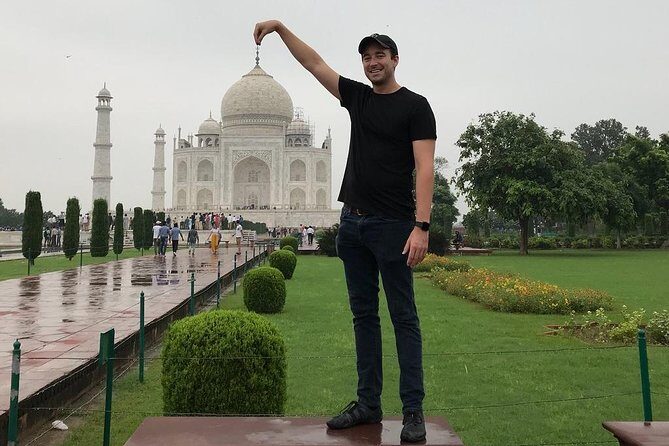
One detail that matters: the Taj Mahal and other major stops aren’t just rushed “look-and-go.” The experience is designed so you can take in the views and still get photos that look like you tried. In Agra, a guide was praised for knowing exactly how to get the photos people didn’t even know they wanted.
What can you do to help the photos? Keep expectations simple:
- Bring a fully charged phone/camera and a small power bank.
- Wear comfortable shoes. You’ll walk more than you think.
- When you arrive at a monument, ask your guide or driver where most people miss a good angle.
And for practical reasons, don’t put your “best camera settings” ahead of hydration and shade. You’ll enjoy the experience more when your body is comfortable enough to notice details.
Price and value for up to 3 people
The price is listed at $458.63 per group up to 3 people. That matters because the driver and AC car costs are spread across a small group, not divided across a larger crowd.
What you should evaluate is the all-in reality:
- Included: private transport, fuel/parking/tolls/taxes, and hotel/airport pickup/drop-off
- Not included: meals, entrance fees, and monument guide service
So if you’re comparing this to a cheaper option, be sure you’re not comparing apples to “apples with no peels.” A lower price often means you’ll pay separately for private transport, guides, or you’ll lose time and end up paying for it in taxis later.
If you can travel with up to 3 people, this is a strong value because you’re paying for convenience and reduced friction. If you’re traveling solo, the value still can be okay if you really want the private car experience, but your cost per person will be higher than a multi-person group.
Who this tour suits (and who should rethink it)
This is a good fit if you want:
- A private road trip through the Golden Triangle
- A plan with fewer transport hassles
- A driver who can adjust when real life gets messy (holidays happen)
- Hotel freedom so you can match comfort level to your budget
You might rethink it if:
- You want all-inclusive monument tickets and meals included
- You plan to be super self-directed and don’t need a driver staying with you
- You’re sensitive to crowds at major sights and need a slower, more flexible day-by-day pace
Also, since the tour calls for moderate physical fitness, you’ll want to be comfortable with walking, stairs, and full days of sightseeing.
Should you book this Golden Triangle by car?
I’d book it if you want the Golden Triangle without turning your trip into logistics homework. The private AC transport, pickup/drop-off support, and stop-to-stop structure are ideal if you like a plan but still want room to choose your own hotel. It’s also a smart way to get photos and timing right at big monuments.
I wouldn’t book it if you hate paying entrance fees separately, or if you want meals and guide services baked into the package. You’ll need to budget for those extras.
If you’re traveling with a small group (up to 3), this becomes even more attractive because you’re paying for a private setup rather than sharing the ride with strangers.
FAQ
What cities does this Golden Triangle tour include?
It covers New Delhi, Agra, and Jaipur, with round-trip transport starting and finishing in Delhi.
How long is the tour?
The duration is about 4 days (3 nights and 4 days).
Is pickup and drop-off included?
Yes. Hotel and airport pickup and drop-off are included.
Is this a private tour?
Yes. It’s private, and only your group participates.
How many people can be in a group?
The price is per group up to 3 people.
What’s included in the price?
A private AC vehicle with an English-speaking friendly driver, plus fuel, parking, tolls, taxes, and hotel/airport pickup and drop-off.
Are meals included?
No. Meals are not included.
Are entrance fees included for monuments?
No. Monument entrance fees are not included. Some stops are listed as free, including Fatehpur Sikri, Monkey Temple, and Jama Masjid.
Do I get a guide service included?
Guide service is not included, though you may still have local support during visits depending on what you arrange.
What if the weather is bad?
The tour requires good weather. If it’s canceled due to poor weather, you’ll be offered a different date or a full refund.
What’s the cancellation window?
You can cancel for a full refund up to 24 hours before the experience starts. After that point, refunds aren’t provided.