REVIEW · MUMBAI
Mumbai: Karla and Bhaja Caves Full–Day Tour
Book on GetYourGuide →Operated by Mystical Mumbai · Bookable on GetYourGuide
Karla and Bhaja feel carved from time. This full-day trip takes you from Mumbai to two Buddhist rock-cut sites in the Western Ghats, with a guided walk up about 200 steep steps and plenty of viewpoint breaks at Khandala.
I love the way the caves mix big architectural scale with small devotional details: chaityas, reliefs, paintings, and inscriptions spanning from about the 2nd century B.C. to the 5th century A.D. Guided storytelling keeps the art readable, and the day runs with a small-group feel plus a proper air-conditioned ride.
The main drawback is pacing. You’ll be on your feet for much of the morning, and if your pickup is late pickup, you may not have the time buffer to enjoy both Karla and Bhaja. Also, shorts aren’t allowed, so pack accordingly.
In This Review
- Key things to know before you go
- Why Karla and Bhaja caves are worth the long Mumbai day
- Karla Caves: the 200-step climb and the first big payoff
- Chaityas, sculptures, and inscriptions: what to watch for
- Bhaja Caves and the Khandala reset points
- Transport, comfort, and what your guide can change
- Price and value: is $71 a fair deal?
- Who this tour suits best (and who should rethink)
- Should you book this Karla and Bhaja full-day tour?
- FAQ
- How long is the tour from Mumbai?
- Is lunch included?
- What’s included in the $71 price?
- Does the tour include pickup and drop-off?
- Are entrance fees included or do I pay on site?
- What language will the guide speak?
- Are shorts allowed at the caves?
Key things to know before you go
- A lot of steps at Karla: plan for climbing and slow, careful viewing time
- Chaityas on a scale you can feel: the largest hall measures 148 feet and dates to the 1st century B.C.
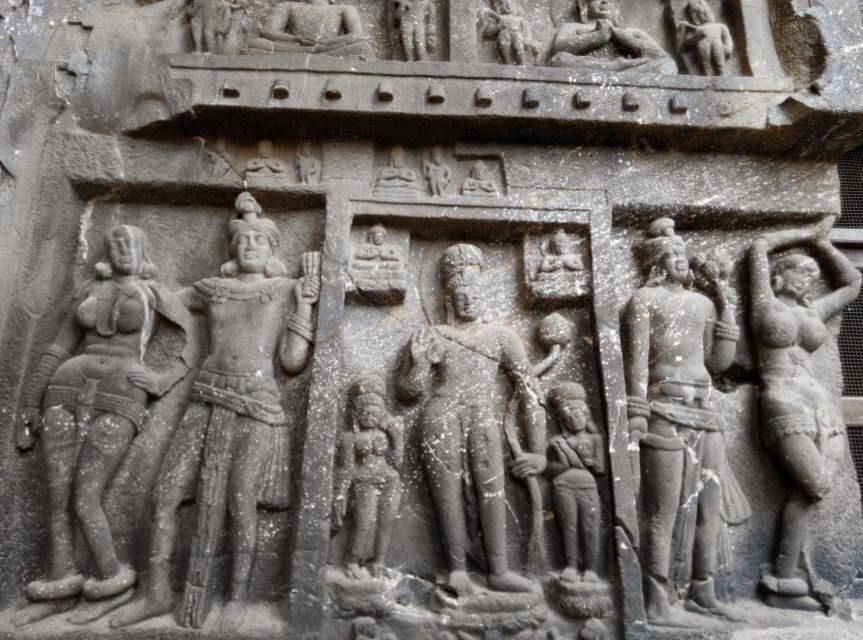
- Buddhist art you can actually read: sculptures, relief carvings, paintings, and inscriptions are part of the show
- Built for monsoon seasons: these rock-cut shrines were used by Buddhist monks during rains
- Khandala viewpoint stops: Tiger Point and Monkey Point are quick photo breaks to reset your legs
- Small-group guide matters: some days run smoothly; a few accounts cite guide mix-ups or time-saving shortcuts
Why Karla and Bhaja caves are worth the long Mumbai day
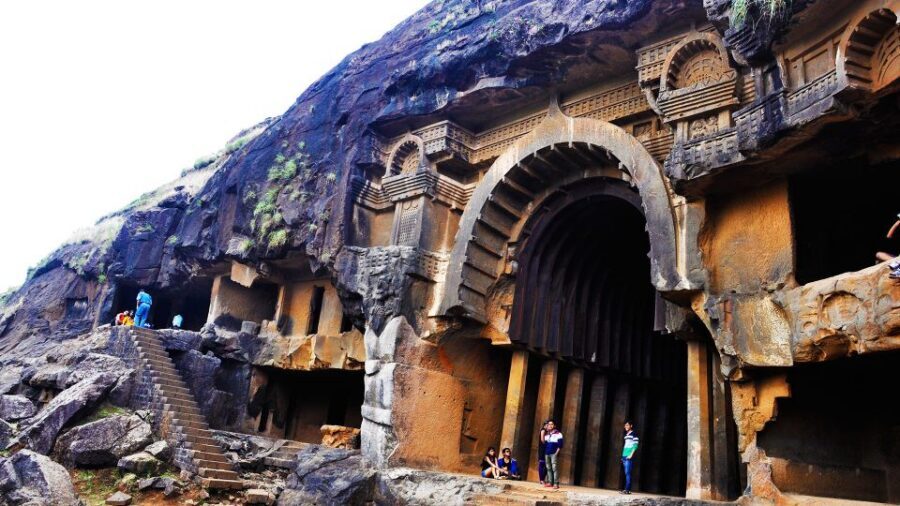
If you’ve only seen Indian temple architecture through photos, this tour changes your perspective fast. Karla and Bhaja are not “one monument you check off.” They’re a cluster of rock-cut spaces carved with intention—prayer halls, shrines, and devotional surfaces designed for people who needed shelter and community during monsoon weather.
The drive from Mumbai takes roughly three hours each way, so the big question is whether the stops justify that time. Here’s where the answer becomes easy: you’re not just walking around stone. You’re walking through an evolving story written in carvings and layout. These caves run across centuries (roughly from the 2nd century B.C. through the 5th century A.D.), and the site design reflects how religious practice shifted over time.
I also like that the day isn’t only “museum mode.” You get viewpoint breaks at Tiger Point and Monkey Point (Khandala). They’re short, but they give you a mental reset. After hours of steps and close-up looking, it’s nice to step back and let your eyes rest on the Western Ghats scenery.
That said, understand the time tradeoff. This is a full-day outing (about 8 hours), and the walking is real—especially the climb up to Karla. If you’re prone to knee trouble or you hate stairs, you’ll feel it here.
You can also read our reviews of more tours and experiences in Mumbai.


Karla Caves: the 200-step climb and the first big payoff
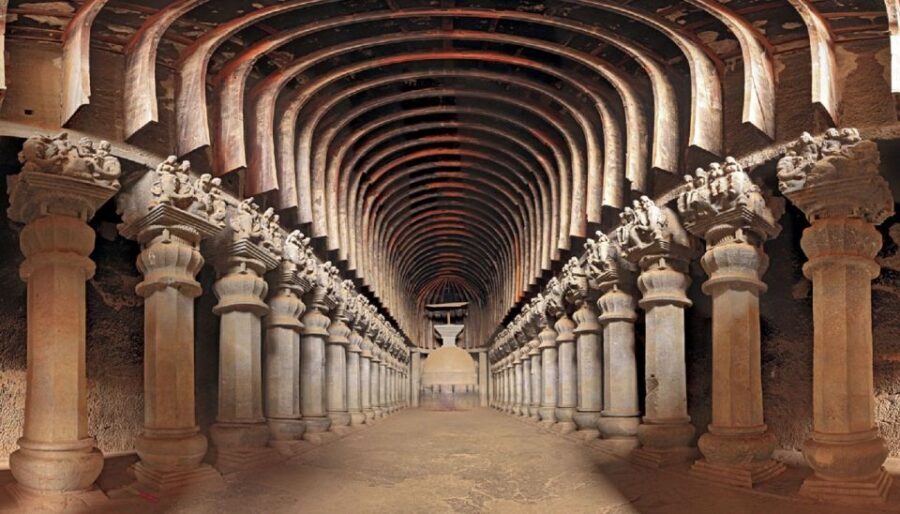
Most of your day centers on Karla, and it starts with the approach: you’ll head out from Mumbai around the late-morning window, arriving around 10:00am by the tour’s rhythm. Then comes the physical bit—ascending about 200 steep steps from the hillside to reach the cave complex.
I like how this isn’t just “go up and rush.” A guided tour helps you pace the climb and saves you from missing the key visual cues. Even before you reach the main chambers, you get a sense of how these shrines were carved directly from the hillside—how the rock itself becomes architecture.
Once inside, Karla’s layout matters. The caves were developed for Buddhist monks to use during monsoons. That practical origin makes the space feel less abstract. These weren’t built for casual sightseeing. They were built for shelter, routine, and communal worship when travel outside would be difficult.
And yes, there’s a moment where the scale hits you. Karla’s chaityas (prayer halls) include one of the largest rock-cut halls in the area—about 148 feet—created in the 1st century B.C. When you’re standing in that kind of carved volume, it’s easier to understand why people still compare Indian rock-cut architecture to cathedrals: it’s geometry, light, and craft working together.
Practical tip: go slow on the stairs, even if you’re tempted to “just get there.” This tour works best when you arrive ready to look, not just breathe through effort.
Chaityas, sculptures, and inscriptions: what to watch for
The Karla stop is where you’ll earn your “how did they do that?” moments. You’ll be guided through Buddhist sculptures and relief carvings, plus evidence of paintings and inscriptions where available. The goal isn’t to memorize dates—it’s to learn how the imagery fits the space.
Here’s what I’d focus on during the guided time:
- Chaitya prayer halls: watch for how the carved surfaces guide your eye toward the devotional focal areas.
- Relief carving depth: even from a distance, the difference between flatter ornament and deeper sculpture is obvious once you know where to look.
- Inscriptions: they can feel like background text, but they often explain patronage or context. Even if you can’t read every character, your guide can connect them to the site’s timeline.
- Paintings (where visible): remnants are often subtle. A good guide helps you spot what’s still there rather than assuming it’s lost forever.
This is also one of the best places in Maharashtra to think about religion as a “system” rather than a single building. Monks needed shelter in the rains, and the architecture reflects routine worship and community structure. That’s a different way to understand faith sites than a quick stop in a busy city.
One note from past participants: guide quality can vary. In one reported case, a guide was friendly but not well prepared about Karla’s details, which affects how much you take away from the carvings. You can’t control who you get, but you can ask your guide early what they want you to notice first, and you can stay attentive during the explanation rather than waiting until later.
Bhaja Caves and the Khandala reset points
After Karla, the day continues to Bhaja, another religious cave site close by. You’ll get another photo stop and guided visit, plus free time to look on your own. The value of doing Bhaja right after Karla is comparison. Even though both are rock-cut, they give you a broader sense of how Buddhist cave architecture evolved region to region.
Bhaja also benefits from the pacing logic of the day. If Karla leaves your head spinning with details, Bhaja gives you a chance to “zoom out” and see patterns: recurring religious layouts, design choices, and how craftsmen reused techniques across sites.
Then you’ll hit the two quick scenery breaks that most people remember most clearly because they interrupt the walking grind:
- Tiger Point: a short break (about 30 minutes) for photos and fresh air
- Monkey Point (Khandala): another short photo stop (about 30 minutes)
These stops are brief, so don’t treat them like destination hikes. Treat them like leg resets. If you’re the kind of traveler who freezes at lookouts, bring some patience—your time is limited, but the views are part of why this day works as a “full experience,” not just caves.
Timing matters here. In at least one booking account, a late pickup meant Karla was reached later than expected, and the day ran out of time so Bhaja didn’t happen. In another instance, Bhaja was skipped without being properly covered. That’s exactly why I suggest you watch the clock and set your own expectation: you want a smooth morning start so both cave sites fit.
Transport, comfort, and what your guide can change
The tour uses an air-conditioned private vehicle from Mumbai, which is a big deal in practice. Maharashtra day trips can turn uncomfortable fast once you’re in traffic. Having AC transport means you arrive ready to walk, not already exhausted from heat and delays.
You’re also getting a live guide in English, Spanish, or German, depending on the option you choose. The guide is what turns rock carvings into understandable stories—dates, symbolism, patronage, and the “why” behind the layout.
Small group format is another practical advantage. A big group can drown out the meaning. In a smaller setup, you’re more likely to ask a question and get an answer you can actually use while you’re still standing in front of the art.
That said, here’s the honest balance: not every day runs the same. One past participant described a vehicle that smelled heavily of smoke, and another mentioned driving that felt reckless. There’s also an account where the driver and guide stopped for breakfast for themselves even though it wasn’t part of the planned schedule, which then squeezed time for the sights.
You can’t micromanage someone else’s day, but you can protect your trip:
- If you’re sensitive to driving style or car conditions, note it early and ask for a comfortable pace once you’re in motion.
- If language matters, double-check the language preference before you go (one account described confusion about an additional language choice not being available).
- If you want maximum site time, keep expectations tight around pickup timing so Karla and Bhaja both happen.
Also, a quick packing reminder that’s surprisingly important: shorts are not allowed. That rule can catch people off guard. Wear breathable long pants or leggings and comfortable shoes with grip for stairs.




Price and value: is $71 a fair deal?
At $71 per person for an 8-hour outing, the “is it worth it?” answer depends on what you’d otherwise do on your own.
Here’s the value math this tour is built on:
- Transport from Mumbai: a private air-conditioned car saves you the hassle of coordinating a route and timing your day around public transit.
- Entrance fees included and the promise of skipping the ticket line: you’re spending less time stuck at checkpoints and more time looking at the sites.
- Live guide in one of three languages: Karla and Bhaja aren’t just pretty caves. The guide is what makes carvings, relief work, and inscriptions feel coherent rather than random stone texture.
- Tolls, parking, and taxes covered: this reduces surprise add-ons.
Lunch is not included, so plan for an extra cost and a bit of flexibility. You’ll have time to buy lunch at a restaurant of your choice after exploring Karla. That’s usually a good thing—you can pick what suits you—but it does mean you should carry some buffer money and keep an eye on your schedule.
There’s one caveat you should take seriously: one account claimed entrance fees were paid on-site despite the description saying they were included. That doesn’t mean it will happen to you, but it does mean you should be ready to show your booking details and ask the guide to confirm what’s covered before you hand over cash.
If you compare this tour to doing Karla and Bhaja separately, the biggest practical advantage is time. You’re not figuring out logistics while also climbing stairs. For many visitors, that alone justifies the price.
Who this tour suits best (and who should rethink)
This trip fits best if you want a guided day that blends two cave sites with quick scenic breaks, all without the stress of planning transit.
You’ll likely enjoy it if:
- You like rock-cut architecture and want help noticing what matters
- You don’t mind stairs and can handle about 200 steep steps plus more walking
- You want a guide in English, Spanish, or German to connect carvings, sculptures, and inscriptions to the bigger story
- You prefer a small group and a single schedule rather than DIY pacing
You may want to rethink if:
- You have knee or mobility issues and dread steep climbs
- Your schedule is tight and you can’t tolerate delays
- You’re very sensitive to vehicle comfort and driving style (because small issues can compound over a long day)
Also, bring long pants. The no-shorts rule is firm enough that it should change what you pack.
Should you book this Karla and Bhaja full-day tour?
I’d book it if you want one well-structured day that combines Karla’s biggest chaitya scale with Bhaja’s comparison value, plus a couple of quick Khandala viewpoints for variety. The main reason to say yes is that you’re paying for guidance and logistics, not just entry tickets.
I’d be more cautious if your top priority is a perfectly timed morning, because the day depends on pickup arriving when it should. In past accounts, late pickup or time-saving shortcuts led to reduced time for Bhaja, and that can be a deal-breaker if Bhaja is your second must-see.
My call: go for it if you can handle stairs and you’re okay with an organized day that keeps moving. If you’re the type who likes slow wandering and long pauses, plan to manage your expectations and lean on your guide to make your time count.
If you do book, take two small steps that protect the experience: wear long pants for the site rule, and arrive ready for a climb so you start viewing immediately instead of recovering from the ascent.
FAQ
How long is the tour from Mumbai?
The tour duration is about 8 hours.
Is lunch included?
No. Lunch is not included, and you’ll have time to purchase it after visiting Karla.
What’s included in the $71 price?
Entrance fees, transport in an air-conditioned car, a live guide (English, Spanish, or German depending on option), and also tolls, parking, and taxes.
Does the tour include pickup and drop-off?
Yes. Pickup is included from your Mumbai accommodation, and the tour ends with hotel drop-off.
Are entrance fees included or do I pay on site?
Entrance fees are listed as included, and the tour also notes skipping the ticket line.
What language will the guide speak?
The guide can speak English, Spanish, or German, depending on the option chosen.
Are shorts allowed at the caves?
No. Shorts are not allowed.