REVIEW · MUMBAI
Mumbai: Buddhist Kanheri Caves & optional Pagoda Temple trip
Book on GetYourGuide →Operated by Amaze Tours · Bookable on GetYourGuide
Some sights connect ancient faith to today’s practice fast. This one bundles Kanheri Caves and the optional Global Vipassana Pagoda in a single, well-paced day. I especially liked the guided read on the cave carvings and the quiet wow-factor of that huge meditation hall. The main drawback is simple: you’ll climb 50+ steps to reach the top, so it’s not a great match if you have mobility limits.
I also like that the experience is built around real logistics—hotel pickup in an air-conditioned vehicle, plus organized entry—so you lose less time to Mumbai traffic and ticket lines. A final note to keep your comfort high: wear shoes you trust, and plan for a warm, outdoor day at a national park.
In This Review
- Key things I’d circle before you go
- How This Trip Links Ancient Caves to Modern Meditation
- Getting to Sanjay Gandhi National Park: Big-city Nature with AC Help
- Kanheri Caves: Basalt Walls, Buddhist Carvings, and the Meaning of Krishnagiri
- The Top of Kanheri: Plan for 50+ Steps and Better Shoes
- Global Vipassana Pagoda: A Pillarless Stone Dome Made for Quiet
- Guides and Drivers: When the Stones Get a Voice
- Price and Time: Is It Good Value?
- Who This Tour Fits Best (and Who Might Want to Skip)
- What to Bring (and What to Leave at Home)
- Should You Book This Tour?
- FAQ
- How long is this experience?
- Does it include hotel pickup and drop-off?
- What’s included in the ticket price?
- Is the Pagoda trip optional?
- Do I need to climb stairs at Kanheri?
- What should I wear or avoid?
- Is it suitable for people with mobility impairments?
- Is there an option to cancel or book flexibly?
Key things I’d circle before you go
- Sanjay Gandhi National Park in a megacity setting: big nature energy without leaving Mumbai limits.
- Kanheri Caves span centuries: carvings and inscriptions dating roughly from the 1st century BC to the 10th century AD.
- A real guided walkthrough: you get facts and context from your English-speaking local guide (often with humor).
- The optional ferry link: the Pagoda add-on includes a short ferry ride to get there.
- The Pagoda’s scale: a stone dome built without supporting pillars and described as the world’s largest meditation hall.
How This Trip Links Ancient Caves to Modern Meditation
Mumbai can feel like a nonstop blur. What I like about this tour is that it slows you down without wasting the day. You start in a forested national park setting, then move into a place made for silent focus. It’s a neat contrast: centuries of rock-cut Buddhist worship at Kanheri, then today’s meditation culture at the Global Vipassana Pagoda.
I also appreciate the structure. Even with option choices, the pace stays simple: guided time where it matters, enough time to look closely, and then move on before you feel cooked by heat.
If you’re the type who enjoys “why this matters” explanations, this works well. It’s not just wandering around stones—it’s designed so the guide can point out what you’re looking at.
You can also read our reviews of more tours and experiences in Mumbai.


Getting to Sanjay Gandhi National Park: Big-city Nature with AC Help
The day starts with hotel pickup if you choose that option, using an air-conditioned vehicle. That’s not a small perk in Mumbai. It means you can get to the park with less stress and less time figuring out transport on your own.
You’ll be visiting one of the most visited parks in the world, and that context matters. You’re not going to an empty scenic corner; you’re going somewhere busy, because it’s worth visiting. In practice, that can mean lots of people at entrances and at key viewing points—but it also means the area is well connected and supported.
Your meeting point is the entrance gate of Sanjay Gandhi National Park. If you don’t select pickup, you’ll head there and join the group right at the start.
Kanheri Caves: Basalt Walls, Buddhist Carvings, and the Meaning of Krishnagiri
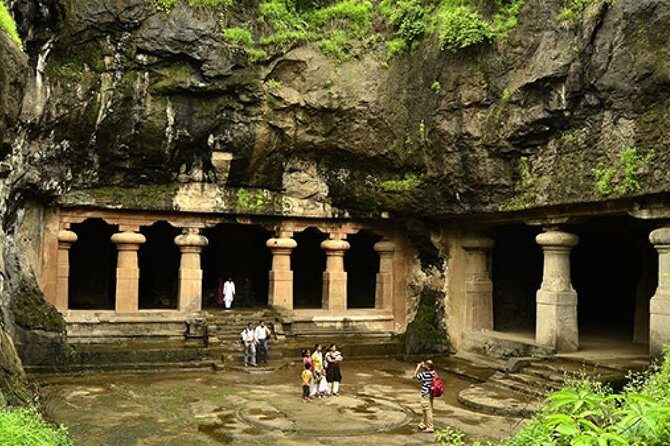
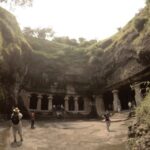
Kanheri is where the trip earns its historical weight. The caves are carved into a massive basalt outcrop on what’s described as the Sanskrit Krishnagiri—meaning Black Mountain—of Salsette. Basalt matters here. It’s why the site looks the way it does: heavy rock, dramatic tones, and surfaces that have held details for a very long time.
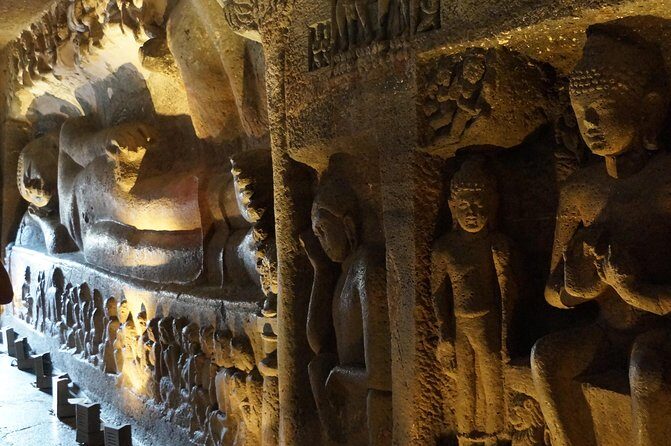
The Kanheri complex is a group of caves and rock-cut monuments used for Buddhist worship. On your guided visit (about 2.5 hours), you’ll get to see Buddhist sculptures and relief carvings, plus paintings and inscriptions. The dates you’ll hear span a long stretch: from about the 1st century BC to the 10th century AD. That’s hundreds of years of belief, renovation, and artistic change in one place.
What you’ll likely notice when someone points it out: the carvings aren’t just decoration. They’re part of how people studied, prayed, and remembered teachings. Even if you don’t know the terminology, your guide can help you connect the visual cues to the purpose of the site.
And yes, the cave setting is a bit of a mood-change from the city. Expect cooler air inside rock-cut spaces, a shift in sound, and that feeling of being in a place designed for contemplation.
The Top of Kanheri: Plan for 50+ Steps and Better Shoes
Here’s the practical reality you should take seriously: you need to climb more than 50 steps to reach the top of the Kanheri Caves. That’s built into the experience, not an optional detour.
So before you book, ask yourself two questions:
- Can you comfortably do a flight of stairs outdoors and on uneven stone?
- Are your shoes stable enough for steps that may be worn smooth?
You’re also told not to wear shorts. I’d treat that as a comfort rule too. You’ll be moving around outdoors and inside a historical site, and covering up helps you feel better while you walk.
Also bring sunglasses and—if the day’s bright—something to protect your eyes. A clear sky can make the open sections feel warm fast.
The tour isn’t suitable for people with mobility impairments. If that’s you, it’s worth skipping this one to avoid turning the day into a battle.
Global Vipassana Pagoda: A Pillarless Stone Dome Made for Quiet
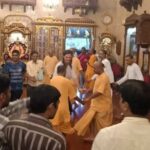
If you add the Pagoda option, the tour shifts from caves to a major modern pilgrimage site. You’ll travel by a short ferry ride to get there, then spend about an hour visiting.
The Global Vipassana Pagoda is described as the world’s largest stone dome built without any supporting pillars, and it’s also said to be the largest meditation hall in the world. That combination is what makes it so striking. The structure gives you scale instantly, and the purpose gives you a reason to slow your breathing.
What I think works for most visitors is that you don’t have to be an expert in meditation to appreciate the setting. The building’s design naturally supports quiet. You’re in a space made for sitting and reflecting, surrounded by the kind of calm that doesn’t come from effort—it comes from architecture and purpose.
If you like to photograph, the dome and surrounding views can be rewarding. If you prefer a quieter day, this stop still delivers, because it’s built to do less—less talking, less rushing, more stillness.





Guides and Drivers: When the Stones Get a Voice
A huge part of whether this tour feels special is your guide. The names you might encounter include Ganesh, Alam, and others, and they bring different styles—but the common thread is clear: they make the site easier to understand.
In particular, Ganesh comes up as someone who combines detailed explanations with a fun, lively approach. Alam is mentioned as very professional and accommodating, and one helpful detail stood out: he’s described as an avid cloud reader, which can make a monsoon-season day smoother. That kind of practical awareness matters in Mumbai, where weather can change fast.
Your guide will also likely help connect what you see in the caves with why it was made—how people used these spaces for worship and, for some visitors, even the feeling of meditation in the caves. Even if you don’t meditate, the guidance helps you experience the place as more than a historical stop.
One more tip: if you’re the type who wants extra cultural context—how Buddhism connects to daily life, what the carvings represent, how styles changed over time—say so. One visitor noted they would have liked more history and culture explained. So think of this as a chance to ask your guide to go deeper.
Price and Time: Is It Good Value?
At about $30 per person, this tour is priced for what you get: guided time in a major archaeological site, plus optional access to a huge modern monument. You’re also not carrying the whole logistics burden yourself.
Here’s what the value looks like in real terms:
- You get an English language tour guide.
- You have transport in an air-conditioned vehicle (if pickup is selected).
- Entrance fees for Kanheri Caves and the national park are included.
- A ferry ticket is included for the Pagoda option.
- Ticket line time is reduced with skip-the-ticket-line support.
That’s a good deal if you’d otherwise pay for transport, entry, and guidance separately. It’s also a good deal for limited time, because you’re looking at a 3–7 hour window depending on options.
If you want to see both Kanheri and the Pagoda, your day includes two very different environments. If you’re mostly focused on archaeology, you may prefer just the Kanheri portion—still guided and still the main draw.
Who This Tour Fits Best (and Who Might Want to Skip)
This tour fits best if you:
- Love old monuments and want help understanding what you’re seeing.
- Prefer guided structure over wandering.
- Want a Mumbai day that’s more outdoors than shopping streets.
- Are comfortable climbing more than 50 steps for the Kanheri top section.
It may not fit if you:
- Need a step-free route (it isn’t suitable for mobility impairments).
- Are sensitive to heat and long walks outdoors.
- Want a purely leisurely pace with no guided explanation.
If you’re traveling solo or as a couple, the guided format makes it easy to enjoy the experience without needing to plan every detail. If you’re with a larger group, the structure also keeps everyone moving without chaos.
What to Bring (and What to Leave at Home)
You’ll want to come prepared because you’re moving between outdoor park areas and indoor/outdoor historical spaces. Bring:
- Passport or ID card
- Comfortable shoes
- Sunglasses
Avoid shorts, since they’re not allowed.
The biggest “bring” is practical: shoes with good grip. You’ll be climbing stairs and walking on surfaces that come with age and wear.
Should You Book This Tour?
I’d book it if you want a guided way to see one of Mumbai’s most important Buddhist sites, and you like the idea of pairing that with the Global Vipassana Pagoda if you can handle the steps and the pace.
The strongest reason to choose this tour is the combo: Kanheri Caves with carved Buddhist art spanning many centuries, plus the optional Pagoda add-on that brings you from carved rock into a purpose-built meditation space. Add in AC transport and included entrance items, and the price starts to look fair.
If stairs are a concern, skip this one and look for a more step-light option. If you’re comfortable on your feet and you enjoy learning while you look, this tour gives you a lot to take home—clear images, better context, and a story that moves from past worship to present-day meditation.
FAQ
How long is this experience?
The duration is listed as 3 to 7 hours, depending on the option you select.
Does it include hotel pickup and drop-off?
Hotel pickup and drop-off are included if you select the pickup option. If not, the meeting point is the entrance gate of Sanjay Gandhi National Park.
What’s included in the ticket price?
Included items are an air-conditioned vehicle, an English language tour guide, hotel pickup/drop-off if selected, entrance fees to Kanheri Caves and the national park, and a ferry ticket (for the Pagoda option).
Is the Pagoda trip optional?
Yes. You can choose an option that includes the Global Vipassana Pagoda.
Do I need to climb stairs at Kanheri?
Yes. You will need to climb more than 50 steps to reach the top of the Kanheri Caves.
What should I wear or avoid?
Comfortable shoes are recommended, and shorts are not allowed.
Is it suitable for people with mobility impairments?
It is not suitable for people with mobility impairments.
Is there an option to cancel or book flexibly?
Free cancellation is available up to 24 hours in advance for a full refund, and you may have a reserve now & pay later option (details depend on availability).