REVIEW · VARANASI
Highlights of the Varanasi & Sarnath (Guided Fullday Sightseeing Tour by Car)
Book on Viator →Operated by Yo Tours · Bookable on Viator
Varanasi teaches religion by walking and watching. This full-day guided route strings together Sarnath’s Buddha story and then the sights along the Ganga’s ghats and evening ritual locations. I especially like the way the day connects Buddhism’s origins to Hindu sacred places without feeling like two separate tours. One thing to think about: it’s a packed 8-hour schedule with several stops that can have separate entry fees, and lunch plus bottled water are on you.
If you like a guide who keeps things moving, you’ll probably enjoy the storytelling style here—plus a car with A/C to make the transfers easier in heat and traffic. In past outings, a guide named Jain has been highlighted for blending humor with clear explanations, which helps when the day is fast. Price-wise, it’s sold as a private group up to 3, but the exact value depends on whether you need to cover extra site tickets during the day.
In This Review
- Key Points Worth Knowing Before You Go
- Sarnath: Where the Buddha’s First Sermon Shapes the Day
- The Sarnath Museum Stop: Buddhist Remains in One Place
- Sarang Nath Temple: A Quick Shiva Detour That Adds Depth
- Dhamek Stupa and Chaukhandi Stupa: The Story Points You Can See
- Ramnagar Fort: Royal Banaras With Astronomical Flair
- Banaras Ghats: The 88-Rail System of Sacred Riverfronts
- Shri Kashi Vishwanath Temple (Golden Temple): Shiva’s Main Center
- Assi Ghat to Manikarnika Ghat: From Devotion to Cremation Realities
- Dasaswamedh Ghat and the Ganga Aarti Location
- The Car, the Pace, and How to Prepare for an 8-Hour Circuit
- Price and Logistics: Is $131.60 a Good Deal?
- Who Should Book This Varanasi and Sarnath Day by Car
- Should You Book It?
- FAQ
- How long is the Varanasi & Sarnath guided day tour?
- What is the price and group size for this tour?
- Is pickup included?
- Does the tour include lunch or bottled water?
- Is bottled water and snacks provided?
- Are admission tickets included for all stops?
- What languages does the guide speak?
- What happens if I need to cancel, or if weather is poor?
Key Points Worth Knowing Before You Go
- Sarnath first, then Varanasi: you start with the Buddhist roots before switching gears to Shiva-centered Banaras.
- Short stops add up: many sights are about 30 minutes, so you’ll want to keep photos quick and questions ready.
- Some major sites are ticketed separately: the museum and several temples/monuments are listed as admission ticket not included.
- A/C car plus snacks: comfort is built in for the ride, but lunch and bottled water aren’t included.
- Ghats by design: you hit both the famous classics and places tied to cremation rituals and daily worship.
- Energy talk is part of the route: you’ll hear practical ideas tied to balancing energy systems during the ghats portion.
Sarnath: Where the Buddha’s First Sermon Shapes the Day
This tour starts in Sarnath, the key Buddhist pilgrimage site tied to one major moment: the Buddha’s first sermon after enlightenment. That matters because it sets the emotional tone for the day. Instead of jumping straight into crowded streets, you begin with a calmer, more focused place to understand why Sarnath became so important.
You’ll then spend time at the Sarnath Buddhist trails and nearby sacred spots. Even if you only know the story at a surface level, the guide’s explanations help you place the landmarks in sequence. It’s also a nice strategy for your schedule: starting outside the densest parts of Varanasi can help you get your bearings fast.
A practical note: Sarnath is still an active religious area, so expect foot traffic and people moving between sites. The upside is that you get real context, not just empty monuments.
You can also read our reviews of more guided tours in Varanasi


The Sarnath Museum Stop: Buddhist Remains in One Place
After the main Sarnath area, you go to the Sarnath museum, described as the oldest site museum of the Archaeological Survey of India. This is the best part for me when someone wants more than just visuals. Seeing artifacts together helps turn the names and stories into something physical.
The museum time is around 30 minutes. That’s enough to skim highlights without turning your day into a slow crawl, but not long enough for deep study. Admission isn’t included for this stop, so budget a little extra if you want the full museum experience.
If you’re someone who likes to understand how sites are preserved and classified, this museum break gives you that background without stealing too much time from the temples and stupas.
Sarang Nath Temple: A Quick Shiva Detour That Adds Depth
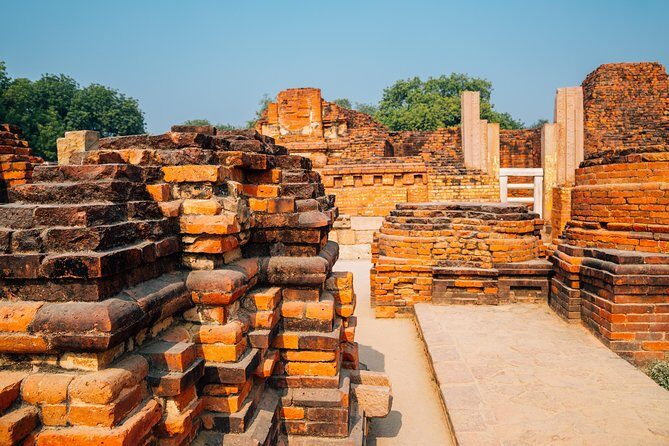
Back in the Sarnath area, you visit the Sarang Nath temple, dedicated to Shiva. It’s tied to Shiva in a way that’s easy to overlook when you’re focused on Buddhism. One name linked here is “deer lord,” which gives you a useful reminder: India’s sacred geography often overlaps across faiths.
This stop is shorter—about 30 minutes—and the admission is listed as free. Because it’s brief, it works well inside a day where you’re switching themes. You’ll leave with a stronger sense that Varanasi isn’t only one religion or one storyline. It’s a layered spiritual city.
Dhamek Stupa and Chaukhandi Stupa: The Story Points You Can See
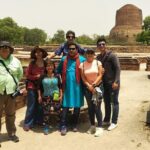
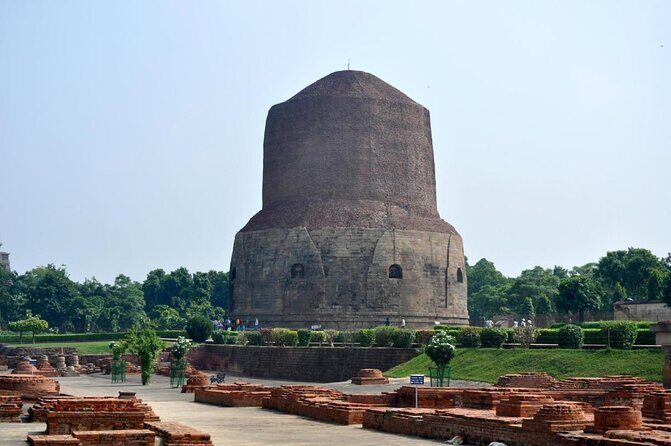
The route then includes two classic Sarnath stupas: Dhamek and Chaukhandi. These aren’t just “old structures.” Dhamek Stupa is presented as the exact spot associated with the Buddha’s first sermon, and it connects visually to the eightfold path leading toward nirvana.
Chaukhandi Stupa is tied to a different moment—Buddha’s reunion with his five companions (the panchavargiya bhikshus). So in a single run, you’re tracking multiple steps in the early Buddhist story.
Each of these stops is around 30 minutes, and admission is listed as not included. In other words: don’t assume every site is covered in the package. If you care about these specific stupas, it’s worth confirming what you’ll pay on the spot so your day doesn’t get awkward.
Ramnagar Fort: Royal Banaras With Astronomical Flair
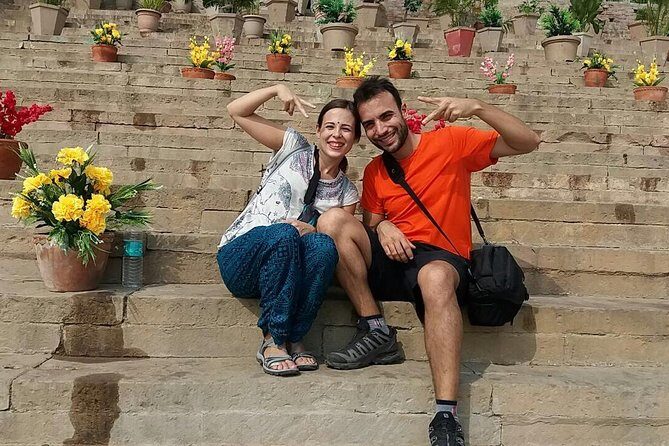
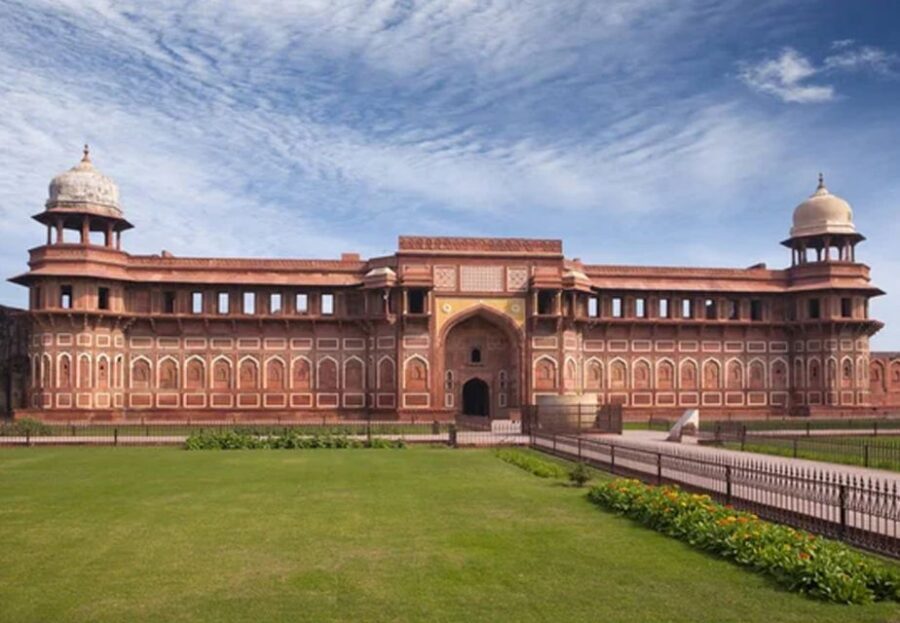
After Sarnath, the day shifts into Banaras proper with Ramnagar Fort. It’s described as a majestic palace-like complex with both architectural excellence and astronomical brilliance, built by the King of Banaras in 1750 AD.
This is your one longer stretch in the itinerary—about 1 hour. It gives you a breather from temples and religious riverfront scenes. It also adds context for how power, culture, and religion shaped the city. Even if you’re not a royal-history person, the fort stop helps you understand why Varanasi’s spiritual life has such strong institutions around it.
Admission is listed as not included, so again, plan on possible extra fees depending on what you want to enter.



Banaras Ghats: The 88-Rail System of Sacred Riverfronts
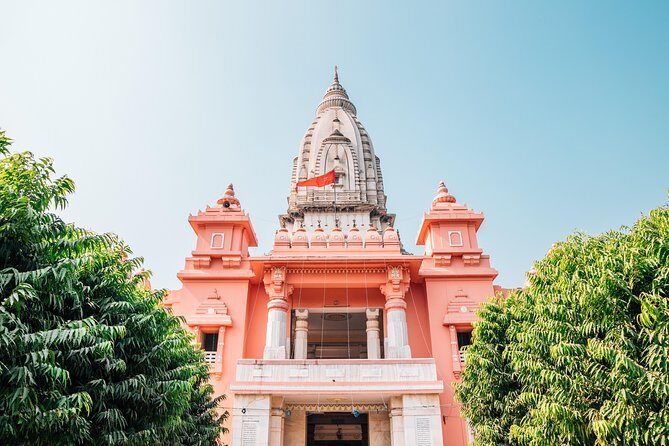
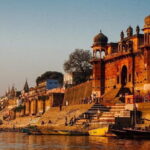
Next comes the ghats—the heart-shaped geography of Varanasi that people come for, even before they understand the theology. You’ll hear that most ghats are over 300 years old and that there are nearly 88 ghats. The tour focuses on major ones, including Dashashwamedh, Manikarnika, and Harishchandra Ghat.
You get about 1 hour here. That’s good time to walk, photograph, and absorb the rhythm of daily life at the river. Ghats can overwhelm you fast if you go in cold, so a guided structure helps you avoid wandering in circles.
One caution: the action concentrates where the city wants you to stand still. You might feel stuck between crowds and steps. If you’re sensitive to noise or want quiet, choose your photo moments carefully and don’t expect a perfect calm scene.
Shri Kashi Vishwanath Temple (Golden Temple): Shiva’s Main Center
Then you visit Shri Kashi Vishwanath Temple, often called the Golden Temple. This stop is about 30 minutes and focuses on the main deity, Vishwanatha, explained here as the ruler of the universe.
The complex includes other small temples, plus a small well described as a wisdom well. That kind of detail matters because it pushes you beyond the famous name and helps you notice the layout and the local devotional logic.
Admission is listed as not included, so it’s another spot where your total cost may rise a bit. Also, temple areas typically run on their own timing and flow. Go with a flexible mindset and treat this as a visit where worship moves on a schedule even if your tour is timed.
Assi Ghat to Manikarnika Ghat: From Devotion to Cremation Realities
From the temple complex, the day moves back to the river with Assi Ghat first. Assi is described as the furthest south of the main ghat region and includes Shri Durga Temple. This is about 30 minutes, with admission listed as free. It’s a gentler landing into the riverfront atmosphere because it feels more devotional and less confrontational than the next stop.
Then you go to Manikarnika Ghat, the burning ghat. It’s described as the place where dead bodies are cremated regularly and it’s considered holiest among the sacred riverfronts, tied to moksha—salvation—through the cremation process.
This stop can feel intense, so I’d be honest: if you don’t handle death rituals well, you may want to slow down, keep your distance when needed, and don’t try to treat it like a photo scavenger hunt. The guide’s context matters here, because it turns the scene from shock value into meaning.
Both Assi and Manikarnika are listed as admission ticket free on the route, which is a nice savings point in the middle of a day with several ticketed sites.
Dasaswamedh Ghat and the Ganga Aarti Location
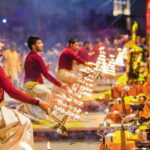
After Manikarnika, you reach Dasaswamedh Ghat. It’s described as the oldest and holiest ghat, and the heart of the action where the famous Ganga aarti takes place every evening.
Your time here is about 30 minutes, and admission is listed as free. The key value is that you’re not just looking at the riverfront—you’re standing at one of the main ritual nodes that makes Varanasi famous after dark.
You’ll also walk around other ghats of Kashi and learn energy transformation techniques tied to balancing your energy system. Even if you’re skeptical of the spiritual framing, you might find the practical talk helps you slow down and focus, especially after the heavy emotional contrast of Manikarnika.
Timing note: the aarti happens every evening, but whether you catch the full show depends on when you arrive. Either way, you’re visiting the correct place to understand why people treat this river as more than scenery.
The Car, the Pace, and How to Prepare for an 8-Hour Circuit
This is a guided full-day sightseeing tour by car, lasting about 8 hours. You’re in and out of sites constantly—most of them around 30 minutes, with a couple longer stops for the museum and fort.
That pacing is a trade-off. You’ll see a lot, but you won’t have hours to linger at each place. I like this format for first-time visitors who want a coherent route and don’t want to plan transport between far-flung landmarks.
What’s included helps: you get an air-conditioned vehicle and snacks. What’s not included matters more than you’d think. Lunch and bottled water aren’t provided, and temple/ghat walking can make you thirsty faster than expected. Bring your own water, especially if your body runs hot.
Because the tour is private and only your group participates, you can ask small questions on the fly without waiting for a bigger crowd to move.
Price and Logistics: Is $131.60 a Good Deal?
The price is listed as $131.60 per group (up to 3). When you split a private price across 2 or 3 people, it becomes much easier to justify compared with hiring separate guides or arranging a custom driver plus ticket handling.
What you do get for that money is real value:
- a trained guide who can speak English & Hindi
- an air-conditioned vehicle
- all fees and taxes listed as included
- snacks
- pickup offered
Where the value can wobble is in the ticketing details. Some stops are marked admission free, while others are marked admission ticket not included, including the museum and several major spiritual landmarks and monuments. So the final cost can rise depending on which sites you enter fully.
One important caution: pricing fairness. If you’re comparing booking options, it’s worth asking what’s included versus what’s paid on arrival. If your hotel or another desk quotes a lower bundled rate for the same day, use that as a sanity check, not as a reason to panic. The goal is that you pay for the convenience and guidance you’ll actually use.
This tour is often booked about 13 days in advance, so if you’re traveling during a busy season, don’t wait until the last minute.
Who Should Book This Varanasi and Sarnath Day by Car
This tour suits you if:
- you want a structured first visit that connects Sarnath and Varanasi instead of treating them as separate trips
- you like storytelling and short stops over long museum sessions
- you’re okay with a full day schedule and walking around ghats
It might not suit you if:
- you want a slow, deep museum-and-temple day with lots of downtime
- you’re extremely cost-sensitive and want zero extra entry fees
- the idea of seeing cremation activity feels too hard for you
If your main goal is to understand both the early Buddhist sites and the Shiva-centered spiritual rhythm of Banaras, this route gives you a strong framework.
Should You Book It?
Book it if you want a guided, efficient day that makes sense of the main landmarks from Buddha’s first sermon through the sacred riverfront rituals. The guide format, the A/C car, and the way the day is sequenced from Sarnath into Varanasi are practical wins.
Consider skipping or negotiating a different approach if you expect to spend a lot on additional entries, or if you’re uncomfortable with cremation-related rituals at Manikarnika. And before you commit, compare what you’d pay for ticketed sites separately, so the final bill feels fair.
FAQ
How long is the Varanasi & Sarnath guided day tour?
It runs for about 8 hours.
What is the price and group size for this tour?
The price is $131.60 per group, for groups up to 3 people. Only your group participates, so it’s a private experience.
Is pickup included?
Pickup is offered, and the tour is also described as being near public transportation.
Does the tour include lunch or bottled water?
Lunch is not included, and bottled water is not included either.
Is bottled water and snacks provided?
Snacks are included, but bottled water is not.
Are admission tickets included for all stops?
No. Some stops are listed as admission ticket free, while others are listed as admission ticket not included (including the Sarnath museum, Dhamek Stupa, Chaukhandi Stupa, Ramnagar Fort, and Shri Kashi Vishwanath Temple).
What languages does the guide speak?
The guide can speak English & Hindi.
What happens if I need to cancel, or if weather is poor?
You can cancel up to 24 hours in advance for a full refund. The experience requires good weather; if it’s canceled due to poor weather, you’ll be offered a different date or a full refund.