Mumbai in four hours? Yes, and it’s sensory. This tour maps the city through real daily life—from fish-market rhythms to the lunch-box system—while also tying Mumbai’s older roots to what you see today. You get a front-row seat to how the city grew from a small fishing village into a major hub, using stops that feel practical, not touristy.
I especially like the Sassoon Dock stop, because it shows commerce the way it actually happens: fishermen, wholesalers, and a fish market that’s been running for generations. I also enjoy seeing the supply-chain magic at Churchgate, where the lunch box system and dabawallas become easy to understand, even if you’ve never thought about delivery logistics before.
One consideration: this is a compact half-day schedule, so you’ll spend a good chunk of time walking and looking closely while moving from place to place. If you prefer slow museum pacing or long sit-down breaks, you may want to plan extra downtime afterward.
In This Review
- Key points to know before you go
- A half-day that uses your five senses (not just your camera)
- Sassoon Dock: where old docks meet wholesale reality
- Colaba’s fishing village walk: a shoreline you can almost feel
- Crawford Market (Mahatma Jyotiba Phule mandai): architecture with real purpose
- Churchgate Station and the lunch box system: watching logistics become legend
- ISKCON Youth Services at Chowpatty: a Hindu ceremony you can observe respectfully
- Banganga Tank: a calmer ending with older-city atmosphere
- The home visit: learning how communities actually live
- Price and what $89.36 buys you in real terms
- Who this tour suits best (and who might skip it)
- Should you book Hidden Jewels and Offbeat Tour of Mumbai?
- FAQ
- How long is the tour?
- What time does it start?
- Does the price include pickup and drop-off?
- Are there entry fees at the stops?
- Is lunch included?
- What do I need to know about confirmation after booking?
Key points to know before you go
- Sassoon Dock first: you start with an authentic, historic fish-market scene that sets the tone for the whole day.
- A real Colaba fishing village walk: not a staged viewpoint, but a street-level look at waterfront life.
- Crawford Market architecture + produce hustle: you get both function and style in one stop.
- Churchgate and the lunch box system: dabawallas in motion make an idea click fast.
- A Hindu ceremony at ISKCON Youth Services: you’ll see how devotion plays out in a living setting.
- A Banganga Tank time-jump: you end up with older-city atmosphere right in central Mumbai.
A half-day that uses your five senses (not just your camera)
If you only know Mumbai as a skyline, this kind of tour helps you reset your focus. You start in places where people work and trade. You watch systems in action. You see how religious life and everyday routines share the same streets. It’s the kind of tour that helps you read the city, not just photograph it.
I like that the pacing is built for a short visit. It’s about roughly four hours, starting at 9:00 am, with pickup and drop-off from your accommodation. You’re also traveling by an air-conditioned vehicle, which matters when you’re switching between markets, stations, and waterfront areas.
Because the tour is run by Jewish India Tours, you can also expect your guide to connect what you’re seeing to Mumbai’s communities—how different groups lived alongside each other and influenced local customs. In past similar outings, guides such as Hanna, Joshua, and Ritu were praised for turning history into something you can actually understand on the sidewalk.
You can also read our reviews of more tours and experiences in Mumbai.

Sassoon Dock: where old docks meet wholesale reality
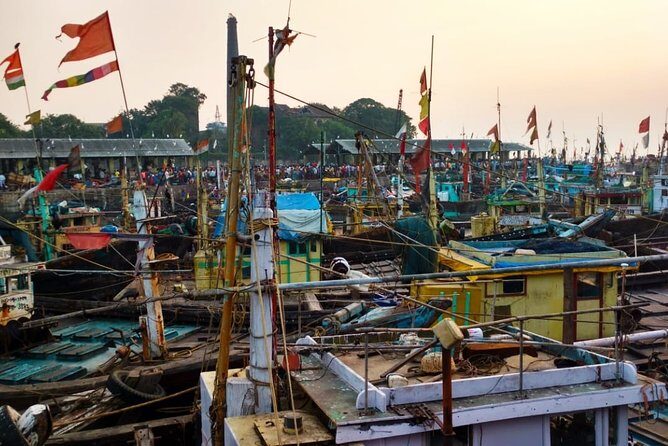
Your day opens at Sassoon Dock, one of the oldest docks and also one of the city’s largest fish markets. This stop is special because it’s not about quiet sightseeing. It’s about production and distribution—how fish moves from fishermen and boats into wholesaling, and how Mumbai’s food system keeps flowing.
Even if fish markets aren’t your thing, this stop is useful for your overall Mumbai understanding. It explains why Mumbai grew the way it did. A fishing village becomes a city when trade scales up. Watching that happen in real time gives you context for the rest of the tour.
What to watch for: the pace of work, the way stalls and buyers operate, and how the dock scene feels like a workplace rather than a photo set. Admission isn’t a paid requirement here, so you can focus on observing instead of paperwork.
Possible drawback: fish markets can be visually intense and very sensory. If you’re sensitive to strong smells or prefer lighter-footed city walks, you might want to mentally prepare for a strong start.
Colaba’s fishing village walk: a shoreline you can almost feel
Next up is Colaba, where you walk through a fishing village. This is a different angle on the same theme: Mumbai’s earliest character didn’t vanish when the city modernized. You can still spot traces of the old coastline life as you move along the streets.
I like this stop because it keeps you from treating Mumbai like one big “downtown” blur. Colaba is a reminder that neighborhoods with livelihoods shaped the city’s growth. Instead of only seeing buildings, you’re seeing people’s daily patterns—what their streets look like, how the water-edge shapes movement, and why “location” matters.
This is also a free-entry stop, which means you’re not paying to enter the scene. You’re simply walking through it, using your eyes and ears to understand the layout.
Tip for you: bring a little patience. This kind of street-level walking works best when you accept that you’re part of the flow, not watching from a distance.
Crawford Market (Mahatma Jyotiba Phule mandai): architecture with real purpose
Then you head to Crawford Market, now known as Mahatma Jyotiba Phule mandai. This is a wholesale fruit and vegetable market and one of the oldest markets in Mumbai. It’s also famous for its architecture, which is a great combo: you get beauty, but the building is still doing its job.
Here’s why this matters. Markets are where you learn how cities feed themselves. They’re also where you see how trade and infrastructure develop. By the time you reach this stop, you already saw fish and waterfront life. Now the tour shifts to produce, and suddenly the city’s supply chain feels more complete.
The time here is short, about 20 minutes, so I’d use it like a quick scavenger hunt: look at the building lines, scan the crowd movement, and notice how wholesale works at speed. Admission isn’t required for this stop either, so the value comes from your guide’s framing and what you pay attention to in the room.
Churchgate Station and the lunch box system: watching logistics become legend
The Churchgate Railway Station stop is one of the most memorable parts of the day if you enjoy figuring out how things work. This is where you’ll witness the amazing lunch box system and see the dabawallas in action.
Even if you know the basics, seeing it nearby makes it feel different. It becomes more than a quirky story. You start to see the system as repeatable process—timed coordination, delivery discipline, and a network that keeps functioning because people have practiced it until it’s almost automatic.
This is also a great “Mumbai skills” moment. Railways and delivery systems explain how the city handles scale. If you want to understand why Mumbai feels like it runs on schedules—even when street life is anything but calm—this stop gives you a handle.
What makes it practical: the stop is about 20 minutes, so you get the core experience without turning your day into a long wait. Admission isn’t required here either. Your guide helps you connect what you see to how the system supports office workers and everyday routines.





ISKCON Youth Services at Chowpatty: a Hindu ceremony you can observe respectfully
At ISKCON Youth Services (ISKCON Chowpatty), you visit a Hindu temple and see a religious ceremony. This stop adds a different kind of learning: Mumbai isn’t only trade and transport. It’s devotion, ritual, and community expression—played out in spaces you pass by without noticing unless someone explains what you’re looking at.
The time here is about 30 minutes, which is just enough to observe and understand the atmosphere without dragging you through a long service. Your guide’s job is especially important here. Religious ceremonies can look symbolic from the outside. With the right context, they become meaningful, not confusing.
Consideration for you: temple settings often come with unspoken norms. Even though the tour details here don’t list dress or rules, it’s smart to carry yourself with extra respect—slow down, avoid blocking sightlines, and follow your guide’s lead.
Banganga Tank: a calmer ending with older-city atmosphere
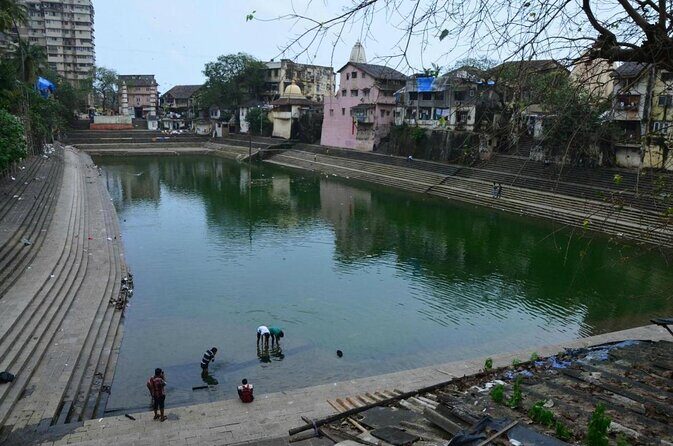
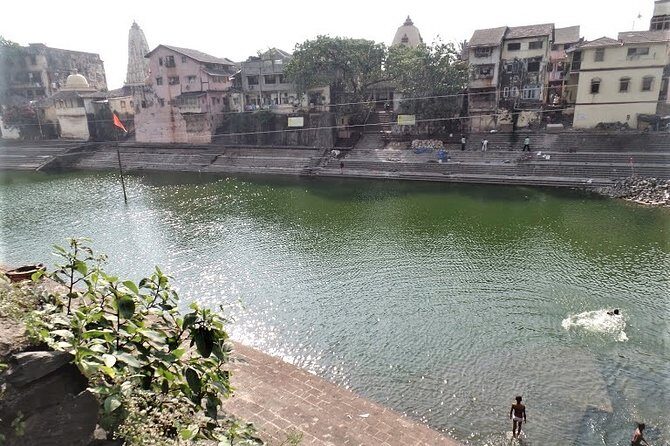
The final stretch takes you to Banganga Tank, where you can see how the city looked about a century ago. This isn’t just a photo stop. It’s a mood shift. After fish markets, wholesale produce, and the speed of transit systems, this place gives you a sense of continuity.
Banganga Tank works well as a closing scene because it reminds you that cities don’t move in one straight line. Layers stay. People keep returning. Places preserve memory through layout and everyday use.
You’ll spend about 45 minutes, which is long enough to wander slowly, notice small details, and let the day settle in your head. Admission is free for this stop too, so your “cost” is time and attention—exactly what you’re buying with a tour like this.
The home visit: learning how communities actually live
One highlight listed for this experience is a home visit. That’s the part that tends to change the way you remember a city. Seeing a street and a market is great, but homes show you the everyday logic of life—what people prioritize, how they organize routine, and how cultural habits survive in a modern neighborhood.
The details of where and how the home visit fits into the day aren’t spelled out beyond the fact that it’s included, but the value is clear: it’s your chance to move from observing Mumbai to understanding Mumbai through a family’s lens.
What you’ll get out of it: more context for cultural stories your guide mentions, and a deeper sense of how Mumbai’s communities overlap—especially since the tour is operated by Jewish India Tours, which means you may hear how Jewish customs intersect with local life and how traditions show up alongside other religious practices.
Price and what $89.36 buys you in real terms
At $89.36 per person for about four hours, this isn’t a “budget only” tour, but it also isn’t priced like an all-day private driver for sightseeing buses. You’re paying for four main things that actually matter:
- Pickup and drop-off from your accommodation
- An English-speaking experienced guide who connects the dots between stops
- An air-conditioned vehicle for the in-between travel
- Bottled water, plus a mobile ticket for smoother access
On top of that, the scheduled stops are described as having free admission requirements, so you’re not stacking extra entry-ticket costs on your day.
If you’re traveling with a small group, the private setup is another value point: you’re not sharing the day with random strangers, and you can likely move at a pace that suits your group. There are also group discounts mentioned, which can make this feel like a smarter deal if you’re traveling with friends.
For your money, you get a “systems tour”: fish market supply, produce trade, rail-based delivery logistics, and ritual life. That’s a lot to squeeze into one half day, and it’s exactly why it works.
Who this tour suits best (and who might skip it)
This is a strong fit if you:
- Want to understand Mumbai as lived-in space, not just monuments
- Like markets, street-level scenes, and watching how systems work
- Prefer a guide who explains what you’re seeing rather than leaving you to guess
It may be less ideal if you:
- Want lots of museum time and quiet interiors
- Don’t like sensory, working-market environments
- Get restless with a packed schedule
Also, if you’re short on time, this tour is easy to plug into a busy Mumbai plan. You start at 9:00 am and you’re done in time to enjoy the evening your way.
Should you book Hidden Jewels and Offbeat Tour of Mumbai?
I’d book it if your goal is to understand Mumbai’s “how it runs” side in a short visit. The combination of Sassoon Dock, the dabawallas lunch box system at Churchgate, a temple ceremony, and a closing scene at Banganga Tank gives you multiple angles on the city’s logic—work, transport, faith, and older layers.
It’s also a good choice if you want local context from a guide who’s been praised for being engaged and adapting when needed. Guides like Joshua have been specifically noted for keeping things organized and pivoting when the day throws an obstacle. That matters when you’re planning a half day.
Before you go, I’d mentally prepare for a compact walking day with active public spaces. If that sounds like your kind of travel, you’re going to enjoy how quickly the city starts making sense.
FAQ
How long is the tour?
The tour runs for about 4 hours.
What time does it start?
It starts at 9:00 am.
Does the price include pickup and drop-off?
Yes. Pickup and drop-off from your accommodation are included.
Are there entry fees at the stops?
Entry fees are not included, but the information provided says no entry fee applies for the places covered on this tour.
Is lunch included?
No. Lunch is not included.
What do I need to know about confirmation after booking?
Confirmation is received within 48 hours of booking, subject to availability. The tour is described as private, and only your group will participate.