REVIEW · MUMBAI
Mumbai Dharavi Slum Tour With Local English Guide
Book on Viator →Operated by Cityscape Mumbai Tours · Bookable on Viator
Dharavi changes how you see Mumbai. This 2-hour walking tour is interesting because it’s led by a local resident guide who knows the everyday reality of Dharavi, plus you’ll see both the residential and commercial sides instead of only a single angle.
What I like most is that you get a guided route that’s made for understanding—not just walking past sights—and the experience is priced in a way that feels achievable.
The second big win is the time use: you spend about 2 hours moving through neighborhoods and work areas, with bottled water included, so you can focus on the conversation and what’s happening around you.
One consideration: it’s a slum community, so the sights and stories can feel heavy, and lunch isn’t included, so plan to eat after.
In This Review
- Key things to know before you go
- Why a Dharavi walking tour makes sense (and what it really shows)
- Homes and work: what you’ll actually see in Dharavi
- Guides like Rukaiyyaa and Abhishek turn facts into real meaning
- Timing, meeting point, and how to plan your day in Mumbai
- Price and value: why about $8.54 can still feel like a real experience
- What to expect from a respectful, on-the-ground visit
- Who this tour is best for (and who may want to skip it)
- Should you book the Dharavi Slum Tour with a local English guide?
- FAQ
- How long is the Dharavi Slum Tour?
- What is the price per person?
- What’s included in the tour?
- Is lunch included?
- Does the tour offer pickup?
- How many people are in the group?
Key things to know before you go
- Local English guide (often with first-hand experience): You’ll hear the story of Dharavi from someone who lives there.
- Residential plus commercial view: You get both where people live and how they earn a living.
- About 2 hours on foot: Short enough for a half-day plan, long enough to actually get context.
- Small group limit (up to 15): This keeps the pace human, and questions feel possible.
- Starts near public transport: The meeting point is set up for easy access.
Why a Dharavi walking tour makes sense (and what it really shows)

Dharavi is one of the largest slum areas in Asia, and it sits right in the middle of Mumbai. The reason this kind of tour works is simple: you aren’t looking at poverty from behind a bus window. You’re walking through a living community where daily routines, family life, and work all happen close together.
This experience is built around a resident perspective. That matters. When your guide is from the area, you get explanations that connect the dots—why certain things look the way they do, how people organize their days, and how work and home overlap. Instead of treating Dharavi like a single “thing,” the tour frames it as a real place with real systems.
And you also get a broader lesson. In a lot of Mumbai, you can learn about the city’s big public stories. Here, you learn the smaller, more personal story: how people build livelihoods in tight spaces, and how communities function even with limited resources.
You can also read our reviews of more guided tours in Mumbai



Homes and work: what you’ll actually see in Dharavi
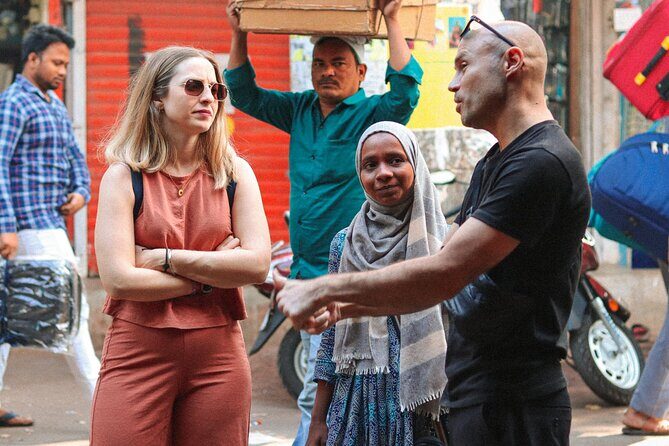
This tour doesn’t just stop at one type of scene. You’ll walk around to see the residential side, where people live, and then the commercial side, where small-scale industries happen. That mix is the heart of what makes the walk feel like understanding rather than just seeing.
On the residential side, expect to notice how families arrange daily life in close quarters. You’re likely to hear about local routines and the meaning of community spaces—things that can be hard to grasp if you only view Dharavi from a distance.
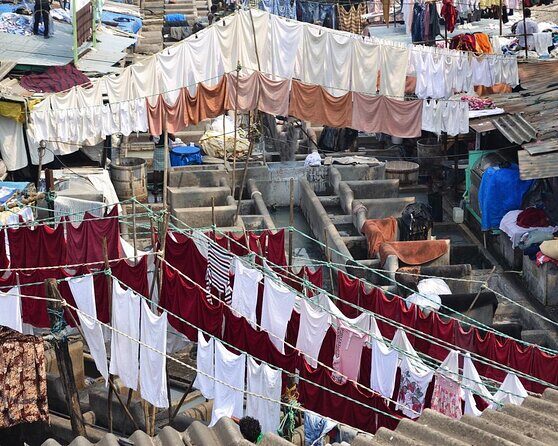
On the commercial side, the focus shifts toward work. This is where you can pick up the practical side of Dharavi’s economy—how people create jobs and services in small, working areas. One reason this part lands is that it’s not theoretical. You’re seeing how production and trade get done in real conditions.
Even if you’re only on the route for around two hours, the residential-to-commercial flow helps you understand something important: Dharavi isn’t only hardship. It’s also adaptation, entrepreneurship, and community know-how. You should still expect challenges to come up in the conversation—because real life includes them—but the tour aims to show more than one mood.
Guides like Rukaiyyaa and Abhishek turn facts into real meaning

The guide is the difference between a tour that feels like a checklist and one that feels like a conversation with context. Here, the tour is led by local English-speaking residents, and the best guides bring both clarity and personal connection.
Some guides you might be assigned include people like Rukaiyyaa, who’s described as personable with clear English and a lifetime of first-hand experience. Guides like Abhishek are also known for explaining both Dharavi and broader Mumbai questions, and for being helpful even beyond the tour when it’s time to move around the city.
You might also meet guides such as Bala (praised as excellent), Rohit (helpful and informative, with special attention to recycling), or Chirag, who’s been described as professional and extremely responsive to questions—down to practical help like getting a phone working and sharing tips for using local apps.
What you should take from this: your guide isn’t just reading a script. They can answer questions about daily life, local culture, and how Mumbai works. That’s one reason the tour feels worth it even at a low price—because the value is mostly in people, not production.
Timing, meeting point, and how to plan your day in Mumbai
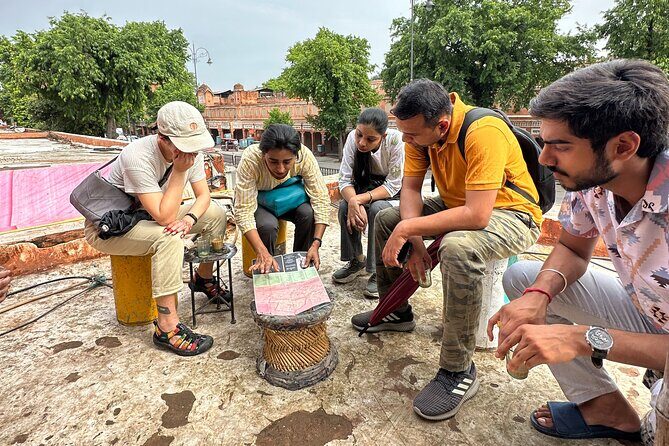
This tour runs for about 2 hours. It’s a walking format, and it’s set up for a small group with a maximum of 15 travelers. If you like tours where you can ask questions and keep pace with the group, this size usually feels comfortable.
You’ll start at Third Wave Coffee, Tip Road, Unit No. 58, Ground, Ram Mahal, Senapati Bapat Marg, Marinagar Colony, Station, Mahim, Mumbai, Maharashtra 400016. The tour ends back at the meeting point, so you’re not left figuring out a new area afterward.
Pickup is available from select hotels, which can be helpful if you don’t want to navigate on your own before the walk. If your hotel is not on the pickup list, no worries—the meeting point is listed as near public transportation, which is exactly what you want for a city like Mumbai.
Practical tip: because the walk is only two hours, it’s best as a focused add-on, not a “fill the whole day” plan. After the tour, you’ll want food options ready to go, since lunch is not included.
Price and value: why about $8.54 can still feel like a real experience

At around $8.54 per person, this is one of the cheaper ways to get a guided, local-led look at a place as complex as Dharavi. The key is what’s included and what’s doing the heavy lifting.
What you do get:
- A private guided walking tour
- Led by a local resident guide with English ability
- Bottled water included
- A route that covers both home life and work life
- Mobile ticket
- Confirmation at booking time
What you don’t get:
- Lunch
So why the price still makes sense? Because the tour isn’t built around fancy vehicles or museum-style entries. The main cost is the guide time and the walking route. If you care about understanding a neighborhood from the inside, that guide-led component is the real “product.”
Also, the small group size helps. You’re paying for guided attention. In Mumbai, where time and transport can get expensive fast, a two-hour session with a local guide for this price can feel like a smart trade.



What to expect from a respectful, on-the-ground visit
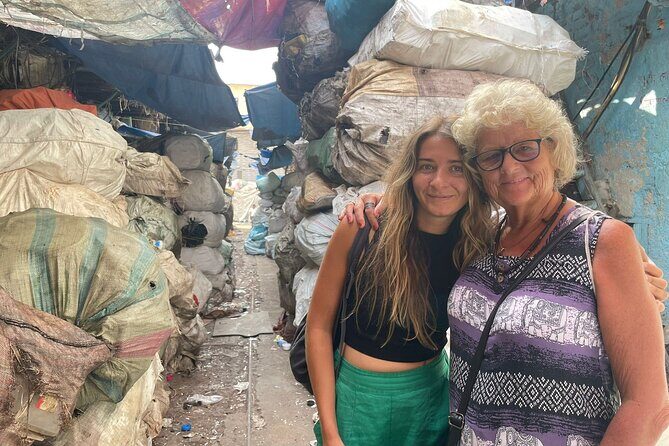
This is not a sightseeing-only stop. You’re entering an active community where people live and work side by side. That means the atmosphere can feel intense at times, depending on what you see and what you’re told. Keep a respectful mindset, stay present, and treat questions as part of learning rather than “gotcha” moments.
It also helps to come with a curiosity about how communities function under pressure. If your goal is only to take photos or collect quick facts, you’ll miss the point. But if you want to understand how people organize daily life and work—especially in a place with complex realities—this tour is built for that.
One more thing: because you might hear both positives and negatives while walking, you’ll likely leave with a more honest picture than you started with. Dharavi often gets oversimplified in conversation. Here, you’ll get a clearer, more human view.
Who this tour is best for (and who may want to skip it)
This tour is a great fit if:
- You want a local-led experience instead of a drive-by view.
- You’re curious about how everyday economies work in dense cities.
- You enjoy asking questions and getting real explanations from people living the story.
It’s also ideal if you’re on a tighter schedule. Two hours fits well between other Mumbai plans, and you return to the starting point afterward.
You may want to think twice if:
- You’re looking for a light, purely entertaining tour with no challenging topics.
- You need a guaranteed lunch stop as part of the activity window.
- You prefer tours in major “tourist bubble” areas only. This one is squarely in the real neighborhoods of the city.
Should you book the Dharavi Slum Tour with a local English guide?
I’d book it if you want value, real context, and the kind of guided walking that actually helps you understand a place. At around $8.54, you’re paying mainly for local time and translation of local life—especially valuable when your guide is someone like Rukaiyyaa or Abhishek, praised for clear English, personal connection, and answering questions beyond the basic route.
I’d also book it if you like practical travel moments. Some guides have been described as genuinely helpful with everyday needs after the tour, like figuring out train plans or app tips. That’s the kind of support that helps your whole trip, not just the two-hour walk.
If you’re sensitive to heavy topics or you’re expecting a relaxed “souvenir tour,” you might find this harder emotionally. But if you’re traveling to learn, to connect the dots, and to see Mumbai as a whole city—not just the postcard parts—this is the kind of booking that can change how you look at urban life.
FAQ
How long is the Dharavi Slum Tour?
It lasts about 2 hours.
What is the price per person?
The price is $8.54 per person.
What’s included in the tour?
The tour includes bottled water and an admission ticket.
Is lunch included?
No, lunch is not included.
Does the tour offer pickup?
Pickup is available from select hotels.
How many people are in the group?
The tour has a maximum of 15 travelers.