REVIEW · MUMBAI
2-Hour Guided Tour of Dharavi
Book on Viator →Operated by Be The Local Tours and Travel · Bookable on Viator
Dharavi surprises you quickly. This 2-hour, small-group tour uses a professional guide to show the neighborhood as it is day to day, with small-group attention and round-trip transfers from your hotel. Based in the area made famous by Slumdog Millionaire, it aims to reduce the clichés and help you see real systems, real people, and real work.
I love how the route focuses on where people work and bake and make and not just where people live. You’ll see industrial zones that serve Mumbai—bakeries are a big example—plus hands-on trades like pottery. And you’re not stuck with book learning: guides such as Razak (who grew up in Dharavi and still lives there) and Faisan use local context as they lead you.
One drawback to plan for: this experience depends on good weather. If conditions are poor, you’ll need to shift dates (or get a full refund). Also, if you expect movie-style misery and nothing else, you may feel mismatched—this tour is built to counter that stereotype.
In This Review
- Key things you’ll notice on this Dharavi tour
- A 2-hour Dharavi walk that corrects the clichés
- The heart of the route: seeing work, not just poverty
- Where homes and community life show up on the same path
- Interacting with residents: how to ask without making it awkward
- Your guide could be Razak, Faisan, Touseef, Adil, Avil, or Abir
- Price and value: why $22.32 can make sense
- Start at Third Wave Coffee, end at Kumbharwada near Sion Hospital
- Weather matters more than you’d think
- Who should book this Dharavi guided tour?
- Should you book this Dharavi guided tour?
- FAQ
- What is the duration of the Dharavi guided tour?
- How much does the Dharavi tour cost?
- Is admission included?
- Where do I meet for the tour?
- Where does the tour end?
- What are the tour hours?
- Does the tour include hotel transfers?
- What happens if the weather is poor?
Key things you’ll notice on this Dharavi tour
- A locally led visit, with guides like Razak, Faisan, Touseef, Adil, Avil, and Abir bringing firsthand context
- Workplaces right next to daily life, including industrial sections and small residential pockets
- Schools and community spaces, so you understand the rhythms beyond labor
- Industry details that matter, from bakery production to pottery work
- Real conversation time, with chances to ask questions and talk with residents
- Small-group pacing, designed for personal attention rather than a rushed cattle-car tour
A 2-hour Dharavi walk that corrects the clichés
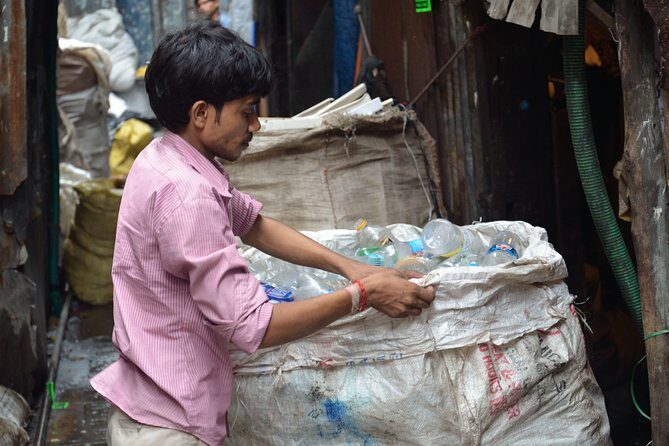
Dharavi is the kind of place people think they already understand. Movies helped. Scary headlines helped too. But a guided route here works differently: it gets you to look at what’s actually happening in the neighborhood today.
This tour runs about two hours and stays focused. You start in the main meeting area near Mahim at Third Wave Coffee, then you end at Kumbharwada near Sion Hospital. The point isn’t to tick off a checklist. The point is to get your bearings quickly—social, economic, and human.
And the guide matters a lot. The best moments are when someone explains what you’re seeing while it’s still in front of you. In the groups I read about, locals such as Razak, Touseef, Adil, Avil, and Abir do exactly that. Some guides are still living in Dharavi; others are neighborhood students connected to the community. Either way, you’re not getting a lecture from far away.
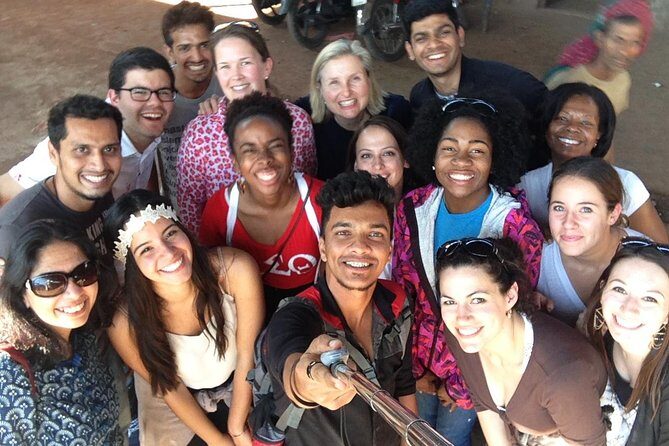
Also, the format is built to keep things human-sized. It’s a private tour in the sense that your group goes together, not mixed into a massive crowd. Small-group attention is a recurring theme—helpful when you want to ask questions and not feel like you’re interrupting.
You can also read our reviews of more guided tours in Mumbai


The heart of the route: seeing work, not just poverty
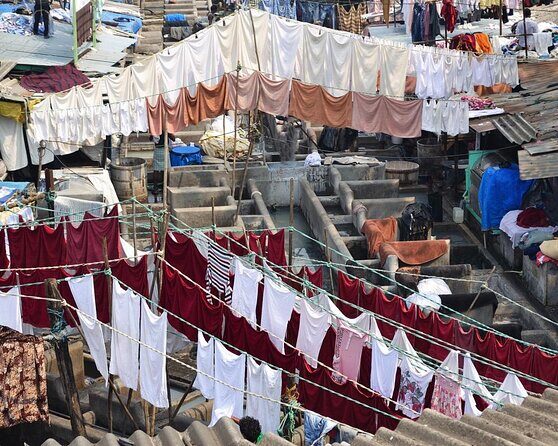
In Dharavi, work isn’t an abstract idea. It’s practical and visible. The tour’s core segment is a walk through the area where people live and also work in close proximity.
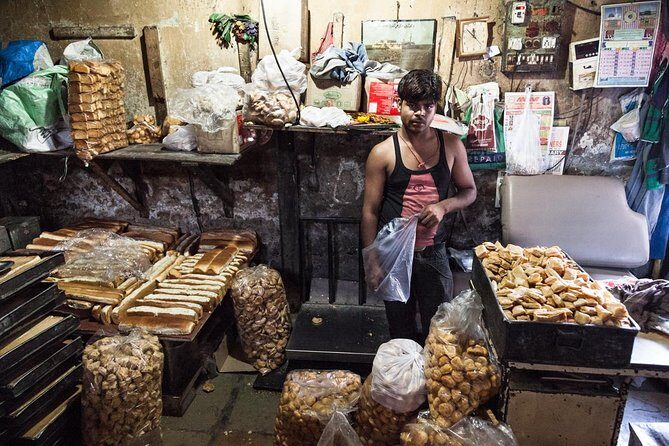
A big highlight is the industrial section—especially the bakeries. Mumbai-wide production is the kind of detail that changes how you think about the place. Instead of seeing Dharavi as one big label, you start seeing it as a cluster of specialized tasks that feed a much larger city.
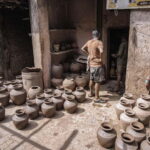
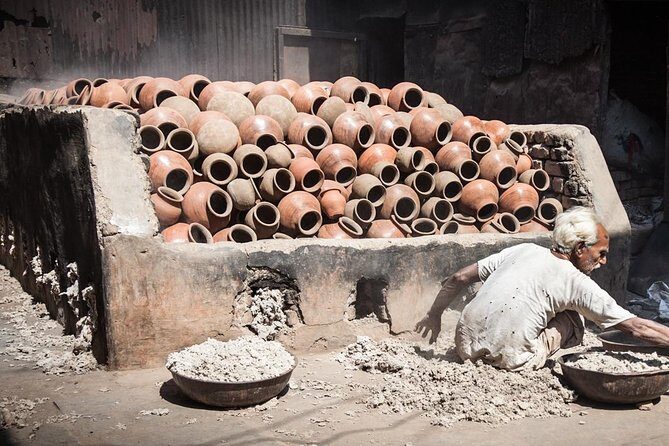
You’ll also notice that the neighborhood isn’t only factories. There are many workshops and small production spaces where people do trade work close to where they rest, eat, and raise kids. Pottery industries are one example that’s part of the route, so you can connect a specific craft to an actual place.
Why this is valuable: when you see work organized at neighborhood scale, it becomes harder to reduce people to a single storyline. You start to understand daily survival and daily ambition. In a place where outsiders often arrive with assumptions, this approach does the opposite—it gives you something concrete to hold in your mind.
A guide can also help you interpret what you’re seeing without turning it into judgment. If you ask normal questions—how something is made, who it’s for, how people manage space—you’ll likely get answers that bring nuance instead of pity.
Where homes and community life show up on the same path

The route doesn’t stop at industry. You’ll also pass through residential areas—where entire families may share a compact room. That detail is important, because it’s the reality behind the stereotype.
But the tour doesn’t treat homes as a sad exhibit. It frames them as part of a functioning community. You’ll get a sense of everyday life beyond production: where people relax, how families arrange routines, and how schools fit into the neighborhood flow.
Local schools are specifically mentioned as part of the experience. That’s a practical inclusion. When you see the school environment, you stop thinking only in terms of present hardship and start thinking about future pathways—education as a daily decision, not a distant concept.
And you’ll see the combination of work and rest in the same geographic area. That’s often what shocks people the most: you expect separation—industrial zone here, home there. Dharavi compresses those categories. The result is a place that feels busy, organized, and intensely practical, even when resources are limited.
That balance is exactly why this tour is recommended so consistently. It doesn’t pretend challenges don’t exist. It just refuses to define the neighborhood as despair only.
Interacting with residents: how to ask without making it awkward
One of the strongest parts of this tour is the chance to interact with residents—guided by someone who knows the area and the people in it. This is not the kind of experience where you should treat conversations like a photo opportunity.
What makes it work better is the way the guide sets the tone. Guides like Razak and Faisan (both connected to Dharavi) are used to questions from outsiders. They also understand which topics invite helpful explanation and which ones should be handled carefully. The goal is conversation, not interrogation.
A few practical tips come up again and again in people’s feedback. Bring water, and keep an open mind. Those two things sound simple, but they change how the whole experience feels. When you’re hydrated, you can focus. When you’re open-minded, you’re more likely to hear what people are actually explaining—not what you expect to hear.
If you’re the type who likes to talk, this tour rewards that. Ask about daily routines. Ask about how trade work connects to family life. Ask what the neighborhood needs and what it’s proud of. Done respectfully, those questions help you build a mental map that’s bigger than the one you started with.
Your guide could be Razak, Faisan, Touseef, Adil, Avil, or Abir
Local guides aren’t just a nice bonus here. They’re part of the educational design.
From the information available, the tour may be led by different people connected to Dharavi, including:
- Razak, known for growing up in Dharavi and continuing to live there
- Faisan, praised for answering many questions
- Touseef, described as hospitable and local
- Adil, praised for helpful, courteous guidance and maintaining safety
- Avil, noted for showing an interesting side of the area
- Abir, highlighted for storytelling and for knowing the ins and outs
Even when you don’t get one of these names, you can use them as a clue for what to expect: firsthand context, practical answers, and a guide who can steer you away from assumptions.
There’s also a detail worth noting about education support. In some groups, guides are young students from the neighborhood planning to attend college, and part of the tour support goes toward school. That means your participation isn’t only informational. It can also connect money to opportunities for local young adults.
A few more Mumbai tours and experiences worth a look




Price and value: why $22.32 can make sense
At $22.32 per person for about two hours, this isn’t a luxury-priced experience. It’s priced like a focused city tour with added responsibility.
Here’s what you’re paying for that matters:
- A professional guide who works locally (not a script reader)
- Small-group personal attention, which keeps the experience from feeling rushed
- Round-trip transfers from your hotel, which saves time and reduces logistics stress
- A mobile ticket (easy to manage)
- Admission is listed as free for the tour itself, so you’re not adding entry fees on top
When you factor in transfers and guide-led learning in a neighborhood setting, the price starts to look like a bargain. The biggest value is the combination of time and access: you’re getting a concentrated window—two hours—where you can ask questions and see work, homes, and schools as a single system.
It also helps that the tour is described as suitable for most people. That doesn’t mean it’s effortless, but it suggests the operator intends a broad appeal rather than an ultra-specialized niche.
Start at Third Wave Coffee, end at Kumbharwada near Sion Hospital
Logistics matter more than people admit. When your directions are clean, you can focus on the actual experience.
This tour starts at:
Third Wave Coffee, Tip Road, Unit no.58, Ground, Ram Mahal, Senapati Bapat Marg, Marinagar Colony, Station, Mahim, Mumbai, Maharashtra 400016, India.
It ends at:
Kumbhar Wada, Dharavi, Mumbai, Maharashtra, near Sion Hospital.
Opening hours are listed as 10:00 AM to 4:00 PM, Monday through Sunday. So if you’re visiting Mumbai with a tight schedule, you can usually slot it in during daylight hours.
Also, it’s described as near public transportation, which is helpful if your hotel transfers don’t line up perfectly with your plan. That said, the experience includes hassle-free round-trip transfers from your hotel, which is a comfort for first-time Mumbai visitors.
Weather matters more than you’d think
This tour requires good weather. That’s not just a legal note; it affects comfort and safety.
Mumbai can have sudden changes. If rain or poor conditions cancel the tour, you’ll be offered a different date or a full refund. That’s the kind of policy that reduces risk on your schedule.
If you’re choosing your travel days strategically, pick a day when you’re not depending on this tour being the one thing you absolutely cannot miss. Then you’ll have more flexibility if weather gets in the way.
Who should book this Dharavi guided tour?
Book it if you want a structured, respectful introduction to Dharavi that doesn’t rely on movie images. This is a strong choice when you care about:
- Understanding local industry as part of community life
- Seeing schools and daily routines, not only buildings from outside
- Learning from a guide who grew up there or is deeply connected to the neighborhood
- Asking questions and getting straight answers in context
You might skip it if you only want a quick photo stop. This tour is about observation and conversation. If you’re expecting a show, you may feel frustrated. If you want a real sense of how a city works at neighborhood scale, you’ll likely come away with a different mental map of Mumbai.
Should you book this Dharavi guided tour?
I think this is one of the better-value ways to understand Dharavi—because it’s guided, time-limited, and designed to correct stereotypes with specific things you can actually see: bakeries serving Mumbai, pottery work, local schools, and everyday residential life.
The biggest reason to book is the guide quality. When locals lead the conversation—especially people like Razak or Faisan—it stops being abstract and turns into real learning. Add small-group pacing and hotel transfers, and it’s a low-stress way to do something that can easily feel heavy or uncomfortable if you go in unprepared.
If you’re open-minded and ready to walk away with more nuance than you started with, book it.
FAQ
What is the duration of the Dharavi guided tour?
The tour lasts about 2 hours.
How much does the Dharavi tour cost?
It costs $22.32 per person.
Is admission included?
Admission is listed as free for this experience.
Where do I meet for the tour?
The meeting point is Third Wave Coffee, Tip Road, Unit no.58, Ground, Ram Mahal, Senapati Bapat Marg, Marinagar Colony, Mahim, Mumbai.
Where does the tour end?
It ends at Kumbhar Wada, Dharavi, near Sion Hospital.
What are the tour hours?
The listed hours are 10:00 AM to 4:00 PM, Monday through Sunday.
Does the tour include hotel transfers?
Yes, it includes hassle-free round-trip transfers from your hotel.
What happens if the weather is poor?
This experience requires good weather. If it’s canceled due to poor weather, you’ll be offered a different date or a full refund.