REVIEW · NEW DELHI
Golden Triangle 3 Nights, 4 Days return trip : Delhi-Agra-Jaipur
Book on Viator →Operated by Masterji kee haveli dot com · Bookable on Viator
Three cities. One organized flow.
This Golden Triangle route links Delhi access to Agra icons and Jaipur’s royal sights, using a private vehicle and English-speaking local guides. You’ll cover the big names like the Taj Mahal, then swap in Mughal-era curiosities like Fatehpur Sikri and Chand Baori.
Two things I really like: the ride is handled end-to-end with hotel/port pickup and drop-off, and the guides help you make sense of what you’re seeing instead of just pointing at stones. In the staff examples shared with this trip, coordinators like Dhruv and local guides such as Mahadev in Jaipur show up for people who want their day to run smoothly.
One drawback to plan for: monument entrances and camera charges are not included, and the schedule is busy by design. Add heat, road traffic, and the fact that start/finish times aren’t guaranteed, and you’ll want a flexible mindset rather than a minute-by-minute one.
In This Review
- Quick hits before you go
- Delhi to Agra to Jaipur: why this route feels efficient
- The private vehicle setup: comfort, safety, and less mental math
- Day 1 in Agra: Taj Mahal with enough time to actually see details
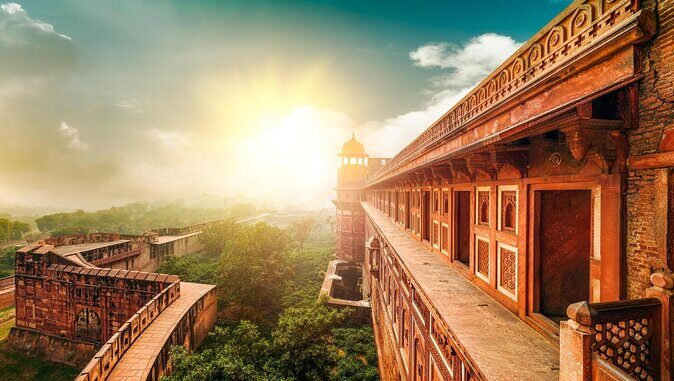
- Agra Fort: the Mughal power center behind the postcard
- Day 2: Fatehpur Sikri first, then the stepwell that cools everything down
- Fatehpur Sikri’s mix of Mughal and sacred spaces
- Chand Baori: a stepwell built for community life
- Day 3 in Jaipur: Amer Fort first, then the City Palace and Jantar Mantar
- Amber Palace (Amer Fort): views from the hill
- City Palace: where power moved in 1727
- Jantar Mantar: the UNESCO sky-and-math stop
- Free time in Jaipur: shopping is optional, rest is smart
- Day 4: another flexible end, another chance to get your bearings
- What’s included, what’s not, and how the price adds up
- Who this Golden Triangle trip suits best
- Quick packing and on-the-ground tips that matter
- Should you book this Delhi-Agra-Jaipur Golden Triangle tour?
- FAQ
- What is the duration of the Golden Triangle itinerary?
- Does the price include accommodation?
- Are monument entrances included?
- Is food included in the tour?
- Do I get hotel pickup and drop-off?
- Is bottled water provided?
- Is Fatehpur Sikri admission included?
- What language are the guides?
- Can I get a full refund if I cancel?
Quick hits before you go
- Private car between Delhi, Agra, and Jaipur means fewer transfers and less guesswork.
- Local guides in Agra and Jaipur help you understand what you’re looking at at each stop.
- Fatehpur Sikri is free admission in this itinerary, which can save money on the spot.
- Taj Mahal and Agra Fort are timed blocks (about 2 hours each) so you’re not stuck too long or rushed too hard.
- Chand Baori stepwell adds a cooler, photo-friendly detour beyond the usual big-city icons.
- Free time for shopping or heading back gives you a choice instead of forcing one ending.
Delhi to Agra to Jaipur: why this route feels efficient
A Golden Triangle trip works best when the travel days aren’t a scramble. Here, you get private transport by vehicle with bottled water included, plus pickup/drop-off at your hotel or port. That setup matters because Delhi traffic can turn even a simple transfer into a long, stressful chore.
This plan is also built for pacing that matches the sights. Instead of packing every city with ten stops, you get a focused set of major monuments plus one or two “why is this here” stops that make the whole trip feel more lived-in.
The tour is English-led, and it’s designed for a private group (only your group participates). You’ll likely feel safer moving between cities this way because the driver and guide handle the rhythm of the day, not you.
A few more New Delhi tours and experiences worth a look
The private vehicle setup: comfort, safety, and less mental math
The best part of a private-car plan is what you don’t have to do. You don’t have to figure out routes, hunt for change, or negotiate rides after a long sightseeing day. You just show up, keep your schedule moving, and let the driver deal with the roads.
Comfort is also practical here: the reviews linked to this style of trip repeatedly praise a calm, well-managed day with an excellent driver and smooth communication. When that happens, you can spend your energy on the monuments, not on logistics.
One small thing to keep in mind: the itinerary doesn’t guarantee exact start and finish times. Weather, traffic, and road conditions can stretch things. In plain terms, plan your expectations with a little wiggle room and you’ll enjoy the day more.
Day 1 in Agra: Taj Mahal with enough time to actually see details
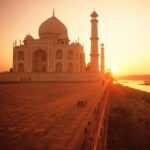
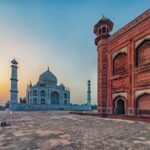
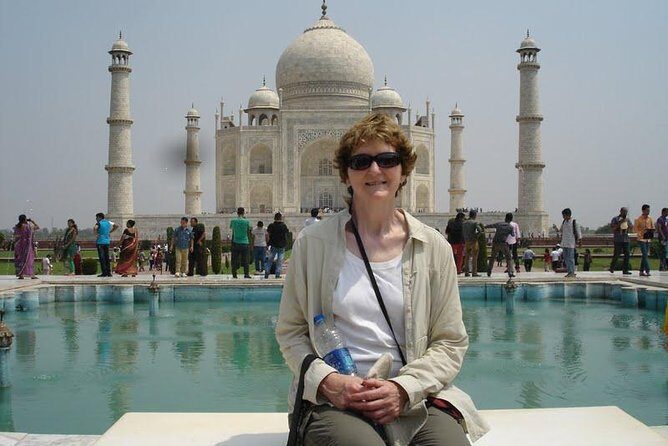
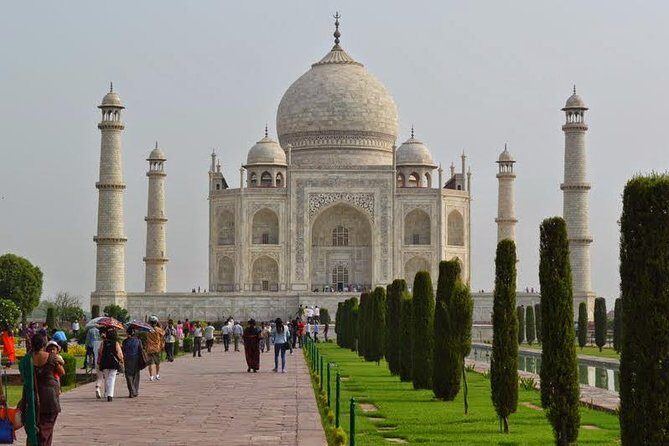
The Taj Mahal is an ivory-white marble mausoleum on the south bank of the Yamuna River. It was commissioned in 1632 by Emperor Shah Jahan to house the tomb of his favorite wife, Mumtaz Mahal, and it also includes Shah Jahan’s tomb. The key idea for your visit is this: it’s not just one photo spot, it’s a whole architectural experience, built to be looked at slowly.
You get about 2 hours for the Taj Mahal, and that’s a good amount if you split your time into three phases: the outside composition, the main viewing areas, and then the smaller visual details people often rush past. Admission tickets and camera charges are not included, so be ready to pay on arrival.
Practical tip: bring a light layer and plan for sun exposure. Even without knowing your exact entry time, Agra can feel intense. Having that water bottle already covered helps you keep moving without hunting for a refill.
Agra Fort: the Mughal power center behind the postcard
After the Taj Mahal, you’ll visit Agra Fort, another heavyweight site. This fort served as the main residence of Mughal emperors until 1638, when the capital shifted from Agra to Delhi. Before the British takeover, the last Indian rulers to occupy it were the Marathas.
You also get about 2 hours here, and that time block is helpful because Agra Fort rewards walking. It’s one of those places where you’ll start noticing layers: different rulers, different eras, and the way the fort’s layout supports authority and defense.
Like the Taj Mahal, admission isn’t included. Also, keep your camera expectations realistic. If you care about photography fees, budget for them so there are no surprises.
Day 2: Fatehpur Sikri first, then the stepwell that cools everything down
Day 2 has two stops that balance grand empire with something more human-scale: a city of red sandstone and then a stepwell built for survival in heat.




Fatehpur Sikri’s mix of Mughal and sacred spaces
Fatehpur Sikri sits just west of Agra. It’s described as a small city founded by a 16th-century Mughal emperor, with red sandstone buildings clustering at its center. The entrance is the Buland Darwaza gate, and nearby you’ll find the Jama Masjid mosque.
This stop also ties together several landmark features:
- the marble Tomb of Salim Chishti
- Diwan-E-Khas, noted for a carved central pillar
- Jodha Bai Palace, a blend of Hindu and Mughal styles
- the Panch Mahal, a five-story structure overlooking the site
Here’s the money saver: Fatehpur Sikri is listed as Admission Ticket Free. You still have about 2 hours, so you can take your time without feeling like every minute has to “pay for itself.”
Chand Baori: a stepwell built for community life
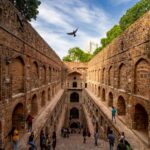
Next comes Chand Baori, a stepwell in Abhaneri. It’s famous because it wasn’t just a water hole. The stepwell worked as a community gathering place for locals during intense heat, and one side includes a pavilion and resting room for royals.
You get about 1 hour here. It’s shorter than Fatehpur Sikri, and that makes sense because the best experience is often walking down viewpoints, taking photos, and then stepping back into open-air light.
Admission isn’t included for Chand Baori, so treat this as another on-the-spot payment. Also, wear shoes you’re comfortable walking in, because stepwells mean steps and uneven angles.
Day 3 in Jaipur: Amer Fort first, then the City Palace and Jantar Mantar
Jaipur is sometimes called the Pink City, and this itinerary leans into its royal identity. Day 3 stacks three major sights, and the order matters: you start high, then move into palace space, then finish with the science monument.
Amber Palace (Amer Fort): views from the hill
Amer Palace (Amer Fort) sits in Amer, about 11 kilometers from Jaipur. Amer is described as a town of around 4 square kilometers, and the fort is located high on a hill. It’s also noted as the principal tourist attraction in Jaipur.
You get about 2 hours here, and that time should be used for two things: first, taking in the scale from below and around the fort complex, and second, pacing your walking so you’re not overheating before you even reach the best angles.
Entrance isn’t included, and camera charges may apply. If you like photos, plan for that budget line.
City Palace: where power moved in 1727
Next is the City Palace of Jaipur, created around the same time as Jaipur itself. The palace was established by Maharaja Sawai Jai Singh II, who moved his court to Jaipur from Amber in 1727.
You’ll have about 1 hour here. City Palace usually works best when you accept it as a “palace complex experience,” not one single room. Even if you only see a portion, you’ll understand how the city was built around royal administration.
Again, admission isn’t included.
Jantar Mantar: the UNESCO sky-and-math stop
Last is Jantar Mantar, a UNESCO World Heritage site and an important science landmark. It’s a collection of nineteen architectural astronomical instruments built by Sawai Jai Singh II, completed in 1734. The site features the world’s largest stone sundial.
You get about 1 hour here, which is enough to grasp how the instruments work in real space. If you’re the type who likes seeing how old thinkers measured the sky, this is the stop that can turn your whole day from “pretty buildings” into “wow, they built tools for understanding.”
Admission isn’t included, so budget for those fees too.
Free time in Jaipur: shopping is optional, rest is smart
After the main sights, you get free time for shopping or for driving back toward Delhi. The key here is optional choice. The company also notes that it discourages shopping and has no interest in pushing purchases.
So use the time how you want. If you’re not into shopping, you can treat this as a chance to regroup, grab something to drink, or just wander the streets at a slower pace before heading to your next transport segment.
Because food and drinks aren’t included, free time is also when you’ll want to plan meals. Decide ahead of time whether you prefer a sit-down meal or quick local snacks, and keep it simple.
Day 4: another flexible end, another chance to get your bearings
Day 4 keeps things open with more free time for shopping or driving back to Delhi. That flexibility can be useful if Day 3 ran long due to traffic or if you want a slower morning.
It also means you should travel with the right mindset: don’t plan a super tight personal schedule at the end of your day. You’ll be moving by vehicle, and travel time can change with conditions.
If you want something specific beyond the listed monuments, the additional tour info says you can add destinations and more nights, and you can use the chauffeur-driven car to visit places you want such as markets, sites, or restaurants. That’s a big deal for people who don’t want a rigid checklist.
What’s included, what’s not, and how the price adds up
This tour is priced at $302.97 per person for about 4 days and 3 nights (accommodation not included). For many people, the value comes from avoiding the big three expenses you can’t easily DIY on your own: safe city-to-city transport, local guide time, and admissions management.
Included in the price:
- Bottled water
- Local guides at Agra & Jaipur
- Hotel/port pickup and drop-off
- Transport by private vehicle
- All taxes, fees, and handling charges
Not included:
- Food and drinks
- Accommodation
- Monument entrances and camera charges
Here’s how I’d budget it: think of the price as paying for the “machine” that runs the trip (vehicle + guides + logistics). Then add your own daily costs for meals and then your separate costs for monument entry fees. That split is common on tours like this, but knowing it upfront prevents sticker-shock later.
Also note the itinerary includes a stop where admission is free (Fatehpur Sikri). That small detail can help your total spend, especially if you care about entry fees.
Who this Golden Triangle trip suits best
This fits well if you want a stress-light way to see the classic sights with less planning pressure. It’s especially useful for first-time visitors to India who want a driver and guides handling the hard parts.
It’s also a good match if you like structure but not micromanagement. You’ll have set sightseeing blocks, then free time for shopping or making your own ending.
One more factor: the tour says most people can participate, but it flags serious medical conditions. If you have mobility concerns, it’s smart to ask how much walking each site expects and whether you’ll be able to pace comfortably.
Quick packing and on-the-ground tips that matter
Even with bottled water included, you’ll feel more comfortable if you pack like you’re in a hot sun corridor. Plan for dry air, strong light, and lots of outdoor time between stops.
For monuments, keep your camera fees in mind because camera charges aren’t included. If you bring a phone-only setup, you might still face fees depending on the site rules, so leave some cash buffer.
And because the trip includes leather-focused shopping areas in the overall region (Agra is known for leather work), you may see tempting stalls. The tour company discourages shopping, so if you’re sensitive to sales pressure, you can simply keep walking when you want to.
Should you book this Delhi-Agra-Jaipur Golden Triangle tour?
I’d book this if you want the big sights handled with private transport and guide time, and you’re happy to budget separately for monument entrances and meals. The itinerary hits the Taj Mahal and Agra Fort, then balances in Fatehpur Sikri and Chand Baori, and finishes with Jaipur’s Amer, City Palace, and Jantar Mantar.
Skip it if you’re the type who hates structured days or you want full control over exact entry times and final-day timing. This tour gives you a plan, not a guarantee of minute-perfect scheduling.
If you do book, set yourself up for success: bring cash/card for site tickets, keep your schedule flexible on travel days, and use the free time to rest or wander instead of trying to cram in extra commitments.
FAQ
What is the duration of the Golden Triangle itinerary?
The trip runs for about 4 days. It’s described as a return route covering Delhi, Agra, and Jaipur with 3 nights.
Does the price include accommodation?
No. Accommodation is not included in the price.
Are monument entrances included?
No. Monument entrances and camera charges are not included.
Is food included in the tour?
No. Food and drinks are not included.
Do I get hotel pickup and drop-off?
Yes. Hotel/port pickup and drop-off are included.
Is bottled water provided?
Yes. Bottled water is included.
Is Fatehpur Sikri admission included?
Fatehpur Sikri is listed as Admission Ticket Free in this itinerary.
What language are the guides?
Tours are conducted in English. If you need another language, you should message to check availability.
Can I get a full refund if I cancel?
Free cancellation is offered up to 24 hours in advance for a full refund.