REVIEW · NEW DELHI
8 Days Golden Triangle Tour with Ranthambore Tiger Tour
Book on Viator →Operated by Tour Guide Delhi · Bookable on Viator
Tigers and marble in one tight week. I really like the Taj Mahal sunrise visit with a guide—it’s the kind of timing that turns a famous sight into a memory. I also like the focus on wildlife with two Ranthambore game drives instead of one rushed outing. One thing to consider: the big monuments need separate entry tickets, and tiger sightings are never guaranteed.
This is a well-paced “Golden Triangle + wildlife” route, using an air-conditioned vehicle with hotel/airport pickup and drop-off. Your group stays limited to just your party, but the safaris run in shared jeeps/canters, so you’ll be moving with other people in the same wildlife circuit.
In This Review
- Key things to know before you go
- Delhi first: from Old Delhi lanes to iconic British-era landmarks
- Agra without the rushing: Agra Fort and a Taj photo you’ll remember
- Sunrise Taj Mahal: what makes it worth the early start
- The drive day that doesn’t feel like wasted time: Fatehpur Sikri to Ranthambore
- Ranthambore tiger safari: two shots, two chances, real wildlife energy
- Jaipur evening choices: Monkey Temple or Birla Mandir
- Jaipur day: forts, observatories, palaces, and photo stops that matter
- How the tour is set up: hotels, guides, and what you pay for
- Service quality: the driver and guide names that stand out
- Price and value: is $749 fair for an 8-day Golden Triangle plus Ranthambore?
- Who this tour is best for (and who should think twice)
- Should you book the 8 Days Golden Triangle with Ranthambore?
- FAQ
- What is the tour price and duration?
- What’s included in the price?
- Are monument entrance fees included?
- How many wildlife safaris do I get in Ranthambore?
- Does the tour include the Taj Mahal sunrise visit?
- Can I depart from Jaipur or Delhi on the last day?
Key things to know before you go
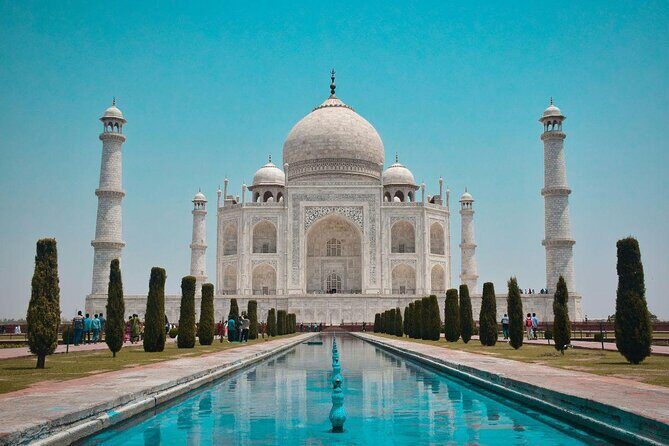
- Sunrise Taj Mahal at 5:45 AM makes the crowds feel like a problem you get to avoid.
- Two Ranthambore safaris (early morning and late afternoon/evening) improve your odds.
- Old Delhi by rickshaw through Chandni Chowk gives you street-level India, fast.
- Fatehpur Sikri stop on the drive day adds a UNESCO detour without adding a whole extra day.
- Hotel pickup and drop-off reduce the hassle of coordinating trains or internal drivers.
- Pro guides in each city means you’re not just taking photos—you’re learning what you’re looking at.
Delhi first: from Old Delhi lanes to iconic British-era landmarks

Day 1 is about getting you settled in New Delhi. You meet your chauffeur, get to your hotel smoothly, and have time to recover before a full sightseeing day. If you arrive early, I’d spend the evening doing something simple nearby—plan nothing big. Jet lag plus traffic is a combo you don’t need twice.
Day 2 is a fast, structured tour of Delhi’s most important layers: Mughal-era power, daily market life, and the grand capital-street look from the British period.
You start at Jama Masjid (built in 1656 by Shah Jahan). It’s huge—built to hold about 25,000 worshippers—so it feels like a whole city inside a building. From there you hop into Old Delhi’s energy with a rickshaw ride in Chandni Chowk. The ride isn’t just fun—it helps you understand why this area grew so fiercely around trade routes and food markets.
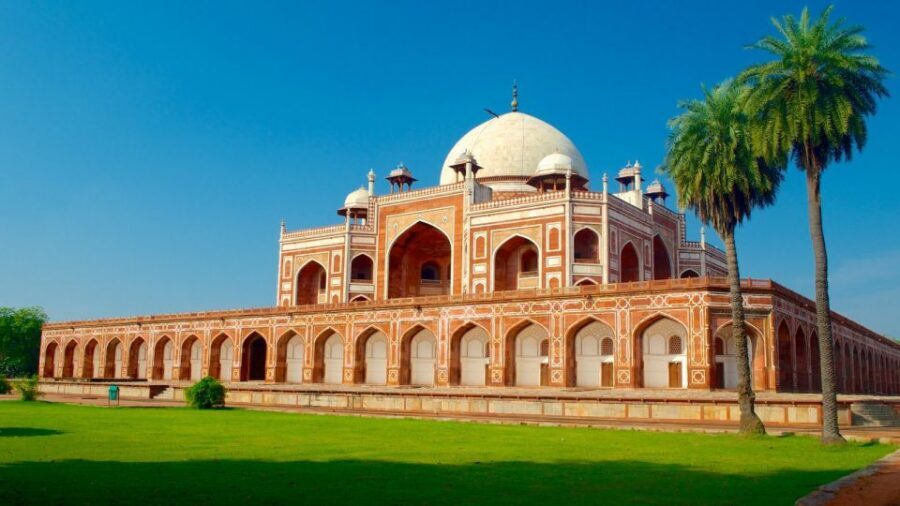
Next come the landmarks around New Delhi’s formal axis: a drive-by view of the Red Fort (you mostly see it from the outside because the Indian Army occupies much of the complex), then stops at Raj Ghat (Gandhi’s memorial), India Gate, and photo stops for Parliament House and Rashtrapati Bhavan. The day ends with two more heritage stops: Humayun’s Tomb (a key early garden-tomb model for later Mughal architecture) and Qutub Minar (UNESCO). If you like architecture that actually has a story behind the shapes, this is your day.
Practical note: Day 2 is packed. You’ll be walking some and you’ll be traveling between points by car. Wear comfortable shoes and keep water handy, since Delhi can feel hot even when you don’t expect it.
You can also read our reviews of more tours and experiences in New Delhi.



Agra without the rushing: Agra Fort and a Taj photo you’ll remember

Day 3 moves you from Delhi to Agra with a hotel check-in on arrival. You get exploring time before the day is over, including Agra Fort and a sunset Taj view from Mehtab Bagh (the Moonlight Garden). The fort is UNESCO-listed and was a major Mughal residence; it’s the kind of place that helps you understand how emperors used walls like tools—security, authority, theater.
The Mehtab Bagh stop matters because it gives a different angle on the Taj Mahal. You’re not just staring straight at the front gate vibe. You’re stepping into the “outside and across the river” relationship that shaped Mughal planning.
Also, this day is a useful buffer. After the intense day of Delhi, Agra gives you breathing room while still packing in meaningful stops.
Sunrise Taj Mahal: what makes it worth the early start
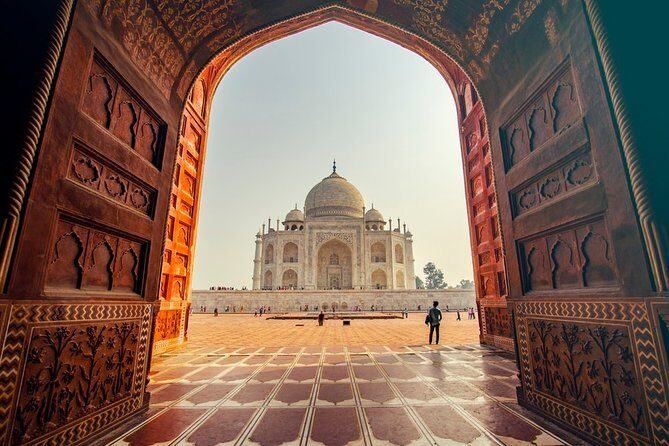
Day 4 is the big one: a 5:45 AM sunrise visit to the Taj Mahal. You’ll meet your private guide in the hotel lobby and head out before the day gets busy. The reason this is so satisfying is simple: early light turns the Taj’s white marble into something that looks alive. You’re seeing the same building, but the colors shift, and you feel the drama in the timing.
The Taj Mahal itself takes about two hours for guided exploring. You’ll learn what it was built for and why its design language works so well even for first-timers. Afterward, you go back for breakfast and then check out—because the tour doesn’t pause here. It keeps moving toward wildlife.
And this matters for value: you’re getting the Taj Mahal highlight without losing an entire day to it. Then the schedule folds that effort into the next destination.
The drive day that doesn’t feel like wasted time: Fatehpur Sikri to Ranthambore
From Agra, you drive to Ranthambore, but you make a meaningful stop first at Fatehpur Sikri. This is an abandoned Mughal capital and a UNESCO site, known for Mughal architecture and city-planning ideas that went big for its time. Even if you only have about an hour, it’s enough to spot how grand ambitions can turn into quiet ruins.
Then you continue to Sawai Madhopur, check into your hotel, and sleep for the early starts coming in the next couple of days.
If you’re the type who hates “car days,” this one may still test you—but the Fatehpur Sikri stop gives you something worth seeing rather than just highway miles.
Ranthambore tiger safari: two shots, two chances, real wildlife energy
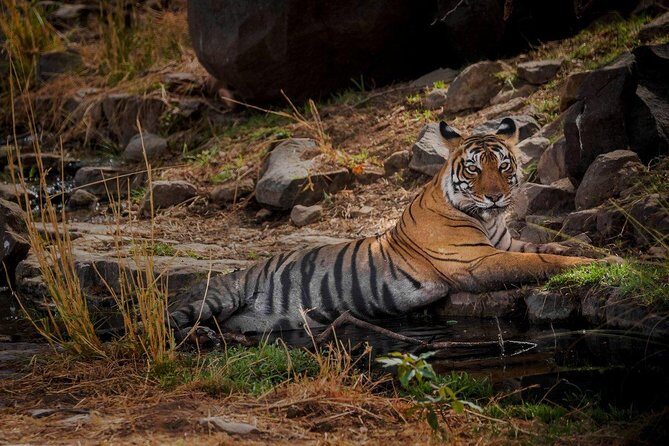
Day 5 begins with your morning safari pickup at 6:00 AM. This first game drive runs about 2–3 hours and takes place in Ranthambore National Park, one of India’s well-known tiger reserves. The included safari time is the key value point here: you’re not squeezed into a short loop. You’re given enough time to track wildlife movements and wait when the action is quiet.
After the morning drive, you return to the hotel for breakfast and a more relaxed mid-day block. This is important. Safari fatigue is real. Heat and sitting in a vehicle can wear you out even when you’re excited.
Then comes your afternoon wildlife push at 2:30 PM, another drive running roughly 3–4 hours. With two safaris, you’re working with nature’s rhythm instead of betting everything on one outing. You also increase your odds of seeing tigers or other wildlife like leopards, deer, and exotic birds—all mentioned as possible sightings.
About odds: tiger viewing is never guaranteed. What the tour can control is the number of attempts and the time you’re in the park. Two separate drives are a sensible way to play the odds.





Jaipur evening choices: Monkey Temple or Birla Mandir
Day 6 is travel day to Jaipur. You leave Sawai Madhopur after breakfast and ride toward Rajasthan’s capital, then settle into your Jaipur hotel.
In the evening, you choose between Galta Ji (Monkey Temple) or Birla Mandir.
- Galta Ji is known for its seven sacred water tanks (kunds) and has lots of rhesus macaques and langur monkeys. If you like temples that feel lively and not overly staged, this option can be great.
- Birla Mandir is a modern white-marble temple dedicated to Vishnu and Lakshmi. The design is more contemporary and clean-lined compared with older Mughal and fort architecture.
Both options fit a first night in Jaipur. You’re not expected to do everything. You pick one, see it well, and get back to rest.
Jaipur day: forts, observatories, palaces, and photo stops that matter
Day 7 is your main Jaipur sightseeing day. Jaipur’s look is unmistakable: pink tones in parts of the city, strong palace shapes, and heritage sites that explain how the city worked.
You start with the Jaipur Fort area, described as a UNESCO palace complex built from pale yellow and pink sandstone with white marble. It’s associated with rulers like Raja Man Singh I and later expansions by Jai Singh I. Even if you’re not a hardcore architecture person, the materials and scale tell you this wasn’t a small royal project.
Then you get a Jal Mahal photo stop. It’s called the Water Palace and sits in Man Sagar Lake, with a five-story structure where lower levels are submerged when the water fills. It’s mostly a view stop, but a good one—because it’s one of those “wait, this is a palace in the middle of water?” moments.
Next up is City Palace of Jaipur, a royal residence and seat of the Maharaja. It’s described as a fusion of Rajput, Mughal, and European styles, and you’ll spend about an hour there. If you like your history grounded in real places instead of facts alone, this works.
Then comes Jantar Mantar, an astronomical observatory and UNESCO site with 19 instruments. One highlight mentioned is the world’s largest stone sundial. This is where Jaipur stops being only about temples and forts; it becomes about the science a royal court actually funded.
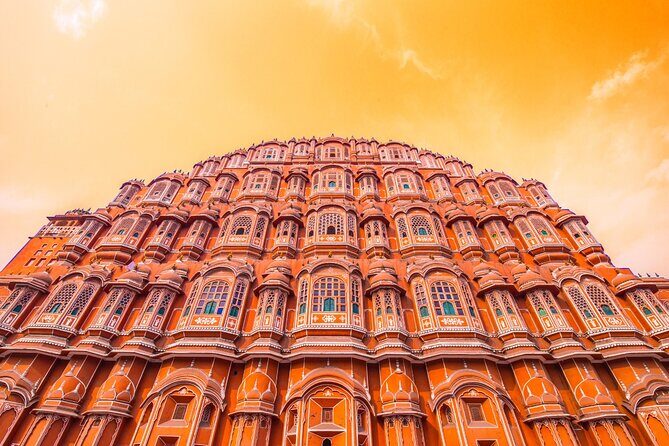
You finish with a quick photo stop at Hawa Mahal (Palace of Winds). It was built in 1799 for royal women to observe street life, which adds context to those famous honeycomb-like windows.
Finally, there’s time for local markets. This is where you can buy textiles, jewelry, and handicrafts without rushing. Just keep your budget in mind, since Jaipur shopping can turn into a slow but addictive loop.
How the tour is set up: hotels, guides, and what you pay for
This tour is built around three big pillars: comfortable bases (3–5 star hotel options), guided sightseeing, and included experiences that would cost you time or money on your own.
You get:
- Air-conditioned private vehicle with water
- Professional tour guides in each city
- Hotel/airport pickup and drop-off
- Breakfast included for 7 mornings
- Two Ranthambore safaris in shared jeep/canter
You don’t get:
- Monument entrance fees (listed as $79 per person, not included)
That entrance-fee detail matters. Even though the route includes UNESCO sites and major attractions, the tour keeps those ticket costs separate. If you’re the type who wants one neat all-in number, mentally add that fee before you compare prices with other options.
Service quality: the driver and guide names that stand out
The best thing about this tour setup is that it feels staffed, not just scheduled.
One review specifically called out Sonia and Vivek for being great and flexible when the plan needed adjustment. Another praised Mr. Rajendra Sharma as a professional driver who kept everyone safe and comfortable. A separate experience praised Ajay as an excellent driver who catered to comfort and safety throughout the trip.
Even without knowing the full behind-the-scenes operation, those names matter. In a country where logistics can be complicated, a steady driver and confident guides can turn delays into manageable moments.
Price and value: is $749 fair for an 8-day Golden Triangle plus Ranthambore?
At $749 per person, this tour sits in the mid-range for a combined Golden Triangle + Ranthambore package. The value comes from the included structure: private air-conditioned transfers across multiple cities, city guides, and two safaris. Those safari days alone can be expensive to arrange well, especially if you’re trying to match schedules for sunrise Taj visits and wildlife drives.
Two costs to keep in mind:
- Monument entrances are not included (listed as $79 per person).
- Safaris are included, but animal sightings aren’t something anyone can sell as a guarantee. Two drives help, though.
If you want a stress-reduced route where you’re not planning between cities and booking guide/safari pieces separately, this price can make sense.
If you already enjoy independent travel and you have time to manage ticketing and transport yourself, you might do it cheaper. But you’ll trade that for more planning and more coordination.
Who this tour is best for (and who should think twice)
You’ll likely enjoy this tour if you:
- Want big-name sights with real context from guides
- Like being on a schedule (not wandering all day with no plan)
- Want a serious wildlife component with two Ranthambore drives
- Appreciate early starts when they pay off, like the Taj sunrise
You might think twice if you:
- Hate early mornings (that 5:45 AM Taj start is non-negotiable here)
- Prefer slower travel with more downtime between cities
- Expect tigers to be guaranteed (no safari can promise that)
Should you book the 8 Days Golden Triangle with Ranthambore?
If you want a balanced trip that hits Delhi, Agra, Jaipur, and Ranthambore in one shot, this tour’s mix is strong. The sunrise Taj and two Ranthambore safaris are the two parts most people remember, and the included guides and transport help you focus on seeing instead of negotiating logistics.
My advice: add the monument entrance fee into your mental budget and pack for long days—comfortable shoes, light layers, and a good attitude toward early starts. If you do that, you’ll get a trip that feels like India in big chapters: marble, forts, markets, and the possibility of tiger sightings in the same week.
FAQ
What is the tour price and duration?
The tour costs $749 per person and runs for about 8 days.
What’s included in the price?
Included features cover hotel/airport/railway pickup and drop-off, a private air-conditioned vehicle with water, professional guides in each city, breakfast for 7 days, and two Ranthambore safaris in shared jeep/canter.
Are monument entrance fees included?
No. Monument entrance fees are not included and are listed as $79 per person. That also means Taj Mahal and other major sites’ tickets are not included.
How many wildlife safaris do I get in Ranthambore?
You get two game drives in Ranthambore National Park: one early morning (around 2–3 hours) and one afternoon/evening (starting at 2:30 PM, around 3–4 hours).
Does the tour include the Taj Mahal sunrise visit?
Yes. There’s a 5:45 AM sunrise visit to the Taj Mahal, with a private guide meeting you in the hotel lobby.
Can I depart from Jaipur or Delhi on the last day?
Yes. On the last day, you have an option to depart from Jaipur (to Jaipur International Airport) or from New Delhi (to Delhi International Airport or a preferred Delhi location).