REVIEW · NEW DELHI
From Delhi- 4 Day Private Golden Triangle Agra and Jaipur Tour
Book on Viator →Operated by Abby & Scout Tours · Bookable on Viator
You can measure a trip by how early it starts. This 4-day private Golden Triangle tour is built around sunrise Taj Mahal, then strings together Agra’s Mughal sights and Jaipur’s forts, palaces, and crafts without making you fight ticket lines.
Two things I like a lot are the private AC car and driver with an English-speaking guide doing the heavy lifting, and the way the schedule adds extra stops (stepwells, gardens, and hand-block printing) rather than only the headline monuments. One possible drawback: it’s a packed itinerary, so you’ll spend a lot of time on the road and you’ll want to plan your stamina.
In This Review
- Key moments worth planning for
- Golden Triangle, But With a Private Driver Who Actually Manages the Day
- Day 1 in Agra: Agra Fort First, Then Mehtab Bagh Across the Yamuna
- Day 2: Sunrise Taj Mahal, Fatehpur Sikri, and the Stepwell Detour to Abhaneri
- Sunrise Taj Mahal without letting the day take over
- Fatehpur Sikri as a time-jump in Mughal ambition
- Abhaneri’s Chand Baori: the “why is this here?” stepwell
- End of day: Jaipur arrival and a hotel check-in window
- Day 3 in Jaipur: Gaitor Tombs, Monkey Temple Fun, Albert Hall, and Nahargarh Sunset
- Nahargarh Fort at sunset: Jaipur’s best high-angle payoff
- Old city walking + hand-block printing (yes, you’ll make something)
- Day 4: Stepwells, Jal Mahal, the Jaipur Palace Circuit, and a Real Observing Stop
- Panna Meena ka Kund: stepwell symmetry in 20 minutes
- Jal Mahal: the floating palace illusion
- City Palace: the power center of the Pink City
- Hawa Mahal: the windows face-the-street icon
- Jantar Mantar: don’t skip the observing instruments
- Swargasuli Tower: a quieter finish with stillness
- Lassiwala lassi and Meera Mandir: end with local tastes
- Price and Logistics: Is $332.80 per Person Good Value?
- Who This Tour Fits Best (And Who Might Want a Slower Version)
- Should You Book This 4-Day Private Golden Triangle Tour?
- FAQ
- Are entry tickets included in the price?
- Is accommodation included?
- Is the tour private?
- Do I get pickup from Delhi?
- What about the Taj Mahal closure day?
- Does the tour include food or drinks during travel?
- Is there WiFi in the vehicle?
- What happens if I cancel?
Key moments worth planning for
- Sunrise Taj Mahal timing so you see it before the day gets crowded
- Mehtab Bagh at dusk for a different Taj perspective across the Yamuna
- Chand Baori and Fatehpur Sikri for two distinct Mughal-era architectural styles
- Nahargarh Fort sunset plus night-lighting around Water Palace and the area
- Hand-block printing + making your own scarf/napkin instead of just shopping
- Skip-the-line help from your guide for monument entry tickets
Golden Triangle, But With a Private Driver Who Actually Manages the Day
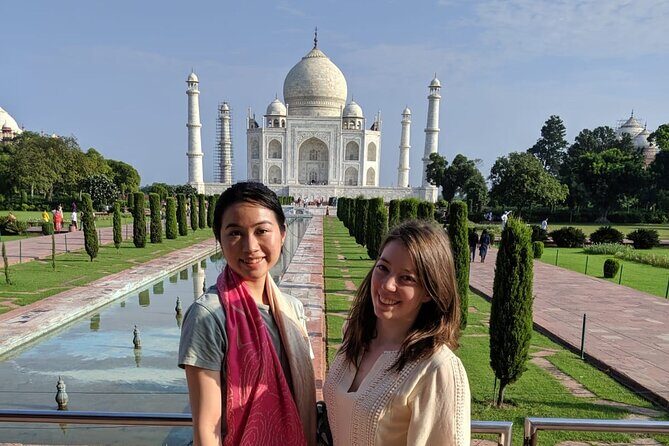
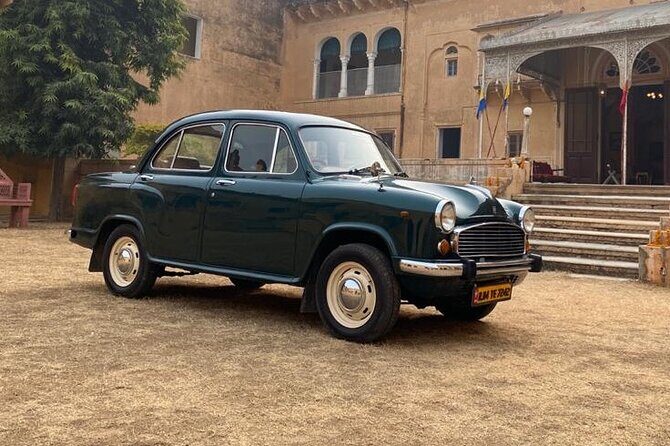
This tour works because it’s private. You’re not squeezed into a group shuffle where you’re stuck waiting on everyone else. Instead, you get an air-conditioned car and driver for intercity transfers and day-to-day sightseeing, plus an English-speaking guide throughout.
That matters in the Golden Triangle because logistics can steal your energy. Your guide keeps the flow moving, helps you navigate what to prioritize, and supports ticket entry so you spend less time standing around. Even the car details are practical: WiFi, bottled water, cookies, snacks, and soft drinks are included, which is handy for a long travel day between Delhi, Agra, and Jaipur.
Also, this is tailor-made in the sense that you can set a suitable start time from Delhi, and the team will advise what they can likely fit in your Agra day. That’s not a guarantee of miracles, but it’s a good sign you’re not locked into a rigid clock.
The one big tradeoff: the itinerary is full. If you’re the type who needs long, unstructured breaks, you’ll have to choose where to slow down.
You can also read our reviews of more private tours in New Delhi


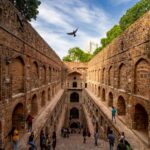
Day 1 in Agra: Agra Fort First, Then Mehtab Bagh Across the Yamuna
Day 1 sets up your Agra story with two very different moods: power on stone, then calm at water’s edge.
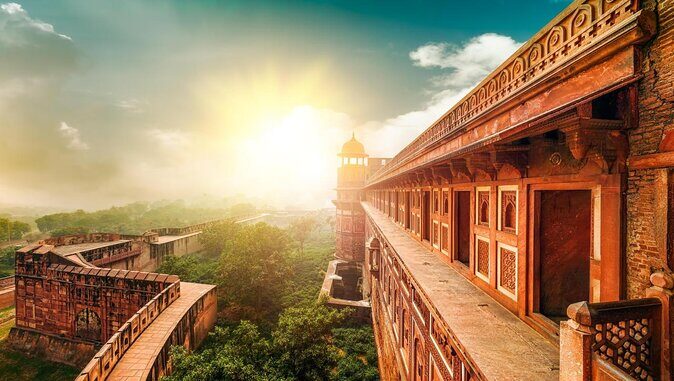
Agra Fort is the “how rulers lived” stop. You’re looking at massive fortifications and the kind of architecture that makes you understand why empires cared about this bend in the Yamuna. It’s scheduled for about an hour, with entry not included, so you’ll want to budget time for ticket purchase (your guide will help you with lines).
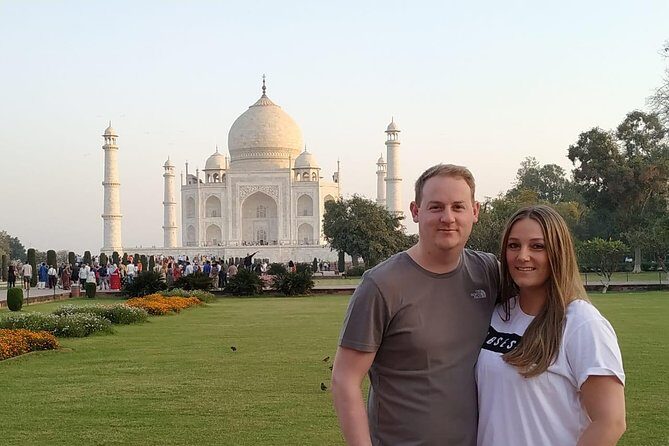
Then you head to Mehtab Bagh, a Mughal garden on the opposite bank of the Taj Mahal. The timing is the point: it’s described as best in dusk light, when the sky changes and the Taj view feels softer. Most people rush straight to the main landmark; this stop nudges you into a slower, more cinematic perspective.
Practical note: you’re not just moving between sights here—you’re shifting your visual “focus.” Fort views feel heavy and monumental. Mehtab Bagh is all about reflections, light, and framing. If you like photos, this is where you’ll likely get the ones that look different from the standard postcards.
Day 2: Sunrise Taj Mahal, Fatehpur Sikri, and the Stepwell Detour to Abhaneri
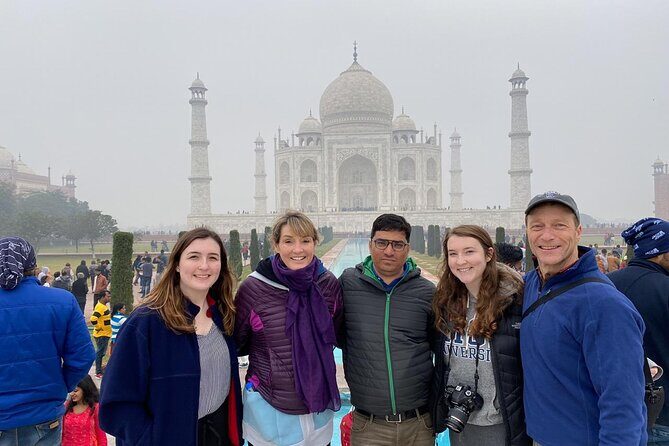
Day 2 is the headline day, and it’s built around the one decision that makes Taj Mahal visits more enjoyable: sunrise.
Sunrise Taj Mahal without letting the day take over
You’re scheduled for the Taj Mahal in the early morning with a session of about three hours. The entry ticket isn’t included, but the guide will help you skip long ticket lines. Sunrise is smart for two reasons. First, the light is flattering—less glare, more detail in the marble. Second, you’re starting the day before the busiest crowds lock into place.
One key heads-up: the Taj Mahal remains closed on Fridays. So you need to plan your route so that the day you’re supposed to visit Taj Mahal isn’t a Friday.
Fatehpur Sikri as a time-jump in Mughal ambition
After Taj, the itinerary moves you to Fatehpur Sikri, Akbar’s former capital. You get about an hour here. The listing marks admission at free, so you won’t have to budget entry tickets for this stop. Still, wear shoes you can walk in. This place is about scale and wandering, even when you keep the time tight.
A few more New Delhi tours and experiences worth a look



Abhaneri’s Chand Baori: the “why is this here?” stepwell
Then comes a detour that’s worth your attention: Chand Baori (stepwell) in Abhaneri. The stop is short—about 30 minutes—but it’s the kind of site that rewards looking carefully. Stepwells are practical water infrastructure, but in Chand Baori’s case, it’s also architecture-as-puzzle: tight geometry, repetitive steps, and a visual illusion that feels almost impossible until you see it in person.
Entry ticket isn’t included here, so again: budget for monument access, and rely on your guide for ticket-line navigation.
End of day: Jaipur arrival and a hotel check-in window
You’ll arrive in Jaipur and check into your hotel. The itinerary shows a couple of hours at arrival time, which is your buffer for rest, shower, and getting your bearings before the next set of temples and forts.
Day 3 in Jaipur: Gaitor Tombs, Monkey Temple Fun, Albert Hall, and Nahargarh Sunset
Day 3 gives you a mix of heritage, people-watching, and night views.
Royal Gaitor Tumbas is the first stop (about 30 minutes). This is where you get quieter, more contemplative architecture linked to royal history. It’s a good contrast after the heavy Mughal monuments you’ve already seen.
Next is Galtaji Temple, often called the Monkey Temple. It’s scheduled for about an hour and admission is marked free. The attraction here is simple: yes, there are monkeys, but the real value is the setting. It’s a lived-in temple complex where visitors end up watching daily behavior and tree-to-temple movement. If you travel with kids, this is the kind of stop that turns “history day” into “moment day.”
Then you hit Albert Hall Museum for about 45 minutes. Admission isn’t included, but the time is reasonable for seeing what you came for. The itinerary also hints you’ll revisit that area later with night lighting, so plan on it being part of a longer visual loop.
Nahargarh Fort at sunset: Jaipur’s best high-angle payoff
The big emotional moment on Day 3 is Nahargarh Fort. You get around three hours here, and it includes both sunset time and night-lighting experiences.
Your schedule is built for:
- Sunset views over Jaipur (the itinerary calls this a bird’s-eye panorama)
- Illuminated scenes around the Water Palace, including thousands of floodlights on the lake surface
- Strolling time through the local bazaar, with the option to try traditional sweets
- Passing by illuminated Albert Hall
This is one of those Jaipur nights that makes the city feel like a movie set. And because you’re already in a fort zone, the views don’t require extra effort—just patience while the sky changes.
Old city walking + hand-block printing (yes, you’ll make something)
After Nahargarh, the plan shifts back into the city. You’ll do a walking tour of old Jaipur and local markets, with back streets and colorful market areas on the route. The itinerary notes you can try street food options, and it also flags that your focus is on hygienic choices (so use your judgment).
Then you get a hand-block printing session, scheduled for about 1.5 hours, where you create your own napkin/scarf. This is one of the best value pieces on the whole tour because it turns a souvenir from a purchase into a story you actually made. If you care about crafts and hands-on travel, this is the activity that will stick in your memory longer than one more photo at a palace gate.
You also stop at Patrika Gate for about 20 minutes, marked free—a nice reset between heavier monument visits.
Day 4: Stepwells, Jal Mahal, the Jaipur Palace Circuit, and a Real Observing Stop
Day 4 is where Jaipur’s headline monuments line up in a compact route. It’s not “see everything forever” time. It’s more like: hit the major landmarks efficiently, with short stops that still give you enough time to understand what you’re looking at.
Panna Meena ka Kund: stepwell symmetry in 20 minutes
You start with Panna Meena ka Kund, about 20 minutes, marked free. This stepwell is known for its symmetrical step layout. It’s a quick but visually strong stop—good if you like patterns and want a change of pace from palaces.
Jal Mahal: the floating palace illusion
Next is Jal Mahal, the palace that looks like it’s floating because the lower levels sit under lake water. Scheduled for about 20 minutes and marked free. Even if you don’t buy into the storybook vibe, it’s still a clever optical effect that adds variety to a day of stonework and carvings.
City Palace: the power center of the Pink City
Then comes City Palace of Jaipur for about 1.5 hours. Entry ticket isn’t included. This is where Jaipur’s royal presence feels most concrete. Even within a limited time window, you should feel the scale and the museum-palace blend.
Hawa Mahal: the windows face-the-street icon
You’ll also visit Hawa Mahal (Palace of Wind) for about 30 minutes. Entry ticket isn’t included. The signature detail is the facade: 953 finely screened windows. It’s a short stop, but it’s the kind of place where you’ll look up a lot. If you like architecture, plan to spend your attention vertically.
Jantar Mantar: don’t skip the observing instruments
Next is Jantar Mantar, about 30 minutes, and it’s marked as a UNESCO World Heritage open-air observatory. Entry ticket isn’t included here either. This is a standout because it’s not just pretty stones—it’s tools for measuring the sky, the kind of scientific craft that turns a sightseeing day into something more than postcard collecting.
Swargasuli Tower: a quieter finish with stillness
You also stop at Swargasuli Tower for about 30 minutes. Admission isn’t included. It’s a calmer, less “clockwork tour” kind of stop than the big-ticket palaces, which can feel like a breath before your final food and temple moments.
Lassiwala lassi and Meera Mandir: end with local tastes
The itinerary ends with two simple, human-scale stops:
- Lassiwala Kishan lal Govind Narain Agarwal for lassi tasting (about 15 minutes, free)
- Shri Jagat Shiromani ji Temple (Meera mandir) for about 25 minutes (free)
You finish with something Jaipur-friendly: a taste of everyday life and a spiritual stop that doesn’t feel rushed.
Price and Logistics: Is $332.80 per Person Good Value?
At $332.80 per person, the headline question is whether you’re paying for the right stuff.
Here’s what you’re actually getting, based on the tour inclusions:
- Private air-conditioned car and driver for intercity transfers and sightseeing
- An English-speaking private tour guide throughout
- Parking, tollways, state taxes, and gasoline
- WiFi, bottled water, cookies, snacks, soft drink in the car
- GST included
- A structure designed to manage sunrise and sunset timing
What’s not included:
- Entry tickets for monuments (your guide helps you skip long ticket lines, but you still pay for access where required)
- Accommodation and meals
- Tips for the driver and guide
- Any camera/video fees at monuments (if applicable)
So the value depends on your travel style. If you’d otherwise hire a private driver yourself, deal with route planning, and pay for separate guides, this price can look fair fast. If you’re trying to do everything as cheap as possible with public transport and self-guided apps, a private guided package like this will feel like you’re paying for convenience.
For most couples and small families, though, the math tends to work: you’re buying time saved and stress reduced, while still getting real sights instead of “driving past everything.”
Who This Tour Fits Best (And Who Might Want a Slower Version)
This tour is a strong match if you:
- Want sunrise Taj Mahal and a true sunset at Nahargarh
- Like a guide to explain what you’re seeing, not just a checklist
- Prefer private comfort over group logistics
- Enjoy crafts—especially the chance to make your own hand-block printed napkin/scarf
It may not be your best fit if you:
- Get tired easily from a packed schedule (short stops add up)
- Want full flexibility every hour without any set timing
- Expect accommodation and meals to be included (they aren’t)
One more practical thought: this tour calls out that you can’t plan Taj Mahal on Friday. If your travel dates land you on a Friday, you’ll need to adjust your plan so Taj Mahal timing works.
Should You Book This 4-Day Private Golden Triangle Tour?
I’d book this if you want a smooth, well-timed route through Delhi to Agra to Jaipur with a private car, real guided context, and at least two memorable “timing moments”: Taj at sunrise and Nahargarh at sunset with the night lighting.
I wouldn’t book it if you’re dreaming of a relaxed holiday with long downtime, or if you’re determined to do everything without structured stops and ticket handling help.
If your priority is maximum “wow per day” while still keeping the logistics under control, this one makes sense.
FAQ
Are entry tickets included in the price?
No. Entry tickets are not included. Your English-speaking guide helps with skipping the long ticket lines for monuments.
Is accommodation included?
No. Accommodation and meals are not included in the tour price.
Is the tour private?
Yes. It’s a private tour/activity, so only your group participates.
Do I get pickup from Delhi?
Yes, pickup is offered, and the tour includes all intercity transfers by private air-conditioned car and driver.
What about the Taj Mahal closure day?
The Taj Mahal is closed to visitors on Fridays. You’ll need to plan your tour dates so the Taj visit day is not a Friday.
Does the tour include food or drinks during travel?
Food isn’t included as a meal, but the car includes bottled water, cookies, snacks, and soft drinks.
Is there WiFi in the vehicle?
Yes. WiFi access is included in the car.
What happens if I cancel?
Free cancellation is available up to 24 hours in advance for a full refund. If you cancel less than 24 hours before the start time, the amount paid is not refunded.