REVIEW · MUMBAI
Explore Complete Mumbai City in 3 Days by Private Vehicle
Book on Viator →Operated by Shreeji Tours n Travels · Bookable on Viator
Mumbai in three days can feel like a sprint. This private vehicle tour packs major Mumbai icons, daily-life stops, and a studio visit into a tight loop with an English-speaking guide; I especially like the mobile ticket convenience and the “see-it-all” structure. One possible drawback: Day 1 moves fast, and several stops are brief, so you’ll want comfy shoes and a flexible attitude.
At $235 per person, I think the value comes from how much is handled for you: air-conditioned transport, bottled water, pickup and drop, tolls/parking, plus included entrance tickets at key stops. It’s a good way to cover a lot without spending your precious vacation hours on route planning and ticket-hunting.
In This Review
- Key Highlights You’ll Feel (Not Just Read)
- 3 Days in Mumbai by Private Vehicle: What You’re Actually Signing Up For
- Price and Inclusions: Where the $235 Per Person Value Comes From
- Day 1: South Mumbai Icons, Gandhi Memory, and Views from Malabar Hill
- Gateway of India and Chhatrapati Shivaji Maharaj Terminus
- Marine Drive and Girgaum Chowpatty: The sea-front rhythm
- Hanging Gardens and ISKCON Chowpatty: viewpoints plus faith
- Mani Bhavan Gandhi Museum: one man, one house, big impact
- Dhobi Ghat and Antilia: daily work and famous wealth
- Haji Ali Dargah and historic temples: faith on an islet
- Day 2: Dharavi’s Entrepreneurship Meets SJ Studio’s Film-Making
- Dharavi for 2 hours: industry, recycling, and work life
- SJ Studio and Entertainment: how Bollywood becomes a workplace
- Bandstand Promenade: sea views and celebrity-adjacent culture
- Day 3: Kanheri Caves in Sanjay Gandhi National Park and the Global Vipassana Pagoda
- Kanheri Caves: rock-cut history with big time inside
- Global Vipassana Pagoda: a structured place for reflection
- Getting the Most from a Private Vehicle Day: Guide Quality and Custom Stops
- Practical Tips That Will Save Your Day
- Wear shoes you can walk in
- Plan for no included meals
- Bring a light layer and stay ready for weather
- Expect Day 1 to be fast
- Who This Tour Fits Best (and Who Might Feel Crunched)
- Should You Book This Mumbai 3-Day Private Tour?
- FAQ
- How long is the tour?
- What time does the tour start?
- Is pickup and drop included?
- What’s included in the price?
- Are entrance fees included?
- Are meals included?
- Is this a private tour or a shared group?
- Do I need to book well in advance?
- What if the weather is bad?
Key Highlights You’ll Feel (Not Just Read)
- Private, air-conditioned transport with pickup and drop keeps the day from turning into a navigation project.
- English-speaking guide means you get context at landmarks like Gateway of India and Chhatrapati Shivaji Maharaj Terminus.
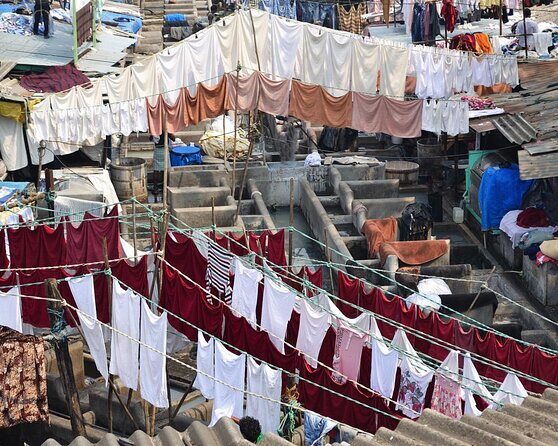
- Real daily-life stops like Dhobi Ghat add texture beyond sightseeing photos.
- Dharavi + SJ Studio on the same trip gives you a fuller picture of how Mumbai functions—business and media both.
- Nature day built in with Kanheri Caves and the Global Vipassana Pagoda gives your brain a break from city noise.
3 Days in Mumbai by Private Vehicle: What You’re Actually Signing Up For
This is designed for people who want to experience Mumbai’s range in a short time. You’ll bounce between South Mumbai’s landmark zone, the Dharavi area, a working film hub, and then out to green/rock-cut sights on the third day.
The key here is the pacing. Day 1 is heavy on classic monuments and viewpoints, Day 2 mixes human-scale industry and movie-making, and Day 3 shifts you into caves and a meditation hall. If you want Mumbai to feel like a highlight reel, this format works. If you want slow, lingering time at every site, you may feel the schedule is tight.
You can also read our reviews of more city tours in Mumbai


Price and Inclusions: Where the $235 Per Person Value Comes From
$235 per person is a fair ask for a private, 3-day plan because the package covers the stuff that usually costs time and friction:
Included with your tour price:
- Air-conditioned vehicle and private transportation
- Mineral bottled water
- Pickup & drop
- Local English-speaking guide
- Toll tax & parking fees
You also get admission ticket coverage for several major stops (not every single stop), while many others are listed as free. For example, Mani Bhavan Gandhi Museum and Dharavi are included, and Kanheri Caves and the Global Vipassana Pagoda have included admissions too.
Not included:
- Meals
- Personal expenses
That matters because Mumbai can be unpredictable for food costs and timing, especially when you’re moving between neighborhoods. You’ll want to build your own lunch plan (or snacks) around the route, rather than counting on the tour to feed you.
Day 1: South Mumbai Icons, Gandhi Memory, and Views from Malabar Hill
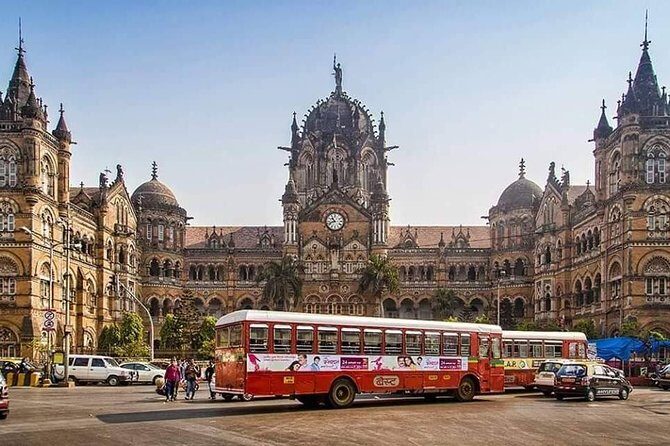
Day 1 is a classic South Mumbai circuit—big landmarks in the morning, spiritual/cultural stops mid-day, and sea views and architectural surprises throughout.
Gateway of India and Chhatrapati Shivaji Maharaj Terminus
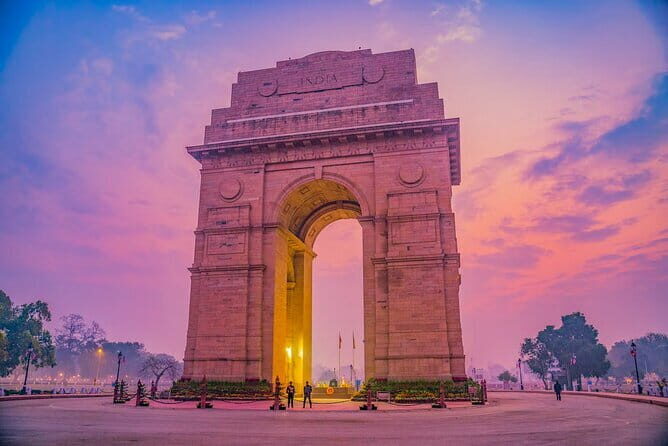
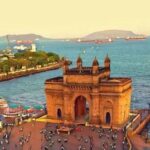
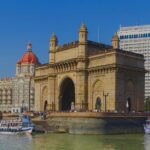
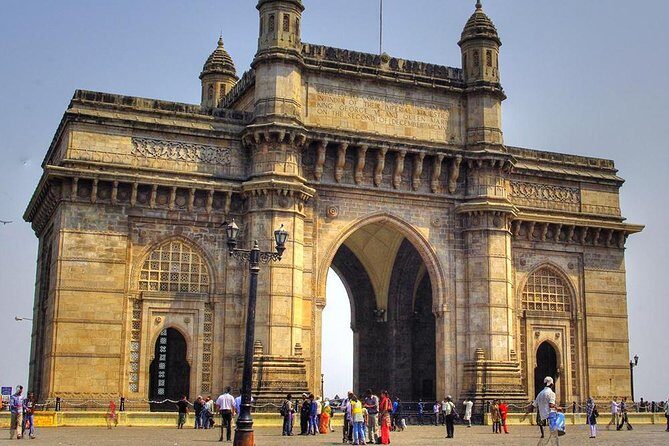
You start at Gateway of India, the arch monument tied to the era of King-Emperor George V and Queen-Empress Mary. It’s the kind of place where you can see how Mumbai projects itself to the world—plus it’s a good anchor point for orientation.
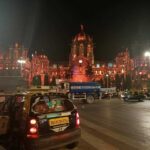
From there, you head to Chhatrapati Shivaji Maharaj Terminus (CSMT), a historic rail station and UNESCO World Heritage Site. If you like transport history and architecture, this is one of the most satisfying stops of the whole trip, because it’s both functional and monumental. Admission is listed as free, so you can focus on the building itself rather than logistics.
Marine Drive and Girgaum Chowpatty: The sea-front rhythm
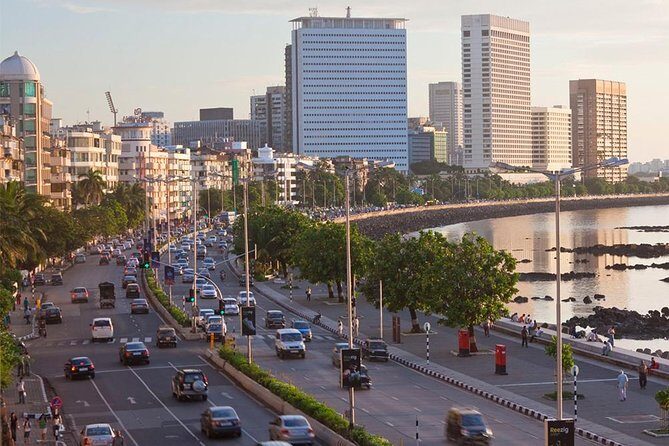
Next comes Marine Drive, a C-shaped boulevard along South Mumbai. This is one of those places you understand fast: the curve, the skyline, and the way people move along the promenade.
Then you stop at Chowpatty Beach (Girgaum Chowpatty). It’s a public beach and a natural follow-up to Marine Drive—especially because the area feels like a living part of the city, not just a tourist postcard. Admission is listed as free, which is nice because it helps you control how long you want to spend there.
You can also read our reviews of more private tours in Mumbai



Hanging Gardens and ISKCON Chowpatty: viewpoints plus faith
You’ll get a pause with Hanging Gardens on Malabar Hill. Even if you’re not a “gardens person,” the value here is the viewpoint context—Malabar Hill gives you a different angle on the city than the seaside strip.
Then it’s on to ISKCON Chowpatty (Sri Sri Radha Gopinath Temple). This stop is more than a building photo: it’s a spiritual community site, and you’ll likely feel the calm contrast from the nearby urban scene. Admission is listed as free.
Mani Bhavan Gandhi Museum: one man, one house, big impact
Mani Bhavan Gandhi Museum is the cultural “weight” in Day 1. It’s dedicated to Gandhi’s life and features his room, library, and photos/films. Admission is listed as included, which makes it an easier call for your schedule—this is one of the few stops where the tour’s time investment is especially meaningful.
Dhobi Ghat and Antilia: daily work and famous wealth
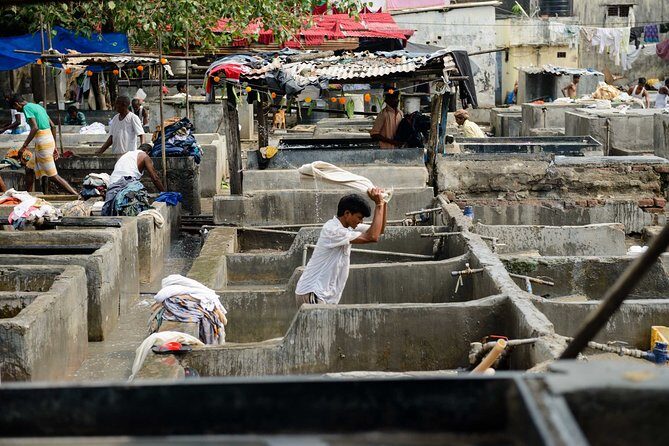
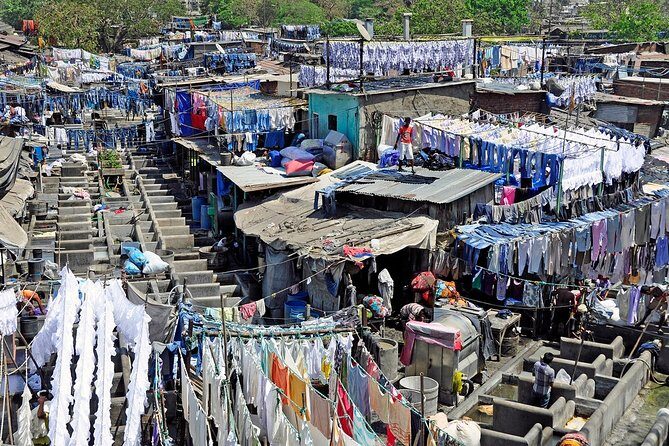
A standout contrast comes next at Dhobi Ghat, an open-air laundromat where dhobis wash linens and clothes from Mumbai’s hotels and hospitals. It’s brief, but it’s memorable because it shows the city’s service industry as part of everyday life.
Then you pass Antilia, a private home valued extremely high. It’s a quick look rather than a visit, but it connects to Mumbai’s reality: enormous wealth can exist right next to intense daily labor and dense neighborhoods.
Haji Ali Dargah and historic temples: faith on an islet
You’ll also visit Haji Ali Dargah, located on an islet off the coast of Worli. It’s a mosque and shrine for Pir Haji Ali Shah Bukhari, and it’s one of those places where setting matters as much as architecture.
The day continues with more spiritual landmarks:
- A Jain Temple in Mumbai with intricate stone carvings and a zodiac-painted dome
- Banganga, a temple tank in the Walkeshwar Temple complex
- Babulnath Temple, an ancient Shiva mandir near Girgaum Chowpatty
Most of these are listed as free-entry stops, and that’s a practical bonus on a day already packed with sites.
Day 1 reality check: This is not a “slow stroll” day. The short stop times are the trade-off for hitting a lot of Mumbai’s core sights in one route.
Day 2: Dharavi’s Entrepreneurship Meets SJ Studio’s Film-Making
Day 2 is where the tour gets more human and more modern in one sweep.
Dharavi for 2 hours: industry, recycling, and work life
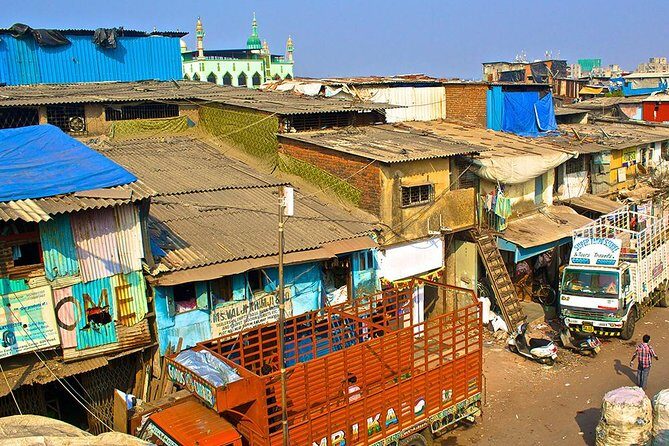
At Dharavi, you spend about 2 hours with the admission ticket included. The framing here is important: it’s presented as a place known for extreme entrepreneurship and small-scale industries, including plastic recycling.
I like this stop because it breaks the usual oversimplification people bring into Mumbai. Even if your impressions are formed by stereotypes, a guided visit helps you see systems—work, trade, and the practical economy that keeps things running.
One thing to keep in mind: a slum-area visit can be emotionally intense. If you get easily overwhelmed, you’ll want to pace your energy and ask the guide for context so it feels grounded, not just overwhelming.
SJ Studio and Entertainment: how Bollywood becomes a workplace
Next is SJ Studio and Entertainment Ltd, with about 3 hours and admission included. This is a studio stop in the heart of Mumbai and described as a major film and TV production hub.
This part is valuable if you’re curious about how media is produced in real time—sets, production workflow, and how filming culture fits into city life. It also gives you a day that’s not only history and monuments; you get something current.
Bandstand Promenade: sea views and celebrity-adjacent culture
Finally, you’ll have time at Bandra Bandstand, a 1.2-kilometer promenade along the sea. This is where Mumbai’s identity shifts again: from dense neighborhoods and industry to open-air walking by the water.
Your stop description also references Indian stars associated with the area. Even if you’re not chasing celeb sightings, you’ll still get the location feeling—sea air, long views, and a place people actually use.
Day 3: Kanheri Caves in Sanjay Gandhi National Park and the Global Vipassana Pagoda
Day 3 is the reset day. You trade the city circuit for caves and a dedicated meditation space.
Kanheri Caves: rock-cut history with big time inside
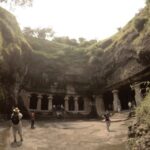
You visit Kanheri Caves, located in/near Sanjay Gandhi National Park on the island of Salsette’s western outskirts. You’ll spend about 4 hours, with admission included.
The caves are cut into a massive basalt outcrop, and you’ll want time for the walk-and-look rhythm. Because this is nature-linked and cave-linked, it tends to feel very different from urban sightseeing. If you prefer a day where your senses slow down—this is it.
Global Vipassana Pagoda: a structured place for reflection
Then you go to the Global Vipassana Pagoda near Gorai in North-west Mumbai. Your time here is about 3 hours, and admission is included.
This stop is described as a meditation hall, inaugurated in 2009, built on donated land. I like this because it gives you a mental landing after two city-heavy days. It’s also the kind of place where respectful behavior matters, so plan to keep your voice down and your phone use modest.
Getting the Most from a Private Vehicle Day: Guide Quality and Custom Stops
A private format changes how you experience Mumbai. With an air-conditioned vehicle and pickup/drop, you’re not stuck juggling taxis, route timing, or ticket lines when your day is already packed.
What really matters, though, is your guide and driver rapport. In past experiences, guides like Sameer and Vikrant have been specifically praised for being proactive and friendly, and Nitin is named as an excellent driver. Even if your guide is different, use that as a signal: the best versions of this tour are the ones where you feel taken care of, not just transported.
Also, the tour can often be customized. One of the best outcomes is when you tell your guide what you care about most, then the route leans toward your priorities. For example, if Bollywood studios aren’t your thing, you might be able to adjust—without losing the big structure of the three days.
Practical Tips That Will Save Your Day
Wear shoes you can walk in
You’ll do plenty of walking and standing, especially with cave areas on Day 3 and promenade/beach stops on other days. Comfortable shoes matter more than you’d think when you’re stacking multiple short sights.
Plan for no included meals
Meals aren’t included, and that’s normal for this type of city touring. Build your own lunch and snacks around the midday rhythm so you don’t end up eating late or overspending.
Bring a light layer and stay ready for weather
The experience requires good weather. Mumbai can change fast, so pack a light layer for cooler moments and keep a simple rain plan in mind.
Expect Day 1 to be fast
Day 1 has many stops—each with short time blocks—so you’ll see a lot, but not everything in “deep linger mode.” If you want photos, prioritize the big anchors first (Gateway, CSMT, Marine Drive), then let the smaller temples and viewpoints fill in the texture.
Who This Tour Fits Best (and Who Might Feel Crunched)
This tour is a strong fit if you:
- Want a 3-day overview of Mumbai without doing it piece-by-piece
- Like having a guide explain context at major monuments
- Are curious about both everyday life (Dhobi Ghat, Dharavi) and modern work (SJ Studio)
- Appreciate a final day that shifts into caves and meditation space
You might feel less happy with it if you:
- Want long, slow time at each stop
- Dislike tight schedules or rapid transitions between neighborhoods
- Need a tour that includes meals, not just transport and tickets
Should You Book This Mumbai 3-Day Private Tour?
Book it if you want to get your bearings fast and see Mumbai’s main storylines in one trip: colonial-era monuments, rail-station grandeur, sea-front scenes, Gandhi’s personal legacy, daily labor you can actually observe, and the contrast of studio production and nature/cave history.
If you book, do one smart thing: tell your guide what you care about most on Day 1 so they can steer your time. With a private vehicle, your experience depends heavily on that fit—when your priorities match the route, the value feels obvious.
FAQ
How long is the tour?
The tour runs for 3 days (approx.).
What time does the tour start?
The start time is 9:00 am.
Is pickup and drop included?
Yes. Pickup & drop are included.
What’s included in the price?
The package includes an air-conditioned vehicle, private transportation, mineral bottled water, pickup & drop, a local English-speaking guide, and toll tax & parking fees.
Are entrance fees included?
Admission ticket coverage is included for several stops, and some other stops are listed as free entry. For example, Mani Bhavan Gandhi Museum and Dharavi are listed as included, and Kanheri Caves and the Global Vipassana Pagoda are also listed as included.
Are meals included?
No. Any meals are not included.
Is this a private tour or a shared group?
It’s private—only your group participates.
Do I need to book well in advance?
On average, it’s booked 31 days in advance.
What if the weather is bad?
The experience requires good weather. If it’s canceled due to poor weather, you’ll be offered a different date or a full refund. Free cancellation is available up to 24 hours before the start time.