REVIEW · AGRA
Agra Temples and Spiritual Sites Private 6 Hours Tour
Book on Viator →Operated by Keeper Landwey · Bookable on Viator
Agra turns spiritual on this guided loop, with stops across faiths in one focused day. I like that the tour runs on a private live guide and air-conditioned car, so you get context without the usual wandering. Instead of just ticking sights, you’ll move from prayer space to prayer space and see how different communities shaped Agra.
I especially like the pickup and drop-off anywhere in Agra, which makes the day feel easy. I also like that the main stops have free admissions, so your money goes to guide time and transport instead of entrance fees.
The one possible drawback: this is a worship-site day, so you should expect rules on dress, cameras, and timing—and that can make visits feel a bit more structured than sightseeing-only stops.
In This Review
- Key highlights worth planning for
- A 6-hour spiritual route that changes how you see Agra
- Pickup, AC comfort, and why free entry is real value
- Jama Masjid: Shah Jahan’s Friday Mosque near Agra Fort
- Balkeshwar Mandir on the Yamuna: Shiva worship by the river
- St. George’s Cathedral in Agra Cantonment: English Gothic in India
- Dayal Bagh (Dayalbagh): Radhasoami and the meaning of merciful gardens
- Gurudwara Guru ka Tal: Sikh pilgrimage tied to Guru Tegh Bahadur Ji
- Courtyard Agra meal break: a practical reset
- What to wear and how to act at religious sites
- The guide and driver factor: what makes the day feel smooth
- Price and value for $67: who should book this
- Should you book this Agra spiritual sites tour?
- FAQ
- How long is the Agra Temples and Spiritual Sites private tour?
- What time can pickup happen in Agra?
- Do I get a guide and private transportation?
- Are entrance fees included for the religious sites?
- Is lunch included?
- Does the tour include bottled water and umbrellas?
- Is free cancellation available?
Key highlights worth planning for
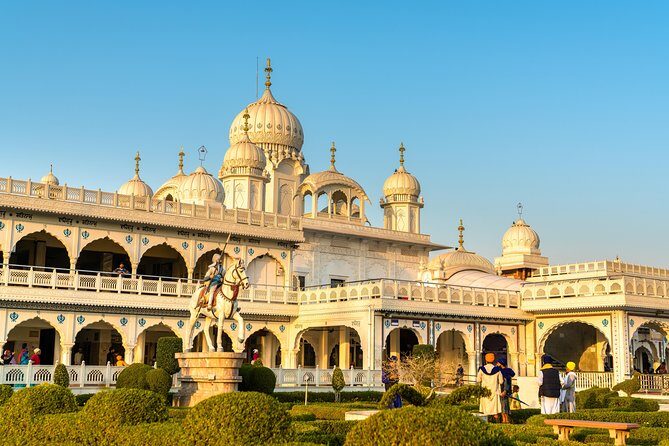
- A multi-faith route in one 6-hour window, from Jama Masjid to a Sikh gurudwara
- Free entry at every religious stop, keeping the day good value
- AC comfort with bottled water and umbrellas for Agra weather reality
- A real local guide, with past groups noting strong explanations and patience
- An intentional meal break at Courtyard Agra (meal cost not included)
- Pickup can happen from anywhere in Agra, which saves you time and hassle
A 6-hour spiritual route that changes how you see Agra
This tour is for when you want Agra beyond the Mughal postcard. You’ll see how Muslims, Hindus, Christians, Sikhs, and Radhasoami devotees use sacred space—and how those places sit in the actual neighborhoods of the city.
I like that it’s private and guided. That matters here, because places of worship come with customs and small details that you’ll miss without someone to translate the meaning. The day is also timed in clean blocks, so you aren’t stuck in long traffic without a plan.
One practical note: the pickup window runs from early morning through midday. If you start closer to the morning end, you’ll beat some heat and crowds. If you start later, you’ll still have a full route, but plan for warmer light and busier streets.
You can also read our reviews of more private tours in Agra



Pickup, AC comfort, and why free entry is real value
You’ll get picked up and dropped off anywhere in Agra, which is a big convenience if you’re not staying right by the main sights. The tour also includes a private car with chauffeur plus parking fees and taxes, so you’re not dealing with surprise costs mid-day.
Inside the car, you’ll have AC and bottled water. Add the included umbrellas, and you’re covered if the weather turns on you—Agra can do that. This sounds small, but it makes the day feel manageable, especially if you’re combining outdoor monuments with active places of worship.
Then there’s the big value driver: entrances for the religious stops are free or very low, and this tour is priced with that in mind. In other words, you aren’t paying extra just to get into shrines. You’re paying for guided time, transport, and a smooth route.
Jama Masjid: Shah Jahan’s Friday Mosque near Agra Fort
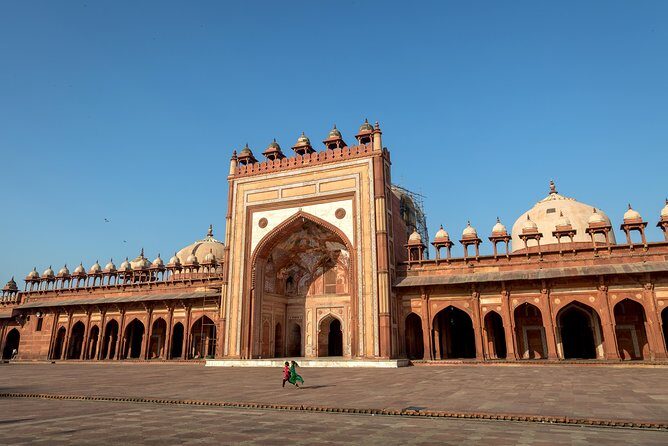
Jama Masjid is the kind of stop that gives you instant scale. Built by Shah Jahan in 1648 for his daughter, it’s known as the Friday Mosque and is considered one of the largest mosques in India. The setting is also striking: the mosque is across from Agra Fort and looks over the Agra Fort Railway Station area.
Expect a calm focus when you enter. Even if you’re there as a visitor, the experience is guided by worship etiquette. A good guide helps you understand what you’re seeing—how spaces are used, why the architecture is laid out the way it is, and what the name Jama Masjid implies.
This is also a smart first stop because it’s early in the route and it helps you “read” Agra’s layout. You’ll get a sense of the fort zone and the city’s older core right away.
Balkeshwar Mandir on the Yamuna: Shiva worship by the river
Next up is the Balkeshwar Mandir, a famous Hindu temple devoted to Shiva. It sits on the bank of the Yamuna River, so the feel of the place isn’t just temple-stone; it’s also tied to the river’s presence in daily life.
Here’s what to watch for: the temple setting can feel busy, but the purpose is clear. You’re stepping into living worship, not a museum display. Give yourself a little extra patience for foot traffic and for people doing their rituals.
If you like places where history and routine meet, this stop tends to land well. The guided explanation helps you connect the temple to the broader religious landscape of Agra, rather than treating it like a separate, unrelated attraction.
St. George’s Cathedral in Agra Cantonment: English Gothic in India
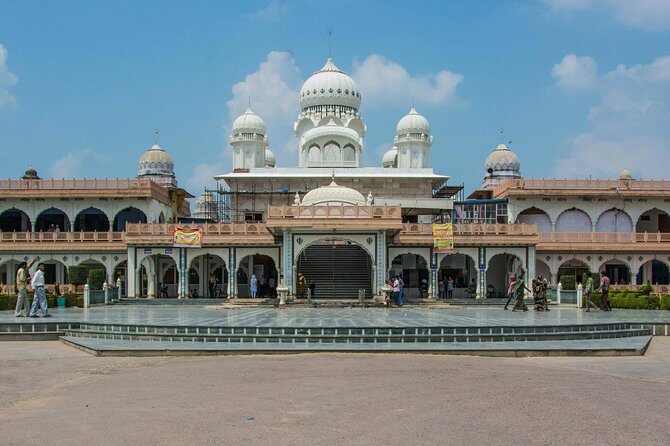
Agra isn’t only Mughal-era monuments. St. George’s Cathedral is a reminder of the Christian community that settled during the Colonial era, and the building holds onto that time period in its design.
You’ll find it in the Agra Cantonment Area, in Sadar Bazar. The architecture is English Gothic, and it was designed and constructed by Major General and Engineer J T Boileau in 1828. The cathedral is said to be well preserved, and it continues to draw worshippers from the nearby areas as well as tourists.
This stop is worth your attention because it gives contrast. You’ll compare sacred space styles: how a mosque organizes movement and worship, how a Hindu temple sets up devotion, and then how a church frames reverence through its own architectural language.
If you’re the type who enjoys seeing how empires and communities left physical marks, this one tends to be a highlight. It also adds balance to a day that could otherwise feel like it’s all one religious tradition.



Dayal Bagh (Dayalbagh): Radhasoami and the meaning of merciful gardens
Dayal Bagh, also spelled Dayalbagh, is described by its meaning: Garden of the Merciful. It’s a locality in Agra and the headquarters of the Dayalbagh sect of the Radhasoami faith.
During your visit, you’ll learn about its spiritual focus and the fact that the 8th revered leader lives and presides over satsang here. That detail matters because it explains why the place is not just historical. It’s active and oriented around ongoing spiritual gatherings.
From a visitor perspective, this stop can shift your day from “spectacle” to “practice.” In other words, it gives you a different kind of sacred atmosphere—less about grand monuments and more about organized faith life.
If you want your Agra day to feel varied and thoughtful, this is the kind of stop that helps you slow down and look at how belief shapes place.
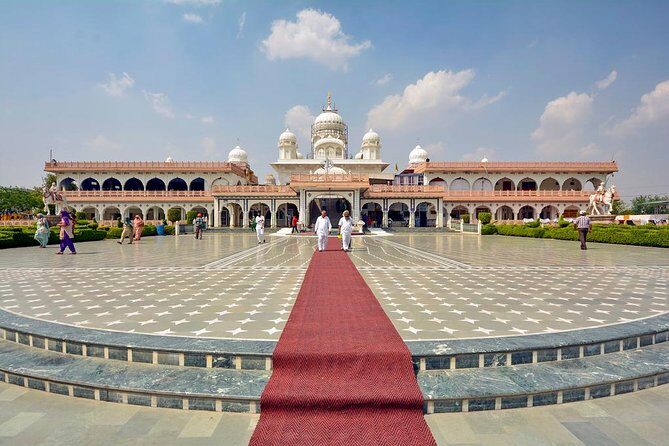
Gurudwara Guru ka Tal: Sikh pilgrimage tied to Guru Tegh Bahadur Ji
Then the tour heads to Gurudwara Guru ka Tal, a Sikh pilgrimage with roots back to the 17th century. It’s situated along National Highway Number 2, which makes it easier to locate and part of Agra’s real travel routes, not hidden off the main map.
This gurudwara marks the holy place of Shri Guru Teg Bahadur Sahib Ji. His journey began from Shri Anandpur Sahib, and the site also connects to the names of followers who traveled with him, including Bhai Mati Das ji, Bhai Sati Das ji, Bhai Dyala Ji, Bhai Gurditta Ji, Bhai Udo ji, and Bhai Jaita ji.
What makes this stop memorable is the clarity of purpose. Sikh pilgrimage sites often feel structured in terms of reverence and visitor flow, and having a guide helps you respect customs without guessing. You’ll get context for why the site matters and how it fits into Sikh spiritual geography.
If you care about understanding religion through story and place, this is one of the most meaningful segments of the day.
Courtyard Agra meal break: a practical reset
Mid-tour, you’ll pause for a meal break at Courtyard Agra. The plan is flexible in feel—an authentic multi cuisine Indian restaurant or a 5-star hotel setting—so you can treat this as a reset rather than another rushed stop.
The key point: the meal itself isn’t included. That’s normal, and it keeps your tour price focused on the guided sights and transport. I’d treat this as your chance to eat something dependable, refill water if you want, and regroup for the final segment.
After a day hopping between sacred spaces, a real seated break helps you enjoy the rest of the route instead of feeling “done” before you finish.
What to wear and how to act at religious sites
You’ll be walking and moving around multiple worship sites, so wear comfortable clothes and walking shoes. That isn’t just practical—it helps you avoid awkward last-minute adjustments if a site’s entry rules require certain coverage.
Keep your pace respectful inside sacred spaces. If the guide points out where to stand, how to move, or what not to photograph, follow it. These places are working religious sites, not just scenery.
Also, think about time of day. Morning visits tend to feel quieter, while later visits can be brighter and busier. Either way, your AC car and bottled water help you stay functional between stops.
The guide and driver factor: what makes the day feel smooth
The tour includes a private live tour guide, and that role matters a lot on this route. Each site has its own language, rules, and cues. A good guide turns those cues into understanding, so you don’t just “see” buildings—you grasp why they matter.
Past tour experiences shared names that stand out: a guide like Junaid has been praised for depth and patience, while Ankur has been associated with connecting essential history and culture to what you’re actually standing in. On the driving side, Vijay has been mentioned for giving people confidence as the day moves between neighborhoods.
You can’t guarantee the exact people, of course, but you can look for the same qualities: clear explanations, good timing, and patience with questions and small detours.
Price and value for $67: who should book this
At $67 per person for about 6 hours, the value comes from three things: the private AC car with chauffeur, the private guide, and the fact that most major religious stops are free to enter.
If you’re a solo traveler, this can still feel fair because you’re not paying to manage taxis or negotiate entry logistics. If you’re traveling with a group, the included group discounts can add another layer of value—especially because you get the same guided pacing rather than splitting into mismatched half-days.
This tour suits you best if:
- You want Agra’s spiritual and religious side, not only major Mughal monuments
- You like structured time with stops that actually connect to a theme
- You appreciate a guide who explains what you’re seeing, not just where it is
- You’d rather sit back in AC than wrestle with traffic between districts
One limitation: if your must-see list is entirely about Mughal palaces and forts, this isn’t designed for that. It’s designed to help you understand Agra through faith sites.
Should you book this Agra spiritual sites tour?
Yes, if you want a focused, respectful, multi-faith day with smooth transport and strong guidance. The free-entry stops make it a smart buy for people watching their budget, and the pickup anywhere-in-Agra setup saves real time.
Skip it only if you’re mainly after high-profile palace sightseeing or you don’t want worship-site rules in your day. Otherwise, this is one of those itineraries that changes the tone of your trip: you’ll leave with a clearer picture of how Agra’s communities use sacred space—and that’s the kind of memory that lasts longer than photos.
FAQ
How long is the Agra Temples and Spiritual Sites private tour?
It runs for about 6 hours.
What time can pickup happen in Agra?
Pickup is offered from anywhere in Agra between 6:00 AM to 1:00 PM.
Do I get a guide and private transportation?
Yes. You’ll have a private live tour guide and sightseeing in a private air-conditioned car with a chauffeur.
Are entrance fees included for the religious sites?
Entrance tickets are listed as free for the stops, and the tour notes that religious site entrances are free or very less, with exclusions for meal and other optional items.
Is lunch included?
No. There’s a meal break at Courtyard Agra, but admissions for the meal are not included.
Does the tour include bottled water and umbrellas?
Yes. Bottled water is included, and umbrellas are provided if needed.
Is free cancellation available?
Yes. You can cancel for a full refund if you cancel up to 24 hours in advance of the experience start time.