REVIEW · MUMBAI
Cultural & Heritage Trails of Old Town Mumbai Guided Walking Tour
Book on Viator →Operated by Yo Tours · Bookable on Viator
Old Town Mumbai moves best on foot. This guided walk strings together big-name landmarks and small back-lane stories, starting at Gateway of India and ending on Marine Drive in about 2 hours. I like that it’s a quick, practical way to get your bearings fast and learn what you’re actually looking at. I also like the guide setup: a friendly storyteller who can speak English & Hindi, plus local money-saving tips. One thing to plan for: it’s walking-only with no hotel pickup and no food or drinks included unless specified, so you’ll want to go ready to wander.
The route is built for first-timers and tight schedules. You’ll cover about 1.5 miles (2 kilometers) and get a feel for how Colaba and South Mumbai connect—waterfront views, old churches, cinemas, finance buildings, and those classic “what is that?” details that don’t show up on a bus ride. If you choose a morning or evening departure, you can also match the tour to your day’s plans.
In This Review
- Key highlights worth your time
- Gateway of India to the statues and the waterfront vibe
- Old lanes, an Arab perfume shop, and a heritage-hotel stop
- Churches, Royal Bombay Yacht Club, and Regal Cinema (South Mumbai’s show-and-story stretch)
- Downtown Mumbai: galleries, a Jewish Synagogue, and an antique library
- Finance landmarks: Bombay Stock Exchange, Reserve Bank of India, and the Oriental Buildings
- Horniman Circle, Town Hall, St Thomas Cathedral, and the telecom/rail power points
- The finish: Queen’s Necklace (Marine Drive) and a clean landing point
- How long it really takes, and what you should bring
- Value for money: why a low price can still feel meaningful
- Who should book this Old Town Mumbai guided walk?
- Should you book it?
- FAQ
- FAQ
- How long is the Cultural & Heritage Trails of Old Town Mumbai guided walking tour?
- How far do you walk?
- Where does the tour start and end?
- Are there morning and evening tour times?
- What languages does the guide speak?
- What’s the group size limit?
- Is food or drinks included?
- What’s included in the tour price?
- Can I cancel for a full refund?
Key highlights worth your time
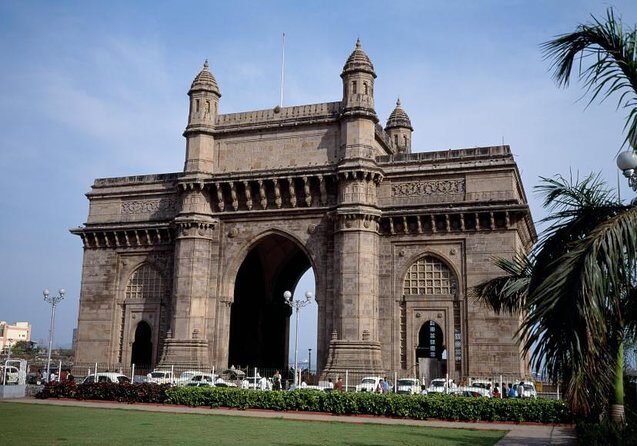
- Gateway of India waterfront start with turquoise water, boats, and the Vivekanand and Shivaji Statues
- Small-lane storytelling that goes beyond the postcard sites into side streets and older institutions
- Landmarks that mix culture and daily life, from churches and synagogues to a famous yacht club stretch
- A walk through South Mumbai’s “old meets modern” including finance landmarks like the Bombay Stock Exchange and Reserve Bank of India
- End at Queen’s Necklace (Marine Drive) for an easy, iconic finish after the walk
Gateway of India to the statues and the waterfront vibe
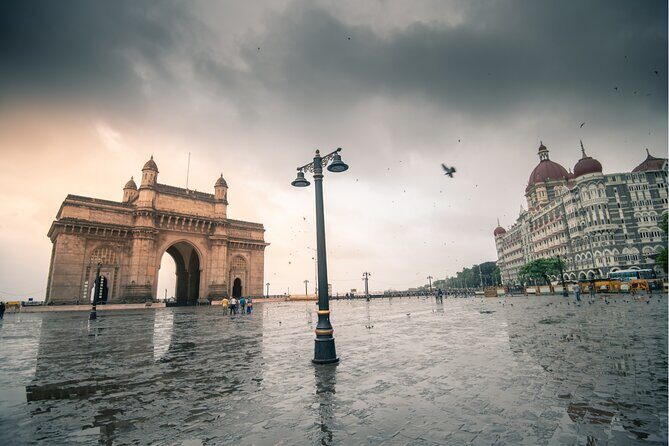
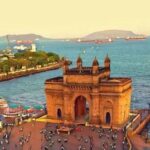
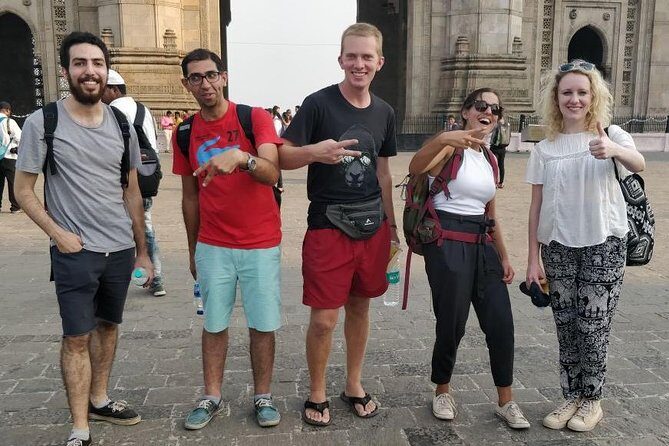
Most walking tours try to cram in famous places. This one starts with a more useful goal: helping you read the city. You begin at Gateway of India near Apollo Bandar in Colaba, right by the water. The scene is the first clue that Mumbai is both a coastal city and a trading city—colored boats and yachts out on the water make the whole area feel alive even before you start walking.
From there, the tour focuses on landmarks that set the tone for South Mumbai. You’ll see the Vivekanand and Shivaji Statues and the Wellington Fountain as you move along the waterfront stretch. These stops matter because they give you context for what you’ll keep noticing later: the way public spaces, monuments, and architecture all tie into the city’s layered history.
Practical note: because you’re starting on a waterfront, it can be cooler or breezy depending on the time of day. If you choose the evening slot, you’re likely to enjoy it more if you’ve got a light layer for comfort.
You can also read our reviews of more walking tours in Mumbai


Old lanes, an Arab perfume shop, and a heritage-hotel stop
After the big visual hits, the walk turns into the part I actually enjoy most: the older streets and the everyday businesses that carry memory. The route includes a generations-old Arab perfume shop and a heritage hotel described as a backpacker hotspot. Even if you’re not shopping, these stops help you understand how Mumbai’s neighborhoods have long attracted travelers, traders, and families moving through the same corridors.
Then the tour tosses in something delightfully specific: a stop related to India’s best-known seekh kebab brand shop. That’s not just about food. It’s about how certain foods become identity markers—and how the “same brand” shows up next to heritage buildings without anyone batting an eye.
What to expect here: short pauses, guide-led explanations, and enough time to look around instead of just passing through. You’ll also be shown hidden lanes and places, which is where many first-time visitors usually miss the best details. This is also where the walking tour format really pays off. On foot, you notice storefront layouts, street geometry, and how locals actually move through the area.
Churches, Royal Bombay Yacht Club, and Regal Cinema (South Mumbai’s show-and-story stretch)
This section is a classic South Mumbai mix: faith, leisure, and culture in a single stretch. You’ll pass the oldest churches in South Mumbai, and you also get a look at the Royal Bombay Yacht Club area and the historic buildings lining the road.
One standout stop on this part of the walk is the Regal Cinema, noted as India’s first air-conditioned theatre. That’s the kind of detail I love because it turns a building into a story. You can look at a landmark and still not know why it matters—here, the guide’s job is to connect the dots so the city feels less like a pile of sights and more like a narrative.
If you’re an architecture and cultural-spaces person, don’t rush this segment. Even if you can’t read every façade detail, the tour gives you the “what you’re seeing and why it matters” version, so you leave with real understanding, not just photos.
Downtown Mumbai: galleries, a Jewish Synagogue, and an antique library
Once you shift toward downtown, the tour moves from monuments to institutions—places where culture and community live side by side. You’ll visit art galleries showing different art varieties, plus a Jewish Synagogue and an antique library.
These stops are valuable for first-timers because they broaden the definition of what “heritage” means in Mumbai. It’s not only religious architecture. It’s also books, art collections, and the long-standing presence of different communities in the same city blocks.
A nice part of the format is that the guide doesn’t treat each stop like a separate island. The explanations link how communities and cultural spaces evolved in this area. If you like asking questions (or you’re just naturally curious), this is where the guide’s conversation style can shine.
I’ve heard guides here can go out of their way to make you comfortable and answer questions on the spot. If you want that human pace, choose the tour time when you’re least likely to be rushed—morning or evening both work, but pick the one that matches your energy.
Finance landmarks: Bombay Stock Exchange, Reserve Bank of India, and the Oriental Buildings
This is one of those sections that surprises people in the best way. You’ll look at Bombay Stock Exchange (BSE), the Reserve Bank of India, and the Oriental Buildings. It sounds like “office-world sightseeing,” but the tour treats it like a city story.
Why it works: Mumbai’s identity isn’t only about markets and street life. It’s also about finance, shipping, and the institutions that grew alongside the port. Seeing these landmark complexes after the religious and cultural stops gives you a fuller picture of how different worlds share the same geography.
If you’re the type who enjoys learning what goes on behind the scenes (even at a basic level), this section can be a highlight—because it reframes what you might normally pass without noticing.
You can also read our reviews of more guided tours in Mumbai



Horniman Circle, Town Hall, St Thomas Cathedral, and the telecom/rail power points
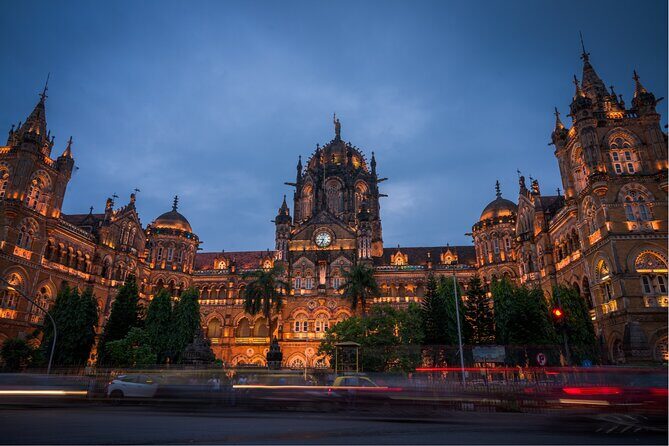
The walk continues with a set of prominent civic and architectural stops: Horniman Circle, Town Hall, St Thomas Cathedral, the Central Telegraph Office, and the Western Railway Headquarters.
Each place adds a different layer:
- Horniman Circle and Town Hall give you that formal civic feel.
- St Thomas Cathedral connects you to the long footprint of Christian communities in South Mumbai.
- Central Telegraph Office adds an “infrastructure” angle, showing how communication shaped growth.
- Western Railway Headquarters reinforces the role of rail in Mumbai’s movement and economy.
This is also where the route stays efficient. You don’t spend forever at a single building, but you get enough context to look at each stop like a clue, not a checkpoint.
The finish: Queen’s Necklace (Marine Drive) and a clean landing point
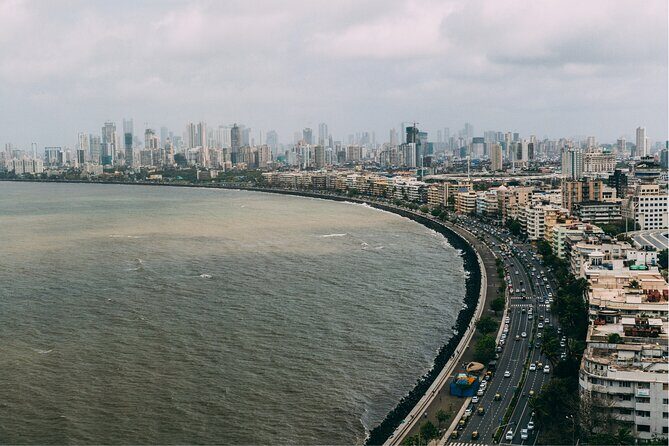
You end where many people wish their day had started: at Queen’s Necklace, the local nickname for Marine Drive. After a couple hours of walking through Old Town layers, Marine Drive feels like a reset. The boulevard-style waterfront view is a satisfying visual payoff, and it’s easy to plan your next step from there.
If you’re building a day of sightseeing, Marine Drive is a great end point because it sits in the middle of where people want to be for dinner or evening plans. You also get that “I understand the city now” feeling when the walk lands at a place that’s widely recognized.
How long it really takes, and what you should bring
The tour runs about 2 hours and covers roughly 1.5 miles (2 kilometers). That’s short enough to fit into almost any itinerary, which is exactly why I think it’s strong value for the price point.
Because hotel pickup and drop-off are not included, you’ll be responsible for getting yourself to the start at Gateway of India (Apollo Bandar, Colaba). The tour is described as being near public transportation, which helps. Once you’re at the meeting point, the rest is straightforward.
What I’d bring:
- Comfortable walking shoes (you’re on foot for about 1.5 miles)
- Water, since food and drinks aren’t included unless specified
- A light layer for waterfront breeze, especially if you choose an evening start
- Your phone charged for photos and navigation, particularly because the tour ends at Marine Drive
Group size is capped at 15 travelers, which usually helps the experience feel personal rather than chaotic. You’ll also get to benefit from a guided pace that’s designed for learning, not just moving.
Value for money: why a low price can still feel meaningful
At $12.47 per person, this is one of those deals that can work very well for first-timers. The key isn’t just the cost. It’s what’s included: a trained English and Hindi storyteller, local recommendations, and access to hidden lanes and places.
For many cities, paying a small amount for a well-run walking guide is the best “time-savings tool” you can buy. Instead of spending your first day guessing what matters, you get a structured path, plus the kind of context that helps you keep understanding the city after the tour ends.
The stories also seem to land with people. Mentions of guides like Akansha (with the note that she lives in the city and explains local life) and Nisar (who tells stories and adjusts based on interest) show that the guide interaction is a major part of the experience quality. If you care about the human side—asking questions and getting answers—this is worth your attention.
Who should book this Old Town Mumbai guided walk?
This tour is a good fit if:
- You’re visiting Mumbai for the first time and want a fast orientation
- You have limited time but still want to see real heritage areas
- You prefer walking over buses, since you’ll notice more at street level
- You want a guide who can explain history and culture in a practical, talk-to-you way
It may not be the best fit if:
- You’re expecting a long food crawl (food and drinks are not included unless specified)
- You need a tour with hotel pickup (not provided)
- You want a deep, academic-style lecture (this is more about guided storytelling and getting your bearings)
If you do just one guided walk to start your South Mumbai day, this one makes sense.
Should you book it?
I’d book it if you want an efficient introduction to Old Town Mumbai that doesn’t feel like a rushed checklist. Starting at Gateway of India, moving through churches, cinemas, galleries, and finance landmarks, then ending at Marine Drive is a smart arc. You get the big sights, but you also get the side streets and the explanations that make those sights click.
If you’re the type who likes to ask questions, pick the tour time that matches when you feel most alert. And since there’s no included food, plan a snack strategy so the walk stays enjoyable from start to finish.
FAQ
FAQ
How long is the Cultural & Heritage Trails of Old Town Mumbai guided walking tour?
It lasts about 2 hours.
How far do you walk?
You walk about 1.5 miles (2 kilometers) on foot.
Where does the tour start and end?
It starts at Gateway of India, Apollo Bandar, Colaba and ends on Marine Drive (Queen’s Necklace).
Are there morning and evening tour times?
Yes, you can choose between a morning and an evening time.
What languages does the guide speak?
The guide can speak English and Hindi.
What’s the group size limit?
The tour has a maximum of 15 travelers.
Is food or drinks included?
Food and drinks are not included unless specified.
What’s included in the tour price?
A friendly storyteller/guide, local tips and recommendations, access to hidden lanes and places, and time for conversations and interesting stories are included.
Can I cancel for a full refund?
Yes, you can cancel up to 24 hours in advance for a full refund.