REVIEW · LEH
Leh Ladakh Circuit – Trans Himalaya
Book on Viator →Operated by Go 360 · Bookable on Viator
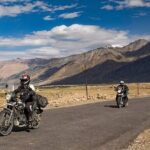
Leh Ladakh hits you fast: the roads climb, the air thins, and the views change every few hours. What makes this Leh Ladakh circuit work well is the tight pairing of big scenery days with built-in recovery time, plus a team that clearly prioritizes safety and acclimatization. I like that you’re not just dropped at spots—you’re guided through the key religious and photo-worthy stops, like Gurudwara Pathar Sahib and the Indus-Zanskar confluence.
Two things I also really appreciate: you get airport transfers and included planning tools like inner line permits, and the package supports you physically with a basic first-aid setup plus oxygen cylinder and an oxi meter. One possible drawback: this route is highly dependent on road and weather conditions, and delays or unscheduled changes can happen due to landslides or political issues.
In This Review
- Key highlights you’ll feel on this Trans Himalaya loop
- The big idea: a best-of Leh Ladakh circuit that keeps moving, but not recklessly
- Altitude reality check: why oxygen support matters on a 6-day loop
- Entering Leh on Day 1: acclimatization plus easy city icons
- Day 2 in Leh outskirts: Indus–Zanskar, Magnetic Hill, and Pathar Sahib
- Khardung La to Nubra: the 18,400 ft pass and Diskit Monastery calm
- Pangong Tso via Shyok route: border-water scale and Three Idiots filming points
- Day 5 back to Leh: Changla Pass plus Thiksey and Shey monasteries
- Day 6 departure: simple and stress-light
- Price and value: what you’re paying for, and what you should budget for
- Who should book this circuit (and who might want a different plan)
- Should you book the Leh Ladakh Circuit – Trans Himalaya?
- FAQ
- How long is the Leh Ladakh Circuit – Trans Himalaya tour?
- Where does the tour start and end?
- What meals are included?
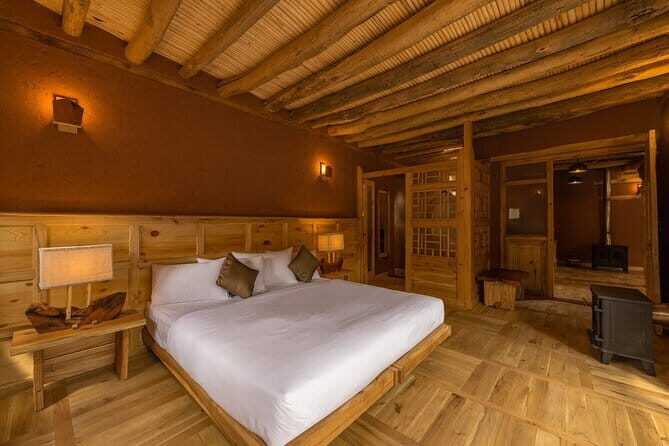
- What accommodation is included?
- Are inner line permits included?
- Is oxygen support provided?
Key highlights you’ll feel on this Trans Himalaya loop
- Day 1 acclimatization in Leh before you start climbing passes
- Confluence of Indus and Zanskar plus quick hits like Magnetic Hill and Hall of Fame
- Khardung La (18,400 ft) on the way to Nubra Valley and Diskit Monastery
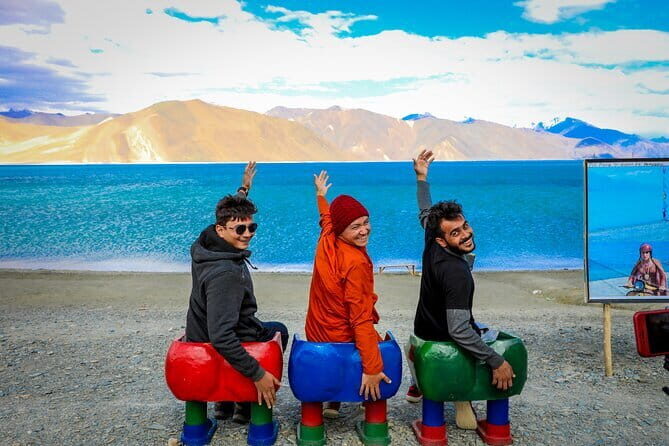
- Pangong Tso via Shyok route with time at the lake at border-country scale
- Changla Pass (17,350 ft) on the return, plus Thiksey and Shey monasteries
- A team that can be flexible; one guide name that stood out was Jimmy brother
The big idea: a best-of Leh Ladakh circuit that keeps moving, but not recklessly
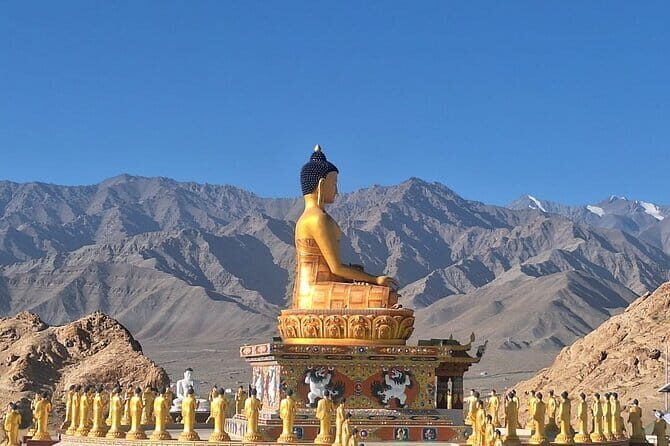
This is a classic six-day circuit that covers the headline areas most first-timers dream about: Leh, Nubra Valley, and Pangong Tso. The value is in how the days are arranged. You get a proper start in Leh, then you stack the dramatic driving days with monastery visits and viewpoint time, and you end with a return to Leh for departure from Kushok Bakula Rimpochee Airport.
You’ll likely spend your time in a mix of longer drives and concentrated stops. That’s not a bad thing here. Ladakh rewards pace—but only if you respect altitude and don’t try to do everything at once. This itinerary tries to balance that, with an acclimatization day up front and another big pass day later.
Also, the tour is designed as a group experience (it notes private tour for your group), so you’re dealing with one coordinated plan instead of piecing together taxis, permits, and timing yourself.
You can also read our reviews of more tours and experiences in Leh.

Altitude reality check: why oxygen support matters on a 6-day loop
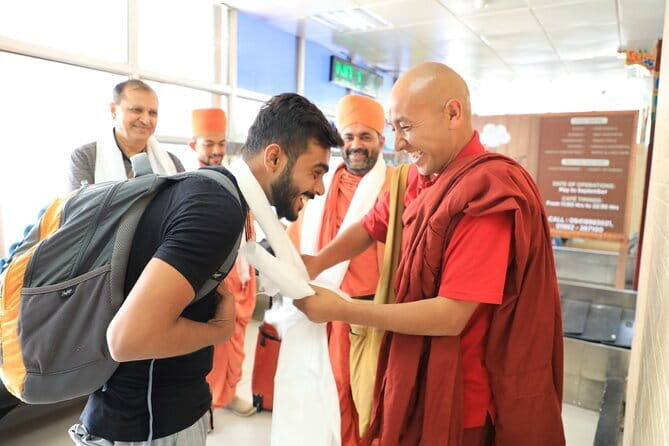
Leh Ladakh is not just scenic—it’s altitude work. The first day being mainly for rest isn’t fluff. It’s how you get your body used to the thinner air before you start crossing high points.
What I like in the included support is that you get more than a vague “be careful” message:
- a basic first aid medical kit
- an oxygen cylinder
- an oxi meter
That doesn’t mean altitude is risk-free. It means you’re not leaving everything to luck. If your oxygen levels drop or you start feeling off, it’s easier to respond quickly when the kit is there and someone is watching the situation.
Also remember: this is a “good weather required” type of experience. If conditions are poor, plans can shift. So if you’re booking, treat the date as flexible when possible, not as a single unbreakable deadline.
Entering Leh on Day 1: acclimatization plus easy city icons
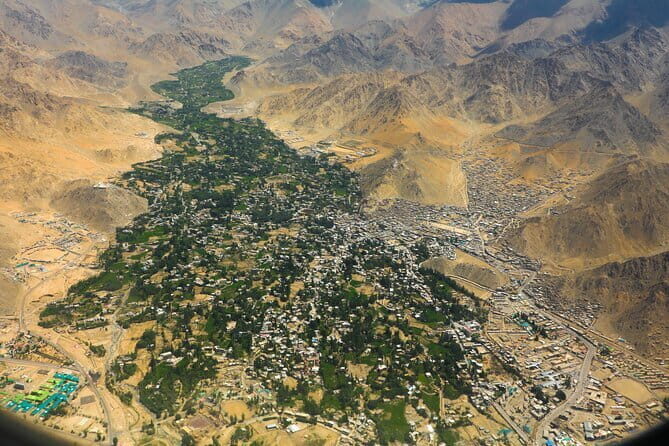
Your day begins with pickup at Kushok Bakula Rimpochee Airport and transfer to the hotel. Then you slow things down on purpose. This matters because Leh is where your body needs time to adjust.
In the evening, you can wander to a compact set of sights that are easy to enjoy without rushing:
- Leh bazaar for simple street-level browsing
- Shanti Stupa for views and a calm setting
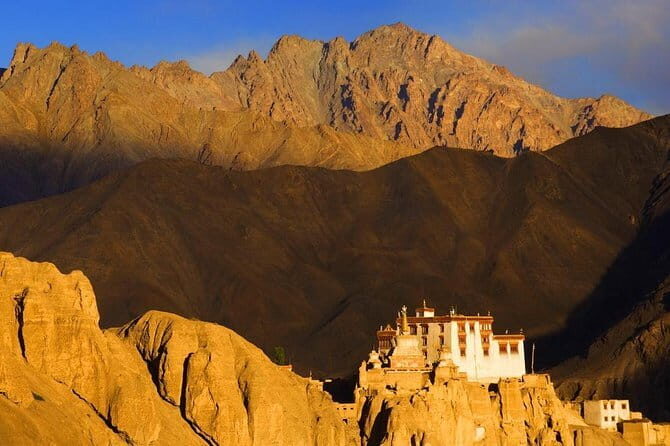
- Leh Palace for a sense of the region’s royal-era presence
The practical win here is that you’re not trying to “earn” Leh with a long hike on day one. You’re getting your bearings, learning the rhythm of the city, and setting yourself up for the next morning.
Day 2 in Leh outskirts: Indus–Zanskar, Magnetic Hill, and Pathar Sahib
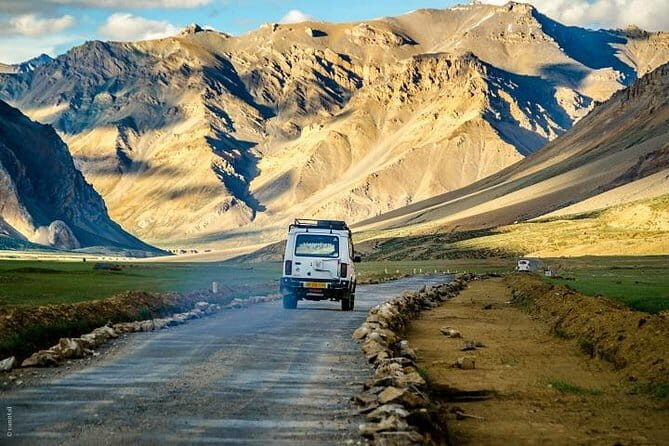
Day two is a payoff day, with several signature stops that tell you what Ladakh is about beyond mountains.
You’ll visit:
- Hall of Fame (a grounding stop that connects the region with its strategic story)
- Magnetic Hill (a classic physics-meets-tour stop—worth seeing for the experience even if you enjoy figuring out what you’re looking at)
- Gurudwara Pathar Sahib (a place that’s spiritually important and visually memorable)
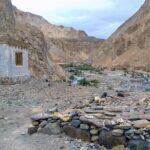
- Confluence of the Indus and Zanskar Rivers (the moment you really feel the geography)
The confluence stop is the one that sticks with most people because the rivers’ meeting point looks powerful and strangely peaceful at the same time. It’s also a strong “orientation” moment: once you’ve seen where these rivers connect, the rest of the circuit makes more sense.
The timing is built around comfort: breakfast, sightseeing, then you’re back in Leh for dinner and overnight. That’s exactly what you want after a big day—good sleep, not late-night wandering in thin air.
Khardung La to Nubra: the 18,400 ft pass and Diskit Monastery calm
On Day 3 you drive from Leh to Nubra Valley via Khardung La. The route distance is listed at about 125 km and around 5 hours of travel, but in Ladakh that “5 hours” is really “start moving, then take in the changing altitude.”
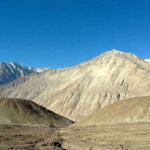
A standout detail here is Khardung La being described as the world’s highest motorable road at around 18,400 feet (noting that Umling La opens later). Even if you’re not chasing records for the sake of records, this is one of those passes that gives you a quick education in scale.
Once in Nubra, you slow down with:
- Diskit Monastery, described as a 14th-century monastery and the largest and oldest in Nubra Valley
This is where the circuit becomes more than driving. Monasteries give you a quieter pace, plus you get a different kind of landscape view—wide sky and old stone, rather than just road and rock.
One more Nubra note: the itinerary mentions sand dunes. And from the activity mix this operator is associated with, you might find options like jeep safari or camel safari in the Nubra area. If those matter to you, ask early when you confirm, because it’s easier to add time if you plan around it.
Pangong Tso via Shyok route: border-water scale and Three Idiots filming points
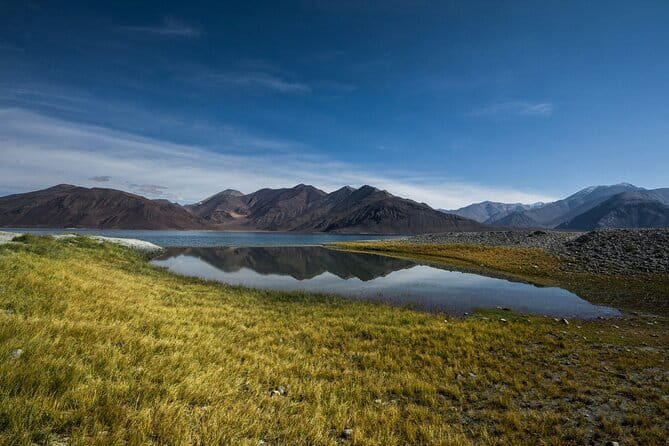
Day 4 is about reaching Pangong Tso through the Shyok route. This section is famous because it feels remote and cinematic, and because the lake itself is massive.
Here are the facts that help you understand what you’re seeing:
- Pangong Tso is described as a salt-water body about 120 km long and 6–7 km wide at its longest point
- it’s bisected by the India–China international border, with about two-thirds in China’s possession
- the itinerary includes the Three Idiots movie location area
If you want that iconic lake look, timing matters. On a clear sunny day, the route notes you can see seven-color formations in the water. That’s the sort of thing you can’t force with effort, so your best strategy is to stay flexible and let the light do its job.
Overnight at Pangong is also a big deal. It reduces the pressure to rush every viewpoint. You’ll likely see the lake in different moods—from brighter daytime tones to softer evening light—without needing to sprint back to Leh.
Day 5 back to Leh: Changla Pass plus Thiksey and Shey monasteries
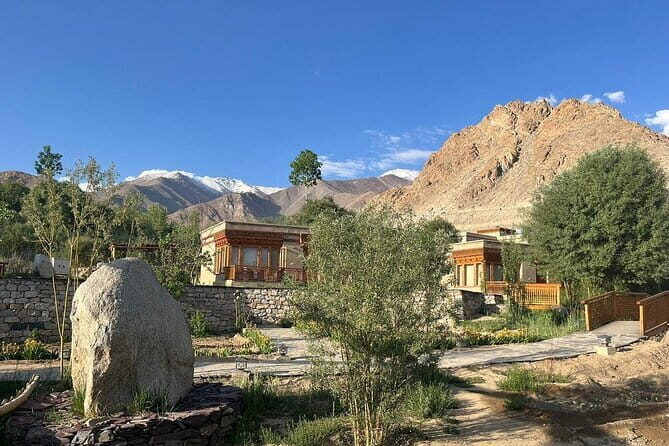
After Pangong, you turn back toward Leh and cross Changla Pass, listed at about 17,350 ft. This is a high point that feels different from Khardung La. The big pass theme is the same—thin air and wide views—but the mood shifts as you come back from the lake and return toward civilization.
En route, the plan includes:
- Rancho School, known as the Three Idiot school
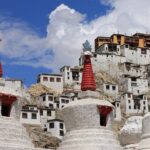
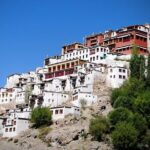
- Thiksey Monastery
- Shey Monastery
Thiksey and Shey are especially useful as a pair. One gives you a strong monastery presence with a dramatic sense of place; the other adds continuity to the region’s spiritual geography. If you’re traveling with family or friends who prefer “short and meaningful” stops, these are good fits because you can spend time looking without committing to a long hike.
The itinerary also mentions a sumptuous dinner with chit-chat on this day, plus the driving back to Leh for an overnight hotel stay. That’s a good rhythm: you get your final monastery hits, then you end with a proper rest night.
Day 6 departure: simple and stress-light
Day 6 is straightforward: breakfast, then departure from Leh to Kushok Bakula Rimpochee Airport, with the activity ending back at the meeting point.
That might sound obvious, but it’s often where tours either become easy or stressful. Here, you’re not ending the trip with a last-minute scramble. You’ve already done the hard part—crossed passes and spent nights out on the circuit—so the final day feels like a clean landing.
Price and value: what you’re paying for, and what you should budget for
At $916.63 per person for an approximately 6-day loop, you’re not just buying transport. You’re buying coordination and the stuff that usually slows people down: permits, meals, and safety support.
Included items that add real value:
- Accommodation on a double-sharing basis
- basic first aid kit, oxygen cylinder, and oxi meter
- airport transfers
- inner line permits
- breakfast (5) and dinner (5)
- wildlife and red cross fees
Sightseeing admissions are listed as sometimes free and sometimes not included. For example, Day 1 and Day 2 include admissions as free in the schedule, while Day 3 and Day 5 show admissions not included. So when you budget, assume you may pay some entry fees depending on the exact stop and day.
Also note what’s not covered: anything not mentioned, plus possible unscheduled stay due to landslide, political issues, or other factors outside control. That’s a normal reality in high-altitude regions. The key is that the operator flags it so you’re not surprised.
Who should book this circuit (and who might want a different plan)
This tour makes sense if you:
- want a first-time Leh Ladakh circuit covering Leh, Nubra Valley, and Pangong Tso
- like having your days structured, including meals and hotel nights
- appreciate safety-first support like oxygen and an oxi meter
- prefer guided sightseeing rather than self-driving and permit puzzles
It might be less ideal if you:
- need lots of full free time to roam solo every day (this is a paced, route-based circuit)
- get very anxious about long drives or changing weather
- want fixed plans that never adjust; the route is weather-dependent
If you’re sensitive to altitude, talk to your doctor before you travel and keep your expectations realistic. The oxygen support helps, but it doesn’t erase the altitude itself.
Should you book the Leh Ladakh Circuit – Trans Himalaya?
If your goal is a smooth, well-paced circuit with major highlights—Khardung La, Nubra’s monasteries and sand zones, and Pangong Tso—you’ll likely be happy with this plan. The strongest reasons to book are the structure (acclimatization day up front), the included support (oxygen and oxi meter), and the value-adds (airport transfers, permits, and meals).
I’d tell you to book especially if you’re the type who wants memories without the headache of coordinating permits and transport. And if you care about extra activities like jeep or camel safari in Nubra, ask what can be added on the ground so your days stay comfortable rather than squeezed.
FAQ
How long is the Leh Ladakh Circuit – Trans Himalaya tour?
The duration is approximately 6 days.
Where does the tour start and end?
It starts and ends back at Kushok Bakula Rimpochee Airport in Leh (meeting point: 4HV4+259, Leh, 194104).
What meals are included?
Breakfast is included for 5 days and dinner is included for 5 days.
What accommodation is included?
Accommodation is included on a double basis on sharing basis.
Are inner line permits included?
Yes, inner line permits are included.
Is oxygen support provided?
Yes. The package includes a basic first aid medical kit along with an oxygen cylinder and an oxi meter.