REVIEW · HYDERABAD
The Kingdom of Diamonds Tour
Book on Viator →Operated by The Hyderabad Walking Company · Bookable on Viator
A diamond story in stone ruins. This private half-day outing ties together Golkonda (the diamond-powered capital) and the Qutb Shahi Tombs (the royal city of the dead), with a clear explanation of how these places connect. I like that the tour doesn’t treat them as two separate sights—it frames both as part of the same kingdom experience, with trade routes and power plays built into what you walk past.
What I really like is the way the guide—Navin—brings the architecture to life, so you understand what you’re seeing instead of just reading it. I also like that you get the best of both worlds in one go: the stone bazaars and fort politics at Golkonda, plus the tomb complex’s Persian-style hamam details that help you picture daily life and royal status.
One possible drawback: expect a fair amount of walking on uneven stone and stairs, including a climb up at Golkonda Fort to reach the Diamond Keep, so plan for some exertion early in the morning.
In This Review
- Key highlights to look for
- Two royal “cities” in one tour: living Golkonda and the tomb complex
- Golkonda Fort: more than a backdrop for diamond myths
- The killbox reality check
- Climb to the Diamond Keep
- Qutb Shahi Tombs: a royal necropolis that explains power
- Learning kingship as a cost, not a slogan
- The Persian-style hamam
- Why this tour’s structure works (and who it’s for)
- Price and value: what $110 buys in real terms
- Timing and route reality: a morning start with built-in climbing
- Practical expectations: what you’ll feel in each stop
- Who should book this tour
- Should you book the Kingdom of Diamonds Tour?
- FAQ
- How long is the Kingdom of Diamonds tour?
- What does the tour include?
- Is pickup available?
- Is the tour private?
- What time does the tour start?
- Where does the tour start?
- Where does the tour end?
- Is admission included for both stops?
- How much does it cost?
- What is the cancellation policy?
Key highlights to look for
- Killbox moment at Golkonda: a practical way to imagine an attack that never succeeded
- Diamond Keep viewpoint: the cool, breezy house setting for the richest rulers
- Qutb Shahi Tombs as a living story: not just graves, but the cost and politics of kingship
- Persian-style hamam: one of the most complete preserved examples in India
- A trade crossroads explanation: East–West connections that match what you see in the ruins
- Navin’s engaging delivery: passion and clarity that work well even for families
Two royal “cities” in one tour: living Golkonda and the tomb complex
Hyderabad has plenty to see, but this tour gives you a rare pairing. You start with the kingdom that made its name on diamonds and trade, then shift to the tombs that preserve how the Qutb Shahi rulers wanted to be remembered.
The payoff is how the tour connects meaning. You’re not just taking photos of walls and arches—you’re learning why these sites belonged together, socially and politically, and how they supported a kingdom that sat between major trading worlds.
You can also read our reviews of more tours and experiences in Hyderabad.


Golkonda Fort: more than a backdrop for diamond myths
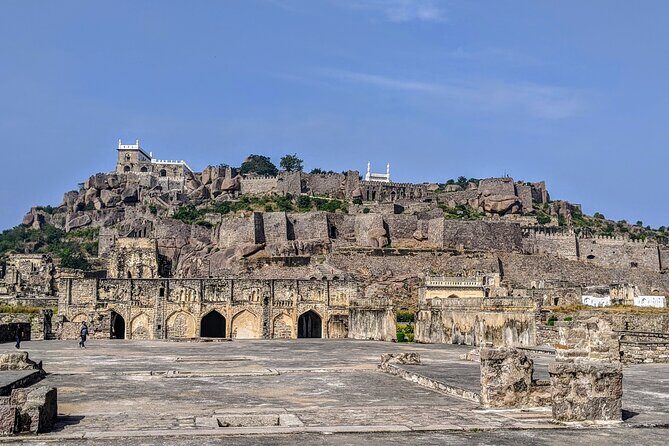
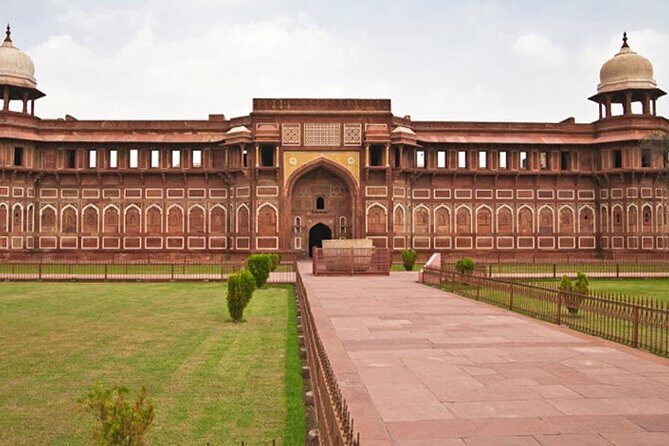
Let’s clear up a fun (and slightly misleading) point right away: the “fort” here is also talked about as a city. It was the capital of the Qutb Shahi kingdom in the 16th and 17th centuries, and the tour treats it like a place where people worked, traded, and lived—not a lone monument.
You’ll walk through the stone bazaars that once powered commerce. The big idea the guide shares is that Golkonda was famous for diamonds, yes, but diamonds also meant networks—trade linking Arabia, China, Europe, and different parts of India. If you like history that explains why buildings were built the way they were, this part gives you that cause-and-effect feeling.
The killbox reality check
One of the most memorable elements is the chance to experience the attack perspective at what the tour calls the killbox. It’s designed to help you understand the fortifications as something tactical, not just dramatic.
And here’s why that matters: the fort has never been taken in a military action, so the architecture is more than decoration. You’re standing where defenders expected attackers to suffer, which turns the stone walls into a story about planning and survival.
Climb to the Diamond Keep
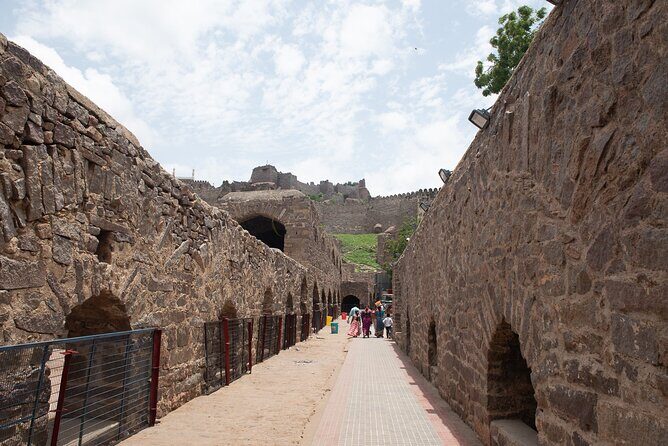
Later, you climb up to the top and reach the Diamond Keep, described as a cool and breezy house called home by arguably the richest kings of their time. Even if you don’t care about royal luxury, this is a strong “read the landscape” moment.
You’ll feel the shift from the busy, trade-focused lower spaces to the more controlled, high-ground mindset of the rulers. It’s the kind of detail that makes a ruined site feel like a real place with different roles for different people.
Admission note: the tour lists the Golkonda Fort admission ticket as free, which is a nice practical boost to value.
Qutb Shahi Tombs: a royal necropolis that explains power
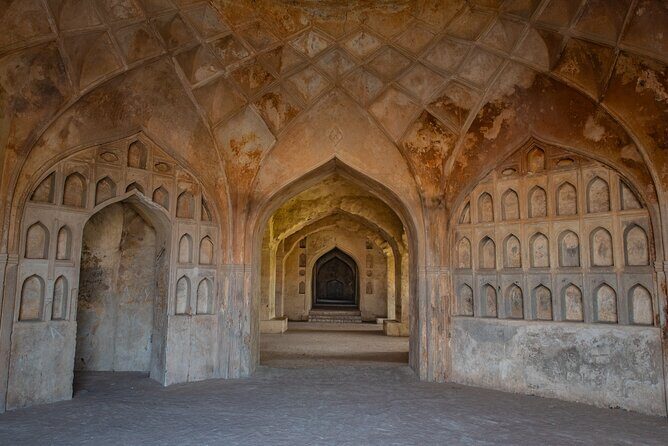
After Golkonda, you move from a city of the living to the tomb complex that acts like a royal memory machine. The Qutb Shahi Tombs are described as one of the best-preserved necropolises in the world, and the tour uses that preservation to show how the rulers lived in spirit even after death.
This stop isn’t presented as a somber walk with vague commentary. You’ll explore how the kings and their families are arranged and interpreted, and you’ll learn what the tour frames as the price of becoming a king in the 16th century.






Learning kingship as a cost, not a slogan
One of the more intriguing story threads here is the mention of a woman who was more powerful than all the kings of Golkonda. The fact that the tour calls this out tells you they’re aiming for human stories, not just dates and names.
It’s a good reminder that in many dynasties, political power doesn’t always follow the simplest label of king. When you connect that theme back to monuments, you start noticing how architecture can signal authority, rank, and legacy.
The Persian-style hamam
The complex also includes the most complete and best-preserved example of a Persian-style hamam from that era in India. That’s a big deal because it pulls you toward daily life and status—how a public bath could function as a social and cultural space, not only as a facility.
And it’s smart for a tour to include this, because hamams are the type of site that helps you picture ordinary routines and public behavior. You’re not trapped in royal symbolism all the time. You’re seeing how a kingdom shaped how people met, washed, and conducted public life.
Admission note: the tour includes admission for the Qutb Shahi Tombs.
Why this tour’s structure works (and who it’s for)

The tour is built around a big idea: Golkonda and the Qutb Shahi Tombs add meaning to each other. If you only see one side, you miss the full logic of the kingdom. One place tells you how wealth, power, and trade operated day to day. The other shows what that power tried to secure for the future.
That “paired city” approach is also great for groups that want a coherent experience. A couple benefits because it feels like a guided narrative. Families with kids benefit because it’s concrete: climb here, stand there, picture an attack, then switch to the hamam and stories of rulers.
Navin’s role comes up repeatedly for a reason. The way the tour is described—passionate, engaging, and able to bring architecture to life—matters because these are complex sites. If your guide can translate stonework into plain language, you’ll walk away with real understanding, not just impressions.
Price and value: what $110 buys in real terms
At $110 per person for about 4 hours, the cost lands in the “private tour” zone. What helps justify it is how the tour handles admissions and practical details.
- You get pickup offered, which saves time and friction in a city where getting between sites can eat up energy.
- You receive a mobile ticket, which simplifies entry.
- Admission for Golkonda Fort is free on this tour, and Qutb Shahi Tombs admission is included.
- You’re doing two major sites with a guided narrative, not just walking around solo.
So you’re paying for guided interpretation and convenience more than for entrance fees. If you like the kind of tour where you can look at the same wall and understand how it worked, this value makes more sense.
If you mainly want to wander slowly, take lots of breaks, and read everything at your own pace, you might decide you only need one stop. In that case, a combined tour could feel like you’re moving faster than you want.
Timing and route reality: a morning start with built-in climbing
The tour start time is 8:30 am, and the meeting point for the start is at JS Javeed Gulshan, 9-8-152/2/11, sala nagar, Nav Mahal Colony, Khair Complex, Golconda Fort, Hyderabad, Telangana 500008, India. It ends at the entrance to the Qutb Shahi Tombs, at 9CW2+X5J, Qutub Shahi Tombs, Hyderabad, Telangana, India.
Because Golkonda includes a climb to the top and time at elevated points like the Diamond Keep, this tour makes the morning slot practical. Cooler temperatures usually help when you’re doing stairs and walking on stone.
Also, the tour is “private” in the sense that only your group participates. That’s a plus if you’re traveling with kids or prefer a calmer pace where your guide can adjust to your questions.
Practical expectations: what you’ll feel in each stop
Here’s what the experience tends to feel like as you move through it.
At Golkonda Fort, the mood is strategic. You’re learning how fortifications shaped movement and defense, and how trade wealth supported the kingdom’s position. The stone bazaars and the killbox moment are the kind of details that make you look at the fort differently once you’ve been shown the logic.
At the Qutb Shahi Tombs, the mood turns reflective but still specific. You’re walking through a preserved complex where architecture is linked to politics, family structure, and ideas about kingship. The hamam is a standout because it gives you a tangible social-space reference point rather than only funerary symbolism.
Who should book this tour
This is a strong choice if you want:
- A guided narrative that connects two major sites into one story
- A focus on architecture with explanation, especially for forts and royal tomb complexes
- A guide who can handle family groups and keep attention through engaging delivery (Navin’s name shows up as a highlight)
- A compact half-day plan that still covers the big moments at both locations
It’s less ideal if you’re the type who wants total free time at each site. Since the tour covers both stops in about four hours, you’ll likely be moving on on schedule.
Should you book the Kingdom of Diamonds Tour?
If you’re deciding between random sightseeing and a guided, story-driven loop, I’d book this. The main reason is the structure: it treats Golkonda and the tombs as connected parts of the same kingdom, and that connection makes the monuments easier to understand while you’re standing in front of them.
Also, free admission for Golkonda and included admission for the Qutb Shahi Tombs help the math. And if you value a guide with real enthusiasm—Navin comes through as a standout in how people describe the experience—this tour is the kind that pays off quickly.
One last thought: if you’re sensitive to stairs and walking on uneven surfaces, plan accordingly, because Golkonda includes a climb to the top. If that’s manageable, this is a smart way to get more meaning out of two of Hyderabad’s most important heritage stops.
FAQ
How long is the Kingdom of Diamonds tour?
It’s listed as approximately 4 hours.
What does the tour include?
The tour includes two stops: Golkonda Fort and the Qutb Shahi Tombs.
Is pickup available?
Yes, pickup is offered.
Is the tour private?
Yes. It’s described as a private tour/activity, with only your group participating.
What time does the tour start?
The start time is 8:30 am.
Where does the tour start?
It starts at JS Javeed Gulshan, 9-8-152/2/11, sala nagar, Nav Mahal Colony, Khair Complex, Golconda Fort, Hyderabad, Telangana 500008, India.
Where does the tour end?
It ends at the entrance to the Qutb Shahi Tombs, 9CW2+X5J, Qutub Shahi Tombs, Hyderabad, Telangana, India.
Is admission included for both stops?
Golkonda Fort admission is listed as free, and Qutb Shahi Tombs admission is listed as included.
How much does it cost?
It costs $110.00 per person.
What is the cancellation policy?
There is free cancellation. You can cancel up to 24 hours in advance for a full refund.