REVIEW · LEH
Great Himalayas Motorbike Tours
Book on Viator →Operated by Traverse Adventure Tours · Bookable on Viator
High passes are the point of this ride.
This private Leh-based motorcycle tour is built for big altitude days and cultural stops, with a strong focus on Umling La and a full run of high-mountain passes. I like that it gives you time to acclimatize in Leh first, then ramps up fast with monastery visits, glacier viewpoints, and remote Zanskar-area scenery.
What I really like is the mix of hard riding and human touches: you get real briefing + hill practice early, and the team handling the logistics (including named guides like Vidit and Vishal) aims to keep you comfortable through the long stretches.
One consideration: the route is physically and mentally demanding because you’re spending days at very high elevation and on busy road conditions when weather is questionable. If you’re the sort who panics at altitude or long travel days, you’ll want to be honest with yourself before committing.
In This Review
- Key highlights you’ll feel on the road
- Why the Leh-to-Umling La route hits differently
- The team, bikes, and how the daily rhythm works
- Day 1 in Leh: use the rest day like it’s part of the tour
- Monastery morning near Leh: Shey and Thiksey plus your riding briefing
- Lamayuru’s moon-scape, then Namika La and Fotu La
- Kargil to Rangdum and Suru Valley: the glacier-view day
- Pensi La and the “Gateway to Zanskar” feeling
- Zanskar pass country: Singe La and Sirsir La
- Back near the monasteries: revisiting Lamayuru’s character
- Khardung La, Hunder Sand Dunes, and Diskit Gompa in Nubra
- Pangong Tso: the “color changes” lake day
- Hanle and Kaksang La: remote quiet with one more high point
- Umling La and the high-pass finale: Photi La and Nerbole
- Ending in Leh via Chumathang Hot Spring and the Indus Valley
- Price and value: $3,200 per person, with real costs covered
- Should you book this ride?
- FAQ
- FAQ
- What is the price per person?
- How long is the tour?
- What time does the tour start?
- Is pickup included?
- Is this a private tour?
- What meals and drinks are included?
- Are flights and visa included?
- Are entrance fees included for the stops?
- What happens if the weather is poor?
Key highlights you’ll feel on the road
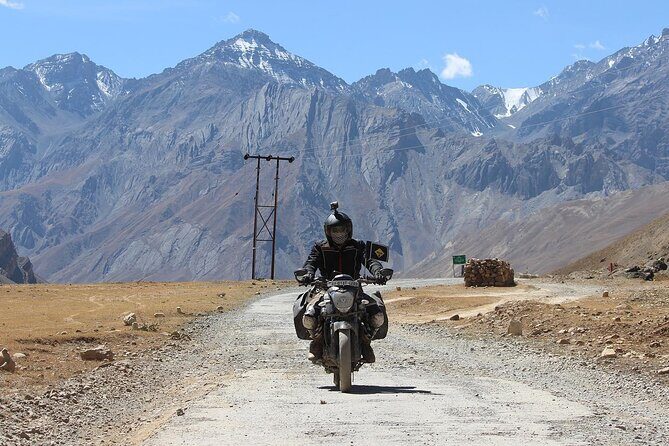
- Acclimatization-first approach in Leh so you start the passes with better odds of feeling human
- Umling La and other high motorable passes packed into a single run
- Support vehicle for backup and luggage, which matters when the weather or bike throws a curveball
- Monastery stops with real time inside the sites, not just photo stops
- A team that’s praised for attention to detail, including guides like Vidit and Vishal
- Meals and drinks included on schedule, so you’re not guessing every day
Why the Leh-to-Umling La route hits differently
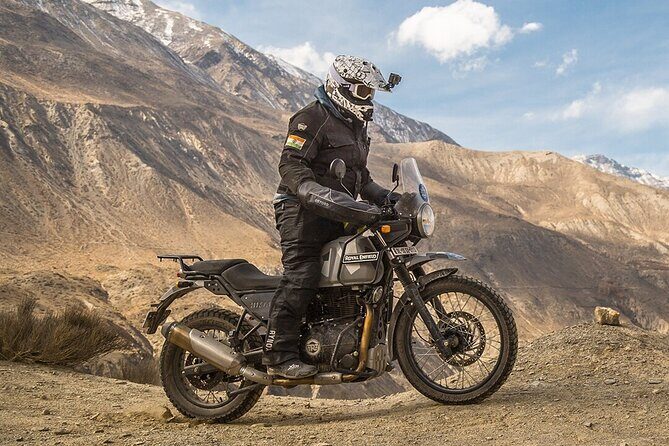
This trip isn’t just about checking mountain names off a list. It’s about the way Ladakh changes as you climb and cross—thin air, long distances, sudden changes in terrain, and that strong sense of remoteness. You also get the cultural side in steady doses: gompas, statues, and the quiet rhythm of Buddhist sites that you pass on the way to the passes.
The big selling point is Umling La, described as one of the highest motorable passes globally, with the route data citing it around 5,352 meters (also commonly referenced around 19,034 feet). Either way, it’s a serious altitude goal, and the rest of the route builds toward it with a sequence of other high points like Fotu La, Pensi La, Khardung La, Kaksang La, and more.
You’re also not riding blind. The plan includes a rest day in Leh, a briefing and short hill ride before the longer pushes, and a support vehicle for backup and luggage. That combination makes the adventure feel more like a controlled expedition than a random road trip you have to manage solo.
You can also read our reviews of more tours and experiences in Leh.
The team, bikes, and how the daily rhythm works
The day-by-day pacing is straightforward. You arrive, get settled, and then the team guides you into the riding schedule with a briefing session and early riding time. On the second day you’ll get your motorbikes and do a short ride in the hills, plus monastery visits. That matters because Ladakh riding has its own quirks: altitude affects your breathing, road surfaces can be unpredictable, and fatigue creeps in faster than you expect.
This is a private tour/activity, meaning it’s your group only. That generally helps with timing and with keeping everyone moving at the same pace. One thing I’m glad the route includes is the support vehicle. A lot can go wrong on high-elevation roads—flat tires, mechanical issues, or just a rough day—and having backup for luggage and support makes the whole thing feel safer and more relaxed.
The guides’ names come up often in the feedback: Vidit and Vishal. The recurring theme is that the operation is hands-on. You’re not left to figure things out yourself mid-ride, especially when the route turns remote.
Day 1 in Leh: use the rest day like it’s part of the tour
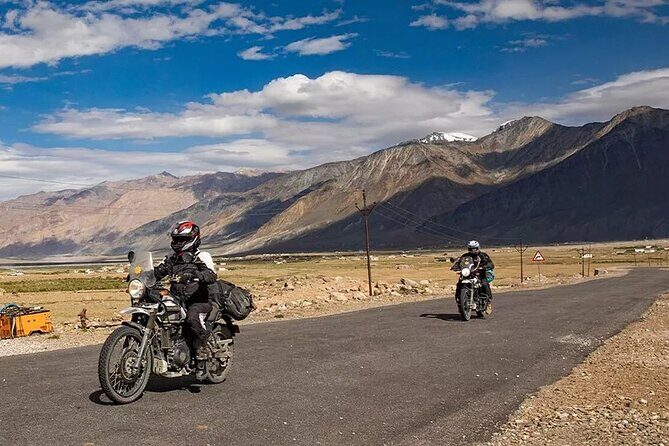
Leh is your staging point, and the first day is intentionally calm. You land at Kushok Bakula Rimpochee Airport (IXL), then the team transfers you to the hotel. After that, you get a rest day in Leh city to acclimatize.
Don’t treat this as dead time. Acclimatization is a practical move for high-altitude riding. Even if you feel fine on arrival, the earlier you rest and adjust, the better you’ll handle the following days when the route starts climbing and crossing.
This is also when you get your bearings: you’re not just sitting around. You’re letting the altitude settle while you prepare mentally for the bigger passes ahead.
Monastery morning near Leh: Shey and Thiksey plus your riding briefing
On day two, the tour flips from rest to rhythm. You’ll pick up your motorbikes, then do a small hill ride and a briefing session. This is a smart design choice: it helps you lock into the riding style early while your body is still fresh from the acclimatization day.
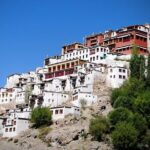
Then you move into the cultural side with stops at Shey Monastery and Thiksey Monastery.
At Shey, the highlight is a copper statue of Buddha Shakyamuni, described as known for being a rare, standout structure. The palace complex includes multiple chortens, which gives you more than one reason to pause and look around.
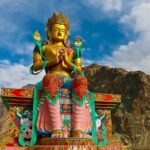
At Thiksey, the centerpiece is the 49-foot Maitreya Buddha statue in the lotus position, set across two floors. It’s tied to a commemorative moment—built to mark the 1970 visit of the 14th Dalai Lama. If you like context, this stop gives you it without needing a lecture that eats your time.
The downside here is mainly logistical, not quality: you’re juggling riding + early touring, so mornings feel busy. If you’re the type who needs slow starts, plan to keep your mornings light.
Lamayuru’s moon-scape, then Namika La and Fotu La
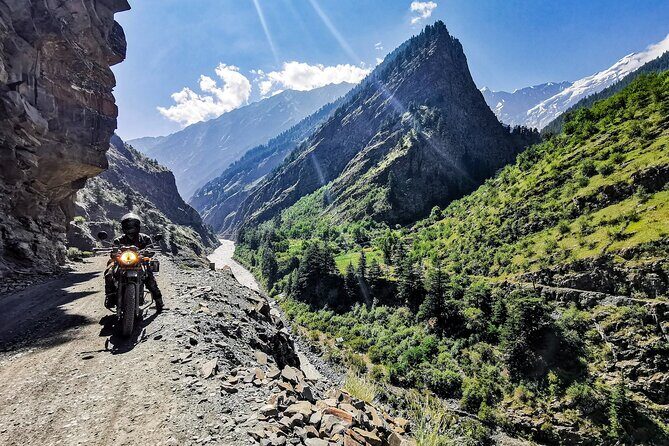
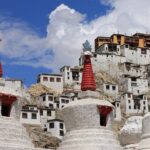
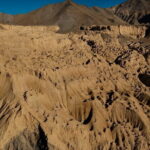
Lamayuru (also called Yuru Gompa) is the first big “wow” stop in the plan after you’ve started riding more actively. The monastery sits in what’s described as a cave-like setting with a moonlike terrain around it. It’s the kind of place where the scenery feels sculpted, not just scenic.
Even though the annual festival is the major magnet, you still get value from the site itself: multiple buildings and the feel of an older monastic presence. If you happen to time your trip close to the Yuru Kabgyat festival, you’d get the mask dance by lamas as a highlight, but even outside festival time, Lamayuru has a distinct character.
From there the ride heads toward the high pass zones with brief stops at Namkila Pass (Namika La) and Fotu La. Namkila is described as traversed by the Srinagar-Leh highway at about 3,700 m. Fotu La is higher and sits on the Srinagar-Leh highway too, listed at about 4,108 meters and noted as surpassing Zoji La in elevation.
These pass stops aren’t long scenic layovers. They’re more like “be here, feel it, keep moving.” The value is that you see the high-mountain road system up close while your legs are still adapting.
Kargil to Rangdum and Suru Valley: the glacier-view day
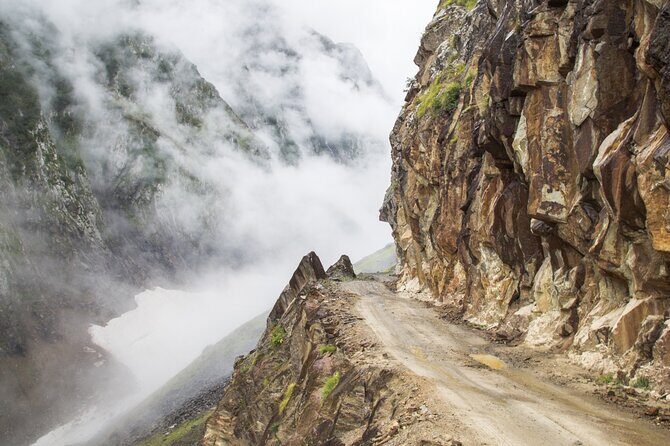
Day four shifts your route style from high-pass pauses into a longer, more immersive driving day. You head from Kargil toward Rangdum with scenic breaks at places like Panikhar for views and local cuisine.
The plan routes you through the Suru Valley, with Nun Kun peaks in view and a stop that includes a Parkachik Glacier viewpoint. Even the short duration given for the glacier stop matters because it’s not a drive-by. The point is to see that ice movement and understand why this area looks the way it does.
Then you arrive at Rangdum, described as remote and quiet, with Rangdum Monastery as the cultural anchor. The tour notes an option to stay in a guesthouse or even do a night under the stars, depending on what you choose.
Possible drawback: remote areas can mean fewer creature comforts than Leh. If you’re expecting city-level convenience, you’ll want to recalibrate. The reward is that the area feels genuinely far from the usual travel loop.
Pensi La and the “Gateway to Zanskar” feeling
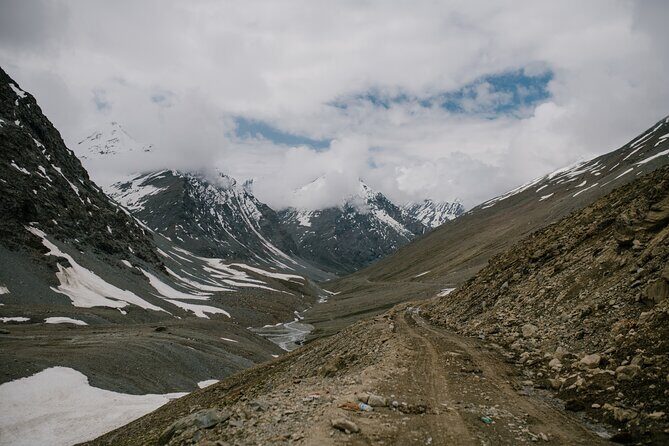
The next stop sequence is built around high elevation and route transitions. Drang-Drung Glacier is a brief viewpoint stop, noted as the largest glacier in Ladakh other than Siachen, with a maximum length around 23 km.
Then you hit Pensi La, described as the Gateway to Zanskar, sitting at about 4,400 m and connecting Suru Valley to Zanskar Valley. For riders, a pass like this is often more than a number. It’s where you feel the road get serious: the air thins, winds can change quickly, and the driving takes more focus.
At these altitudes, your best tool is patience. If you rush, you’ll suffer. If you ride smoothly and keep steady, the route becomes manageable.
Zanskar pass country: Singe La and Sirsir La
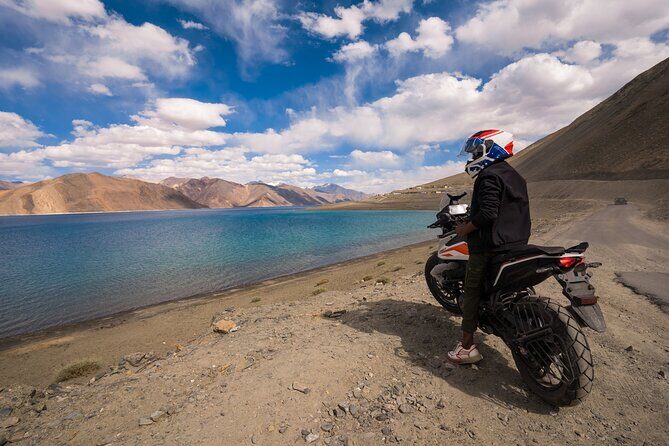
The route includes high pass stops in the Zanskar region such as Singe La and Sirsir La. Singe La is listed around 5,050 meters, also described as the Lion’s Pass. Sirsir La is around 4,800 meters.
What I like about this part of the plan is the pacing of altitude experience. You’re not throwing yourself straight into the highest pass without any in-between moments. You get progressive exposure: you see how conditions change as the elevation climbs, and you learn your own body’s rhythm.
These stops are short, but that’s the point. You’re not on a hike where you lose the feeling of driving. You’re on a motorcycle trip where the passes themselves are the event.
Back near the monasteries: revisiting Lamayuru’s character
Lamayuru appears again later on in the plan (it’s called out as a key stop). That repetition isn’t redundant if you understand what it’s doing. It gives you another chance to experience the monastery and its setting under different light and after more riding time.
By the time you return, you’re likely less focused on first-time impressions and more able to notice details: the murals and the way the monastery sits against the harsh, dramatic terrain.
Khardung La, Hunder Sand Dunes, and Diskit Gompa in Nubra
Nubra Valley is a contrast zone, and this tour treats it that way. The big early icon is Khardung La, listed around 5,359 m and described as one of the highest motorable roads. This is your classic Ladakh achievement pass: thin air, big views, and that short moment where you realize you’re riding at extreme elevation.
Then the plan adds something different: Hunder Sand Dunes in Nubra Valley. The dunes are described as a surreal high-altitude desert contrast, and Hunder is also known for double-humped Bactrian camels. The ride here is noted as not included for the camel element, but the stop still gives you the scenery and the camel presence.
From there, you get Diskit Gompa. It’s described as the oldest and largest gompa in Nubra Valley, with a 32-meter-tall Maitreya Buddha statue overlooking the Shyok River. If you want one stop that feels both monumental and readable, Diskit is it: you get size, you get a strong subject, and you get murals and artifacts inside.
Possible drawback: Nubra days can feel long because the distances add up. If your riding style is slow or cautious, it can help to manage fatigue early, especially after Khardung La.
Pangong Tso: the “color changes” lake day
Pangong Tso is the kind of place where the hours turn slippery. The plan lists it as a major highlight with the lake spanning about 134 km and sitting around 4,350 m. It’s also described as crossing the India-Tibet border, so it’s not just scenery—it’s geography with meaning.
What matters practically is timing. The lake is famous for ever-changing shades of blue. Even with limited stop time, you can often catch at least one shift if light and weather cooperate.
If you’re going for photos, bring patience and treat this as a “watch the sky” stop rather than a “snap and go” stop.
Hanle and Kaksang La: remote quiet with one more high point
After Pangong, you head toward Hanle. The plan describes the ride from the lake area into a remote high-altitude village at about 4,530 m. Hanle also gets cultural credit with the Hanle Monastery referenced as a spiritual site.
Then you pass by the Rezang La War Memorial, described as a tribute to Indian soldiers from the 1962 Sino-Indian War and specifically the 13th Kumaon Regiment. It’s located near Rezang La Pass at about 5,000 m. This stop is emotionally heavy compared to the scenic points. It’s also one of the moments that makes the ride feel connected to real lives, not just a dramatic route.
Finally, you reach Kaksang La, listed around 5,438 m. It’s described as remote and challenging, with views of Himalayan peaks, lakes, and valleys.
This day’s value is the blend: quiet remote riding, a strong cultural pause, and another high-altitude road milestone.
Umling La and the high-pass finale: Photi La and Nerbole
The final big altitude push comes with Umling La. The plan frames the route from the Hanle side and includes stops at Norbol(e) Top and Photila Pass. Photila is listed around 4,682 m, with additional nearby points described along the way.
Then you pass Photi La, listed at about 5,524 m (18,124 feet) and described as one of the world’s highest motorable passes. After that, you reach Nerbole Top at about 4,600 m.
Even if you don’t know the exact pass rankings, you’ll feel what the route is doing. This is a closing act designed for riders who want a final big number and a feeling of accomplishment when the road gets most serious.
If weather is iffy, this is the area where good conditions matter most. That’s why the tour notes that it requires good weather for operation.
Ending in Leh via Chumathang Hot Spring and the Indus Valley
After Nyoma (as referenced in the plan), the route returns toward Leh with a couple of memorable stops.
One is Chumathang Hot Spring, a small village on the Indus River known for its hot sulfur springs near the river. The plan notes that locals use the medicinal benefits too. Even if you don’t know the science, you’ll likely appreciate the comfort after high-altitude riding days.
Then you ride through the Indus Valley, described for its cultural heritage and wide views, before arriving back in Leh.
This finale is valuable because it lets you decompress. You’re not going from one pass directly into travel chaos. You get a simple, soothing stop, and then you’re back to a place where you can eat normally and sleep well.
Price and value: $3,200 per person, with real costs covered
At $3,200 per person for a private, 12-day (approx.) adventure, the price looks steep until you break down what’s included.
You’re paying for:
- A guided operation built around high passes and remote routing
- Support vehicle for backup and luggage
- Meals: 12 breakfasts, 12 lunches, 12 dinners
- Drinks on the way: mineral water, tea/coffee, snacks, juice
- A structure that includes rest and acclimatization in Leh
- Entrance fees as indicated in the day-by-day plan for the major monastery stops (with some stops marked free or not included)
You’re not paying for:
- Visa and flights
- Alcohol
- Some add-ons like the Hunder Sand Dunes camel ride, which is listed as not included in the plan
So the question isn’t just cost. It’s how much stress the package removes. If you tried to piece together Leh-to-Umling La routing yourself, you’d spend serious time on logistics, permits, timing, and support. Here, the tour compresses that into a single plan and gives you a backup system.
If you’re a solo rider hoping to go cheap, you might find other budget options. But if you care about smooth logistics in extreme elevation, the included food + support vehicle + guided structure can be real value.
Should you book this ride?
Book it if:
- You want a serious high-pass motorcycle adventure with a clear goal like Umling La
- You appreciate monastery stops and don’t mind switching between riding focus and cultural pauses
- You want an operation led by guides like Vidit and Vishal who are praised for attention to details and supportive management
- You’d rather pay for organization than manage everything yourself at high altitude
Skip it or at least rethink it if:
- You get unsteady at altitude or hate long days where the road can dominate your day
- You expect city-style comfort everywhere, since the route includes remote areas like Rangdum
- You’re looking for a laid-back ride with minimal driving intensity
If you’re honest about your riding comfort and altitude tolerance, this tour has the ingredients for a memorable, genuinely different Himalaya motorcycle run.
FAQ
FAQ
What is the price per person?
The tour is priced at $3,200.00 per person.
How long is the tour?
The duration is listed as 12 days (approx.).
What time does the tour start?
The start time is 8:00 am.
Is pickup included?
Pickup is offered. The plan also describes being met at Kushok Bakula Rimpochee Airport (IXL) on arrival in Leh.
Is this a private tour?
Yes. It’s described as a private tour/activity, so only your group participates.
What meals and drinks are included?
Breakfast (12), lunch (12), and dinner (12) are included. Mineral water, tea/coffee, snacks, and juice are provided on the way.
Are flights and visa included?
No. Visa and international or domestic flights are not included.
Are entrance fees included for the stops?
Admission tickets vary by stop. Some monastery visits are marked as included, some passes/viewpoints are marked free, and at least one activity like the Hunder Sand Dunes camel ride is marked as not included.
What happens if the weather is poor?
The experience requires good weather. If it’s canceled due to poor weather, you’ll be offered a different date or a full refund. The plan also notes it may be canceled if the minimum number of travelers isn’t met, with a refund or alternative option.