REVIEW · LEH
8-Days Heavenly Himalayas- LEH-LADAKH
Book on Viator →Operated by BOUT INDIA TOURS · Bookable on Viator
Leh can feel oddly simple at first. You get monks, mountain passes, and a night near Pangong Tso, all handled with a private car and permits included. One thing to consider: this is a high-altitude route with long drives, so plan for fatigue and acclimatization.
I like that the schedule focuses on major Ladakh stops without making you figure out logistics day by day. The trip also builds in a real acclimatization moment in Leh before you start stacking altitude and mountain roads.
The best way to think of this tour is as a comfortable “see the big icons” route, with a safari-camp night that keeps it from feeling like a checklist.
In This Review
- Key Things That Make This Ladakh Tour Work
- First Day in Leh: Arrive, Settle, Then Breathe
- Leh Sightseeing With Thiksey, Shey, and Leh Palace Views
- Alchi Monastery and the Indus–Zanskar Connection
- The Nubra Valley Drive: Khardung-La and the Feeling of Distance
- Diskit Monastery, Hunder Sand Dunes, and Hot Springs
- Pangong Tso at 4,350 m: Camp Night by the Lake
- Hemis Monastery on the Way Back to Leh
- Day 8: Drop-Off at Leh Airport and a Clean Finish
- Price and Value: What You’re Actually Paying For
- Who This Tour Fits Best (and Who Should Think Twice)
- Quick Practical Tips Before You Go
- Should You Book This 8 Days Heavenly Himalayas (LEH–LADAKH)?
- FAQ
- What is included in the 8-day tour price?
- Are flights included?
- Do I need permits for Nubra Valley and Pangong Tso?
- Do I get an English-speaking guide at Pangong Lake?
- How high is Pangong Tso?
- How do you travel between Leh, Nubra Valley, and Pangong Tso?
- Is check-in at the Leh hotel the same every day?
- What style of accommodation should I expect?
- When does pickup happen, and where is the meeting point?
- What is the cancellation window for a full refund?
Key Things That Make This Ladakh Tour Work
- Airport pickup and private transfers keep your first day in Leh low-stress.
- Inner line permits for Nubra Valley and Pangong Lake are included in the price.
- Khardung-La to Nubra Valley is the showpiece drive, including a high motorable pass route.
- Diskit + Hunder mixes monastery time with sand dunes and a Bactrian camel ride option.
- Pangong Tso camp night puts you at about 4,350 m with iconic lake views.
- English-speaking guides at most stops (Pangong Lake is the exception), with past coordination names like Chahat, Kunal, and guides such as Stanzin or Tundup appearing in feedback.
First Day in Leh: Arrive, Settle, Then Breathe
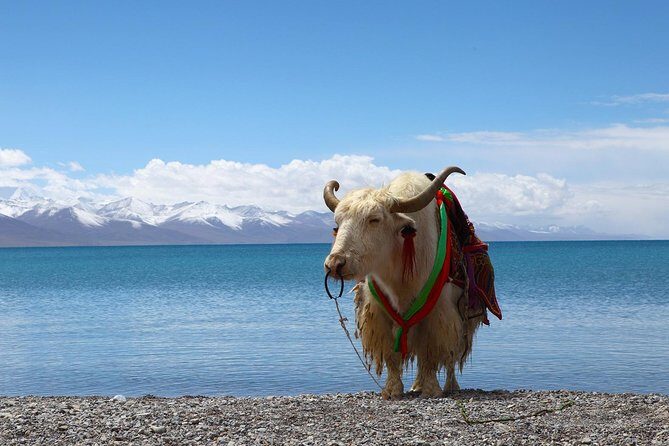
You land in Leh and get a private car pickup from Leh Airport, then check in and keep the rest of the day flexible. Standard check-in time is 12:00 pm, so if your flight lands earlier, you may still have to wait a bit. After that, the day is basically for you to acclimatize.
Leh’s Old Town style matters here. With stupas and old mudbrick houses around, it’s not just a city you pass through—it’s a place to get your bearings fast. Even if you don’t plan a lot that afternoon, just walking slowly helps you adjust to the altitude.
This is a tour built around not rushing your first altitude adjustment. That’s valuable because the next days quickly move from sightseeing into higher elevations and steep roads.
You can also read our reviews of more tours and experiences in Leh.

Leh Sightseeing With Thiksey, Shey, and Leh Palace Views
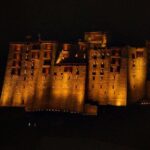
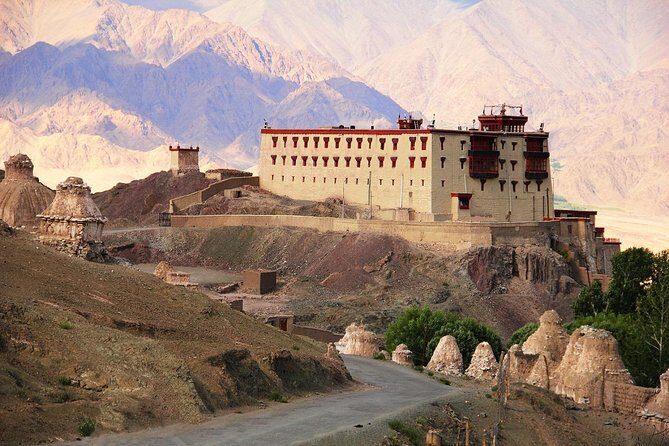
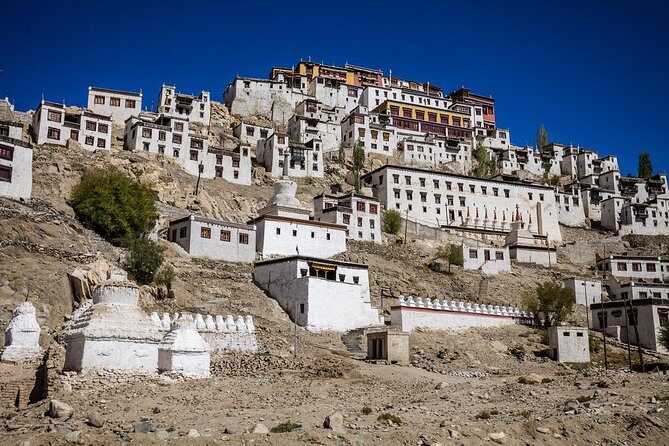
Day 2 brings classic Ladakh in a smart order: Leh Palace, Shey Palace & Monastery, then Thiksey Monastery. Leh Palace (17th century) also gives you a viewpoint from the roof area, with the Stok Kangri mountain range in the wider mix. That kind of “first big view” is a nice payoff after your arrival day.
Shey Palace & Monastery is tied to Ladakh’s royal history as a summer retreat. The idea isn’t just to see buildings—it’s to understand how monasteries and palaces sit in the landscape and how that shapes daily life in the region.
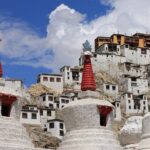
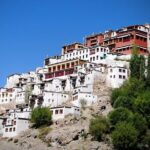
Thiksey is one of the key stops because of its Tibetan-style presence and hilltop setting. It’s often described as resembling the Potala Palace of Lhasa, and standing there gives you a clearer sense of Ladakh’s Buddhist links and architecture.
The drawback? This is still sightseeing at high altitude. Go slow, drink water, and avoid sprinting between photo spots. If you need a slower pace, use the drive time to rest.
Alchi Monastery and the Indus–Zanskar Connection
Day 3 is where the trip broadens out beyond the busiest monastery circuit. You visit a military history stop (Hall of fame), then the Sikh temple Gurudwara Pathar Sahib, and later Magnetic Hill. The Magnetic Hill piece is more for the experience and local lore than for geology lessons, but it can be fun if you go in with the right mindset.
Then you get to Alchi Monastery, which is the spiritual and artistic core of the day. You’re looking at wall paintings that reflect both Buddhist and Hindu influences from the period of the region’s kings, plus Buddha statues and detailed wood carvings. For me, the value here is that Ladakh doesn’t feel like one uniform style—it feels like layered culture.
You also stop at Sangam, the confluence of the Zanskar and Indus rivers. Even if you don’t spend a ton of time there, it gives context for why Ladakh’s monasteries and towns developed where they did: water sources and travel routes.
If you’re sensitive to long days, note that Day 3 is built as a full-day sightseeing push. Plan on being tired by evening, even if the stops are interesting.
The Nubra Valley Drive: Khardung-La and the Feeling of Distance
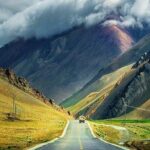
Day 4 is the big transit day: you drive from Leh to Nubra Valley via Khardung-La Pass (18,380 ft). The route is about 159 km from Leh, and you pass through Leh–Phyang–Khardung La–Khalsar–Diskit–Nubra Valley.
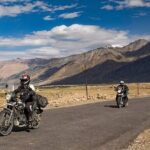
This part matters because the drive isn’t just “getting there.” Crossing Khardung-La is the kind of ride that changes how you picture Ladakh. You see the region’s scale quickly, and the road itself becomes a major attraction.
Once you arrive in Nubra Valley, the tour shifts tone. The valley is framed as a quieter, community-centered place, away from the main Leh bustle. You check in, eat dinner, and have your first proper night in Nubra.
The possible drawback is simple: you’ll be in the car a lot on the days that include major passes and valley transfers. If you’re prone to motion sickness, bring what works for you, and build in rest breaks.
Diskit Monastery, Hunder Sand Dunes, and Hot Springs
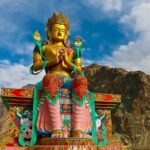
Day 5 starts with Diskit Monastery, the largest and oldest surviving monastery in Nubra Valley. The prime highlight is the 100-foot Maitreya Buddha statue, which was inaugurated by the Dalai Lama. That’s not a small claim, and seeing it in person is likely to anchor the whole day.
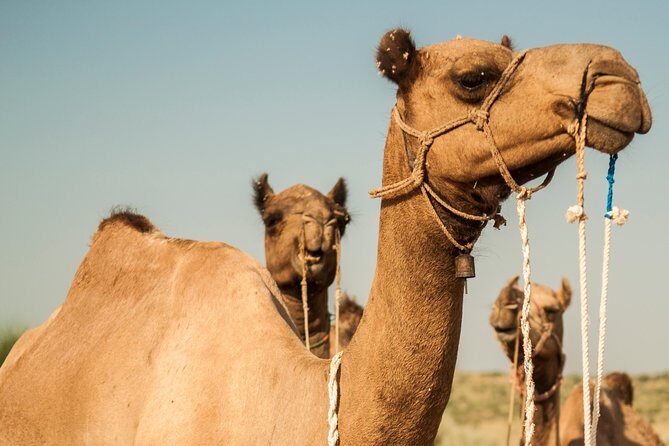
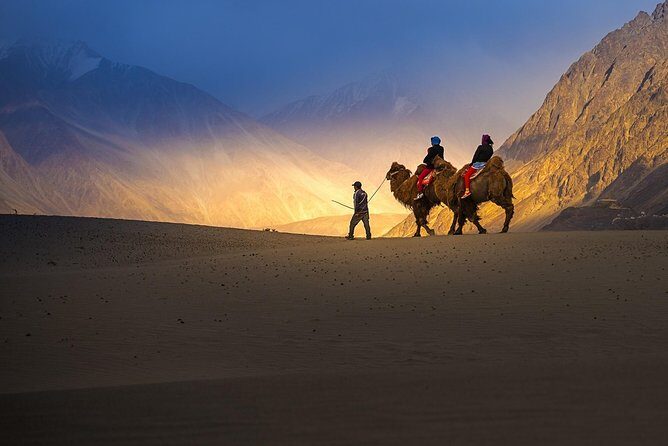
After that, you head to Hunder Sand dunes. Here the tour adds a hands-on activity: a ride on a rare Bactrian camel (double-humped camel). It’s one of those experiences that’s short, memorable, and very “Ladakh,” especially for first-timers.
Then you finish with Panamic Hot Springs. The idea is a quick reset after altitude and road time. The springs are described as sulfur-rich, and it’s considered good for the skin—so even if you don’t treat it like a spa day, it can feel like a practical recovery stop.
If you want a warning label, it’s this: hot springs and sand dunes are active time. Don’t schedule extra stamina for the evening—this is where a relaxed pace pays off.
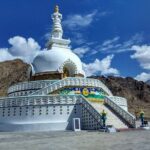
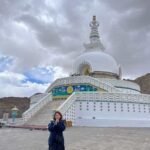
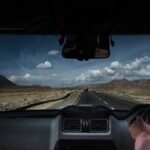
Pangong Tso at 4,350 m: Camp Night by the Lake
Day 6 is about Pangong Tso. You drive from Nubra Valley to the lake, reaching an endorheic Himalayan lake at about 4,350 m (14,270 ft). The lake stretches about 134 km and runs toward the India–China border area, so the scale feels real when you’re there.
Then you check into camps near Pangong Lake. This is the tour’s signature overnight, and it’s built for views: the camps are set up so you can look out over the mountain ranges and the lake. Pangong’s water is described as salty and crystal clear with blue tones, and it looks best when the sun is out.
Even if you don’t do it, the option for a yak safari is included as an activity you can indulge in. If you do it, it’s the kind of experience that makes your trip feel less like indoor sightseeing and more like a high-altitude adventure.
One important practical note: the tour says an English-speaking guide is provided for most sightseeing, but Pangong Lake is the exception. That doesn’t mean you’re on your own with zero support; it just means this lake day may feel more self-directed once you’re at the camp.
Hemis Monastery on the Way Back to Leh
Day 7 brings you back toward Leh, with a key stop at Hemis Monastery. Hemis is described as the largest monastic institution in Ladakh and also noted as the wealthiest Buddhist monastery in India. That combination of scale and collections is exactly why it’s chosen as a stop before returning to Leh.
You’re looking at sacred Thangkas, murals, and artifacts, plus collections of ancient remnants such as a copper Buddha statue and gold and silver stupas. Hemis gives you a sense of how monasteries in Ladakh aren’t just religious spaces—they’re also repositories of art and objects carried through generations.
Then you reach Leh in the evening, check in, and keep the rest of the night easy. Dinner and overnight stay are at the hotel in Leh, and the schedule leaves you free for an unplanned stroll or early sleep.
If you’re tired from altitude shifts and driving, this “quiet evening” is a feature, not filler. Use it to recover.
Day 8: Drop-Off at Leh Airport and a Clean Finish
Day 8 is straightforward. After an early breakfast, you check out and the private car drops you at Leh airport for your return flight. That clean ending is worth paying attention to, because Leh departures can be sensitive to timing.
You’re leaving with a stack of classic Ladakh images: monasteries on hills, a pass drive that feels extreme, Nubra’s valley rhythm, and Pangong’s lake color from camp surroundings. It’s the kind of trip that usually leaves you wanting more time in one place, which is a good sign.
Price and Value: What You’re Actually Paying For
At $1,700 per person for about 8 days and 7 nights, the headline number can look steep until you break down what’s included. This price covers accommodation in 3- or 4-star hotels or Swiss camps (as listed) for the nights, plus private transportation with a driver, and English-speaking guides at most destinations.
What really boosts value is the inclusion of inner line permits for Nubra Valley and Pangong Lake. Permits in remote border-adjacent regions aren’t just paperwork—they’re part of how the trip becomes possible and compliant.
You also get meals: breakfast (7) and dinner (7). That matters in Ladakh because you don’t want to burn energy hunting for food after long driving days. If you’ve planned for “easy logistics,” this kind of meal inclusion is a real cost saver.
What’s not included is the stuff that can swing your total budget fast: flights and visa, travel insurance, and tips/gratuities. If you’re the kind of traveler who likes to handle everything yourself, the private car and included guides remove a lot of work—so the value depends on whether you want that time and planning burden taken off your plate.
Who This Tour Fits Best (and Who Should Think Twice)
This works well if you want a structured Ladakh route that hits the major monasteries and the big scenic drives without worrying about permits, handoffs, or translating logistics.
It also fits groups who appreciate private comfort: a private vehicle, a consistent driver, and English-speaking guidance most days. Past feedback tied to the operator often highlights smooth transitions and strong coordination, with names like Chahat and Kunal showing up as key points of contact, and guides such as Stanzin or Tundup referenced for on-the-ground help.
Think twice if you:
- Want lots of independent roaming without set stops, because the route is pre-planned.
- Need a guided experience specifically at Pangong Lake (the tour data indicates guides are not provided there).
- Struggle with long road days at altitude. You’ll be moving across valleys and passes, and the schedule expects you to handle it.
Quick Practical Tips Before You Go
Leh is your first altitude test. Keep Day 1 and Day 2 paced, drink water, and don’t treat sightseeing like a sprint.
On the pass and long drive days (Khardung-La to Nubra and Nubra to Pangong), plan for comfort: water, layers, and simple snacks if you’re the type who gets hungry between stops. The tour includes meals, but you’ll still be awake and traveling through scenic terrain.
Finally, if you care about the flow of your trip, pay attention to the fact that many days are listed as full sightseeing blocks. That’s part of the deal: you’re spending daylight wisely so you can see more of Ladakh without backtracking.
Should You Book This 8 Days Heavenly Himalayas (LEH–LADAKH)?
If you want a Ladakh first-timer route that combines major monasteries, the Khardung-La drive, and a real Pangong Tso camp night, this is a strong fit. The included permits, private car, and most-days English-speaking guidance do the heavy lifting for you.
I’d book it if you value convenience and want the planning stress handled—especially on a destination where altitude and distance can make self-guided travel more complicated.
I’d hesitate if you’re expecting lots of freedom day-to-day, or if you specifically need a guide at Pangong Lake. In that case, you might want a different format that offers guided support there.
FAQ
What is included in the 8-day tour price?
The tour includes 7 nights in 3- or 4-star hotels or Swiss camps (double/triple sharing), all transfers and sightseeing by private car with driver, English-speaking guides at most destinations (not at Pangong Lake), inner line permits for Nubra Valley and Pangong Lake, and breakfast (7) plus dinner (7).
Are flights included?
No. Flights and visa are not included.
Do I need permits for Nubra Valley and Pangong Tso?
Yes, inner line permits are needed for Nubra Valley and Pangong Lake, and they’re included in the tour price.
Do I get an English-speaking guide at Pangong Lake?
The tour data specifies English-speaking guides for sightseeing at most destinations, except Pangong Lake.
How high is Pangong Tso?
Pangong Tso is about 4,350 m (14,270 ft).
How do you travel between Leh, Nubra Valley, and Pangong Tso?
You use a private car with a driver for transfers and sightseeing across the route, including driving via Khardung-La Pass.
Is check-in at the Leh hotel the same every day?
Standard check-in time is listed as 12:00 pm.
What style of accommodation should I expect?
You’ll stay in 3- or 4-star hotels or Swiss camps (as mentioned or similar), and you’ll have a safari camp night near Pangong Lake.
When does pickup happen, and where is the meeting point?
The meeting point is Leh Airport. Pickup is tied to the listed opening hours of 8:30 AM to 12:00 PM during the operating dates shown (04/15/2025–08/31/2025).
What is the cancellation window for a full refund?
You can cancel up to 6 days in advance of the experience for a full refund. Changes made less than 6 full days before the start time are not accepted for a full refund.