REVIEW · AMRITSAR
Amritsar Heritage Walking Tour of Old City & Golden Temple Area
Book on Viator →Operated by Vivamos India · Bookable on Viator
One street at a time, Amritsar starts making sense. This heritage walk takes you through old lanes and living markets, with stops tied to Sikh bravery, Mughal-era power, and British footprints. I love how it connects major landmarks like the Town Hall to quieter sacred sites you’d otherwise miss, and I also like that the guide keeps the pace easy for 2 to 3 hours. A possible drawback: you’re walking through the Old City, so plan for heat and narrow paths, and dress respectfully for temple stops.
What makes this worth it is the focus. Instead of only repeating the Golden Temple circuit, this route helps you understand the city that grew around it. Your guide is local and speaks English or Spanish, and the tone is story-first, street-second, market-third.
You’ll start at Town Hall in Katra Ahluwalia at 8:00 am and finish back near the start. The ticket is mobile, the tour is private (just your group), and bottled water is included, which is a small detail that matters on a morning walk.
In This Review
- Key highlights you’ll actually feel
- How this walk turns Old City streets into a clear story
- Price and logistics: what $17 really buys you
- Town Hall: the British-era building that sets the tone
- Saragarhi Memorial Gurudwara: bravery with a date you can remember
- Qila Ahluwalia: a fort story inside the city’s everyday lanes
- Jalebian Wala Chowk: sweets, street names, and why 1956 matters
- Udasin Akhara and Chitta Akhara: where learning and meditation meet
- Darshani Deori: the gateway where Gurus viewed Harmandir Sahib
- Gurudwara Churasti Attari: the market idea born from spiritual encouragement
- Baba Bohar Shivala at Bartan Bazaar: banyan tree mythology and an ending with smell
- The guide factor: why Paramjeet’s style is a big deal
- Who should book this tour, and who might skip it
- Should you book this Amritsar Heritage Walking Tour?
- FAQ
- How long is the Amritsar Heritage Walking Tour?
- What’s included in the tour price?
- Where do I meet, and does the tour end nearby?
- Is this tour private or shared?
- Is the Partition Museum included?
- What happens if weather is poor or I need to cancel?
Key highlights you’ll actually feel
- A tight 2–3 hour route that shows Amritsar beyond the postcard stops
- Memorials tied to real events, including the 1897 Battle of Saragarhi
- Religious sites with clear historical context, from gateways to akharas
- Old City bazaars with names and origins, like a jalebi chowk linked to 1956
- A lead guide with a reputation for personalization, including Paramjeet from Vivamos India
How this walk turns Old City streets into a clear story
The best heritage walks don’t just point. They explain why each place exists and how it fits with the people who lived here. This one is built around that idea: you move through the Old City lanes and keep getting the “what this meant back then” answer in plain language.
I like that the tour naturally balances sacred places and daily life. You’ll see temples and memorial spaces, then switch back to market energy—so the city feels lived-in, not staged for tourists.
If you’re expecting a slow, museum-style experience, this isn’t that. It’s more like following a good local friend who knows which corners matter and how to connect them.
You can also read our reviews of more walking tours in Amritsar



Price and logistics: what $17 really buys you
At around $17, this is priced like a budget-friendly cultural morning, and it holds up because it includes the key ingredients. You get a professional local guide (English or Spanish) and bottled water, plus admissions are included at several stops.
Here’s what helps the value: the tour doesn’t treat history as a lecture. It spends your time at locations that already carry meaning—Town Hall, Gurudwara Saragarhi Memorial, fort history, akharas, and gateways connected to the Golden Temple area. That “time spent in the right places” is the part you’re paying for.
Also, it’s private. That matters more than people expect in crowded areas, because your group can keep a calmer pace and ask questions without feeling like you’re being shoved along.
Timing note: you’re looking at 2 to 3 hours, starting at 8:00 am. Morning is smart here, especially if you’re sensitive to heat or want your photos before the day gets intense.
Town Hall: the British-era building that sets the tone
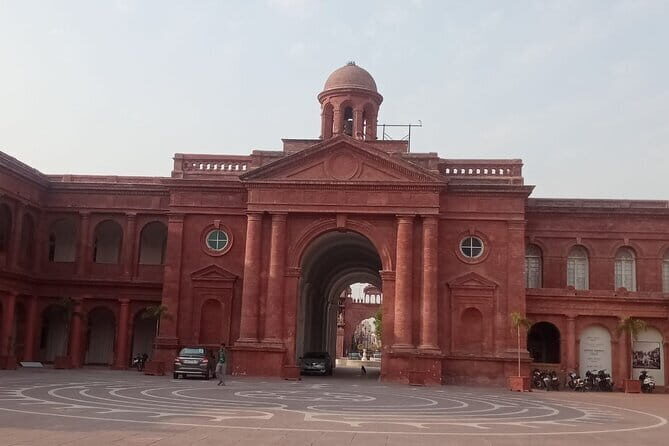
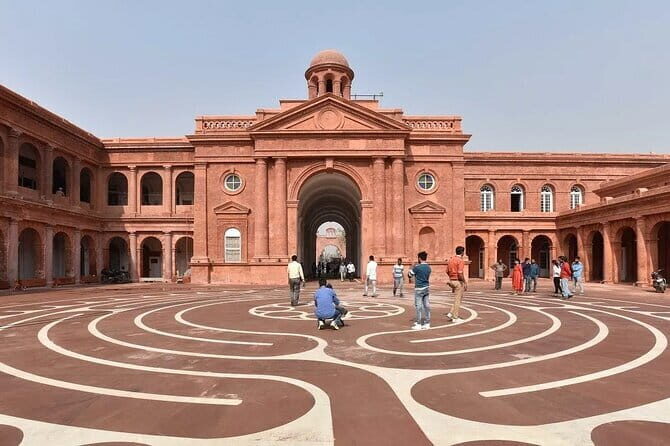
You begin at the Town Hall at Katra Ahluwalia. This structure is a British-era landmark built in 1866, and it once served as an administrative center during British rule.
The quick win at this first stop is perspective. Instead of jumping straight into religious sites, you start with a civic building—so you can see how power and governance shaped city life. It also helps you get your bearings fast for the lanes ahead.
Practically, this is also a useful meeting point. You know you’re starting in a fixed, recognizable place, and the tour ends back at the same area.
Saragarhi Memorial Gurudwara: bravery with a date you can remember
Next is the Saragarhi Memorial Gurudwara, dedicated to 21 Sikh soldiers of the 36th Sikh Regiment. They fought in the historic Battle of Saragarhi in 1897, and the site is built to honor the courage and sacrifice tied to that story.
I like memorial sites when the context is specific, and this one gives you that anchor year and unit reference. It turns a vague “war story” into something concrete you can repeat later, which is half the point of doing this kind of walk.
You’ll spend enough time here to understand why the memorial matters, not just snap a photo and move on. Even if you don’t know much about Sikh military history, the guide’s narrative should help you place it in Amritsar’s broader story.
Qila Ahluwalia: a fort story inside the city’s everyday lanes
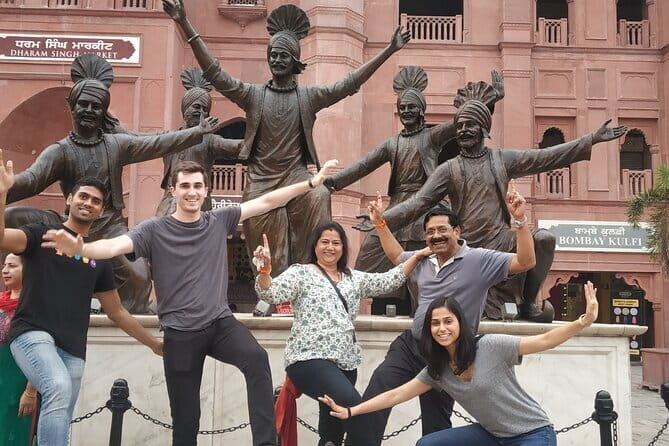
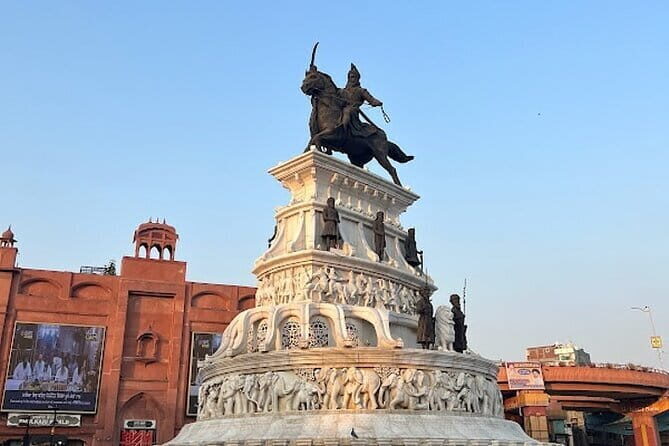
Then you head to Qila Ahluwalia, in the heart of the Old City. This fort is linked to Sardar Jassa Singh Ahluwalia, a prominent Sikh leader of the 18th century.
What makes it interesting is the role it played during periods of foreign invasions and Sikh resistance. In other words, this isn’t just a preserved wall—it’s tied to conflict, survival, and local leadership.
In a guided walk like this, the fort stop usually does more than describe architecture. It helps you understand why defense and identity were so tightly connected in this part of South Asia.
You can also read our reviews of more city tours in Amritsar






Jalebian Wala Chowk: sweets, street names, and why 1956 matters
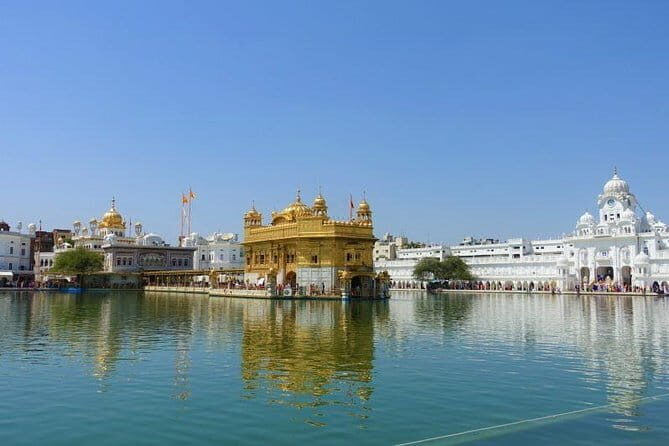
After the heavier history, the tour shifts to something very Amritsar: food culture. You walk through Chowk katra ahluwalia, also connected to Jalebian Wala Chowk, named after a famous sweet shop that has operated since 1956.
The guide connects that shop identity to local life—how people line up, how the area feels, and how a regular craving becomes part of the city’s memory. You’ll also get a look at jalebi preparation, at least in a descriptive way that helps you picture what you’d taste if you stop for a snack.
I enjoy this kind of stop because it makes the Old City feel human. A fort can tell you what people feared; a sweets lane tells you what people wanted.
Udasin Akhara and Chitta Akhara: where learning and meditation meet
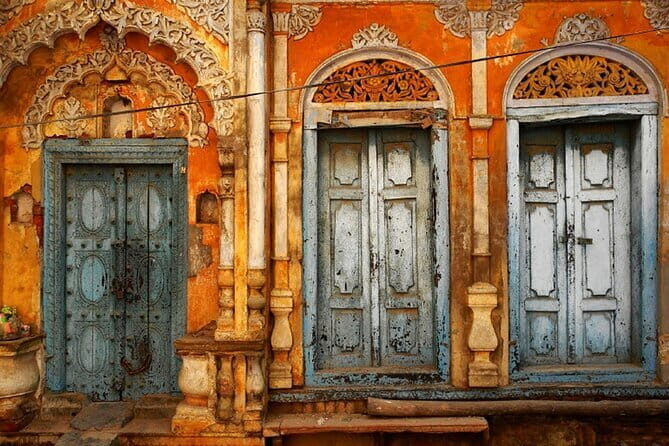
Now the walk turns toward spiritual institutions: the akharas along Sangal Wala Road and then Chitta Akhara in the Old City.
First comes Udasin Akhara Sangal Wala, a sacred site founded in 1771 by Nirvan Priyatam Dass. The tour framing here focuses on its role as a center for education, meditation, and spiritual learning for ascetics and holy men.
Then you visit Chitta Akhara, associated with Baba Shri Chand Ji, the elder son of Guru Nanak Dev Ji. This site is described as a longstanding center for meditation and spiritual learning, so it’s not just a building—it’s an ongoing tradition.
If you’re wondering why these stops belong in an Old City heritage walk, here’s the practical answer. Akharas helped shape how people trained their minds and sustained faith. In a place where community life and religion overlap, that’s part of the architecture too, even if you don’t see it from the street.
Darshani Deori: the gateway where Gurus viewed Harmandir Sahib
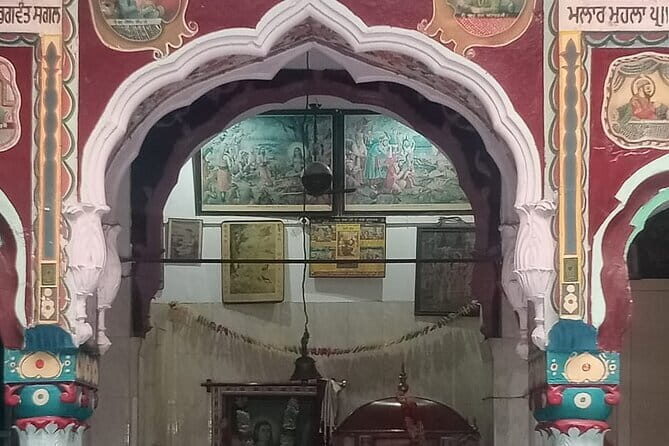
Darshani Deori is a gateway with real religious importance in Sikh tradition. It’s described as the historically significant place from where Sri Guru Arjan Dev Ji and Sri Guru Hargobind Ji would view Harmandir Sahib (the Golden Temple).
This stop works best when you pay attention to the idea, not only the stones. The guide’s explanation should help you understand how proximity and sightlines can carry spiritual meaning—turning a doorway into a moment of devotion and leadership.
Even if you’ve already visited the Golden Temple area before, this is the kind of stop that adds a layer you might not get from the main complex alone.
Gurudwara Churasti Attari: the market idea born from spiritual encouragement
The tour ends at Gurudwara Churasti Attari, established by Sri Guru Hargobind Ji in the early 1600s. This is a fascinating link point between faith and commerce.
Here’s the key story the guide shares: the origin of Batti Hatta Market, created when the Guru encouraged traders to set up 32 shops. That blending—spiritual leadership and daily economic life—is exactly the kind of detail that makes an Old City walk feel specific.
I like this stop because it gives you a “how the city worked” lens. You get a clearer picture of how sacred spaces influenced what kinds of livelihoods grew nearby.
Baba Bohar Shivala at Bartan Bazaar: banyan tree mythology and an ending with smell
Finally, you reach Baba Bohar Shivala at the end of Bartan Bazaar, the utensil market. The highlight here is an ancient banyan tree called Bohar, which holds deep religious significance in Hindu mythology.
The guide connects the tree’s symbolism to the Trimurti: Brahma, Vishnu, and Mahesh. You also get a sense of how that spiritual meaning sits right next to ordinary market life—utensils clinking, shoppers moving, everyday trade continuing under the shadow of a revered presence.
This is a strong way to finish, because the walk closes with something sensory. It’s easier to remember a final stop when it has sound and atmosphere, not only facts.
The guide factor: why Paramjeet’s style is a big deal
The experience is shaped by its local guide, and the best evidence is how consistent the praise is for guide quality. The lead guide and owner associated with Vivamos India, Paramjeet, is highlighted for tailoring the tour and personalizing the pacing so the story lands with you.
That kind of adjustment matters on a heritage walk. If you have a question about Sikh history, you’ll get an answer in context. If you want to spend an extra minute at a gate or a corner, the guide can often steer the flow without turning it into chaos.
It also helps that the narration connects Sikh, Mughal, and colonial themes into one ongoing story. That’s the difference between memorizing dates and actually understanding why Amritsar looks the way it does today.
Who should book this tour, and who might skip it
This is a great fit if you want history you can see and places that explain themselves. It’s also ideal if you’re visiting the Golden Temple area and want a nearby route that goes deeper into the living Old City.
I’d especially recommend it to first-timers who feel overwhelmed by Amritsar’s geography. Starting at Town Hall and moving through well-chosen landmarks helps you build a mental map quickly.
You might choose something else if you only want the Golden Temple complex itself and don’t care about surrounding Sikh memorials, akharas, and old markets. This tour’s focus is the city beyond the main highlight.
Should you book this Amritsar Heritage Walking Tour?
Yes—if you want a short, guided Old City experience that turns streets into stories. The price-to-time ratio is strong, admissions are partially included at key stops, and the route is built around meaningful places rather than random photo stops.
Book it if you’re ready for respectful temple behavior, comfortable walking shoes, and a morning schedule. If you’re sensitive to heat or crowded narrow lanes, go early (the 8:00 am start helps), and wear light layers.
If you want maximum value from Amritsar, this is one of the smarter ways to spend a half-day with a local guide guiding the connections you’d miss alone.
FAQ
How long is the Amritsar Heritage Walking Tour?
It’s listed as about 2 to 3 hours.
What’s included in the tour price?
The price includes a professional local guide (English or Spanish speaking) and bottled drinking water. Admission is included for several stops, while others are free.
Where do I meet, and does the tour end nearby?
You meet at Town Hall, Katra Ahluwalia, Amritsar, Punjab 143006, and the tour ends back at the meeting point.
Is this tour private or shared?
This is a private tour/activity, so only your group participates.
Is the Partition Museum included?
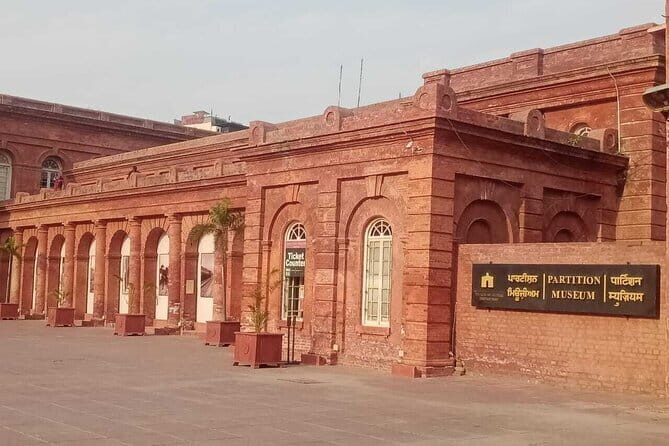
No. Visiting the Partition Museum is optional and costs ₹250 per person, depending on time and interest.
What happens if weather is poor or I need to cancel?
The experience requires good weather. If it’s canceled due to poor weather, you’ll be offered a different date or a full refund. You can cancel for free up to 24 hours in advance for a full refund.