REVIEW · AMRITSAR
Amritsar: Small Group 3 hour Guided Heritage Walk
Book on GetYourGuide →Operated by Go City Adventures · Bookable on GetYourGuide
History walks at human speed here, and this guided route threads Amritsar’s religious calm with the city’s tougher historical chapters through street-level stops. I love how it pairs landmark faith sites like the Golden Temple with named places that explain what happened there and why. I also like that the morning start at the historic civic center makes the whole city feel organized in your head, not just like a list of sights.
The main consideration is simple: you’ll be walking for 3 hours, and some worship areas require you to remove your shoes, so plan for that rhythm rather than hoping you can breeze through. Add in the smart casual dress code, and you’ll have the smoothest time if you come prepared.
In This Review
- Key things you’ll notice on this walk
- Starting at Town Hall: Amritsar’s civic core, before the sacred stops
- Gurdwara Saragarahi: a memorial you can feel in the details
- Qila Ahluwalia: the fort that explains 18th-century defense
- Jalebiwala Chowk: where heritage meets everyday business
- Udasin Ashram Akhara Sangalwala (1771) and the neighboring Chitta Akhara
- Darshani Deori and Baba Bohar: the approach that sets the tone
- Thakurdwara Dariana Mal: colonial-style architecture in a traditional city
- Chowrasti Atari: a 1600s commercial complex tied to Guru Hargobind
- Taksal mint and Thakurdwara Raja Tej Singh: governance you can spot
- Crawling Street and the 1919 massacre memory
- The Ancient Passage: connecting mohallas and katras
- Golden Temple finale: devotion, architecture, and a quieter pace
- Price and value: what $44 gets you for 3 hours
- Who should book this heritage walk
- Should you book the Amritsar Heritage Walk?
- FAQ
- Where does the tour start?
- How long is the guided heritage walk?
- What language is the guide?
- Is hotel pickup included?
- What should I wear and how should I dress?
- Do I need to remove my shoes?
- Can I cancel and get a full refund?
Key things you’ll notice on this walk
- Town Hall (built 1866) sets a civic-and-colonial context right away
- Gurdwara Saragarahi links faith with a specific stand on Sep 12, 1897
- Ahluwalia Misl fort (Qila Ahluwalia) gives you the 18th-century power story behind Amritsar
- Akhara and ashram stops show how spiritual training communities shaped the city
- Crawling Street brings the 1919 massacre memory into the same walking route as the sacred sites
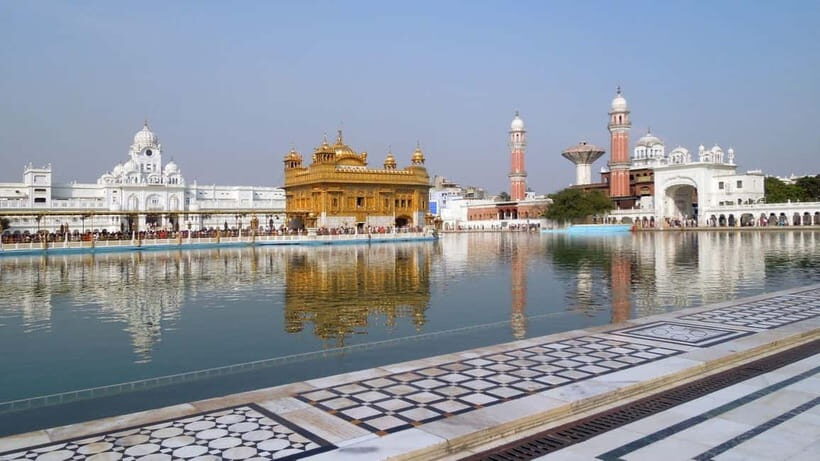
- Golden Temple finale ends with the most important architecture and atmosphere in town
Starting at Town Hall: Amritsar’s civic core, before the sacred stops
Your walk begins outside the Town Hall, the historic administrative hub of Amritsar. This building traces back to the British era, constructed in 1866, and that date matters because it frames how the city was governed and organized during the colonial period. It’s a useful first move: before you hit temples and forts, you’re learning the “how a city runs” layer.
This is also where you’ll get your bearings for the rest of the route. Even if you’ve seen photos of the Golden Temple area, the streets around it can feel like a maze. Starting at Town Hall helps you understand the logic of where you’re going next—government, then memorial, then markets, then the spiritual center.
You can also read our reviews of more walking tours in Amritsar


Gurdwara Saragarahi: a memorial you can feel in the details
Next comes Gurdwara Saragarahi, built around a specific moment in Sikh history. It honors twenty-one troops from the 36 Sikh Battalion who defended their positions on September 12, 1897. That specificity is what makes this stop more than a scenic pause. You’re not just looking at a place; you’re learning the story that shaped it.
Expect a moving stop where spirituality and remembrance sit close together. Guides usually help you understand why memorial gurdwaras are so important in Sikh tradition: they keep events from becoming abstract dates. Instead, you feel the event as something tied to place, community, and devotion.
Practical note: this is a worship space. Shoes must be removed at places of worship, so keep your feet comfortable and flexible for the shoe-off routine.
Qila Ahluwalia: the fort that explains 18th-century defense
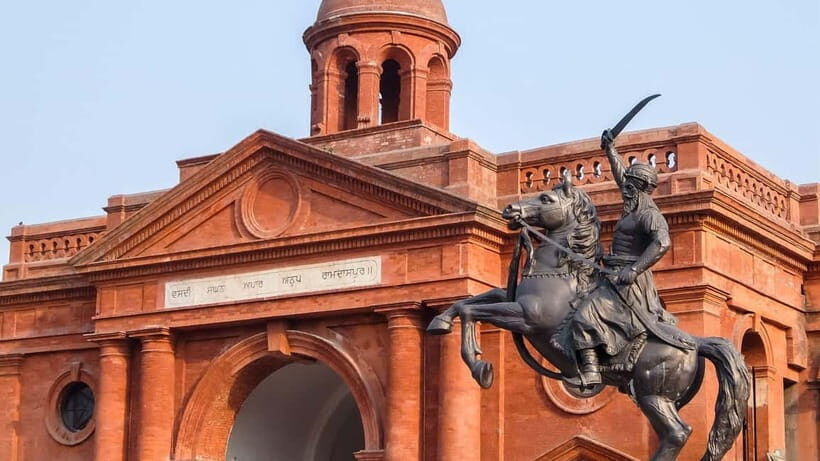
From memorial to military history, you then visit Qila Ahluwalia (Ahluwalia Misl Fort). This fort was formerly held by the Ahluwalia Misl, a group whose leader Jassa Singh Ahluwalia played a key role in resisting foreign incursions in the 18th century.
Even if forts aren’t your thing, this stop works because it gives you a concrete scale for “protection” and “control.” When you see a fort linked to a named leader and a specific defensive role, you start to understand how Amritsar’s political landscape changed over time—and why later religious and civic landmarks sit where they do.
Jalebiwala Chowk: where heritage meets everyday business
After the fort history, the route shifts to Jalebiwala Chowk, right in the center of Amritsar’s business district. This is where you get a chance to savor regional cuisine—an effective reminder that heritage isn’t only stone and stories. It’s also what people eat in the streets, every day.
This stop is especially valuable on a guided walk, because it helps you connect the spiritual and historical sites you’ve seen so far with the living city around them. You’re not separating “old Amritsar” from “modern Amritsar.” You’re learning how they overlap.
Udasin Ashram Akhara Sangalwala (1771) and the neighboring Chitta Akhara
Next you’ll visit Udasin Ashram Akhara Sangalwala, established in 1771. It was once called Nirban Akhara, named in honor of its creator. This kind of stop can be easy to skip if you’re only interested in big-name sights, but it’s a strong part of this walk because it broadens the picture of religious life.
Right nearby, you’ll also see Chitta Akhara, also known as Ganga Raam Akhara, founded close by in 1781 by Mahant Ganga Raam. Together, these stops help you understand how spiritual communities weren’t always centered solely around one shrine. They also developed as training and practice spaces that shaped local society over generations.
If you’re paying attention, you’ll start to notice how the route moves between different forms of devotion: memorial gurdwaras, ascetic akharas, and then toward the Golden Temple complex. That progression makes the city feel less random.
You can also read our reviews of more guided tours in Amritsar


Darshani Deori and Baba Bohar: the approach that sets the tone
As you move toward the Golden Temple, the next destination is Darshani Deori, the gate where you can observe the Golden Temple. This is a smart stop, because gates and approach points often tell you how people actually experience a landmark. You’re not dropped straight into the main complex. You’re guided into it.
Then you’ll pass Baba Bohar, a large revered banyan tree encountered as you stroll toward the end of Bartan Bazaar. Trees like this matter in Indian urban life: they become landmarks, meeting points, and quiet symbols of continuity. Even for visitors who don’t know the exact legend tied to every tree, the presence of a respected banyan adds meaning to the walk.
The emotional effect is real. By the time you reach the main religious area, you’ve already built a sense of place—civic center to memorials to training grounds, then toward serenity.
Thakurdwara Dariana Mal: colonial-style architecture in a traditional city
You’ll enter the courtyard of Thakurdwara Dariana Mal, where you’ll see colonial-style architecture that has influenced much of Amritsar’s downtown. This is one of those stops that rewards careful looking. When you recognize the blend of styles, the city starts to feel like layers rather than eras in isolation.
The value here isn’t just the architecture itself. It’s the reminder that religious and cultural spaces were shaped by changing historical forces—political rule, urban development, and rebuilding over time. A guided walk helps you connect those layers instead of treating them as random design quirks.
Chowrasti Atari: a 1600s commercial complex tied to Guru Hargobind
Next is Chowrasti Atari, a complex with 32 stores and four passageways. It was constructed by Sri Guru Hargobind Sahib in the 1600s. This is a fascinating pivot because it shows a different side of religious leadership: not only spiritual authority, but also city planning that supports commerce and movement.
It also helps you understand why markets and faith often share geography. This kind of design answers a practical question: how does a city feed itself and function day-to-day, while still honoring spiritual leadership?
As you walk through the area, try to picture how passageways and store layouts would shape daily life. Even if you don’t buy anything, the structure gives you a mental map of the neighborhood’s purpose.
Taksal mint and Thakurdwara Raja Tej Singh: governance you can spot
The walk continues to Taksal (mint) in Katra Hari Singh, the first mint in Amritsar, used to produce coins under the Sikh regime. That might sound technical, but it’s a powerful historical indicator. When a city can coin its currency, it’s not just a spiritual center—it’s also part of a functioning political system.
Nearby is Thakurdwara Raja Tej Singh in Katra Jamadar, constructed by Raja Tej Singh in 1851. Seeing the mint alongside a religious structure gives you a fuller picture of how authority worked. Money, governance, and worship weren’t separate worlds here. They were interlinked.
Crawling Street and the 1919 massacre memory
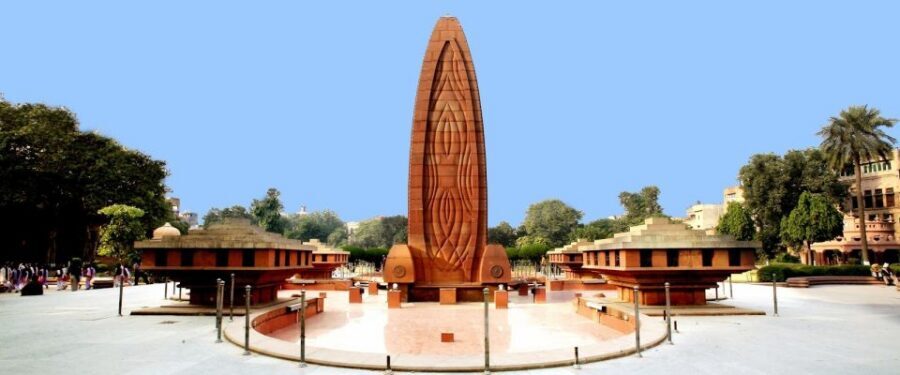
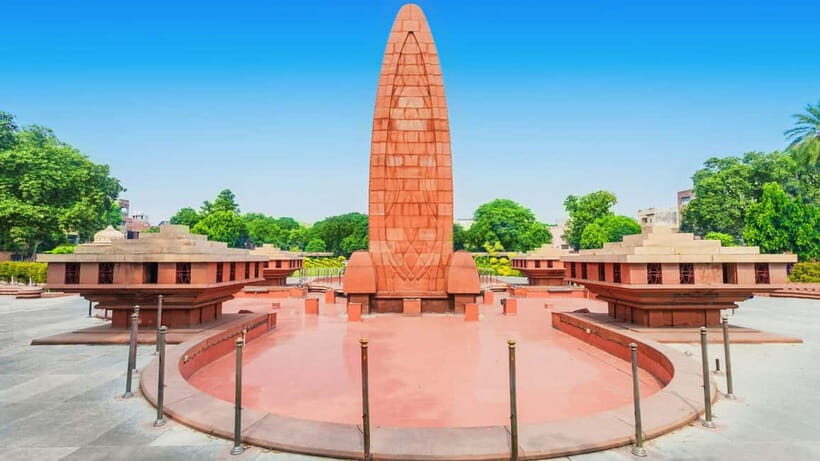
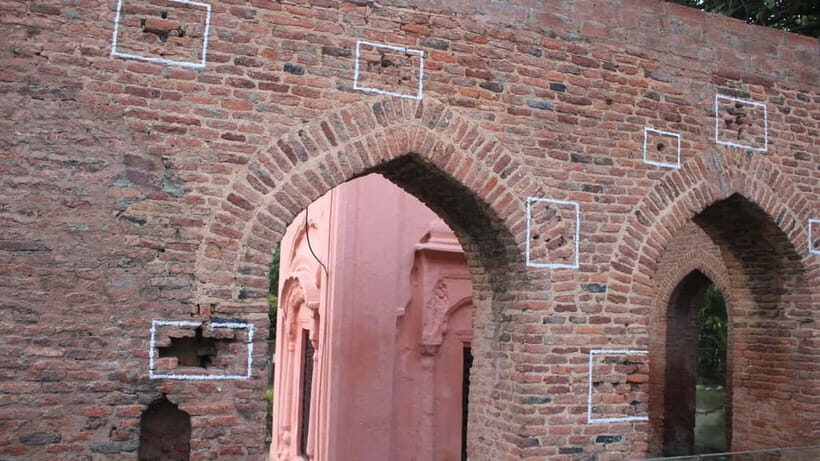
As your walk progresses toward the end, you stroll down Crawling Street. This is a somber reminder of the Jallianwala Bagh shooting, where General Dyer ordered the deaths of hundreds of Sikhs. This stop changes the tone of the day, and it’s important that it’s placed within the same route as sacred and civic sites.
This is one of the most praised parts of the experience because it doesn’t let history stay abstract. It links a specific atrocity to the physical geography of the city, helping you understand that the present landscape carries the weight of what happened there.
One review also highlights the 1919 memorial area as moving, with a beautiful park. Even if you only pause briefly, it’s the kind of moment where you’ll likely feel the purpose of a guide with context.
The Ancient Passage: connecting mohallas and katras
Before you reach the final destination, you visit the Ancient Passage, a traditional archway built by Sikh Misls to connect several mohallas and katras of ancient Amritsar. This stop sounds small, but it’s actually a big idea: it shows how neighborhoods were stitched together.
When you understand connections like this, the city stops being “spots on a map” and becomes a network. It explains how people moved between residential areas, commerce pockets, and spiritual places—exactly what you’re doing now, just in a modern way.
Golden Temple finale: devotion, architecture, and a quieter pace
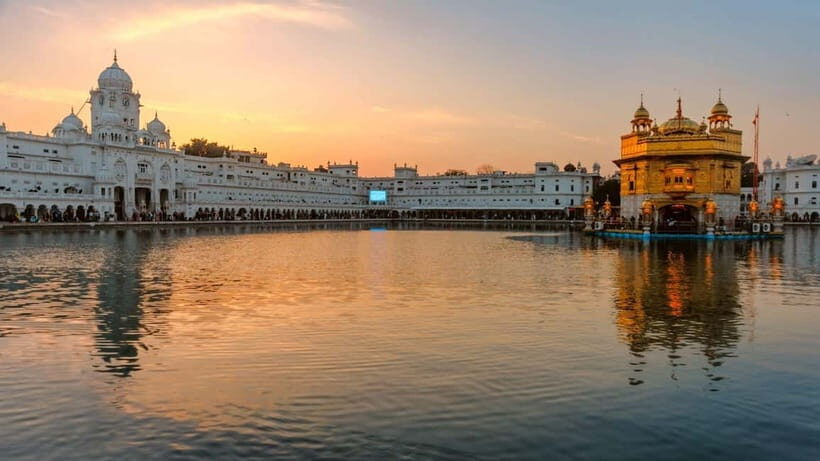
The tour ends at the Golden Temple, described as an architectural and spiritual wonder representing devotion and serenity. That’s the part you’ve been building toward since Town Hall. When you finally arrive, the walk feels like it gave you more than directions—it gave you reasons.
This is also where your guide’s context can matter. One review specifically mentions Golden Temple-related history and points to the sadness of the 1984 period. Even without going into every detail, it’s useful to know that meaningful places often carry layers of modern history too, and a good guide may share how those layers connect to what you’re seeing.
Again, remember the practical rule: shoes must be removed at places of worship. Also keep your smart casual dress code in mind so you don’t feel rushed at the last moment.
Price and value: what $44 gets you for 3 hours
At $44 per person for a 3-hour guided heritage walk, the value comes from the combination—not just the locations. You’re paying for an English-speaking local guide who can connect political history, memorial stories, and spiritual landmarks into a single route you can actually follow on foot.
A self-guided walk could be cheaper, but you’d lose the “why this place matters” thread. Here, that thread is the point: Town Hall sets the civic frame, Saragarahi adds a specific defense story, Qila Ahluwalia adds a power-and-defense narrative, and the later stops tie together governance, markets, architecture, and hard memory.
The other value piece is time. Three hours in Amritsar is long enough to feel like you covered meaningful ground, but short enough that you can still plan additional stops afterward—especially if you want to spend extra time in the Golden Temple area or explore nearby museums on your own.
What’s not included: there’s no hotel pickup or drop-off. That’s a minor trade-off, but it’s worth planning for since you’ll meet outside Town Hall.
Who should book this heritage walk
This tour fits you if you:
- want a structured way to see key Amritsar landmarks without getting lost
- like history that has names and dates attached, not vague “old times”
- appreciate faith spaces with respectful context, not just sightseeing
- are short on time but still want a wide mix: civic center, memorials, forts, bazaars, and the Golden Temple
It may not be the best fit if you want a long, slow day with lots of independent exploration or if you dislike walking at a steady pace.
Should you book the Amritsar Heritage Walk?
I think you should book it if you want Amritsar to make sense quickly. The route is built around connections: civic authority leads to memorials, military defenses, spiritual communities, local commerce, and then the Golden Temple. You’ll walk away with a clearer story of the city, not just photos.
Skip it only if you’re looking for a purely relaxing stroll or you can’t handle shoe-off moments in worship areas. Otherwise, this is a strong way to see the core of Amritsar in just a few hours with a guide who helps you read what you’re looking at.
FAQ
Where does the tour start?
Meet outside of Town Hall, Amritsar. Exact details and guide information are shared a day before.
How long is the guided heritage walk?
It lasts 3 hours.
What language is the guide?
The guide is English-speaking.
Is hotel pickup included?
No. Hotel pick-up and drop-off are not included.
What should I wear and how should I dress?
Dress code is smart casual.
Do I need to remove my shoes?
Yes. Shoes must be removed at places of worship.
Can I cancel and get a full refund?
Yes. You can cancel up to 24 hours in advance for a full refund.