REVIEW · GOA
Old Goa: Walking Tour of Heritage Churches
Book on GetYourGuide →Operated by Make It Happen · Bookable on GetYourGuide
Goa’s church trail has a lot more plot. A guided walking tour of Old Goa’s heritage churches turns stone and paint into clear stories about Portuguese power, local life, and faith—served at a relaxed pace. I like how the route links major monuments without turning it into a blur, and the guide’s personal anecdotes make the history feel human.
What I really like is the mix of big sights and small detail. At stops like Church of St. Catherine and Se Cathedral, you get the why behind what you’re seeing, not just facts. A strong guide—whether it’s Yashasvi, Pawan, Vimala De Souza, or Santoshi—adds side topics that you’d never get from a quick plaque read.
One consideration: churches bring rules. Expect dress code expectations (cover knees and shoulders) and possible photo limits inside, plus the walking means you’ll want comfortable shoes even though the tour is only 2.5 hours.
In This Review
- Key highlights to look for on this heritage church walk
- Entering Old Goa at Viceroys Arch: where the walk finds its rhythm
- Church of St. Catherine: Portuguese arrivals and the “Rome of the East” idea
- Old Goa’s ruins and Se Cathedral: the scale you notice first, the story you remember
- St. Francis of Assisi: frescoes that turn walls into a narrative
- Basilica of Bom Jesus: where St. Francis Xavier’s remains shape the final mood
- Small group, big personal attention: what max 10 really buys you
- Dress code, shoes, and photo rules: how to avoid awkward moments
- The drink stop: small, refreshing, and actually useful in Goa heat
- Price and time: does $12 for 2.5 hours feel like value
- Who this heritage church walk is best for (and who should skip it)
- Should you book this Old Goa heritage churches walking tour?
- FAQ
- Where is the meeting point for the Old Goa walking tour?
- How long is the tour?
- Is the tour guided in English?
- What’s included in the price?
- What is not included?
- How big is the group?
- Are there dress code rules for the churches?
- Can I take photos inside the churches?
- Is the tour suitable for infants or toddlers?
Key highlights to look for on this heritage church walk

- Viceroys Arch start: you begin right where Old Goa’s story is framed
- Portuguese “Rome of the East” context at Church of St. Catherine
- Se Cathedral scale: described as the largest church in Asia as you walk past Old Goa’s ruins
- Fresco storytelling at St. Francis of Assisi that explains what the artwork is showing
- Bom Jesus and St. Francis Xavier: a finale with major spiritual weight
- A small-group vibe (max 10) where questions actually get answered
Entering Old Goa at Viceroys Arch: where the walk finds its rhythm
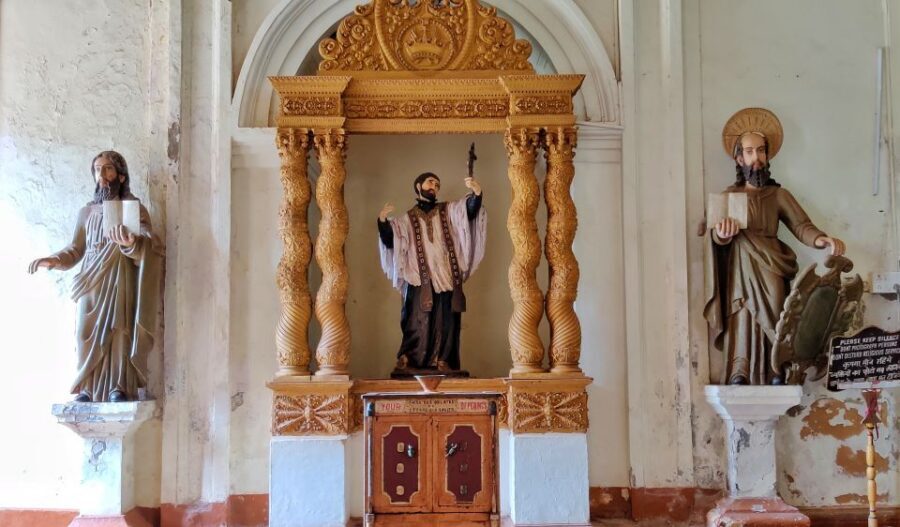
Most Old Goa tours start with a landmark, but this one starts with orientation. You meet at Viceroys Arch (Velha Goa) and begin your 2.5-hour walk with your English-speaking guide. Arrive about 10 minutes early so you don’t feel rushed while the group gathers and the route gets explained.
This opening matters. Old Goa can feel spread out, with walls and courtyards that look similar until someone points out what changed over time. The guide typically sets the scene: Goa as a former capital, the Portuguese impact, and the way religious power shaped the town’s layout. I like this approach because it gives your eyes something to do right away—so the first church you see doesn’t just look impressive, it makes sense.
One practical note: the tour is short, but it’s still walking through historic grounds. Comfortable shoes aren’t optional here. Think supportive soles more than fancy ones.
You can also read our reviews of more walking tours in Goa



Church of St. Catherine: Portuguese arrivals and the “Rome of the East” idea

Next up is the Church of St. Catherine, and it’s a strong early stop because it connects architecture to arrival stories. You’ll learn about the Portuguese coming to India and how this area became a symbol of Portuguese religious ambition. The tour description highlights that the Portuguese called the region the Rome of the East, and the guide’s job is to explain what that means in real life—not just repeat the phrase.
When someone tells you why a church was built where it was built, the building stops being a postcard. You start noticing design choices that reflect a different worldview: how places were organized, how public space supported institutions, and how church life grew into a central feature of daily time.
There’s also a human side to it. Many guides on this route (for example, Yashasvi and Vimala De Souza, based on documented guide styles) are storytellers first. That means you’ll usually get local perspective and personal anecdotes that sound like someone talking to friends—not reciting a textbook.
Old Goa’s ruins and Se Cathedral: the scale you notice first, the story you remember
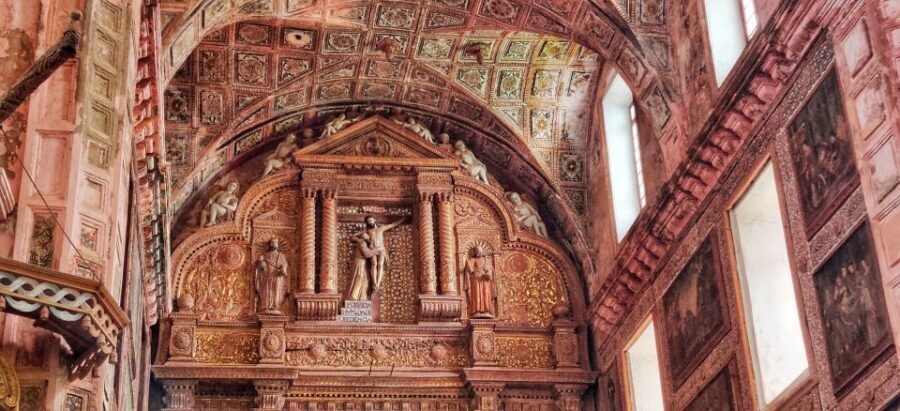
After St. Catherine, you move past the ruins of Old Goa toward Se Cathedral (Sé Cathedral). This is where you get the classic “wait, that’s huge” moment. The tour frames Se Cathedral as the largest church in Asia, and even if you’re not measuring it, you feel the weight of it the second you’re near the structure.
What makes this stop work on a guided walk is the transition: you’re not only seeing a famous building. You’re also watching the guide explain what’s left behind—why ruins exist, what they suggest about changing eras, and how old power structures leave physical traces even after they fade.
That’s also why the pacing here is helpful. You’re moving, not pausing forever. The ruins act like punctuation marks, and Se Cathedral becomes the sentence that hits.
One drawback to keep in mind: if you’re expecting the tour to feel like a museum line with zero walking, you might be surprised by the pace. You’ll cover real ground, and Goa’s heat can make you want more shade than a hat can solve. Bring a light layer you can manage, and keep water for after—your included drink is refreshing, but it won’t replace hydration for the whole afternoon.
St. Francis of Assisi: frescoes that turn walls into a narrative
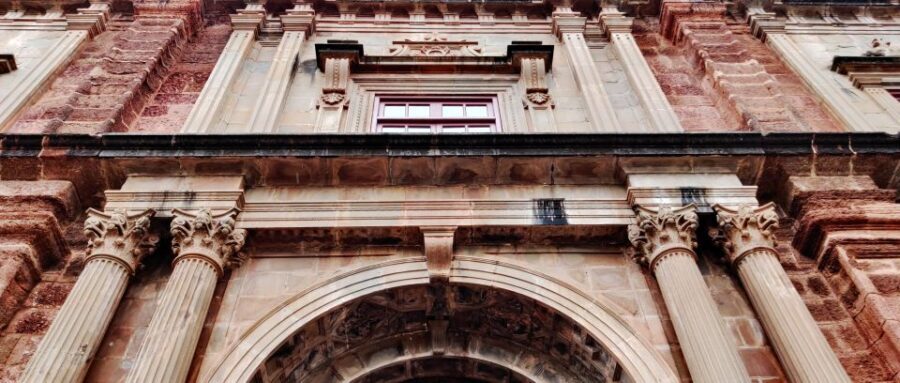
At the Church of St. Francis of Assisi, you get one of the most visually rewarding stops on the route: decorative frescoes that depict the life of the patron saint. This is a great place for a guide, because frescoes can look gorgeous and still be hard to interpret if you don’t know what you’re looking for.
On this tour, the guide typically helps you connect the scenes to the story. You’re not just admiring color and texture—you’re learning what the artwork is trying to show and why the church invested in that kind of visual storytelling in the first place. For many people, this becomes the moment that makes the Portuguese period feel less like distant politics and more like everyday belief made visible.
It’s also a good pause to slow down. If your legs are feeling fine, spend the time to look deliberately: at faces, at repeated symbols, at where scenes start and where they end. A guided explanation helps, but you can still make the artwork yours by taking a few seconds with it.
Basilica of Bom Jesus: where St. Francis Xavier’s remains shape the final mood
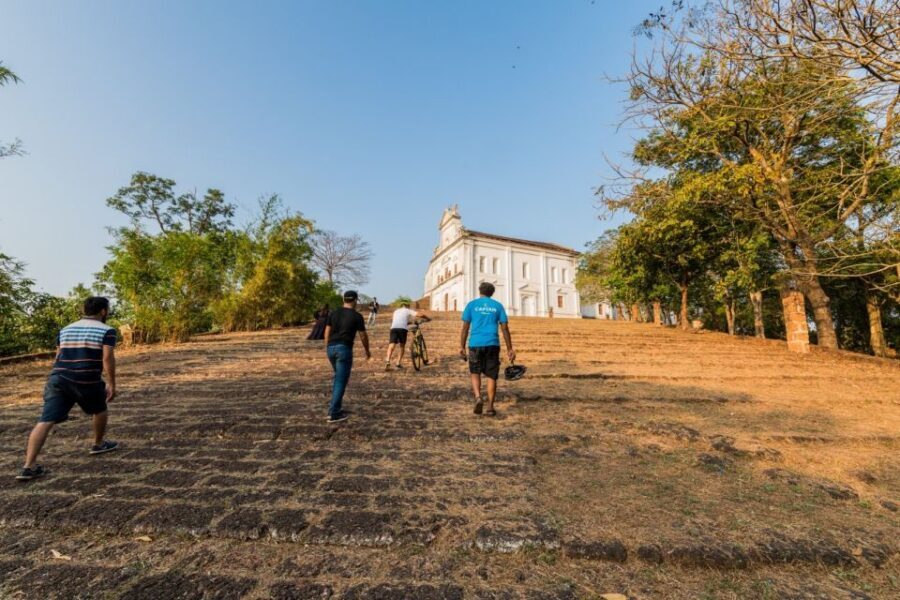
The last stretch is the Basilica of Bom Jesus, known here for housing the remains of St. Francis Xavier. This stop changes the tone. The walk has been building a sense of architecture and colonial story, but Bom Jesus has a more solemn atmosphere that tends to make people quiet without being told.
Even if you’re not coming in as a religious traveler, the guide’s framing helps you understand why this place matters. It’s one thing to hear names; it’s another to stand where history and devotion meet. The tour’s structure—ending with Bom Jesus after St. Francis of Assisi—also creates a satisfying loop around Francis Xavier and the Francis tradition.
A practical point: church rules are real at the end of the walk too. Photography inside churches and museums may be restricted. If you’re unsure, ask your guide before you take out your phone. It’s better than getting shut down mid-shot, and guides usually know the local rhythm of what’s allowed.
You can also read our reviews of more historical tours in Goa





Small group, big personal attention: what max 10 really buys you
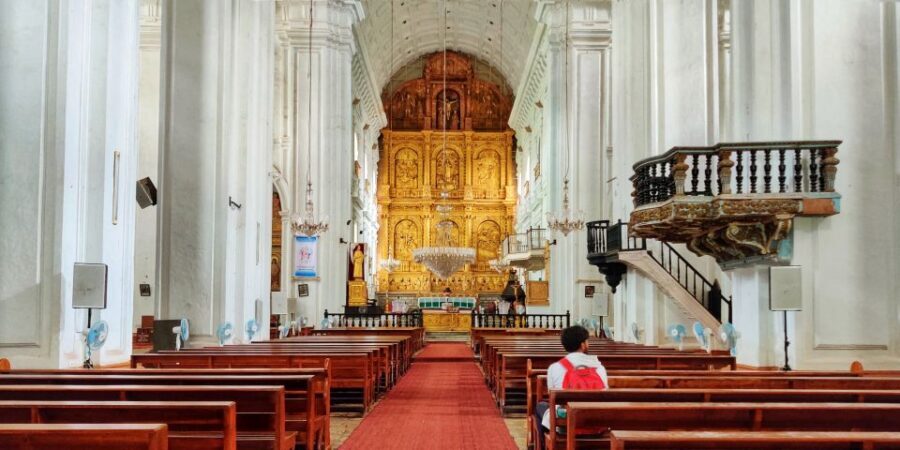
This is built as a small group capped at 10 participants. That limit is the difference between hearing history and actually asking questions. On this route, guides tend to include local perspective and personal anecdotes, and the smaller size makes that storytelling feel directed rather than broadcast.
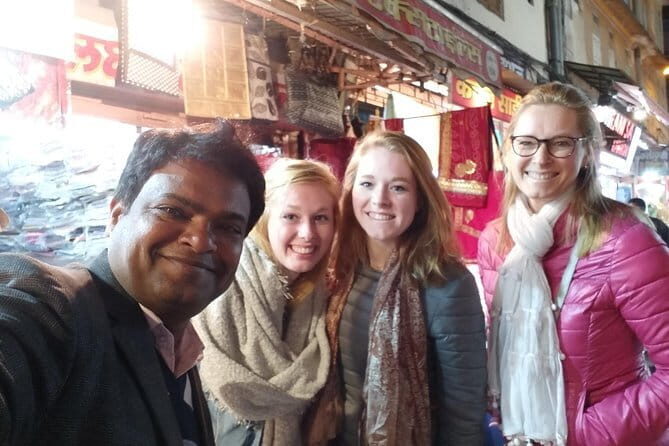
You can see the pattern in the guide styles described for the tour. People mention guides like Pawan, Trancy, Manrata, Priyankaa, Santoshi, Sejal, and Guarish as attentive and story-driven. Some are praised for English clarity, others for answering questions smoothly. Even when the stops are fixed, the guide makes the experience flexible.
There’s also a nice practical advantage: in a short walking tour, you don’t want to guess where to stand, where to look, or when to move on. A good guide helps your group flow.
Also, you’ll likely get a helpful suggestion or two for what to do next in Old Goa. One guide reportedly even helped someone figure out the way to a taxi after the tour, which is exactly the kind of small local support that can save time at the end of a day.
Dress code, shoes, and photo rules: how to avoid awkward moments
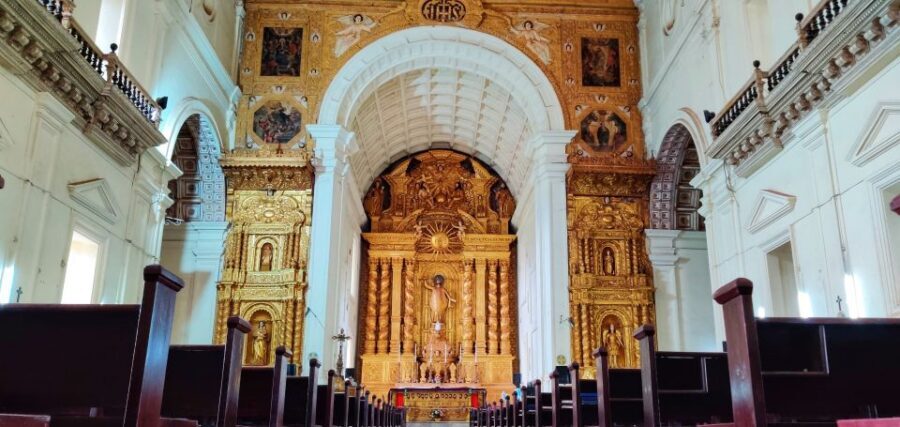
Churches on this route have dress expectations. The guidance is clear: cover your knees and shoulders. It’s not a “nice to have.” It’s part of being respectful, and it keeps you from getting blocked at the doorway when you’re already on a schedule.
So plan clothing accordingly:
- Comfortable clothes you can move in
- Shoulders covered (a light scarf works)
- Knee coverage (long pants are easiest)
Bring comfortable shoes. Old Goa is not a place for rigid footwear. You’ll want traction and cushioning for uneven ground.
For photos: photography inside churches and museums may be restricted. If you’re unsure, ask your guide. That one habit prevents a lot of frustration.
The drink stop: small, refreshing, and actually useful in Goa heat
This tour includes a healthy refreshing non-alcoholic drink. In practice, people have noted things like coconut water and a fresh lime soda during the tour. Either way, it’s a smart break in the middle of walking and sun.
Even if you’re the type who hates “scheduled breaks,” this one makes sense. Your brain absorbs more when you’re not feeling overheated or cranky. It also gives your guide a natural moment to reset the group before the last church stops.
Price and time: does $12 for 2.5 hours feel like value

At $12 per person for about 2.5 hours, this tour is aimed at value. You’re not just paying for entrance fees (none are listed here), and you’re not paying for transport pickup (not included). You’re paying for an English-speaking guide, a structured route, and interpretation—how the guide ties Portuguese rule, local context, and church art together.
That’s where the value shows up. A lot of historic sites are easy to “see” but hard to “understand.” This tour gives you understanding without turning it into a half-day project. For many visitors, that balance is the point: you get multiple anchor churches—St. Catherine, Se Cathedral, St. Francis of Assisi, and Bom Jesus—without spending your entire day in one neighborhood.
Is it perfect? No. You’re walking, and you’re responsible for getting to the meeting point (Viceroys Arch). But the time window is realistic, and the small-group cap means your money isn’t funding a silent crowd.
Who this heritage church walk is best for (and who should skip it)
This is ideal if you want:
- A guided route through Old Goa’s heritage churches
- Portuguese-era context with practical explanation
- Fresco and architecture interpretation, not just name-reading
- A short outing that fits into a busy Goa itinerary
It’s especially good for first-timers who feel overwhelmed by Old Goa’s monuments. With a guide, the area turns from “a bunch of churches” into a connected story.
It’s not recommended for infants and toddlers, and that makes sense. The tour’s length and walking requirements won’t work for very young kids.
Also consider your comfort level with dress code. If you don’t have covered clothing on hand, plan to borrow or buy something locally before you start.
Should you book this Old Goa heritage churches walking tour?
If you want Old Goa to feel understandable, not just impressive, this one is a solid choice. The structure is tight: you meet at Viceroys Arch, hit the major Portuguese-linked churches, and finish at Bom Jesus with a strong emotional close. The guides’ style—story-driven and question-friendly—seems to be the main reason people leave feeling satisfied.
Book it if you:
- Prefer a small group with time for questions
- Like your history explained in plain language with personal anecdotes
- Want a short tour that covers major sites in 2.5 hours
Skip it if:
- You don’t want to walk on uneven ground
- You’re not willing to follow the church dress code
- You need hotel pickup/drop-off included (it’s not part of this tour)
If you’re ticking off Goa’s Portuguese heritage, this walking tour is one of the most efficient ways to get both the landmarks and the meaning.
FAQ
Where is the meeting point for the Old Goa walking tour?
You meet at Viceroys Arch, Velha Goa, Goa 403110, India. Plan to arrive about 10 minutes early. The meeting point is easily accessible by taxi.
How long is the tour?
The tour lasts about 2.5 hours.
Is the tour guided in English?
Yes. The tour includes an English-speaking guide.
What’s included in the price?
What’s included is an English-speaking guide and a healthy refreshing non-alcoholic drink.
What is not included?
The tour does not include hotel pickup and drop-off, insurance, food and drinks, or souvenirs.
How big is the group?
It’s a small group, limited to 10 participants.
Are there dress code rules for the churches?
Yes. You’re asked to dress appropriately and cover your knees and shoulders.
Can I take photos inside the churches?
Photography inside churches and museums may be restricted. If you’re unsure, ask your tour guide before taking photos.
Is the tour suitable for infants or toddlers?
This tour is not recommended for infants and toddlers.