REVIEW · NEW DELHI
Private 7-Day India Golden Triangle Tour
Book on Viator →Operated by Travel China Guide · Bookable on Viator
Golden Triangle, but with zero travel fuss. This private 7-day loop links Delhi, Agra, and Jaipur with English-speaking guides and private A/C transport, hitting the big-ticket sights like Qutub Minar, Humayun’s Tomb, the Taj Mahal, Fatehpur Sikri, and Jaipur’s UNESCO stops.
I love the timing that brings you to the Taj Mahal at sunrise, then later gives you another Taj view from Mehtab Bagh at sunset. I also like the way the tour adds real local texture, from a rickshaw ride through Chandni Chowk to a homemade lunch during the Agra Fort visit.
One drawback to plan for: the days are full. You’ll want comfy shoes and a calm attitude, because you’re moving between major sights on a tight schedule and traffic can add friction.
In This Review
- Key points that make this tour work
- What this Golden Triangle tour does better than a typical checklist
- Who this tour suits
- Day 1 in Delhi: airport arrival with chauffeur comfort
- Day 2 in Delhi: Raj Ghat, Jama Masjid, Chandni Chowk by rickshaw, Qutub Minar
- Raj Ghat: start with Mahatma Gandhi’s memorial
- Jama Masjid: huge courtyard, major scale
- Chandni Chowk rickshaw ride: 360-year-old bazaar energy
- Qutub Minar: 240 feet of Mughal-era engineering
- Humayun’s Tomb: the garden-tomb that shaped later design
- India Gate and Gurudwara Bangla Sahib: two faiths, two different vibes
- Day 3: Transfer to Agra, then Baby Taj and sunset views from Mehtab Bagh
- Drive to Agra: private transfer keeps the day usable
- Itimad-ud-Daulah (Baby Taj): small, elegant, extremely detailed
- Mehtab Bagh at sunset: a second angle on the Taj
- Day 4: Taj Mahal at sunrise plus Agra Fort and a homemade lunch
- Taj Mahal at sunrise: why the morning matters
- Breakfast back at the hotel: the tour protects your energy
- Agra Fort: Mughal-era power and fine carvings
- Local family visit and homemade lunch: the most human stop on the trip
- A quick note on expectations
- Day 5: Fatehpur Sikri’s ghost-town calm, then Chand Baori to Jaipur
- Fatehpur Sikri: UNESCO ruins with real atmosphere
- Chand Baori (step well): the geometry is the attraction
- Drive to Jaipur
- Day 6 in Jaipur: Amber-style fort views, City Palace, Jantar Mantar, and Hawa Mahal photos
- Jaipur District Fort: temples and palaces on pale walls
- Jal Mahal photo stop: the Water Palace on Man Sagar Lake
- City Palace: royal residence turned museum
- Jantar Mantar: UNESCO observatory that still works
- Hawa Mahal: honeycomb facade for last afternoon photos
- Day 7: Return to Delhi for your flight
- Private transport and guides: where the value really shows up
- Private A/C transfers reduce the hidden costs
- English-speaking local guides turn monuments into meaning
- Entrance fees and meals are built in
- Price and value check: $1,319 per person for 7 days
- Small things to plan for before you go
- Who should book this tour, and who should think twice
- Should you book this Private 7-Day India Golden Triangle Tour?
- FAQ
- Where does the tour start, and what time?
- How long is the tour, and which cities do you visit?
- Is pickup included?
- Are entrance fees included for the sights?
- What is not included in the tour price?
- Can I cancel for free?
Key points that make this tour work
- Sunrise + sunset Taj moments: Taj Mahal in the morning, then a distant view from Mehtab Bagh later
- Delhi old-city texture: Chandni Chowk by rickshaw, plus Jama Masjid and the markets nearby
- Real UNESCO hit list: Qutub Minar, Humayun’s Tomb, Fatehpur Sikri, and Jantar Mantar in Jaipur
- Private door-to-door comfort: experienced driver, A/C vehicle, and no shared group hassle
- A meal with people, not just plates: a homemade lunch connected to the Agra Fort day
- Good coordination track record: past guests praised planning and responsive organizers, including names like Amy and Emily, plus drivers such as Raj
What this Golden Triangle tour does better than a typical checklist
A lot of Golden Triangle tours feel like a see-everything bus parade. This one is still intense, but it’s built around two things that matter: private logistics and smart timing.
First, you’re not bouncing between public transit and random taxis. You get an experienced driver and private A/C transfers, which is the difference between vacation and constant navigation work. Second, the itinerary doesn’t just say Taj Mahal. It sets you up for the Taj when the light is best—morning for sunrise charm, and later for the softer, reflective look you get from the river gardens.
There’s also a practical human touch: you’ll meet guides who explain what you’re looking at, not just where to stand for a photo. And in the broader service approach, guests have highlighted that communication can be easier with assigned female guides—helpful if that’s a comfort factor for you.
You can also read our reviews of more private tours in New Delhi


Who this tour suits
This is a strong fit if you want:
- The classic Delhi–Agra–Jaipur triangle with minimal stress
- Guided context for UNESCO sites (and not just photo stops)
- A private setup with English-speaking local guides and included transfers
It’s also a good match for solo travelers who value smooth coordination. And if you’re traveling as a couple or small group, the private format keeps everyone on the same pace.
Day 1 in Delhi: airport arrival with chauffeur comfort
Day one is all about starting clean. You arrive at Indira Gandhi International Airport, and you’re met by a representative from Agate Travel holding a welcome sign. Then a comfortable private car with chauffeur takes you to your downtown hotel.
After check-in, you’re on your own for the rest of the day. That’s a good thing. Day one shouldn’t be an all-out sightseeing sprint after flying. You’ll have time to settle in, grab a first meal, and mentally adjust to Delhi.
Practical tip: If you arrive early, use the extra time for a short walk near your hotel rather than trying to cram a museum into jet lag. The tour builds the “big days” on purpose.
Day 2 in Delhi: Raj Ghat, Jama Masjid, Chandni Chowk by rickshaw, Qutub Minar
Delhi day is a mix of memory, faith, street life, and Mughal-era architecture. It works because the stops don’t feel repetitive; they change the mood every few hours.
Raj Ghat: start with Mahatma Gandhi’s memorial
You begin at Raj Ghat, the black marble platform built in memory of Mahatma Gandhi. This is a simple site, but it’s a powerful one. It helps you get oriented before you jump into the city’s more theatrical monuments.
This is also one of those stops that makes the rest of the day make more sense. India’s history isn’t only stone and symmetry. It’s ideas, leadership, and the way space is used to honor a legacy.
A few more New Delhi tours and experiences worth a look




Jama Masjid: huge courtyard, major scale
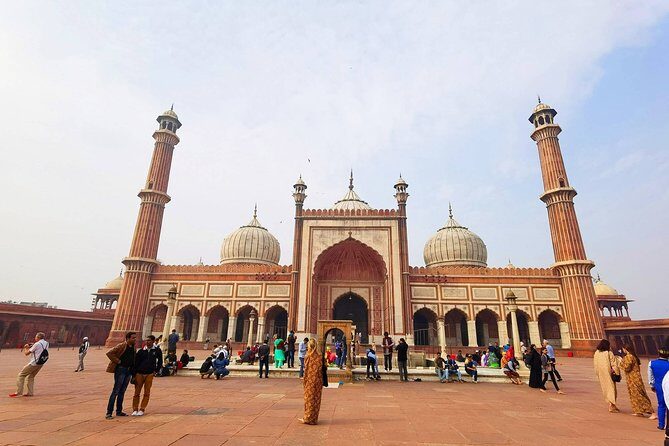
Next comes Jama Masjid, one of India’s largest mosques. You’ll see the architecture, but the bigger wow factor is the courtyard size—built to hold thousands of devotees.
If you visit as part of a guided program, ask questions about how the mosque functions as a community space. You’ll understand it faster than you would just by reading plaques.
Drawback to consider: This is a popular site, so crowd flow matters. Wear shoes you can walk in for a while, and keep your phone secure during busier moments.
Chandni Chowk rickshaw ride: 360-year-old bazaar energy
Then you shift into a very different world: a rickshaw ride in Chandni Chowk. This is one of those experiences that feels like you’re moving through layers—street food smells, fabric stalls, jewel displays, and the quick rhythm of local shopping.
The rickshaw ride is short on paper, but it’s a great “you are here” moment. It helps you experience the old bazaar without needing to figure out traffic, routes, or bargaining basics.
Qutub Minar: 240 feet of Mughal-era engineering
You end the day at UNESCO-listed Qutub Minar, a Mughal minaret built in 1192. The height—240 feet (73 meters)—hits you once you’re close. And the carvings on the facade are where your guide’s explanation really earns its keep.
If you’ve only seen pictures, don’t underestimate how different it feels in person. The verticality is what you’ll remember.
Humayun’s Tomb: the garden-tomb that shaped later design
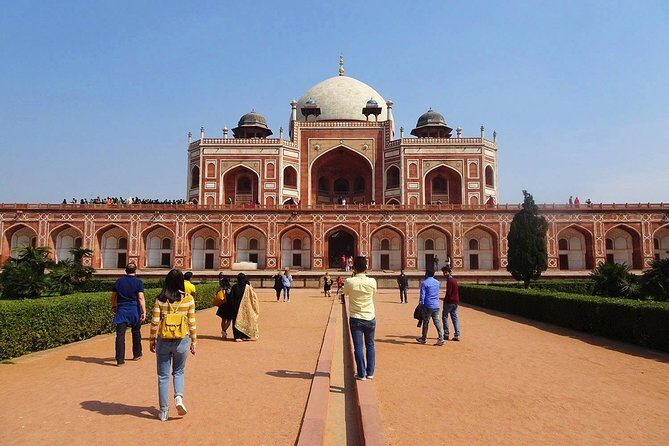
After Qutub Minar, you visit Humayun’s Tomb, another UNESCO site. You’ll see it described as the first garden-tomb in India, and you’ll notice how the layout and design set up a conversation between Islamic and Hindu architectural influences.
This stop is a relief after the dense street day. It gives you open space and a calmer viewing rhythm.
India Gate and Gurudwara Bangla Sahib: two faiths, two different vibes
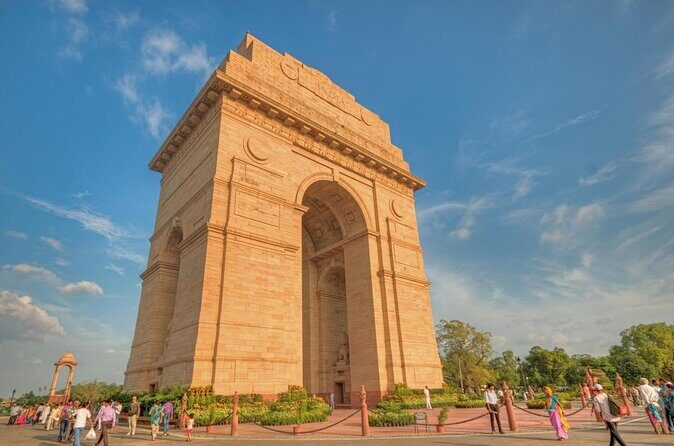
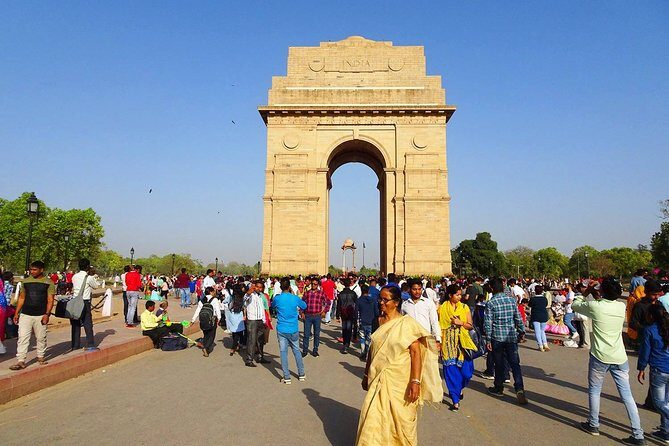
You also get photo time at India Gate, built in memory of the Unknown Soldier, and then you close at Gurudwara Bangla Sahib. That white-and-gold Sikh temple environment is peaceful, and it’s an easy way to experience a different spiritual rhythm than the mosques earlier in the day.
Day 3: Transfer to Agra, then Baby Taj and sunset views from Mehtab Bagh
Day three is about travel transition plus two high-value Agra stops.
Drive to Agra: private transfer keeps the day usable
After breakfast, you head to Agra with a private transfer. The drive is about 3.5 hours, and once you arrive, your guide helps with hotel check-in.
This matters. When you’re in a new city, check-in friction can eat your whole afternoon. Here, it’s handled so you’re ready for sightseeing.
Itimad-ud-Daulah (Baby Taj): small, elegant, extremely detailed
You tour Itimad-ud-Daulah, often called the Baby Taj. It’s not as massive as the Taj Mahal, which is why it’s so rewarding. The carvings and delicate lattice screens are what hold your attention.
It also acts like a design primer. You start spotting the stylistic ideas that later show up at the Taj.
Mehtab Bagh at sunset: a second angle on the Taj
Then you go to Mehtab Bagh, a garden park near the Yamuna River. You get a leisurely walk with a distant view of the Taj Mahal during sunset.
This is one of the smartest parts of the trip because it shifts you from “front-on monument staring” to “landscape-framed perspective” (even though you’re not spending all day outdoors). The view is built for mood: orange sky, river light, and the Taj in the distance.
Practical tip: Bring something light for evening air. Even if the day is warm, sunset can feel cooler near open gardens.
Day 4: Taj Mahal at sunrise plus Agra Fort and a homemade lunch
Day four is the day you probably imagined when you booked this tour.
Taj Mahal at sunrise: why the morning matters
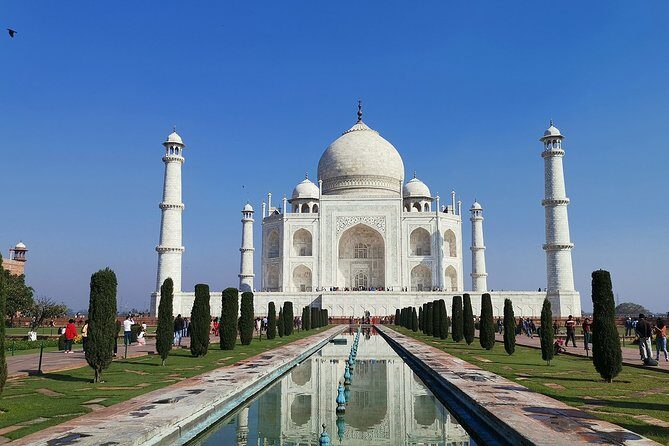
You start with a morning visit to the Taj Mahal. With sunrise, the white marble looks different—softer, more luminous, and less washed out by mid-day heat.
You’ll also get the main story: the Mughal emperor Shah Jahan built it in memory of Mumtaz Mahal. A good guide helps you connect the architecture to that human backstory, which is what turns it from “beautiful building” into “powerful memorial.”
Drawback to consider: Morning starts mean you’ll be waiting a bit at security and entry areas. Plan to be patient and don’t wear anything complicated to take on and off.
Breakfast back at the hotel: the tour protects your energy
After Taj Mahal, you return to the hotel for breakfast. That’s a real perk. Many tours skip this recovery step, then wonder why everyone feels cranky at Agra Fort.
Agra Fort: Mughal-era power and fine carvings
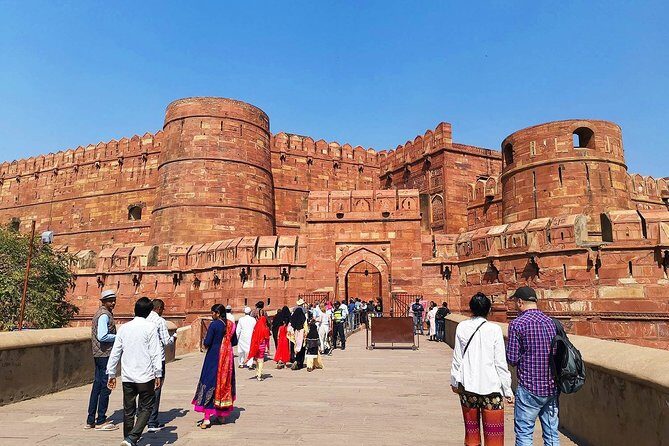
Next is Agra Fort, a structure dating back about 400 years. You’ll see the grand red facade and Mughal-style carvings.
Agra Fort also gives you a different Taj relationship. It shows the political and architectural power behind the monument, not just the final romantic centerpiece.
Local family visit and homemade lunch: the most human stop on the trip
One of the standout inclusions is a local family visit with a homemade lunch during the Agra Fort day. You’ll learn about living habits and family education in India, which turns a sightseeing day into an exchange with real people.
A quick note on expectations
This is not a “show dinner” kind of meal. It’s more about the conversation and the chance to see daily life patterns. Approach it with respectful curiosity.
Day 5: Fatehpur Sikri’s ghost-town calm, then Chand Baori to Jaipur
Day five has a long travel feel, but the stops are worth it. It’s a day of scale—first a Mughal complex in a place that feels quiet now, then an ancient stepwell that looks like a palace from afar.
Fatehpur Sikri: UNESCO ruins with real atmosphere
After breakfast, you set off toward Jaipur. Halfway, you tour Fatehpur Sikri, a 16th-century UNESCO World Heritage site. It’s now described as a ghost town, and you’ll feel that. The red sandstone structures and detailed carvings create a sense of a former world.
You’ll visit Jama Masjid, the Tomb of Salim Chishti, Panch Mahal, and Buland Darwaza. If you like when a guide explains the purpose behind the design, this is a good day for that.
Practical tip: Bring water and a hat. Ruins days can drain you faster than you expect.
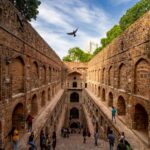
Chand Baori (step well): the geometry is the attraction
Next comes Abhaneri Village and Chand Baori, the big and deep stepwell with a history of over 10 centuries. The trick here is distance: from far away it looks like a patterned palace, then up close you see the engineering and carvings.
This stop adds a different kind of “wow.” It’s not a palace you enter. It’s a structure you read—lines, depth, and symmetry.
Drive to Jaipur
After the stepwell visit, you drive to your Jaipur hotel for the night. This is where a private car matters again. It keeps the day from stretching into an exhausting mess.
Day 6 in Jaipur: Amber-style fort views, City Palace, Jantar Mantar, and Hawa Mahal photos
Jaipur is where the Golden Triangle shifts from empire monuments to city symbolism and royal design.
Jaipur District Fort: temples and palaces on pale walls
You start at a 17th-century fort area, once the capital of Jaipur. The pale yellow walls on a hill are the first impression.
Inside, you’ll find temples and palaces. This isn’t only about scenic angles; it’s about how royalty and religion coexisted in space.
Jal Mahal photo stop: the Water Palace on Man Sagar Lake
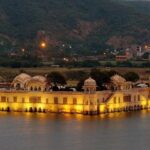
Then you stop at Jal Mahal, the five-storey Water Palace on Man Sagar Lake. It’s a short photo stop, but it’s a visually satisfying one—especially because the building looks like it’s sitting in the water.
City Palace: royal residence turned museum
Next is Maharaja City Palace, which now functions as a museum holding royal items and ancient weapons. If you like objects and context, this is a meaningful break from outdoor monuments.
Jantar Mantar: UNESCO observatory that still works
Jantar Mantar is another UNESCO World Heritage site. It’s an ancient observatory complex with nineteen architectural astronomical instruments that are still operative. You’ll also see the world’s largest sundial.
This stop is a reminder that science and design weren’t separate from art here. Your guide can help you understand what you’re seeing beyond the “big metal instruments” look.
Hawa Mahal: honeycomb facade for last afternoon photos
The day ends with a photo stop at Hawa Mahal, the Palace of Wind. It’s famous for its pink sandstone facade with honeycomb-shaped windows.
You’ll also drive past the Pink Rose Garden and the business center on the way back to the hotel. That gives you a sense of modern Jaipur edges without forcing you to shop or loiter.
Day 7: Return to Delhi for your flight
Day seven is a straightforward close: you get escorted by your guide and driver in a private car for the drive back to Indira Gandhi International Airport. The transfer is about 5 to 6 hours.
This final day is designed to protect your travel day. Instead of scrambling for buses or figuring out trains, you’re delivered to the airport with time to spare.
Private transport and guides: where the value really shows up
Let’s talk about what you’re actually buying with a private Golden Triangle like this.
Private A/C transfers reduce the hidden costs
The big hidden cost in India travel is fatigue: time lost to waiting, language gaps, and route uncertainty. The tour includes all transfers in a private A/C vehicle with an experienced driver. That means you spend your energy on the sights, not on the logistics.
English-speaking local guides turn monuments into meaning
Every major stop is paired with explanation: Qutub Minar carvings make sense, Humayun’s Tomb design becomes clearer, and the Taj Mahal story connects to the person behind the monument.
In one highlighted example from past service, a first-time visitor loved that guides included female team members, making communication easier and more comfortable. Even if you’re not in that situation, it’s a sign they pay attention to how people relate to guiding.
Entrance fees and meals are built in
Entrance fees for the sights are included for what’s listed, plus lunch and breakfast (6). That matters because admission lines and ticket handling can slow tours down. Here, it’s handled so you can keep moving.
Practical tip: If you have dietary restrictions, mention them clearly when booking. Lunch is included, but your preferences still need to be matched.
Price and value check: $1,319 per person for 7 days
At $1,319 per person, you’re paying for a lot more than admissions.
You’re getting:
- 7 days of guided sightseeing across three major cities
- Hotel accommodation on a twin-sharing basis
- Lunch and breakfast
- Entrance fees for the listed sights
- Private A/C transfers with an experienced driver
- English-speaking local guides
- A mobile ticket
Is it the cheapest way to do Golden Triangle? No. But it’s usually better value than the “cheaper” options that force you into day-by-day ticket buying, transit stress, and random timing.
If you value time, comfort, and clean coordination, the price starts to make sense fast—especially for a route as large as Delhi–Agra–Jaipur.
Small things to plan for before you go
A few practical notes can make your days smoother:
- Shoes: You’ll walk at mosques, tombs, ruins, and forts. Wear something you trust for long hours.
- Heat and sun: Several stops are outdoors. Bring water and plan shade breaks when possible.
- Dress for religious sites: You’ll visit Jama Masjid and Gurudwara Bangla Sahib. Loose, respectful clothing helps.
- Photo energy: Sunrise Taj and sunset Mehtab Bagh are both photo-forward days. Charge your gear and consider a small power bank.
Who should book this tour, and who should think twice
This tour is ideal if you:
- Want a classic Golden Triangle without the logistical headaches
- Like guided explanations that connect architecture and history to the story
- Prefer private transport over shared buses
- Enjoy a mix of monuments and local life (rickshaw ride, markets, homemade lunch)
Think twice if you:
- Want a super slow vacation with lots of free time in each city
- Strongly dislike early mornings, because Taj Mahal sunrise is part of the plan
- Prefer deep off-the-beaten-path travel over big-name highlights
Should you book this Private 7-Day India Golden Triangle Tour?
If your goal is to see Delhi, Agra, and Jaipur with the major UNESCO sites—and you don’t want to wrestle with day-by-day transportation—this tour is a solid choice. The sunrise Taj plus Mehtab Bagh sunset is the kind of two-times-per-day value that’s hard to replicate on your own without planning. And the rickshaw ride in Chandni Chowk, plus the homemade lunch tied to Agra Fort, adds human warmth beyond monuments.
If you’d rather travel slower or avoid early mornings, you might feel the schedule is intense. But for most first-timers, this is one of the cleanest ways to do the Golden Triangle with your time and comfort protected.
FAQ
Where does the tour start, and what time?
The tour starts at Indira Gandhi International Airport in New Delhi at 9:00 am.
How long is the tour, and which cities do you visit?
It runs for about 7 days and covers Delhi, Agra, and Jaipur.
Is pickup included?
Pickup is offered, and the meeting point is at the airport.
Are entrance fees included for the sights?
Entrance fees for the sights mentioned are included, along with lunch and breakfast.
What is not included in the tour price?
International flights, the India visa fee, personal expenses, and any festival or holiday peak season surcharges are not included.
Can I cancel for free?
Yes. You can cancel up to 24 hours in advance for a full refund.