REVIEW · AMRITSAR
Amritsar Heritage Walking Tour
Book on Viator →Operated by Walk and Explore · Bookable on Viator
Golden Temple vibes meet sharp 1947 history.
This Amritsar Heritage Walking Tour is a smart way to get your bearings fast, with a guide-led route that pulls you from the Partition story straight into the old-city lanes. I like that you get both Sikh culture and the heavier moments of Amritsar explained in plain language, and I especially like the access to side lanes you’d miss on your own. One caution: it’s a group walk and the storytelling style is more fragments and anecdotes than academic, very footnoted history.
You’ll spend about 2 hours 45 minutes moving through 8–10 heritage stops, using a mobile ticket. The guide can speak English, Hindi, and Punjabi (and guides like Prerit and Hardik show up frequently in recent feedback). This is a walking experience with time split across memorials and market lanes, so wear shoes you can handle on uneven old-street footpaths.
Amritsar has a local mantra you’ll hear mentioned often—LOVE, EAT, and LAUGH—and the best part of this tour is how it balances that warmth with the city’s hard chapters. I think you’ll feel the emotional shift by the time you reach the Golden Temple area at the end.
In This Review
- Key highlights worth showing up for
- Getting your bearings: 2 hours 45 minutes of old-city walking
- Partition Museum in Town Hall: start where the story begins
- Walking toward Saragarhi Memorial Gurudwara: sacrifice with meaning
- Maharaja Ranjit Singh statue: understanding Punjab’s power and politics
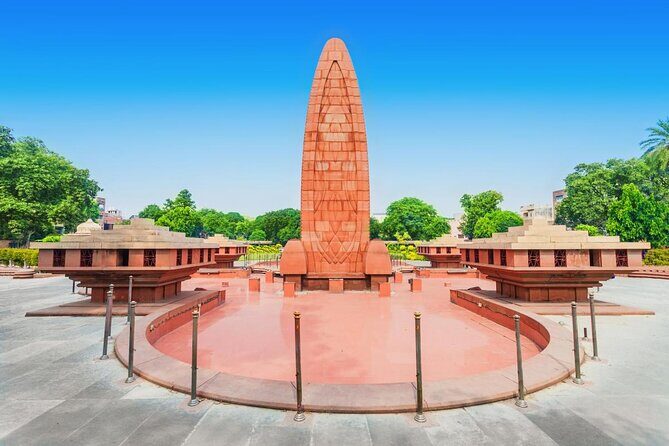
- Jallianwala Bagh memorial: Baisakhi eve and a tragedy that changed trust
- Udasin Akhara on Sangal Wala Road: why training spaces matter
- Guru Bazar lanes and Baba Bohar: where local life shows up
- Ending at Sri Harmandir Sahib area: stepping out into Golden Temple reality
- Price and value: what $16.66 buys you in real terms
- How the guides shape the experience (and how to manage expectations)
- Who should book this walk, and who should look elsewhere
- Should you book Amritsar Heritage Walking Tour?
- FAQ
- How long is the Amritsar Heritage Walking Tour?
- Where does the tour start and end?
- What is included in the price?
- Are entrance tickets included?
- How big is the group?
- Can I cancel for a full refund?
Key highlights worth showing up for
- A guide-led route built to connect Sikh history, Partition memory, and everyday old-city life
- Access to narrow lanes and places you’d likely skip without directions
- Stops that range from the Partition Museum to Jallianwala Bagh memorial
- A longer market-lane segment around Guru Bazar and Baba Bohar
- Small-group feel with a maximum of 20 people
- Good practical guidance, including tips for bargaining to save money
Getting your bearings: 2 hours 45 minutes of old-city walking
This tour is designed for the first-time Amritsar visitor who wants context, not just photos. You start at the Town Hall area and end at the Golden Temple zone, so you’ll gradually shift from civic history into the heart of Sikh Amritsar. The route is about 8–10 heritage and historic places, but the key is how the guide strings them together with stories and local explanations.
Group size matters here. With a max of 20 people, you’re not lost in a crowd, yet you still get the shared-energy feel of a group walk. You also get multilingual support through English, Hindi, and Punjabi-speaking guides, which makes it easier to follow if you’re picking up some words along the way.
Timing-wise, expect a mix of short stops and one longer stretch. Short memorial pauses work well because you’ll be walking again soon, not standing around too long. The longer segment comes later in the old streets near Guru Bazar, which is where you’ll slow down, look closely, and notice how Amritsar runs.
Practical tip: plan on comfortable, grippy shoes. You’re in narrow lanes and older streets, and the experience works best if you’re not thinking about sore feet.
You can also read our reviews of more walking tours in Amritsar



Partition Museum in Town Hall: start where the story begins
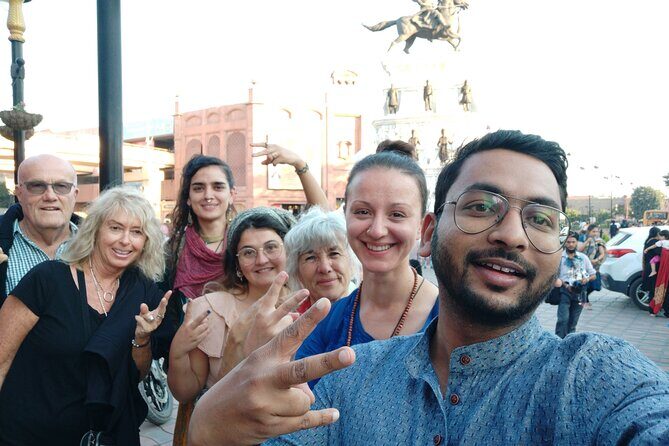
The walk begins at the Partition Museum in the Town Hall building area. This is framed as the world’s first Partition Museum, and the point is clear: start with the big 1947 rupture before you try to understand anything else about Amritsar’s identity. You’ll be told about the Partition of India and Pakistan and how it affected more than a few million people—an event that shaped families, neighborhoods, and the city’s emotional map.
The stop is about 10 minutes, and admission isn’t included in the tour price. That means two things for you: first, you’re not getting a full museum visit by default; second, you should budget separately if you want more than the guided overview.
Why this opening works: it gives you a mental timeline. When you later hear about other major moments in Amritsar, you’ll understand how the past keeps influencing the present—especially in a city where faith, memory, and identity all live close together.
Walking toward Saragarhi Memorial Gurudwara: sacrifice with meaning

Next, you head toward the Saragarhi Memorial Gurudwara, tied to 21 Sikh soldiers who sacrificed their lives while serving in the British army. Even though your stop time is brief, the impact is usually strong because it’s a different kind of history—one connected to honor, duty, and faith.
Admission here isn’t mentioned as required, so you’re mostly paying for the guided context and the walk itself. What I like about this stop is that it breaks up the heavier emotional tone with a place of remembrance that feels both spiritual and historical.
If you tend to like stories about individuals rather than only dates, this is a good stop for you. It humanizes the big historical forces and helps you notice the Sikh values that run through so much of Amritsar.
Maharaja Ranjit Singh statue: understanding Punjab’s power and politics
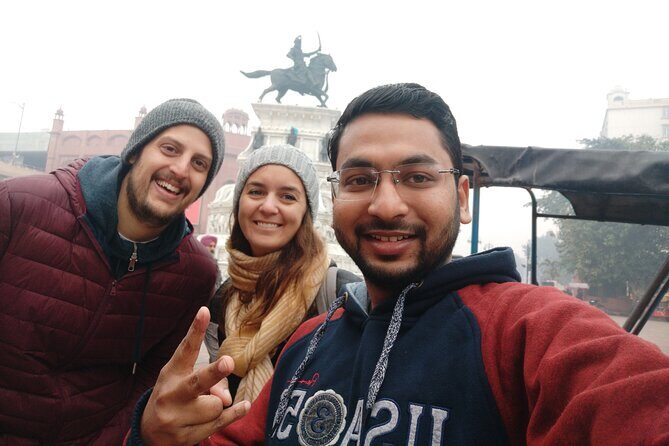
Then comes a stop at the Maharaja Ranjit Singh statue, with stories about Maharaja Ranjit Singh and the Punjab empire. This is one of the more “city-identity” moments on the route, and it’s free of additional entry fees.
Why it matters: Amritsar isn’t just museums and memorials. It’s also connected to regional pride and political history. Even in a walking tour that focuses on memory, this stop reminds you that cultures shape empires—and empires shape cities.
This stop is also short (about 10 minutes), so treat it as a signpost. You’ll leave with a sharper sense of why the city has the kind of monuments it does.
Jallianwala Bagh memorial: Baisakhi eve and a tragedy that changed trust
After that, you reach Jallianwala Bagh, visiting the memorial tied to the April 13, 1919 massacre that occurred on the festive eve of Baisakhi. Your guided time here is about 30 minutes, and admission isn’t included.
This is the emotional center of the tour for many people. You’ll hear the event described and contextualized, and you’ll also see how memorials work differently in India than in places that treat history as strictly academic. Here, remembrance is part of public space, and the guide helps you read that space without turning it into a speech you can tune out.
A practical consideration: if you’re sensitive to heavy topics, this stop may feel intense. Still, it’s exactly why the tour is valuable. You leave knowing Amritsar’s story isn’t only about beauty; it’s also about pain and how the city learned to live with it.
You can also read our reviews of more historical tours in Amritsar


Udasin Akhara on Sangal Wala Road: why training spaces matter
A little further along, you’ll visit Udasin Akhara Sangal Wala Road, focusing on what akharas mean in Amritsar. Your time here is about 20 minutes, and it’s free.
This is the kind of stop that quietly does a lot of work. On many heritage walks, you either get pure religion stops or pure market stops. Here, you get a view of Sikh and local culture through the lens of training spaces and community practices—places that connect discipline, tradition, and social life.
What makes it useful for you: it gives you a more complete picture of daily culture. You start to understand that Amritsar’s heritage isn’t only in monuments. It lives in institutions and routines that have been repeating for generations.
Guru Bazar lanes and Baba Bohar: where local life shows up
Then the tour shifts into what feels most like walking Amritsar rather than touring it. You spend about 1 hour 30 minutes in the old streets around Guru Bazar, learning about local lifestyle and the history of the area.
This is where you’ll move through narrow heritage lanes and get a real sense of the old-city rhythm—shops, movement, and the kind of street texture you can’t download from a guidebook. The route includes narrow alleys toward Baba Bohar, described as a large old banyan tree in the middle of the city and noted as a 150-year-old tree.
The guide’s job here is especially important. Without someone explaining what you’re seeing, it’s easy to walk past the details and miss why certain places are important. With guidance, you notice the street logic: where people gather, how businesses cluster, and how the built environment supports everyday life.
One extra value point: the tour includes advice on bargaining and how to save money. You’re not forced into shopping, but if you’re going to buy anything while you’re in the market area, those tips can help.
If you hate crowds or tight lanes, this is the part you’ll want to manage mentally. Go slow, keep a comfortable buffer from others, and treat it like a guided street walk rather than a fast sightseeing loop.
Ending at Sri Harmandir Sahib area: stepping out into Golden Temple reality
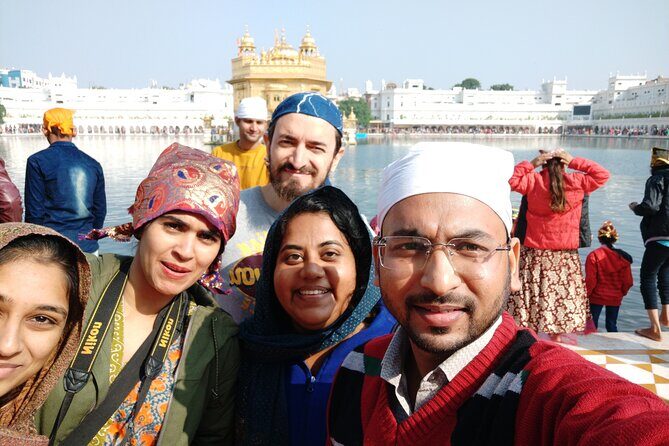
The tour ends at the Sri Harmandir Sahib area, described as outside Golden temple near Atta Mandi. This matters because you don’t just end at a gate—you’re arriving after the stories. So when you’re standing in the Golden Temple zone, you’re more likely to understand what you’re seeing beyond the obvious visual impact.
Also, a couple of the positive reviews highlight the sense of safety a guide brings in busy lane networks—especially for solo visitors. That’s a big deal in cities where getting lost in old neighborhoods can feel stressful. Having an organized route helps you relax and look around.
Price and value: what $16.66 buys you in real terms
At $16.66 per person, this tour is priced like a budget-friendly way to get structure, context, and access—especially in a city where you can easily spend more time and money wandering without a plan. The guide component is the main value driver: you get trained storytellers speaking English, Hindi, and Punjabi, plus a route built around hidden lanes and heritage stops.
What’s included:
- a friendly, trained guide/storyteller
- access to about 8–10 heritage/historic places
- Sikh history and cultural context
- fun facts and conversation-based storytelling
- tips for bargaining and saving money
What’s not included:
- entry tickets/fees for some stops, specifically the Partition Museum and Jallianwala Bagh (and those are likely the two you’ll most want to spend time on independently, even if your guided stop is shorter)
So here’s the real budgeting math to consider: you’re paying for the walk, storytelling, and access, and you may pay separately for memorial/museum entry if you want more than the guided window. If you like the idea of learning first and then choosing whether to go deeper at a site you care about, this price point makes a lot of sense.
How the guides shape the experience (and how to manage expectations)
The strongest repeated compliments are about guides who are warm, punctual, and willing to answer questions. Names showing up in feedback include Prerit and Hardik, and reviews mention strong English command, organized pacing, and a safe, welcoming feel—one review specifically notes comfort for a solo female traveler.
That’s the upside: when a guide can connect places with stories in clear language, a heritage walk stops feeling like a checklist. You start noticing street details and understanding why they matter.
Here’s the downside to consider: there’s at least one disappointed review that complained about a focus on the wrong cultural angle and about the guide using myths or movie-style or propaganda-derived stories as if they were facts. I can’t confirm the same approach for every guide and every day, but you should plan for storytelling to be part history, part local legend, part cultural explanation.
My practical advice if you care about strict accuracy: ask questions when you sense something doesn’t match your understanding. A good guide will clarify what’s historical, what’s interpretation, and what’s local lore.
Who should book this walk, and who should look elsewhere
This tour fits best if:
- you’re a beginner and want a sensible introduction to Amritsar
- you want to connect Sikh culture with major historical events
- you enjoy walking lanes with context more than ticking off monuments
- you appreciate guides who can answer follow-up questions while you go
You might think twice if:
- you want deep, museum-level analysis at every stop
- you prefer a private tour style where the route can fully match your interests
- you strongly dislike any blending of storytelling, local tradition, and less-verified anecdotes
Still, even if you’re history-minded, the route has enough variety—Partition Museum, Saragarhi remembrance, Jallianwala Bagh, akhara culture, and Guru Bazar lanes—that most people can find at least a few moments they’ll remember for a long time.
Should you book Amritsar Heritage Walking Tour?
Yes, if you want a value-priced, guide-led way to understand Amritsar’s layers without spending your day planning. The route makes sense: start with 1947 context, move into remembrance, then end in the Golden Temple area after you’ve learned how history and faith are woven into the streets.
Book it especially if:
- it’s your first time in Amritsar
- you want access to old lanes and places you probably won’t find quickly on your own
- you want a structured walk that still leaves room for questions
Before you go, do two smart things: bring comfortable walking shoes, and expect that Partition Museum and Jallianwala Bagh may cost extra for entry if you want more than the guided visit time.
FAQ
How long is the Amritsar Heritage Walking Tour?
It lasts about 2 hours 45 minutes.
Where does the tour start and end?
It starts at The Partition Museum on Hall Rd in the Town Hall area of Amritsar, and it ends outside Sri Harmandir Sahib (Golden Temple) near Atta Mandi.
What is included in the price?
The tour includes a trained storyteller/guide (English, Hindi, Punjabi), access to 8–10 heritage and historic places, Sikh history and culture, hidden lanes and places, fun facts, and tips for bargaining and saving money.
Are entrance tickets included?
Some stops are not included for admission fees. The Partition Museum and Jallianwala Bagh have admission tickets not included. Other listed stops (like the Maharaja Ranjit Singh statue, Akharas, and Guru Bazar areas) are free per the tour details.
How big is the group?
The tour has a maximum of 20 travelers.
Can I cancel for a full refund?
Yes. Free cancellation is allowed up to 24 hours in advance for a full refund.