REVIEW · AMRITSAR
Amritsar Heritage Walk
Book on Viator →Operated by Discover Punjab Tours · Bookable on Viator
Old Amritsar feels like a street-level time machine. This Amritsar Heritage Walk pushes past the big-picture sights and into the narrow lanes and bye lanes where traditional town planning and local crafts and trade have been carried on for centuries. I really like that it reads like a living map of old city life, not just a set of landmarks.
I also like the human side of the experience: the guiding style. The tour is led by professionals such as Gurinder Singh Johal and Ajay, and their approach is built around small historical anecdotes that make you notice details you’d normally walk right past in Katra neighborhoods.
One consideration: you are walking for about 3 hours through tight old-city lanes, and a couple of the stops are short. If you prefer long, slow museum-style visits, this format will feel more like a quick, focused circuit than a lingering tour.
In This Review
- Key things I’d highlight before you go
- Amritsar Heritage Walk: The old city map you can walk through
- Timing and route basics: How the 9:00 start works
- Town Hall (built 1866): Starting with administration before you hit the lanes
- Saragarhi Memorial Gurudwara: A short stop with strong meaning
- Katra Ahluwalia and Qila Ahluwalia: Fort history inside the neighborhood
- Hall Bazaar archways: The passage that ties mohallas and katras together
- What you actually see: Katras, havelis, akharas, and the working city feeling
- Price and value: Why $35 can make sense here
- Small-group walking style: What to expect from the guides
- Who this tour is best for (and who might want a different plan)
- Should you book the Amritsar Heritage Walk?
- FAQ
- How long is the Amritsar Heritage Walk?
- What is the price of the tour?
- Where does the tour start and end?
- What time does the tour begin?
- What are the main stops on the route?
- Are admission tickets included?
- How large is the group?
- Is mobile ticketing used?
- How flexible is cancellation?
- Is the tour near public transportation and is it suitable for most people?
Key things I’d highlight before you go
- Small group size (max 10) helps the pace stay friendly even in narrow lanes.
- Admissions are included for each featured stop, so you’re not scrambling for tickets.
- Multiple old-city layers show up in a single route: administration, memorial, fort, and passageways.
- Tight lane walking is the point, so comfy shoes matter more than you think.
- Guides with real storytelling skills like Gurinder Singh Johal and Ajay can turn ordinary corners into context.
Amritsar Heritage Walk: The old city map you can walk through
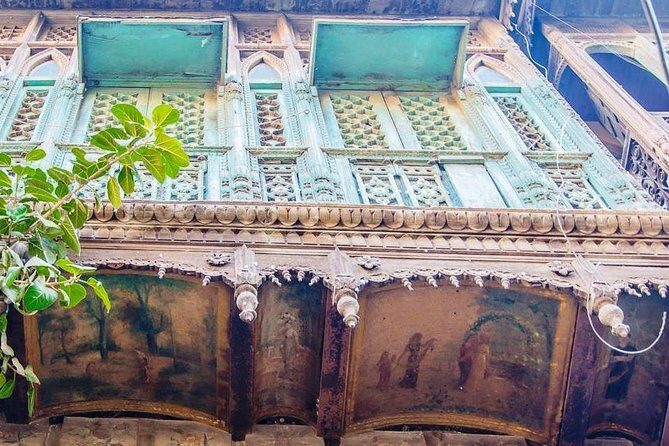
If your plan for Amritsar is mostly the Golden Temple area and a few main stops, you’ll end up with a city you know at a distance. This heritage walk is different. You move into the narrow lanes and bye lanes of the roughly 400-year-old city, where the built environment still shapes everyday life.
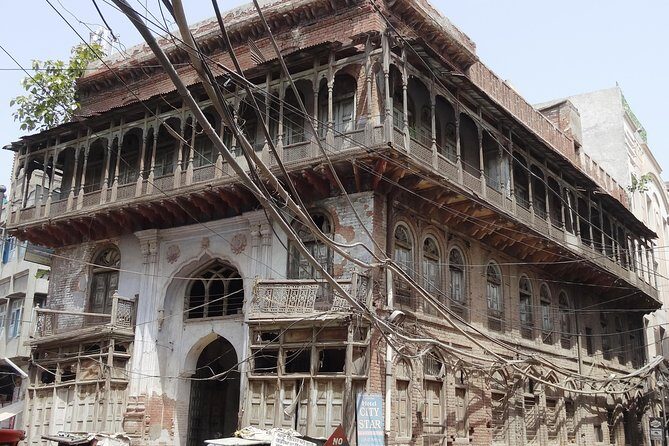
The best part is that the route doesn’t treat old Amritsar like a theme park. It treats it like a system: town planning, trade spaces, and crafts you can see practiced in the same kinds of places for generations. Along the way, the walk brings you past the kinds of spaces locals still recognize, including katras, akharas, bungas, havelis, and hatties. Even if you don’t know every term at first, the guide helps you connect what you’re seeing to why it exists where it does.
You’ll also feel the scale of the old city. It’s not wide boulevards; it’s a network. And because the group is kept small (up to 10 people), you’re not stuck trying to see over shoulders while the lane squeezes you forward.
You can also read our reviews of more walking tours in Amritsar



Timing and route basics: How the 9:00 start works
The walk starts at 9:00 am at the way into Golden Temple Road, near the Town Hall area by Katra Ahluwalia (meeting is listed as Way into Golden Temple Rd / Town Hall / Katra Ahluwalia, Amritsar, Punjab 143006). You’ll end in the Katra Ahluwalia area again, at S23/398, Amritsar Cantt., Punjab 143001.
Total time is about 3 hours. The schedule is built around short, specific stops rather than one long visit. That means you get variety without spending the whole morning in one place. It also means you should keep your expectations realistic: some sites are 5 to 15 minutes, and that can be perfect if you want an orientation to the old city structure.
It’s also marked as near public transportation, which is useful in a city where “getting there” can be half the battle. If you’re relying on transit, give yourself a little buffer so you don’t cut it close to the 9:00 start.
Town Hall (built 1866): Starting with administration before you hit the lanes
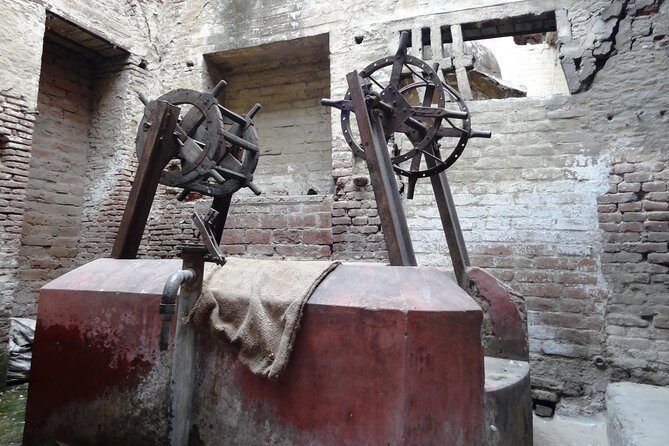
Your first stop is the Town Hall, built by the British in 1866. It’s described as the centre of Amritsar’s local administration, so it gives you a useful reference point before you wander into older quarters.
Why I like this as a first stop: it frames the walk. You’re about to move through katras, passageways, and neighborhood spaces. Knowing that there was an administrative hub helps you understand that the old city wasn’t just markets and homes. It had governance and coordination, too.
This stop is about 15 minutes, with an admission ticket included. Since it’s the opening anchor, you’ll likely get some context on what you’re about to see and how the old city’s layout ties back to how people organized daily life. It’s a good moment to reset your eye: instead of seeing buildings and gates as random, you start to see them as connected functions.
One practical note: because this is the first stop, you’ll benefit from arriving a touch early so you don’t rush through it.
Saragarhi Memorial Gurudwara: A short stop with strong meaning
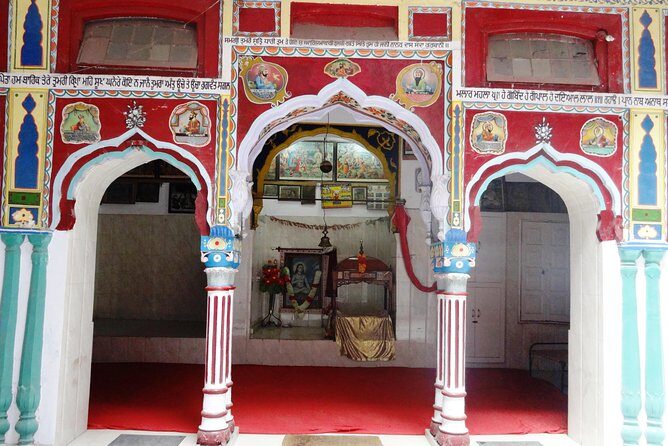
Next up is the Saragarhi Memorial Gurudwara. The memorial is dedicated to the twenty-one soldiers of the 36 Sikh Battalion who lost their lives defending their posts on September 12, 1897.
This is only about 5 minutes, but it matters because memorials change how you read a place. After the administrative context of Town Hall, you shift into a different kind of city memory. You’re reminded that Amritsar’s story includes major moments of sacrifice and resolve, not just building styles and trade routes.
There’s also an included admission ticket for this stop. Even with the short time, the value is that it puts history into your walking route. You’re not only learning about structures; you’re learning about the people and events tied to this area.
Katra Ahluwalia and Qila Ahluwalia: Fort history inside the neighborhood
Then you step into Katra Ahluwalia and specifically to Qila Ahluwalia. This fort is described as belonging to the Ahluwalia Misl, and the route connects it to Jassa Singh Ahluwalia, who played a crucial role in repelling foreign invasions during the 18th century.
This stop lasts around 15 minutes, with admission included. What makes it a good mid-walk point is the way it shifts your focus from public-facing history into local neighborhood power. A fort inside a katra-area context helps you picture how protection and authority were part of everyday geography.
As you walk through Katra Ahluwalia, your guide’s job is likely to connect what’s left of the fort story to the surrounding street pattern. Old Amritsar’s lanes aren’t just leftovers; they reflect security, community movement, and the way people lived close to the structures that mattered.
If you’re the type who likes to understand not just what a building is, but why it sits where it sits, this stop is the one to pay attention to.
You can also read our reviews of more historical tours in Amritsar

Hall Bazaar archways: The passage that ties mohallas and katras together
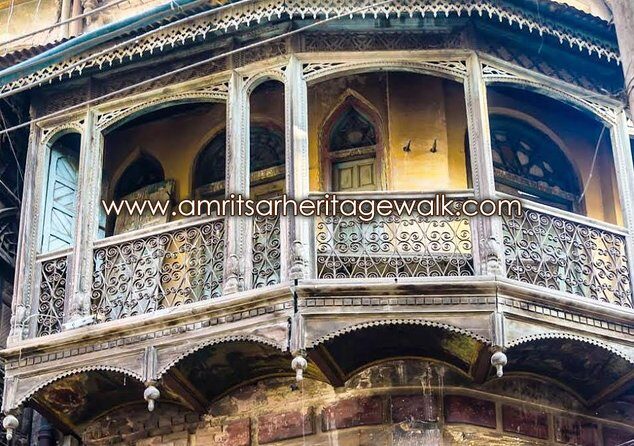
Your final major stop is Hall Bazaar, described as an ancient passage and a typical archway between different mohallas and katras of old Amritsar, established by Sikh Misls.
This is about 20 minutes, with an admission ticket included. I like Hall Bazaar because it explains old city planning in a physical way. Passageways aren’t just decorative. They route movement, shape connections between communities, and funnel daily circulation where it needs to happen.
When a guide frames it as an archway linking mohallas and katras, you start seeing the old city as a network rather than a list of sites. That’s exactly what you want from a heritage walk: not only facts, but the way facts fit together.
Also, because it’s a passage-type stop, it often feels more immersive than a static landmark. You’re moving through spaces that match the old city logic. Even if the walk has a strong historical backbone, you end this part with a practical understanding of how people used the layout day to day.
What you actually see: Katras, havelis, akharas, and the working city feeling
The tour description is clear that you’ll be guided deep inside the narrow lanes and bye lanes and you’ll see places tied to longstanding neighborhood life, including katras, akharas, bungas, havelis, and hatties.
Here’s why I think that matters for your experience: it gives you a different kind of context than a checklist of famous sights. Instead of only learning about high-profile monuments, you learn how a city runs at ground level—through built structures that support trade, community routines, and craft spaces.
And because the guide is part historian and part translator of street clues, you’ll likely walk away with better instincts for what you’re looking at next time you’re in Amritsar on your own. This is the kind of knowledge you use immediately: you start noticing where lanes seem to channel commerce, where structures hint at social life, and how passageways connect communities.
Price and value: Why $35 can make sense here
The price is $35 for approximately 3 hours, and the tour includes admission tickets for each featured stop (Town Hall, Saragarhi Memorial Gurudwara, Qila Ahluwalia, and Hall Bazaar).
That matters because in many heritage experiences, ticket costs sneak in later and make the value less obvious. Here, the structure is clear: you’re paying for a guided, small-group walk plus access to several sites along the route.
You also get a group limit of 10 travelers, which is a big deal in an old city. Narrow lanes turn even a small group into a bottleneck. Keeping numbers small makes the tour feel less like you’re herded and more like you’re being guided through a place.
At $35, this is not a luxury, long-haul private driver type of experience. It’s a cost-conscious way to get history and context without spending your whole day on logistics.
Small-group walking style: What to expect from the guides
A recurring theme in the guidance quality is the storytelling approach. The walk is associated with guides such as Gurinder Singh Johal and Ajay, both described as professional and courteous, with explanations that include small historical anecdotes.
In practice, that means you’re not only hearing dates and titles. You’re also getting little context pieces that help you connect Town Hall, a memorial gurudwara, a fort tied to the Ahluwalia Misl, and an archway passageway into one coherent old-city picture.
That’s a key difference between a walk that feels like sightseeing and a walk that feels like learning. The “learning” part is what makes the time worth it, especially when you’re only on the ground for around three hours.
Who this tour is best for (and who might want a different plan)
This experience is marked as one where most travelers can participate, and the short stop lengths mean it doesn’t demand museum-level stamina.
You’ll likely enjoy it most if:
- you want more than the main attractions and you like exploring how neighborhoods work
- you enjoy guided context while walking instead of standing still
- you’re curious about how Amritsar’s old city is organized, not just what the sites are called
You might want to consider a different option if:
- you dislike walking through tight lanes for extended periods
- you prefer longer time at fewer places rather than short visits across multiple stops
Should you book the Amritsar Heritage Walk?
Yes, I think you should book it if you want Amritsar to feel like a real city and not only a lineup of famous highlights. The combination of old lanes, multiple culturally and historically different stops, and small-group pacing makes it a strong choice for a first or early visit to the old city.
Also, the inclusion of admissions for the stops makes the $35 feel more transparent than many guided tours. And if you care about details—why a passageway connects neighborhoods, why a fort matters where it is, and how a memorial fits into the city’s layout—this format will reward you.
My only hesitation is the walking pace and the fact that some stops are brief. If you like to linger, wear good shoes and go in with the mindset that this is a guided route, not a slow wander.
FAQ
How long is the Amritsar Heritage Walk?
It lasts about 3 hours.
What is the price of the tour?
The price is $35.
Where does the tour start and end?
It starts around the way into Golden Temple Road near Town Hall and Katra Ahluwalia, and it ends at S23/398, Katra Ahluwalia, Amritsar Cantt.
What time does the tour begin?
The start time is 9:00 am.
What are the main stops on the route?
The walk includes Town Hall, Saragarhi Memorial Gurudwara, Katra Ahluwalia (Qila Ahluwalia), and Hall Bazaar.
Are admission tickets included?
Yes. Admission tickets are included for the featured stops listed in the itinerary.
How large is the group?
The maximum group size is 10 travelers.
Is mobile ticketing used?
Yes, the tour uses a mobile ticket.
How flexible is cancellation?
Cancellation is free, and you can cancel up to 24 hours in advance for a full refund. Changes within 24 hours of the start time are not accepted.
Is the tour near public transportation and is it suitable for most people?
It is marked as near public transportation, and most travelers can participate.