REVIEW · MUMBAI
7 Hour Mumbai City Sightseeing Tour By Navv Om Namaha Shivaya
Book on Viator →Operated by Om Namaha Shivaya Cultural Tours · Bookable on Viator
Mumbai hits hard in seven guided hours. This 7-hour route packs major landmarks with spiritual and everyday Mumbai moments, including a stop people love at Babulnath Temple of Shiva; I also like how Navv keeps the day organized so you see a lot without feeling rushed. One thing to plan for: there is no pickup from North Mumbai hotels, so you’ll need to get to the meeting point near Gateway of India.
I like that this is a private day for your group, with an English-speaking tour guide and a chauffeur-driven air-conditioned Innova. You can also modify the itinerary based on what you care about, which matters in a city where one wrong turn can waste hours.
Expect a busy, city-driving schedule that strings together grand architecture, temple calm, and a few hands-on cultural stops. It is a smart way to get your bearings fast, as long as you are comfortable with Mumbai traffic and the fact that the day is packed by design.
In This Review
- Key things you will like about this tour
- Starting at Starbucks near Gateway of India: easy to find, good momentum
- Gateway of India and the Taj Palace: classic Mumbai, plus a choice to go inside
- Mumbai University, Rajabai Clock Towers, and the High Court: where the city flexes its intellect
- Victoria Terminus and the municipal buildings: rail and government in one flow
- Crawford Market, an old street-food lane, and dabbawallas: snack-smart cultural stops
- Jehangir Art Gallery: a calmer counterpoint to the street level
- Marine Drive and the UNESCO Art Deco buildings: Queen’s Necklace at street level
- A special tribute to Mumbai Police: respectful, and different from the usual sightseeing
- Banaganga and the Holy Ganges of Mumbai: spirituality in a real neighborhood setting
- Malabar Hill, Hanging Gardens, and Kamla Nehru Park: skyline views that change how you read the city
- Mani Bhavan Gandhi Museum and dhobi ghat laundry: Mumbai’s moral compass and its daily labor
- Lunch at Palladium Mall and keeping your energy for the last stretch
- Guide and organization: why this tour feels personal even when it is a full day
- Price and value: what $119.97 buys you in real life
- Who this tour suits best
- Should you book this 7-hour Mumbai tour?
- FAQ
- How long is the 7 Hour Mumbai City Sightseeing Tour?
- Where do I meet for the tour?
- What time does the tour start?
- Is the tour private?
- Is there hotel pickup from North Mumbai?
- Is the tour guide English-speaking?
- Does the tour include admission tickets?
- Is there an air-conditioned vehicle?
- What is the cancellation window?
- Who runs the tour?
Key things you will like about this tour
- Navv’s organization: clear planning and a route built around what your group actually wants to see
- Private format: only your group participates, so you can ask questions without crowd noise
- Comfort between stops: chauffeur-driven air-conditioned Innova, with the guide and driver as separate roles
- Iconic Mumbai in one arc: Gateway of India to Marine Drive, then up toward Malabar Hill and skyline viewpoints
- Spiritual meets daily life: Babulnath Temple of Shiva, Banaganga, dabbawallas, and dhobi ghat laundry
- Architecture and art stops: Rajabai Clock Tower, Bombay High Court, Jehangir Art Gallery, and UNESCO-listed Art Deco streets
Starting at Starbucks near Gateway of India: easy to find, good momentum
The tour kicks off at Starbucks – Taj Palace, opposite Gateway of India. That is a practical start point because the area is recognizable, central, and set up for visitors who want to begin their sightseeing immediately without a long search.
You meet your guide in the morning and then shift into a chauffeur-driven schedule. With an air-conditioned Innova, you’re not stuck battling the heat while you travel between stops. The guide and chauffeur are two different people, which usually keeps the experience smoother: one person handles the stories and logistics, the other handles the driving.
The other reason this start works is timing. Beginning near Gateway of India lets you catch the daytime mood of the harbor area before the rest of the day grows busier.
You can also read our reviews of more city tours in Mumbai


Gateway of India and the Taj Palace: classic Mumbai, plus a choice to go inside
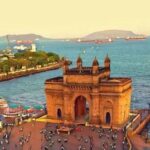
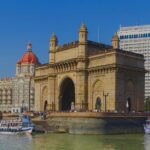
Gateway of India is the obvious anchor for any Mumbai day, and this tour uses it that way. You get the landmark moment first, then you move into nearby sights so your morning stays efficient.
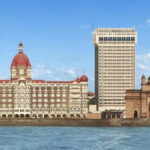
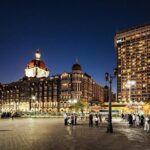
From there, the Taj Mahal Palace Hotel is the next big landmark. The tour notes an optional approach: you can go inside the Taj if you want a coffee or a drink. That small detail matters. It keeps the experience flexible depending on your interests and your budget, and it gives you a calm pause inside an iconic building rather than just photographing the outside and moving on.
If you’re the type who likes architecture and atmosphere, this hotel stop is a nice switch from street-level views. If you’re mostly there for photos, you can treat it as a quick landmark beat and keep going.
Mumbai University, Rajabai Clock Towers, and the High Court: where the city flexes its intellect
After the harbor-famous opening, the tour pivots to a cluster of education and legal architecture. Mumbai University, Rajabai Clock Towers, and Bombay High Court appear in the itinerary back-to-back, which is exactly how you want to see these places.
Rajabai Clock Towers are the kind of structure that becomes more interesting once someone points out what to look for. The clock tower style and the surrounding campus buildings are a strong contrast to the more colonial-and-garden look of other areas you’ll visit later.
Bombay High Court adds a different tone. It helps you understand that Mumbai is not only beaches and film stars. It is also courts, institutions, and serious civic buildings that shape daily life.
A helpful note from the tour setup: your guide is English-speaking, and the route is designed for people who want to ask questions. That matters here, because these buildings reward even basic context about why they were built and how they fit into Mumbai’s story.
Victoria Terminus and the municipal buildings: rail and government in one flow
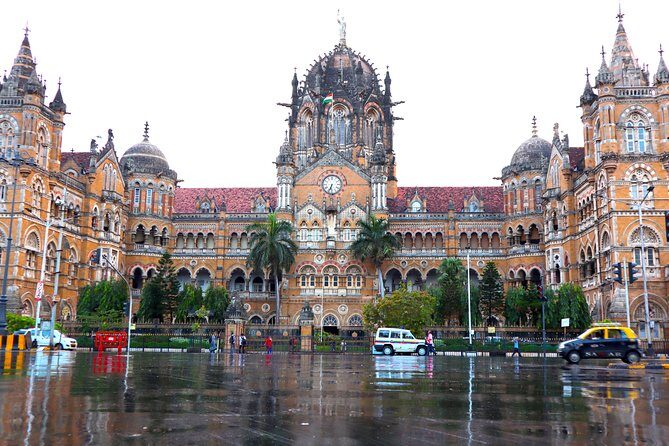
Victoria Terminus Train Station is on the schedule, and it is a big deal for anyone who likes trains, buildings, or urban power centers. Even if you are not a rail fanatic, a station like this is one of the easiest ways to see how Mumbai grew into a global city.
Right after, you pass through the city’s civic layer: the Mumbai Municipal Corporation Building and other administrative landmarks. That pairing works. A station shows movement and commerce; the municipal buildings show governance and planning.
This section of the day is valuable because it shows Mumbai as a working machine, not just a sightseeing postcard. The architecture tells you the city organized itself to handle scale, and the tour hits those signals quickly.
Crawford Market, an old street-food lane, and dabbawallas: snack-smart cultural stops
This tour doesn’t treat food as an afterthought. Crawford Market appears, then you also get dabbawallas and an old street food lane of Mumbai. That combination is excellent value because it turns eating into a cultural lesson rather than only a hunt for the next bite.
Dabbawallas are tied to how food moves through Mumbai. Even if you know the basic idea, seeing it discussed in the local context helps you understand why these lunch deliveries are such a recognizable part of city life.
Crawford Market adds the market-energy layer. You’re not just stopping for a quick look; you’re getting a taste of everyday commerce patterns. And then the old street-food lane gives you the chance to try Mumbai-style flavors at the tempo of the streets.
Two practical tips if you want this part to go smoothly:
- Wear shoes you can walk in, even if the stops are short.
- Keep water handy, especially if you snack as you go.
This is also where the group format matters. With only your group participating, your guide can pace the stops so people can actually see things, not just stand in a line taking photos.




Jehangir Art Gallery: a calmer counterpoint to the street level
Jehangir Art Gallery is a solid mid-day break from the high-traffic intensity of markets and major streets. An art stop gives your eyes a different kind of focus, and it also resets the day’s rhythm.
If you enjoy modern Indian art culture, this is a good moment to slow down for a bit. Even if you are not trying to buy anything, galleries help you understand what locals pay attention to, outside of heritage buildings.
Think of it as the tour’s palate cleanser. After this, the route shifts back into big-city viewing and scenic areas.
Marine Drive and the UNESCO Art Deco buildings: Queen’s Necklace at street level
Then comes Marine Drive, often called Queen’s Necklace. This is one of those Mumbai places where timing and perspective matter.
The itinerary also flags UNESCO World Heritage Art Deco Buildings of Marine Drive. That means your stop is not only about the view along the curve. It is also about the architectural “why” behind the street scene you’re seeing.
Art Deco façades can look repetitive if you only take one or two photos. With a guide, you get pointers for what to notice so it becomes more than a pretty drive.
This part of the day is also visually rewarding even if you do not plan to spend a long time walking. You can take in the sweep of the bay-facing road and then connect it to the earlier civic and educational architecture you saw in the morning.
A special tribute to Mumbai Police: respectful, and different from the usual sightseeing
A stop labeled as a special tribute to Mumbai Police is included. It is not the standard template of landmarks, and that is part of why it can feel meaningful.
Even without extra detail provided, it signals that the tour is trying to cover more than the obvious tourist attractions. It is one of the ways this day feels like a curated look at the city’s public life, not only its monuments.
If you like tours that balance glamour with the everyday workers and systems behind the scenes, this is a good match.
Banaganga and the Holy Ganges of Mumbai: spirituality in a real neighborhood setting
Banaganga is listed as the holy Ganges of Mumbai. That phrase hints at a spiritual connection, and this stop gives you a different emotional temperature than Marine Drive.
Places like Banaganga are often less about showy scale and more about belief, routine, and local devotion. This is where the tour’s spiritual emphasis shows up in a practical way, not just a photo opportunity.
One of the highlights people talk about from this kind of route is Babulnath Temple of Shiva. If that stop is part of your day, treat it as a slow moment. Shiva temples are places where the soundscape, ritual timing, and crowd behavior matter more than the background architecture.
If you’re traveling with family members who prefer respectful, calmer stops, this is one of the best parts of the day to keep the group happy.
Malabar Hill, Hanging Gardens, and Kamla Nehru Park: skyline views that change how you read the city
The route then drives through Super Rich Malabar Hill, followed by Hanging Gardens and Kamla Nehru Park & skyline of Mumbai. That progression matters.
Malabar Hill is where the city’s wealth pattern becomes visible, and driving through it helps you understand how Mumbai’s geography shapes its neighborhoods. Then Hanging Gardens adds a green breathing space between big looks.
Kamla Nehru Park is included specifically for skyline views. If you like the moment when a city stops being names on a map and becomes a layered skyline, this is where it can click.
For photographers, skyline stops are a chance to capture the urban “shape” instead of only individual landmarks. For others, it is still useful. You get a mental diagram of Mumbai’s size and density.
Mani Bhavan Gandhi Museum and dhobi ghat laundry: Mumbai’s moral compass and its daily labor
Two major cultural stops finish the story in a very grounded way: Mani Bhavan Gandhi Museum and dhobi ghat laundry.
Mani Bhavan Gandhi Museum gives you a connection to Gandhi’s time in the city through the museum setting. It also gives the tour a shift away from architecture-only sightseeing into ideas and historical influence.
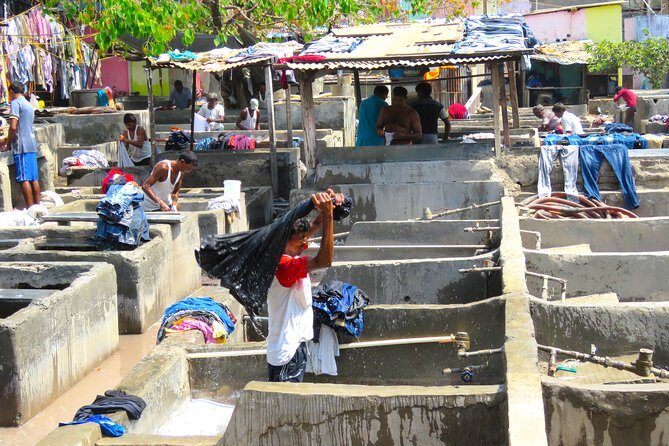
Then dhobi ghat laundry adds the everyday layer. This is a working scene, and it tends to be one of those stops that sticks because it shows labor that is usually invisible to visitors. Watching laundry in action helps you appreciate the city’s practical systems.
If your group tends to get tired after big scenic drives, this pairing can still work because it is emotionally different. One stop brings reflection; the other brings a reality check of how people keep the city running.
Lunch at Palladium Mall and keeping your energy for the last stretch
Lunch is planned at Palladium Mall. A mall lunch stop can be a win on a day like this because it reduces uncertainty. You’re not stuck searching for a place while the day’s timing slips.
Still, since the tour details you choose may or may not include the meal cost, treat lunch as a planned break you pay for on your own if required. Ask your guide up front if you want to know what is included versus what you handle.
This is also a moment to recharge. If you snack earlier at the street-food lane, you might want something lighter. If you skipped early snacks, a proper meal here can save you later.
Guide and organization: why this tour feels personal even when it is a full day
The biggest strength here is how Navv runs the day. People consistently praise his planning, his friendly way of hosting, and his ability to adapt the route to what the group wants.
A few patterns show up in the kinds of comments this tour gets: clear communication, responsive planning ahead of time, and a feel-good approach that makes you comfortable asking questions. One group even described being part of a larger group of 15 people in their 60s, and the day still worked smoothly.
That is important. A 7-hour route can fall apart if the guide pushes a rigid schedule. Here, the itinerary can be modified based on your preferences, so the day can bend instead of snapping.
Also, the guide and chauffeur being separate roles tends to make the tour run more cleanly. You spend less time dealing with driving uncertainty and more time listening, watching, and asking.
Price and value: what $119.97 buys you in real life
The price is $119.97 per person for about 7 hours. The included notes say all fees and taxes are covered, and the day is set up with a free-admission style schedule.
So where does the value come from?
- You are paying for time and coordination, not just transportation. The route strings together landmarks, architecture, and cultural stops so you do not need to plan transfers yourself.
- You are paying for interpretation. With a real English-speaking guide, stops like Rajabai Clock Towers, UNESCO Art Deco streets, and civic architecture become easier to understand and more interesting to look at.
- You are paying for comfort and control. Air-conditioned Innova and a private format keep the day manageable.
A possible value trade-off: the tour does not include pickup from North Mumbai hotels. If you are staying far from the meeting point, you may spend time or money getting to Starbucks – Taj Palace first. That can change the math for your day.
Group discounts and a mobile ticket are included in the tour description too. Those small things matter when you are trying to keep the logistics simple.
Who this tour suits best
This is a strong pick if you want:
- A structured, full-day overview without jumping between unrelated neighborhoods on your own
- A mix of architecture and spirituality, plus a glance at everyday systems like laundry and dabbawallas
- A guide who adapts the itinerary to your interests rather than only reading off a script
It may feel less ideal if you want a slow, leisurely pace with long stays at only one or two sights. This is built to cover many places in a single day, so it fits people who like variety.
Should you book this 7-hour Mumbai tour?
If your goal is to see the major sides of Mumbai in one organized day, I think booking makes sense. The route covers landmark Mumbai (Gateway of India, Taj area), city power (High Court, university clock towers), scenic Mumbai (Marine Drive, skyline stops), and culture you feel in daily life (Mani Bhavan and dhobi ghat).
I would only hesitate if you are counting on North Mumbai hotel pickup. Since that is not included, plan your start at Starbucks – Taj Palace and give yourself extra time to arrive.
Also, if your must-do list includes one or two stops only, you might consider whether a full 7-hour circuit matches your style. But if you want a day that balances big views with spiritual and human-scale moments, this is a solid way to do it.
FAQ
How long is the 7 Hour Mumbai City Sightseeing Tour?
The tour is listed as about 7 hours.
Where do I meet for the tour?
You start at Starbucks – Taj Palace, opposite Gateway of India, Apollo Bandar, Colaba, Mumbai.
What time does the tour start?
The start time is 9:00 am.
Is the tour private?
Yes. It is private, and only your group will participate.
Is there hotel pickup from North Mumbai?
No. Pickup from North Mumbai based hotels is not included.
Is the tour guide English-speaking?
Yes. The tour includes an English speaking tour guide.
Does the tour include admission tickets?
Admission tickets are listed as free, and all fees and taxes are included.
Is there an air-conditioned vehicle?
Yes. The tour uses a chauffeur driven air-conditioned Innova.
What is the cancellation window?
You can cancel up to 24 hours in advance for a full refund.
Who runs the tour?
The experience provider is Om Namaha Shivaya Cultural Tours.