REVIEW · NEW DELHI
7-Day Golden Triangle & Ranthambore Tiger Safari from Delhi
Book on Viator →Operated by Holiday Tours And Travels · Bookable on Viator
A week can feel like a sprint, but this route is built smart. You hit Delhi, Jaipur, Agra, and Ranthambore with private tour attention and local guides in Jaipur and Agra, so you’re not just shuffling between monuments. The main thing to consider is timing: Ranthambore can be closed from July 1 to Sept 30, depending on weather.
I like that the pacing gives you real context. You get morning energy for the big moments like the Taj Mahal at sunrise, and you spend dedicated time in Jaipur’s forts and viewpoints instead of only ticking landmarks. With 6 nights of accommodation and daily breakfasts, it’s also easier to plan your days without constant menu math.
In This Review
- Key things to know before you go
- Is This Golden Triangle + Ranthambore a good fit for you?
- Day 1 in Delhi: arrival, hotel check-in, and a soft landing
- Jaipur’s Pink City tour: City Palace, Jantar Mantar, and Hawa Mahal
- Amer Fort and Nahargarh: fort views that feel cinematic
- Ranthambore National Park safari: why sunrise is your best bet
- Fatehpur Sikri: a Mughal stop that breaks the pace
- Agra: Taj Mahal at sunrise plus the Fort and more
- Delhi on the last day: mosques, monuments, and one very famous minaret
- Price and value: what $550 covers, and what it doesn’t
- Small planning tips that make a big difference
- Who should book this tour (and who might not)
- Should you book this 7-Day Golden Triangle & Ranthambore Safari?
- FAQ
- What cities are included in this 7-day tour?
- How many nights of accommodation are included?
- Is breakfast included?
- Do you get pickup from the airport?
- Are local guides included during the trip?
- How many Ranthambore safaris are included?
- Is the Taj Mahal ticket included?
- When is Ranthambore closed?
Key things to know before you go

- Private group style: it’s only your group, not a big shared crowd shuffle.
- Sunrise-focused highlights: Taj Mahal sunrise and a sunrise Ranthambore park visit are built in.
- Local guidance where it matters: guided time in Jaipur and Agra, not just driving and dropping.
- Safari vehicle varies by your booking option: park fees include 1 or 2 canter safaris depending on your 3-star vs 4-star choice.
- Many monument tickets are not included: you’ll want to budget for admissions like City Palace, Jantar Mantar, Hawa Mahal, Taj Mahal, and others.
Is This Golden Triangle + Ranthambore a good fit for you?

If this is your first trip to North India, this kind of combo tour makes a lot of sense. You get the classic Golden Triangle big hitters—Delhi, Agra, Jaipur—then you add Ranthambore for wildlife that feels totally different from palace sightseeing.
You’ll enjoy this most if you want a guided flow and less decision fatigue. You’ll also like that the trip uses car transfers through the region, which is practical when you’re trying to cover a lot without living at train stations.
The tone of the experience is efficient rather than slow. If you’re the type who needs hours of free time in each city to roam on your own, you might feel the schedule tight at times. The flip side is that you’ll see the major sights without spending your whole week planning.
A few more New Delhi tours and experiences worth a look



Day 1 in Delhi: arrival, hotel check-in, and a soft landing
You start at Indira Gandhi International Airport, with pickup and a welcome from the tour representative. From there it’s a straightforward transfer to your Delhi hotel for your first night.
This first day is intentionally light. After travel, you don’t want a packed sightseeing scramble—you want sleep, hydration, and an easy start so tomorrow’s drive to Jaipur doesn’t feel like a chore.
Practical note: keep your passport details handy. The tour data says you need passport name, number, expiry, and country at booking time for all participants, and you’ll need a valid passport on the day of travel.
Jaipur’s Pink City tour: City Palace, Jantar Mantar, and Hawa Mahal
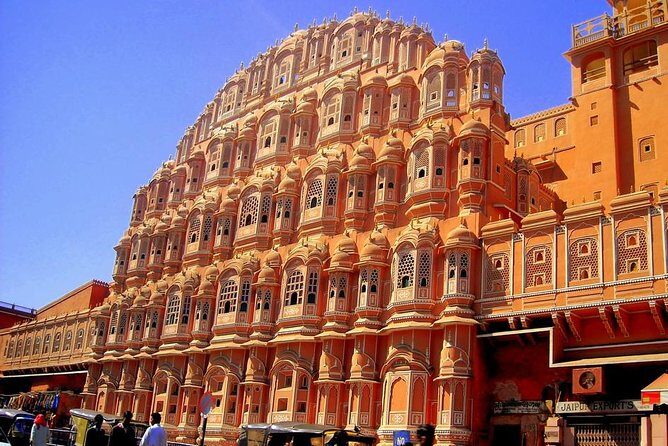
Jaipur is where the Golden Triangle vibe turns visual and story-heavy. On arrival, you check in and then you head out for the Pink City tour.
You’ll visit:
- City Palace (about 1 hour, admission not included)
- Jantar Mantar (about 1 hour, admission not included)
- Hawa Mahal (about 1 hour, admission not included)
Here’s why this trio works. City Palace gives you the royal seat of power and court life, Jantar Mantar shows Rajput-era science in stone, and Hawa Mahal is all about that famous façade and the idea of looking out while staying behind the women’s quarters (the zenana).
Budget reality: the tour includes time, but the listed admissions for these stops are marked as not included. That’s normal for India sightseeing, but it’s worth planning so the day doesn’t feel like surprise add-ons.
Amer Fort and Nahargarh: fort views that feel cinematic
Day 3 is built for Jaipur’s dramatic topography. You’ll go to Amber Palace (Amer Fort) first, with about 3 hours at the site.
Amber Fort matters because it isn’t just a pretty building. It’s a fortified complex set high on a hill, and it’s the kind of place where scale hits you fast—courtyards, ramparts, and the long view back toward Jaipur.
Next comes Nahargarh Fort (about 2 hours). It sits on the edge of the Aravalli Hills and gives you a different angle on the city. Even if you’re not the type to memorize architecture dates, these forts are great for learning how Jaipur defended itself and how the city’s geography shaped daily life.
Then there’s Jal Mahal, the palace in the middle of Man Sagar Lake. You’ll pass it as part of the day’s stops. This one is a “pause and look” kind of visit—less about spending time inside, more about catching the lake-and-palace image in your mind.
Ranthambore National Park safari: why sunrise is your best bet

Now for the part that most people remember most: Ranthambore tiger time.
You’ll transfer from Jaipur area to Ranthambore National Park for safari access. The tour data indicates this includes national park fees and safari scheduling based on your option: 1 canter safari if you book the 3-star option, or 2 canter safaris if you book the 4-star option. The itinerary also lists a sunrise visit, which is often where you get that extra chance for good tiger sightings.
Also note: Ranthambore can be closed from July 1 to Sept 30, and whether it’s open depends on weather. If you’re traveling during those months, don’t treat the plan as guaranteed.
What makes the safari segment special is simple: the drive is structured around wildlife viewing, not sightseeing wandering. You get a real focus—quiet waiting, then sudden excitement when something moves. And even on days without a tiger sighting, the park’s ecosystem (including leopards and marsh crocodiles, per the park description) still delivers.
One more detail: the tour includes canter safari in the park fees. That usually means your seating and viewing will be from a shared vehicle route in the reserve, so dress for early mornings and bumpy roads.
A few more New Delhi tours and experiences worth a look






Fatehpur Sikri: a Mughal stop that breaks the pace
After Ranthambore, you head toward Agra with a key detour: Fatehpur Sikri.
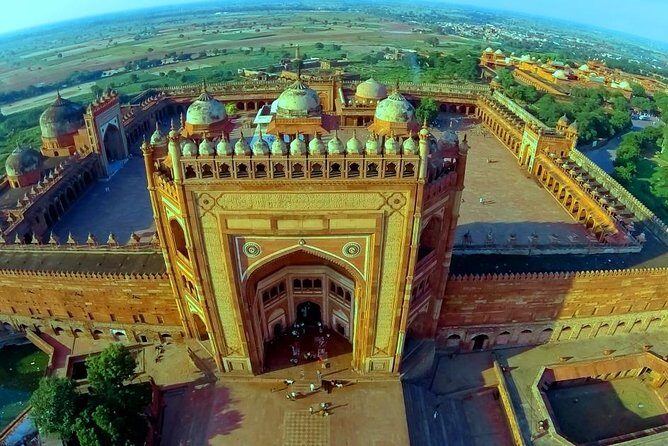
The tour includes around 2 hours here, and it’s described as a 16th-century Mughal city of red sandstone buildings clustered around the center, with the Buland Darwaza gate leading toward the Jama Masjid area.
Why this stop is worth it: it’s not just another fort or another palace. It’s a snapshot of imperial planning and religious focus, and it helps you understand how Mughal power looked when it was trying to be permanent.
It’s also a helpful “reset” after wildlife day. Instead of sitting in the car with zero structure, you get a defined historical detour that still feels like travel.
Agra: Taj Mahal at sunrise plus the Fort and more
Agra is where you want to be a little strategic with time. You’ll do a Taj Mahal sunrise visit before breakfast, with about 2 hours there. This timing matters because the site is at its calmest and light is often more flattering for photos and just plain viewing.
Just know the catch: Taj Mahal admission is not included. The rest of the experience is guided and scheduled, but you’ll need to cover that ticket separately.
After Taj Mahal, the tour continues with:
- Agra Fort (about 1 hour, admission not included)
- I’timad-ud-Daula (about 1 hour, admission not included)
- Agra Bazaar tour focused on handicrafts and marble/soft-stone inlay work (about 1 hour; admissions are listed as not included for the monument-style stops)
Agra Fort is included for a reason: it’s linked to Mughal power, built in red sandstone and described as a huge fort with elegant buildings. If you find yourself staring at just the Taj Mahal’s white marble, Agra Fort is a great counterpoint: stronger, older, and more fortress-like.
I’timad-ud-Daula is often the “quiet win” on Agra days. The tour frames it as a draft of the Taj Mahal. Even if you don’t compare details like a guidebook nerd, it’s still a chance to see Mughal craftsmanship on a smaller, more intimate scale.
The bazaar stop adds practical flavor. You’ll get time to look at handicrafts and the kinds of inlay work the Mughals were known for, without turning this day into a full-time shopping spree.
Delhi on the last day: mosques, monuments, and one very famous minaret
Your final day is a Delhi highlights run after breakfast, with transfer to the airport later for your onward journey.
You’ll see:
- Jama Masjid (about 1 hour, admission not included)
- Red Fort (about 1 hour, admission not included)
- Raj Ghat (about 30 minutes, admission not included)
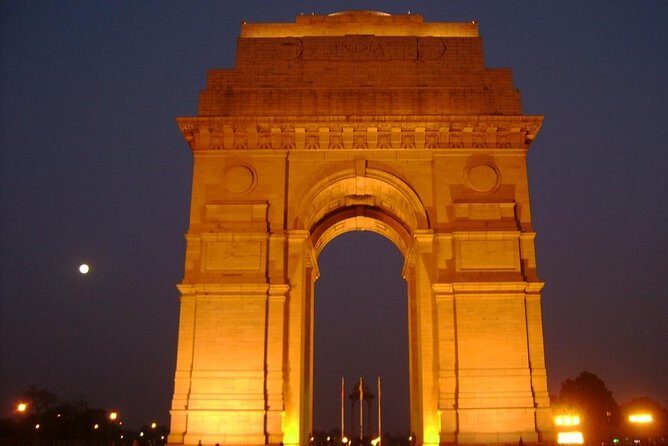
- India Gate (about 30 minutes, free)
- Humayun’s Tomb (about 1 hour, admission not included)
- Lotus Temple (about 1 hour, free)
- Qutub Minar (about 1 hour, admission not included)
This set is a smart mix of old and new, sacred and civic. Jama Masjid and Red Fort help you feel the Mughal footprint in Old Delhi. Raj Ghat brings the modern layer with the memorial to Mahatma Gandhi.
India Gate and Humayun’s Tomb give you a break from the heaviest crowds, and Lotus Temple is a calmer stop with its flowerlike Bahá’í design. Finish with Qutub Minar, part of the Qutb complex and a UNESCO World Heritage site, and you’ll end the trip with a skyline landmark.
One logistics reality: your airport transfer time matters. Since the schedule includes multiple monuments, you’ll want to be punctual with departures from each stop—your driver will have a plan, but Delhi traffic can still be unpredictable.
Price and value: what $550 covers, and what it doesn’t
At $550 per person for about 7 days with 6 nights, the value depends on two things: how much guidance you like and how many safari days you get.
What’s included:
- 6 nights accommodation in double/twin & triple sharing
- 7 breakfasts
- Transportation with tolls, parking, fuel, and driver allowances
- Local taxes
- National park fees for Ranthambore canter safari access (1 or 2 safaris depending on your 3-star vs 4-star option)
- Local guides in Agra and Jaipur only
What’s not included:
- Food and drinks unless specified
- Travel insurance
- Tips, laundry, phone calls, and personal expenses
- Many monument admissions, including major ones like Taj Mahal and several Jaipur/Delhi sites
So is it good value? For me, it’s worth considering if you want a guided structure and you’d rather pay a bundled rate than coordinate everything yourself. The private-group setup and the fact that breakfast and transport are handled is a big part of the savings versus DIY.
If you’re the kind of traveler who already knows how to book tickets and guide apps in each city, the “not included” admissions might feel like extra friction. Still, that’s common for these routes, and the tour does at least clearly mark what’s free versus paid on the listed stops.
Small planning tips that make a big difference
A few things from the tour details can save you headaches:
- Bring comfortable walking shoes. Jaipur forts and Delhi monuments require real walking.
- Plan for passport details and have a current valid passport on travel day.
- Ranthambore schedule is weather-dependent in the July 1–Sept 30 window, so avoid locking in non-refundable connections until you have clarity.
- Keep an eye on safari inclusion. The park fees include canter safari access, but the number of safaris depends on whether your booking option includes 1 or 2.
Also, this is a private tour/activity with only your group participating. That’s great for comfort, but it means the itinerary follows a set flow. If you want to linger at one site, you’ll need to negotiate that on the spot with your local contact.
Who should book this tour (and who might not)
This tour fits you well if you:
- Want the Golden Triangle highlights in a week without constant planning
- Like sunrise sightseeing and wildlife-focused mornings
- Prefer guided context at least in Jaipur and Agra
- Travel in a group that benefits from private-group comfort
You might want to think twice if you:
- Travel during July 1–Sept 30 and cannot tolerate the risk of Ranthambore closures
- Hate any ticket costs at major sites, since Taj Mahal and many monuments aren’t included
- Need tons of unscheduled time in each city
Should you book this 7-Day Golden Triangle & Ranthambore Safari?
If your goal is to see the big names—Delhi, Jaipur, Agra, plus a real tiger safari day—this is a strong way to do it. The breakfast + hotel base, car transfers, and local guides in key cities are practical, and the sunrise choices add real quality to your time.
The decision comes down to dates and expectations. Check your travel month for Ranthambore risk, and budget for monument admissions where the tour lists them as not included. If you’re good with those two points, you’ll likely leave with a trip that feels full but not chaotic.
FAQ
What cities are included in this 7-day tour?
The tour covers Delhi, Jaipur, Agra, and Ranthambore National Park.
How many nights of accommodation are included?
You get six nights of accommodation.
Is breakfast included?
Yes. Daily breakfasts are included, for a total of 7 breakfasts.
Do you get pickup from the airport?
Yes. You’re met at Indira Gandhi International Airport in Delhi and transferred to the hotel.
Are local guides included during the trip?
Local guides are included in Agra and Jaipur only.
How many Ranthambore safaris are included?
The national park fees include canter safari access, with either 1 canter safari for the 3-star option or 2 canter safaris for the 4-star option.
Is the Taj Mahal ticket included?
No. Taj Mahal admission is not included.
When is Ranthambore closed?
Ranthambore National Park can be closed from July 1 to Sept 30, depending on weather.