REVIEW · VARANASI
Varanasi at Dawn: Boat Ride & Storytelling Walk Through Old City
Book on Viator →Operated by Varanasi Guru · Bookable on Viator
Sunrise in Varanasi leaves a mark. This Assi Ghat dawn experience pairs a calm morning aarti with a guide who explains what you’re seeing in plain terms, plus a boat ride that puts the river at eye level.
I especially like two parts: the intimate Subah-e-Banaras morning aarti atmosphere, and the way the boat view turns the Ganges into a living classroom instead of a photo spot. One consideration: the route includes the cremation ground area, so if you prefer a softer, purely scenic morning, expect an emotional edge to the day’s themes.
Guided by local storyteller Sourabh (also spelled Saurabh in some write-ups), the walk aims at meaning: Sanskrit roots, ritual symbolism, and architectural details—plus time for taste stops like kachodi and chai. And yes, you also get access to subterranean temple spaces and private shrines that aren’t meant for casual public wandering.
In This Review
- Key highlights to know before you go
- Subah-e-Banaras Sunrise at Assi Ghat: why this start works
- The boat ride from Assi Ghat to Manikarnika Ghat: river-level meaning
- Old-city footwork: stepwell, akhada, and reading symbols on the street
- Cremation ground and moksha: what the guide helps you understand
- The leaning Shiva temple: architecture you can actually make sense of
- Quiet ghat moments away from the main crush
- Underground access: subterranean temples and private shrines
- Kachodi and chai: a taste stop that fits the story
- Price and timing: whether $78.96 feels fair
- Who should book this Varanasi at Dawn experience?
- Should you book it?
- FAQ
- How long is the Varanasi at Dawn experience?
- Where does the tour start and end?
- Is this tour private?
- What’s included during the experience?
- Is there a mobile ticket?
- Is it suitable for most people?
- What’s the cancellation policy?
Key highlights to know before you go
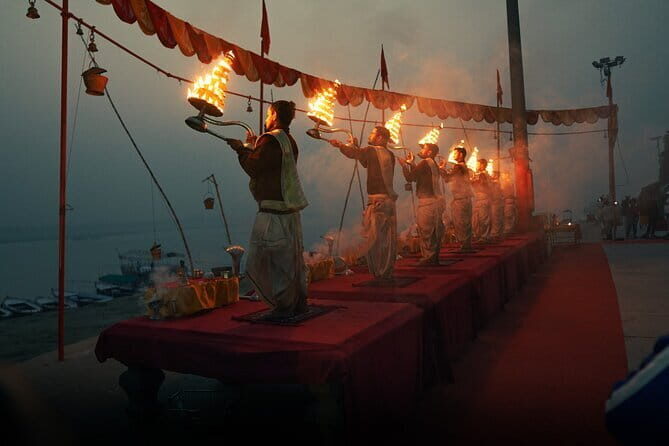
- Subah-e-Banaras at Assi Ghat: Sunrise aarti that feels quieter and more personal than the better-known evening vibe.
- Boat ride from Assi Ghat to Manikarnika Ghat: You watch river rituals from the water, with stories threaded through the sights.
- Ghat-to-cremation-ground storytelling: The guide connects rites with beliefs about life’s journey and moksha.
- Sourabh’s city-reading ability: Past guests mention his calm, well-mannered presence and strong storytelling skills.
- Off-trail temple access: Subterranean temples and private shrines behind unmarked doors (not just a standard guided circuit).
- Food stops that match the setting: Artisanal kachodi and chai at places vetted for local heritage value.
Subah-e-Banaras Sunrise at Assi Ghat: why this start works
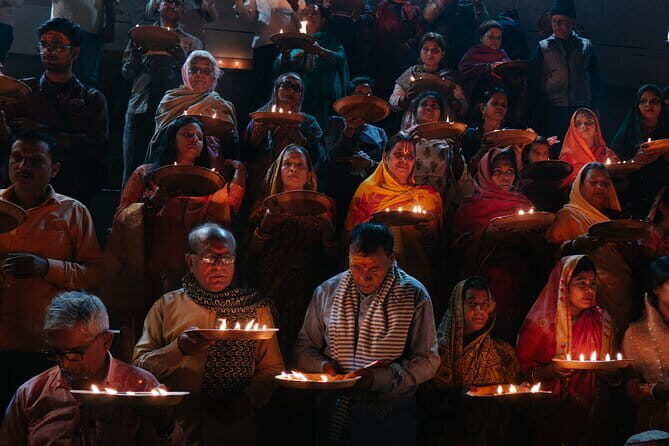
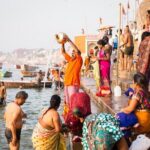
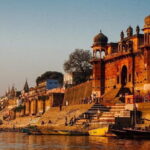
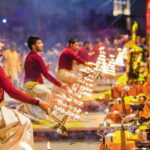
The day starts at Assi Ghat (Shivala), before the city fully turns on. You’re there for the morning version of the Ganga ritual—often called Subah-e-Banaras—and the difference is noticeable. Evening aartis can feel like a performance line. Morning is slower. It helps you actually watch: the rhythm, the coordination, the way people move with purpose while the river stays present in the background.
What I like about starting here is that the guide frames the aarti beyond candlelight and chanting. You’ll learn what the ritual is doing symbolically, and why the timing matters. The guide also sets you up to interpret iconography later on—so when you see temples, steps, and sculpted clues, you’re not just looking at shapes. You’re reading a language.
There’s also usually a short “context” phase built into the early area: an ancient stepwell and a chance to see a traditional akhada (a local training space). Those stops can feel small on a map, but they’re great for understanding how life in Kashi organizes itself around practice—water, discipline, and worship. It’s a reminder that Varanasi isn’t only about grand ceremonies. It’s about daily habits too.
Practical note: sunrise means cooler air and a steady morning pace. Still, you’ll be in a historic riverside area, so expect uneven steps and crowds nearby, even if your group experience stays manageable.
You can also read our reviews of more walking tours in Varanasi

The boat ride from Assi Ghat to Manikarnika Ghat: river-level meaning
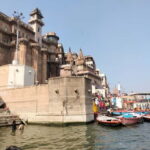
The centerpiece for many people is the boat segment: Assi Ghat to Manikarnika Ghat. This is the kind of move that instantly changes your understanding of Varanasi. On land, ghats can blur together. From the water, the river becomes the organizer—showing you how religious life lines the riverbank in layers.
The guide uses the ride time for storytelling. You won’t just glide past “pretty steps.” You’ll hear legends and historical threads tied to the ghats you’re seeing, plus context for what kinds of rituals happen there at different times. That matters because Varanasi’s ritual calendar isn’t random. It’s structured, and the guide helps you place each scene where it belongs.
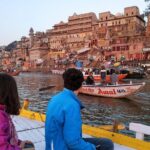
You also get a calmer way to watch the Ganga Aarti from the boat. The experience includes about 40 minutes with admission ticket coverage for the viewing portion. In plain terms: you’re watching without having to elbow your way into the densest viewing crush. You get the river breeze and a wider field of sight.
One thing to keep in mind: boat mornings can be visually intense. The river is active, people are moving, and the guide is talking. If you’re the type who gets overstimulated easily, plan to focus in short bursts—listen, look, then listen again. It’s doable, just don’t expect a quiet nature cruise.
Old-city footwork: stepwell, akhada, and reading symbols on the street
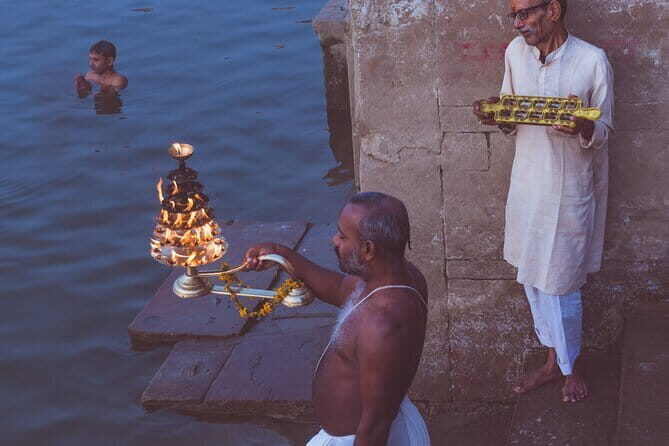
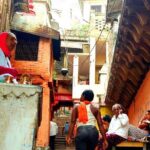
After the river segment, the walk leans into how Varanasi “works” as a city of religious meaning. You’re not only passing temples. You’re moving through the logic behind them: where spiritual life shows up in architecture, street layout, and everyday practice.
That’s where the stepwell stop earns its keep. A stepwell is more than a water feature. It’s built for use, community, and continuity. When the guide explains why these structures matter, you start seeing them as infrastructure for religious life—not just sightseeing stops.
The akhada piece is similar. Even if you don’t know anything about traditional training cultures, you’ll understand why these spaces sit within the broader spiritual world. It’s one of those rare chances to see a practice space that isn’t framed only for outsiders.
If your route includes additional known sites in the old city area, you may also hear stories tied to places like Kal Bhairav and Sankat Mochan, and in some cases even Sarnath-linked context depending on the timing and flow of the morning. The key point is that the guide connects names to meanings, so you don’t leave with a checklist—you leave with associations.
Cremation ground and moksha: what the guide helps you understand
One of the most powerful (and hardest) stops is the great cremation ground area. This is where Varanasi doesn’t hide behind pretty postcards. The guide helps you understand the rituals honoring life’s journey and the beliefs behind moksha—the idea of liberation from the cycle of rebirth.
A fair warning: this part isn’t presented as entertainment. You’ll be in a place where grief, devotion, and acceptance exist side-by-side. The value here comes from interpretation. Without a guide, many visitors miss what’s meaningful versus what’s merely visible.
What I’d recommend you keep in mind for this segment is your own expectations. If you come prepared to learn rather than just witness, the experience lands differently. You’ll likely come away with a clearer sense of why cremation rituals are approached with such deep spiritual structure.
Also: you might see a lot of motion. People working, performing, and moving through the space. Dress respectfully and keep your attention on what your guide is saying, not on trying to “photograph the experience.” This isn’t that kind of stop.
The leaning Shiva temple: architecture you can actually make sense of
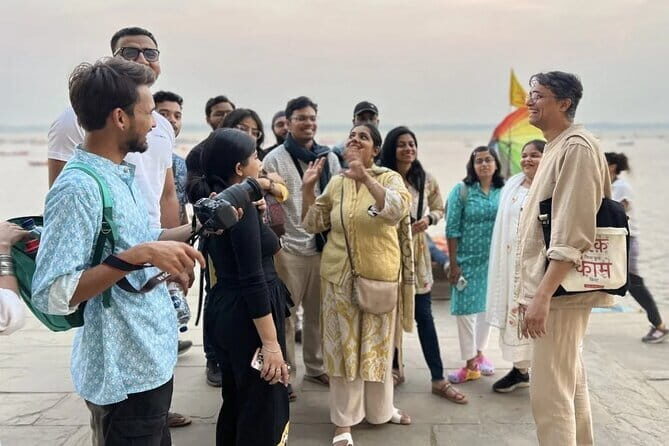
Another standout is a stop at the leaning temple dedicated to Lord Shiva. Leaning temples can sound like a trivia fact, but the guide treats the structure like a story problem. You’ll hear the legends and learn what makes the temple’s architecture unusual.
This matters because Varanasi’s sacred buildings are built to teach. Symbols, shapes, and construction details aren’t random ornament. When you’re given the right frame, you notice things you’d otherwise walk past: alignment, posture, and the way devotees interpret the structure as part of Shiva’s presence.
Expect the guide to tie the temple into the broader spiritual map you’ve been building since Assi Ghat. By the time you reach the leaning Shiva site, you’re usually ready to connect iconography to ritual themes you heard earlier.
You can also read our reviews of more boat tours in Varanasi



Quiet ghat moments away from the main crush
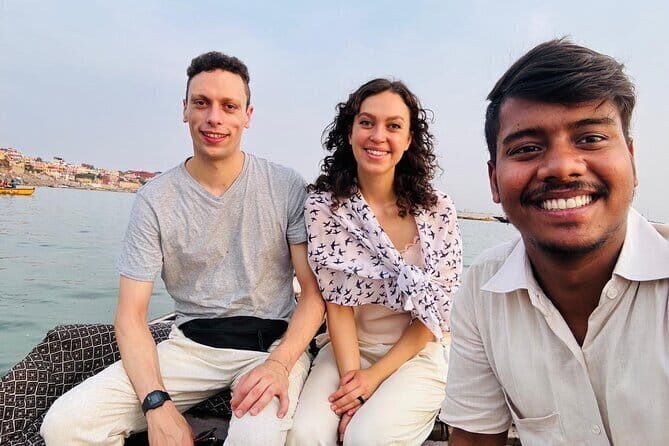
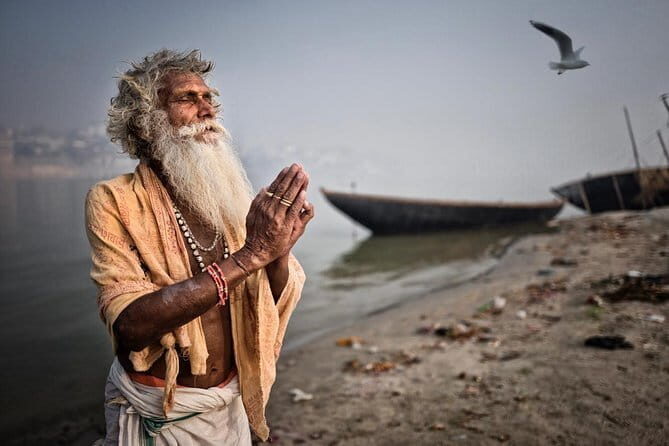
Between big-ticket moments, you’ll likely stop at a quieter serene ghat. This is the part that often feels most human: smaller-scale rituals, locals moving through routines, and a reminder that Varanasi isn’t only a spectacle. The guide’s narration helps you notice details you would normally miss—like how people pace themselves, how prayer fits into daily movement, and how the riverfront works as a social space.
If you’re hoping for a morning that balances intense spiritual moments with short pockets of calm, these quieter ghats are the glue. They stop the day from becoming only intense and make the overall experience feel more like a lived city.
Underground access: subterranean temples and private shrines
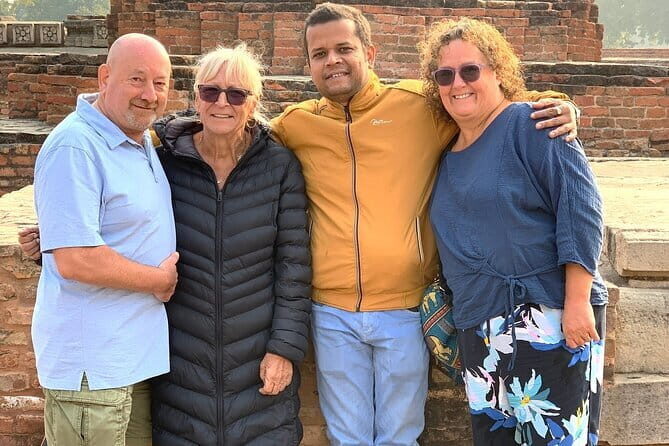
One of the biggest “premium” claims in this experience is underground access. You’ll enter subterranean temple spaces and private shrines hidden behind unmarked doors—places that aren’t meant for casual public access.
In practical terms, this is where you feel the difference between a standard city walk and a scholarly, locally protected experience. You’re stepping into spaces with older layers of devotion and architectural character that you won’t get from surface-level temple-hopping.
This is also where the guide’s scholarship matters. The experience isn’t only about seeing a cool door in a wall. You’re learning metaphysical layers and ritual logic tied to the sacred spaces you’re entering. Even if you don’t know Sanskrit, you’ll get the ideas in manageable pieces so the meaning lands instead of evaporating.
If you have mobility constraints, keep in mind this part may involve more steps or uneven access since it’s underground and architecturally older. The experience states that most people can participate, but underground spaces often change the comfort level.
Kachodi and chai: a taste stop that fits the story
Food in Varanasi can be great, but it’s easy to make it random. Here, the gastronomy portion is part of the design: you’ll taste artisanal kachodi and chai at stops vetted for local heritage value.
I like this approach because it turns eating into another learning channel. You’re not just grabbing caffeine before a walk; you’re getting a small, edible snapshot of the city’s sensory culture. And when a guide explains why certain food spots are favored locally, it helps you avoid the trap of eating only what’s most marketed to outsiders.
Given the morning schedule, this food segment usually helps you keep energy steady for the boat, the walking parts, and the emotional intensity of the cremation ground segment.
Price and timing: whether $78.96 feels fair
At $78.96 per person for about 3 hours, this is clearly not a “cheap morning stroll.” But the value isn’t only in the route length. The pricing reflects three things mentioned in the tour’s concept and supported by how people describe the experience:
- You get a guided interpretation level that goes beyond standard sight explanations.
- You’re paying for access that’s not typical—like the subterranean temple spaces behind unmarked doors.
- You’re also getting structured river time, plus included viewing elements for the aarti portion (boat viewing time is part of the plan).
The booking pattern (often made about 17 days in advance) suggests it’s popular with people who plan carefully. If you’re the type who likes to lock in your major moments early, this is the kind of experience worth scheduling sooner rather than later.
From a practical standpoint, you can also think of it like this: one morning boat-and-walk experience in a place like Varanasi can replace multiple separate hires (a basic walk + a river viewing + a deep-symbol guide). If you want interpretation and access, that bundling usually makes the price feel more reasonable.
Who should book this Varanasi at Dawn experience?
This is a good match if you:
- Want a sunrise start that feels more intimate than later crowds.
- Like learning the “why” behind rituals, temple symbols, and place names.
- Appreciate expert guidance that connects architecture and language to what you’re seeing.
- Value off-the-map access, not just standard highlights.
It may not be your best fit if:
- You prefer a light, sightseeing-only morning with minimal spiritual intensity.
- You feel uncomfortable around cremation-related spaces, even with respectful guidance.
- You don’t want any interpretation component and only want casual strolling.
You’ll also likely enjoy it more if you like to listen. This experience is built around a storyteller guide with a strong command of local meaning. From the accounts tied to Sourabh, the storytelling style seems central to what people remember.
Should you book it?
If your goal in Varanasi is to understand the city’s living spirituality—not just photograph it—this booking makes sense. The combination of Subah-e-Banaras at Assi Ghat, the boat ride to Manikarnika Ghat, the moksha framing at the cremation ground, and the underground shrine access gives you depth in only a few hours.
My call: book it if you want your morning to feel like education with emotion, guided by a real local storyteller such as Sourabh. Skip it if you’re only after easy views and you want to keep the experience strictly comfortable.
If you’re still deciding, remember the experience is private (your group only), uses a mobile ticket, and you can cancel for a full refund if you cancel at least 24 hours before the start time.
FAQ
How long is the Varanasi at Dawn experience?
It runs for about 3 hours.
Where does the tour start and end?
It starts at Assi Ghat, Shivala, Varanasi, Uttar Pradesh 221005, India and ends near Chowk Police Station on Maidagin Road, close to Hayarat Jahid Sahid Baba, Janpath, Bulanala, Varanasi, Uttar Pradesh 221001, India.
Is this tour private?
Yes. It’s listed as a private tour/activity, with only your group participating.
What’s included during the experience?
The plan includes a morning Ganga ritual viewing at Assi Ghat, a boat ride from Assi Ghat to Manikarnika Ghat with storytelling, and additional stops focused on key spiritual and architectural sites.
Is there a mobile ticket?
Yes, the experience includes a mobile ticket.
Is it suitable for most people?
The experience indicates that most travelers can participate.
What’s the cancellation policy?
Free cancellation is available. You can cancel up to 24 hours in advance for a full refund; within 24 hours, the amount paid is not refunded.