REVIEW · NEW DELHI
4-Day Luxury Golden Triangle Tour to Agra and Jaipur From Delhi
Book on Viator →Operated by Prime India Travel · Bookable on Viator
That first sunrise in Agra hits hard. This private 4-day Golden Triangle tour from Delhi to Agra and Jaipur mixes major monuments with real local texture, all handled in a comfortable, private AC car with a driver and live guide in each city. I also love that you get structured time at the big-ticket sights—especially sunrise at the Taj Mahal—so your day doesn’t feel like a frantic parking-lot scavenger hunt.
Two other clear wins: you’ll cover the big Mughal and Rajput hits without juggling transport, and the tour setup tends to keep the trip flowing smoothly, with people like driver Khan or Rajeev praised for clear communication and safe driving. One thing to watch: monument entry tickets and food are not included, so you’ll want to budget extra and plan meals on your own.
In This Review
- Key Highlights You’ll Care About
- 4 Days From Delhi: How This Golden Triangle Sprint Stays Comfortable
- Getting Oriented in Delhi: Qutub Minar and Humayun’s Tomb
- Old Delhi at Jama Masjid and Chandni Chowk: Big Sights, Real Street Life
- Agra From Delhi: What Sunrise at the Taj Mahal Really Changes
- Agra Fort and Itimad-ud-Daulah: Beyond the Main Event
- Fatehpur Sikri Day Trip: A Whole City Left Mid-Story
- Jaipur’s Fort-and-Palace Day: Amber, City Palace, Jantar Mantar, Hawa Mahal
- Price and Logistics: Is $290 Per Person Good Value?
- Tips to Make This Tour Feel Like a Win
- Should You Book This Golden Triangle Tour?
- FAQ
- What cities are included in this Golden Triangle tour?
- How long is the tour?
- What is the price per person?
- Is pickup and drop-off included?
- Is there a guide during the tour?
- Is accommodation included?
- Are monument entry tickets included?
- Is food included?
- What kind of ticketing and transport do I get?
- What is the cancellation policy?
Key Highlights You’ll Care About
- Sunrise Taj Mahal timing for that softer light and calmer feel
- Private AC car for the full route between Delhi, Agra, and Jaipur
- Live guide in each city, so you get context instead of just photos
- Old Delhi mix: Jama Masjid and Chandni Chowk in the same day
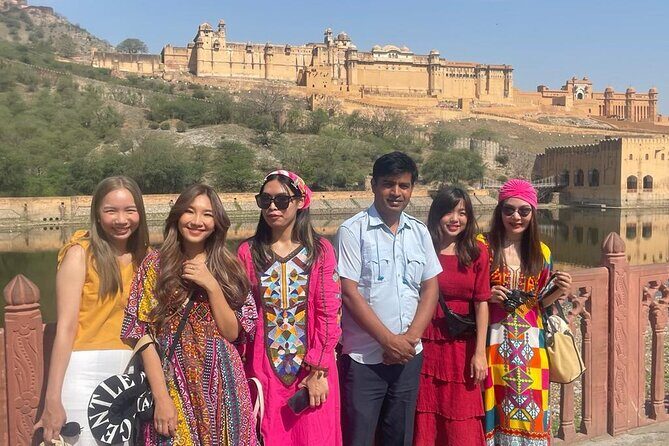
- Fort-and-palace day in Jaipur: Amber Fort, City Palace, Hawa Mahal, plus Jantar Mantar
- Itimad-ud-Daulah mentioned as part of the Agra experience for a great contrast to the Taj
4 Days From Delhi: How This Golden Triangle Sprint Stays Comfortable
A Golden Triangle tour is the classic India sampler: Delhi, Agra, Jaipur. The trick is doing it without turning your trip into a daily sprint with bad logistics. This one solves that with a private air-conditioned vehicle plus pickup and drop-off, so you’re not hunting rides or waiting on strangers.
You’ll also be in a group that’s just your party, not a giant coach herd. That matters because the pace can stay reasonable. And when you have a live guide, you can ask questions and adjust on the fly—without losing the whole day to confusion.
The “luxury” part here is mostly practical: clean car comfort, hotel nights, mineral water, tolls and parking handled, and guides riding the day with you. At this price point ($290 per person), it’s less about champagne and more about fewer hassles and better access to the sights you actually came for.
A few more New Delhi tours and experiences worth a look



Getting Oriented in Delhi: Qutub Minar and Humayun’s Tomb

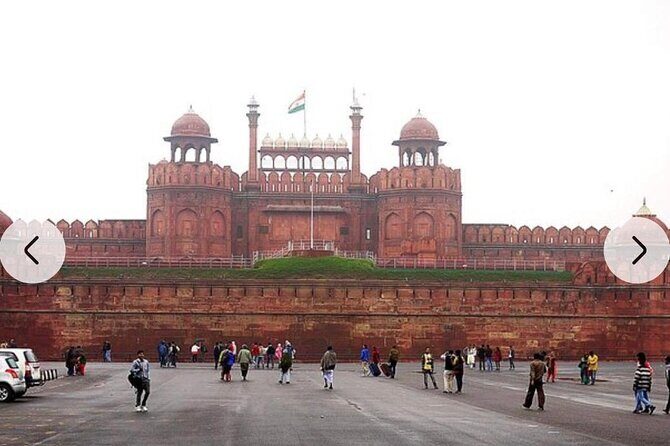
Delhi can feel like a lot on day one. The route here gives you a strong sense of scale fast, starting with Qutub Minar, the 73-meter red sandstone-and-marble minaret and a UNESCO site. It’s a vertical lesson in early Indo-Islamic architecture—five distinct stories, each marked by a balcony, with Quranic inscriptions carved into the tower.
Next comes Humayun’s Tomb, another UNESCO stop and a key Mughal-era milestone. The garden layout—the charbagh, meaning four-part garden—helps you slow down. White marble inlays over red sandstone, plus the Persian-style garden geometry, make it feel calmer than the surrounding city rush.
Practical tip: Delhi in the morning can still be bright and cool, then swing warmer quickly. Wear layers you can manage, and bring sun protection even if the day starts mild. If your guide points out the garden design while you walk, you’ll get more out of the time than you would just standing and taking photos.
Old Delhi at Jama Masjid and Chandni Chowk: Big Sights, Real Street Life
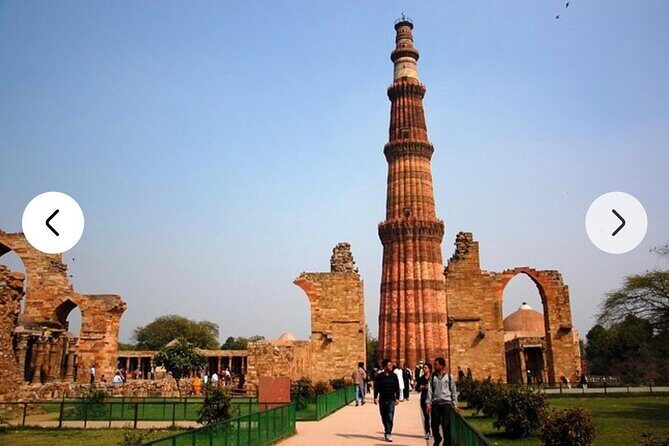
Old Delhi is where your trip stops being postcard-only. Jama Masjid is one of the largest mosques in India, built by Shah Jahan in the mid-1600s. You’re not just seeing a building—you’re seeing a place that can hold up to about 25,000 people in the courtyard. Inside, the marble carvings and Quran inscriptions add detail that’s easy to miss if you rush.
Then you move to Chandni Chowk, the Moonlight Market area built in the 17th century. The best part is how quickly it turns into sensory travel: narrow lanes, busy shopping streets, and street food options. Even if you only browse, it gives you that “this is daily life here” feeling.
One consideration: this part of Delhi can be crowded and loud. If you’re sensitive to noise or tight spaces, keep your route simple and don’t let shopping stall your timing. Your guide can help you walk through the area without drifting into chaos.
Agra From Delhi: What Sunrise at the Taj Mahal Really Changes
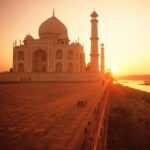
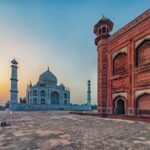
Then comes the moment everybody plans for: the Taj Mahal. You’re aiming for sunrise, which is smart. The white marble shifts color with light—pinkish in the morning, milky white later, golden under moonlight. Sunrise also tends to reduce the “everybody at once” feeling you might expect at peak hours.
As you walk in, focus on symmetry and detail rather than trying to memorize every inch. Look for the dome and the way the structure sits within its Mughal garden setting, with reflecting pools that help stretch the visuals. Your guide’s job here is huge: they can connect the architecture to why it looks so balanced, and what those inlays and carvings are doing visually.
Practical tip for comfort: you’ll likely start early, so expect a bit of morning chill even if the afternoon gets hot. Bring something light you can remove later. And if you get the chance, stay a little after your main viewing—seeing the marble change slightly as the sun lifts makes the whole thing feel more alive.
Agra Fort and Itimad-ud-Daulah: Beyond the Main Event
The Taj Mahal is the headline, but Agra has more to say. Agra Fort is a red sandstone fortress built by Akbar and used as Mughal residence after he made Agra a center of power. Inside, you’ll find a mix of palaces, mosques, and halls that blend Hindu and Islamic design cues.
The Jahangir Palace is one of the standout structures within the fort, and you can also look toward views from areas like the Khas Mahal, associated with Shah Jahan’s family and known for watching the Yamuna River. Even if you’re not a “fort person,” Agra Fort gives context for the Taj—because it shows how the court life worked around these monuments.
About Itimad-ud-Daulah: it’s included in the overall plan for Agra, and it’s a great choice because it’s often described as a smaller-scale masterpiece. Instead of the Taj’s sheer scale, you get intricate marble work and a different kind of elegance.
Tip: if time is tight, don’t try to conquer every room. Let your guide show you the main features that connect to the larger story of Mughal architecture. This is where a good guide saves you from standing in a hallway thinking, I guess I’m supposed to care.
A few more New Delhi tours and experiences worth a look


Fatehpur Sikri Day Trip: A Whole City Left Mid-Story

On day three you’ll visit Fatehpur Sikri, the abandoned Mughal city near Agra. It served as capital for a short stretch—1571 to 1585—and then was left behind, often linked in local storytelling to water issues. The result is that you get a very intact sense of an entire city’s layout, not just a single monument.
What you’ll notice right away is the architecture mix: Hindu, Persian, and Islamic influences all show up in one place. The Buland Darwaza—the Gate of Magnificence—is the famous anchor here, described as the tallest gateway in the world. Even if you’re not counting meters, you’ll feel it in your body: it’s big, dramatic, and it frames the city like a stage entrance.
Practical note: it’s a walking day. Wear comfortable shoes and plan to spend time, not sprint through. If your guide explains why Akbar’s court built this place and why it didn’t last, it clicks faster and feels less like walking through stone captions.
Jaipur’s Fort-and-Palace Day: Amber, City Palace, Jantar Mantar, Hawa Mahal
Jaipur is where the trip shifts from Mughal monuments to Rajput royal design. The day is packed, but it’s the right kind of packed—forts, palaces, and an observatory that most people skip.
Start with Amber Fort (also called Amer Fort). It’s built on a hilltop and known for its mix of red sandstone and marble plus Hindu and Mughal design elements. The ramps, gates, and cobbled paths all create a sense of movement up toward power. If you get to Sheesh Mahal (Mirror Palace), pay attention to the way mirrors catch light and scatter it around the interior.
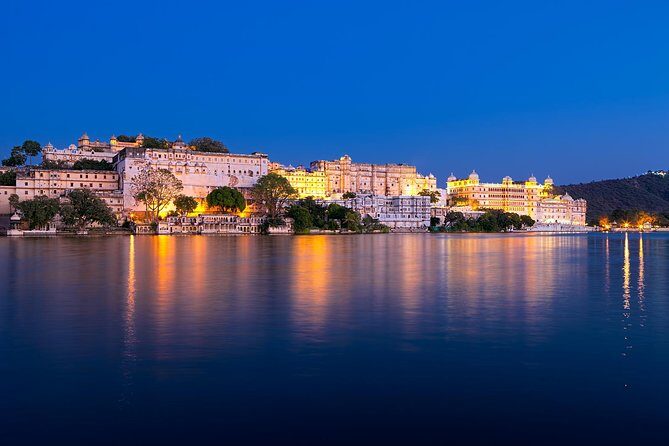
Then you move to the City Palace of Jaipur, a blend of Rajput and Mughal architecture. What makes it special is that it’s not just ruins or a single hall—it’s a complex of courtyards and buildings. The Chandra Mahal is a major highlight, described as seven stories and still connected to the royal family’s presence.
Next is Jantar Mantar in Jaipur, an astronomical observatory built by Maharaja Jai Singh II. The instruments were designed for naked-eye measurements—time, eclipse prediction, tracking stars’ locations, and measuring celestial altitudes. It’s the kind of stop that turns architecture into science, and it feels way more interesting when a guide explains how these stone instruments work as tools rather than just sculptures.
Finally, end with Hawa Mahal, the Palace of Winds. Built in 1799, it’s famous for the honeycomb-like exterior and 953 small windows (jharokhas) with intricate latticework. It’s a design that’s both decorative and functional—built so royal women could observe street life from behind the screens.
My advice: don’t treat Jaipur like a checklist. Pick a “focus mode” for each stop—look for symmetry at the fort, court life details at the palace, tool-like purpose at Jantar Mantar, and the façade pattern at Hawa Mahal. That keeps the day from feeling like photo-taking on repeat.
Price and Logistics: Is $290 Per Person Good Value?
At $290 per person, you’re paying for the “no-fuss” package: pickup/drop-off, a private AC car for the whole route, live guides in each city, mineral water, tolls and parking, and hotel nights with breakfast if you select that option. That’s not the cheapest way to do the Golden Triangle, but it can be a strong value if you want comfort plus knowledgeable direction.
Here’s how to judge the real math. Entry tickets for monuments are not included, and food is also not included. So your total trip cost will be higher once you add those. On the other hand, you’re not paying for separate guides or scrambling for transport between cities. If you’ve ever tried to coordinate Delhi-Agra-Jaipur under your own steam, you already know how quickly the time cost adds up.
The “luxury” claim largely shows up in the private vehicle and guided flow. For couples, small families, or anyone who hates wasting hours on logistics, this kind of pricing often makes sense.
Tips to Make This Tour Feel Like a Win
You’ll get the best experience when you plan for heat, crowds, and early starts.
- Start your day with energy. If sunrise is involved, treat that morning like a priority event, not a casual stroll.
- Bring water discipline. You get mineral water bottles included, but you’ll still want your own habits—especially in markets and fort areas.
- Build in meal flexibility. Since food isn’t included, you’re free to choose what works best for your taste, but you should plan lunch stops so you don’t get stuck hungry in transit.
- Listen for guide context. With live guides in each city, you’ll get far more than a photo tour if you ask one or two questions per stop.
- Wear shoes that handle stone, ramps, and uneven ground. Fort days do not care about your fashion choices.
Should You Book This Golden Triangle Tour?
If you want the classic Delhi-Agra-Jaipur highlights without the stress of arranging transport and interpretation, I’d say this is a solid fit. The biggest reasons are simple: private AC car comfort, live guides in each city, and the smart choice of putting your money/time into major monuments like the Taj Mahal at sunrise.
I’d hesitate only if you’re the type who loves DIY planning and doesn’t mind spending your trip energy on navigation, ticket lines, and figuring out meal timing. In that case, you might find cheaper options, but you’ll likely trade away convenience.
Based on the provider’s reputation for smooth driving and friendly communication (names like Khan, Rajeev, and Imran show up associated with these tours), this seems especially good for first-timers who want safety, clarity, and a confident pace.
FAQ
What cities are included in this Golden Triangle tour?
The tour covers Delhi, Agra, and Jaipur. It also includes a visit to Fatehpur Sikri near Agra.
How long is the tour?
It runs for 4 days (approximately).
What is the price per person?
The price is $290.00 per person.
Is pickup and drop-off included?
Yes. Pickup and drop-off are included.
Is there a guide during the tour?
Yes. A live tour guide is provided in each city.
Is accommodation included?
Accommodation is included if you select the option that includes a 3-star hotel with breakfast.
Are monument entry tickets included?
No. Monuments entry tickets are not included.
Is food included?
No. Food is not included.
What kind of ticketing and transport do I get?
You get a mobile ticket, and you travel the tour in a private AC car for the entire activity.
What is the cancellation policy?
You can cancel up to 24 hours in advance for a full refund. If you cancel less than 24 hours before the start time, the amount paid is not refunded.