REVIEW · NEW DELHI
3-Day Luxury Golden Triangle Tour: New Delhi, Agra & Jaipur
Book on Viator →Operated by Aiza tours · Bookable on Viator
Golden Triangle in three days, with real breathing room. This private loop strings together Delhi, Agra, and Jaipur using a private, air-conditioned car and live guides who can tailor the pace to you.
I especially like the way the plan mixes headline monuments with street-level Delhi, like the Old Delhi rickshaw ride and the spice-market stop near Khari Baoli. I also like that you’re not just dropped off: you get a uniformed driver for the long hops and a guide in each city to explain what you’re looking at while you move.
The main drawback is that it’s still a tight schedule. You’ll be in the car a lot, and the early wake-up for sunrise Taj Mahal is non-negotiable if you want the best light.
In This Review
- Key highlights worth packing for
- Private car, dressed driver, and guides who keep the day moving
- Delhi day: India Gate, Gandhi at Raj Ghat, then into Old Delhi
- Chandni Chowk and Khari Baoli: the smells, the craft, and the fast pace
- UNESCO Mughal landmarks: Humayun’s Tomb to Qutub Minar
- Day two in Agra: the sunrise Taj Mahal advantage
- The drive via Fatehpur Sikri: a worthwhile stop if timing allows
- Jaipur’s Amber Fort: hilltop views and iconic fort geometry
- Jaipur’s royal circuit: Gaitore, City Palace, Jantar Mantar, Hawa Mahal
- Patrika Gate: the modern photo stop that still tells you something
- Guides and pacing: what “private” feels like on the ground
- Price and value: $105 is the easy part; the real cost is time and tickets
- Who should book this 3-day luxury Golden Triangle tour?
- Should you book it?
- FAQ
- What cities are included in this Golden Triangle tour?
- How do pickup and transport work?
- Is this tour private or shared?
- Do you include a rickshaw ride?
- Is the Taj Mahal visit included, and do you go at sunrise?
- Are monument entrance fees included in the price?
- Do I get a hotel for the trip?
- Can the itinerary be customized?
- What if my tour’s second day falls on a Friday?
- Is free cancellation available?
Key highlights worth packing for
- Sunrise timing at the Taj Mahal (early pickup and battery bus access for the walk-in)
- Old Delhi orientation by rickshaw plus a stop at Khari Baoli’s wholesale spice market
- UNESCO-heavy route from Humayun’s Tomb to Qutub Minar
- Local guides in each city, with named guides from past departures like Adin, Rajesh Singh, and Faizan Hussain
- Hotel choice built in (3-, 4-, or 5-star options) with breakfast when you book the stay
Private car, dressed driver, and guides who keep the day moving

This is a “do the Golden Triangle without losing your mind” kind of tour. The structure matters: you get a private, air-conditioned vehicle with a uniformed driver, plus a live guide service at the key stops. That combo is the difference between wandering and actually understanding what you’re seeing.
For you, that means fewer bottlenecks. A big chunk of North India sightseeing is logistics—where to enter, what to prioritize, when to move, and how to read the buildings. Here, the guide’s job is to make those choices feel simple, so the schedule stays realistic even when you’re bouncing between three cities.
There’s also genuine flexibility. The tour is private (only your group), and the format is meant to be customizable. If you want more time at a monument that’s grabbing your attention, or you’d rather skip something that doesn’t fit your style, you’re not stuck in a rigid bus-tour script.
One practical note: entrance fees are not included in the headline price. The tour lists an entrance-fee total of about $65 per person, so budget for that day-of planning.
A few more New Delhi tours and experiences worth a look



Delhi day: India Gate, Gandhi at Raj Ghat, then into Old Delhi
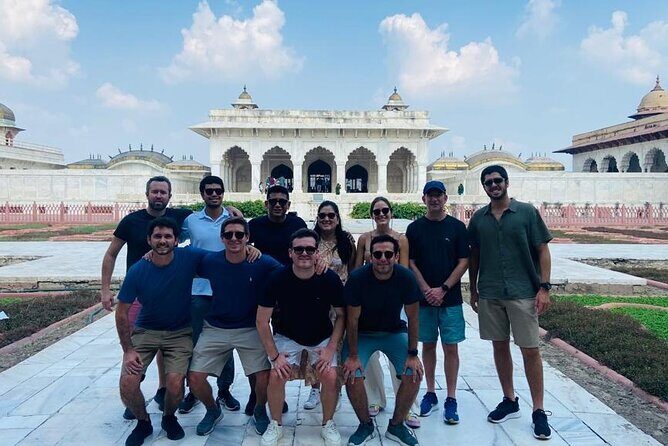
Delhi works best when you treat it as two cities. On day one, you start in the newer, formal layout of Lutyens’ Delhi—India Gate, the war memorial area, and Rashtrapati Bhavan—then pivot toward Old Delhi’s older lanes.
India Gate is a good opener because it gives you a quick sense of how Delhi was planned and what the city looks like when it’s not chaotic. Then you shift to Raj Ghat, the memorial of Mahatma Gandhi, set among serene gardens. It’s quieter than the markets that come later, and it helps your brain reset before you head into the busy bazaars.
After that, you move into Chandni Chowk, one of Delhi’s oldest and busiest market areas (dating back to the 17th century). This is where the tour stops being just “sightseeing” and starts becoming cultural orientation.
The Old Delhi rickshaw ride—built into the plan—makes that transition feel immediate. It’s a short thrill with a purpose: you see how the lanes are structured and you get a feel for the rhythm of the area without walking every step.
Chandni Chowk and Khari Baoli: the smells, the craft, and the fast pace
Chandni Chowk is the classic Delhi market experience, and the itinerary doesn’t waste your time. You’re not just passing by; you’re given about an hour there, which is enough to get your bearings and actually look around.
Just up the way is Khari Baoli, known as Asia’s largest wholesale spice market and operating since the 17th century. It’s a sensory stop—spices, stacked goods, and constant trade activity. The practical value here is understanding the supply side of what you’ll see across North India: markets like this are why food, perfumes, and home remedies are so tightly woven into daily life.
The tour also includes Jama Masjid, one of India’s biggest and most impressive mosques, built by Emperor Shah Jahan between 1644 and 1656. This is where you start noticing how Mughal-era design created visual balance at massive scale—arches, courtyards, and symmetry that holds up even when the area is busy.
Quick heads-up for your planning: Old Delhi is active. If you’re the type who gets tired by crowds, wear comfortable shoes and accept that this day is partly about moving through energy, not about slow museum time.
UNESCO Mughal landmarks: Humayun’s Tomb to Qutub Minar
After Old Delhi, the route climbs into UNESCO territory with Humayun’s Tomb and Qutub Minar. This isn’t random. It’s a smart arc: you go from markets and living streets to monumental tomb architecture where the details reward your attention.
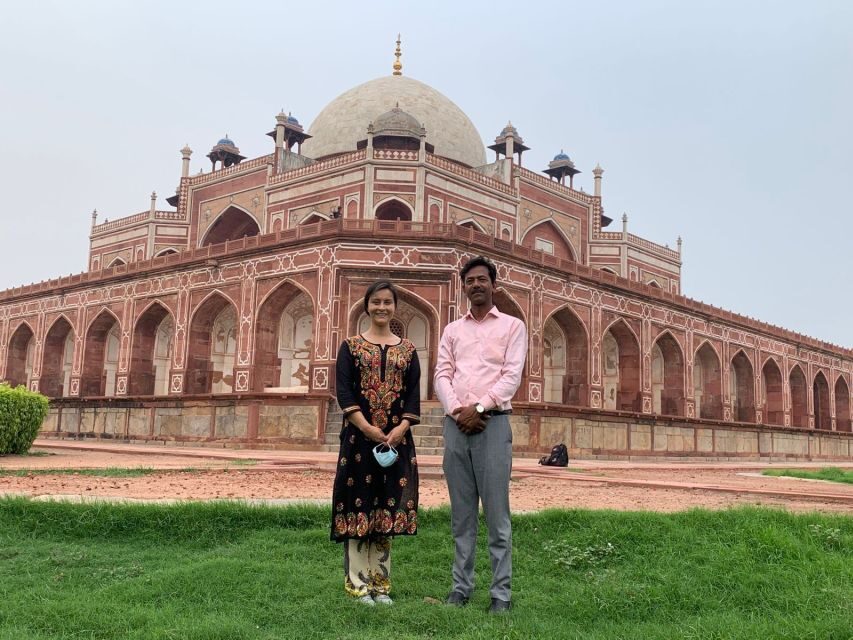
Humayun’s Tomb is a UNESCO World Heritage Site and one of Delhi’s most stunning Mughal-era monuments. Built in 1570 by Empress Bega Begum, it’s the kind of place where you understand why symmetry and garden layouts matter in Mughal design. Even if you don’t memorize every architectural term, you’ll come away with a visual “aha” about how power expressed itself in stone and water features.
Then Qutub Minar enters the picture. This UNESCO-listed minaret is famous as the tallest brick minaret in the world, built by Qutb-ud-din Aibak (with the broader Qutb complex tied to early Indo-Islamic rule). The practical benefit of visiting it on day one is timing: your first exposure helps you spot styles you’ll see again later, especially once you reach Agra and Jaipur.
The tour then includes the Lotus Temple, a Baha’i House of Worship known for its lotus-shaped architecture and calm atmosphere. It’s a good contrast after all the masonry and street noise—more like a reset button.
Day two in Agra: the sunrise Taj Mahal advantage

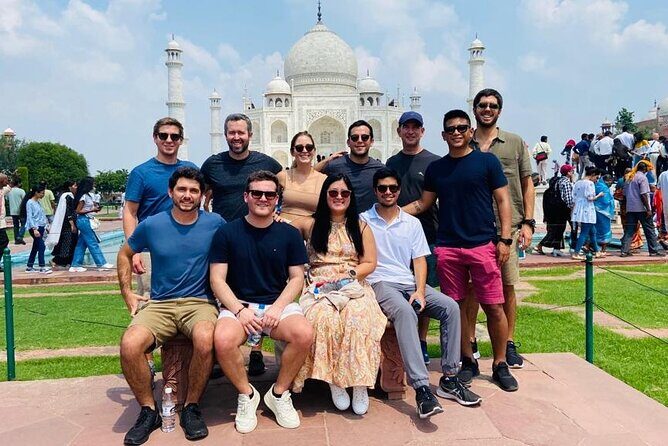
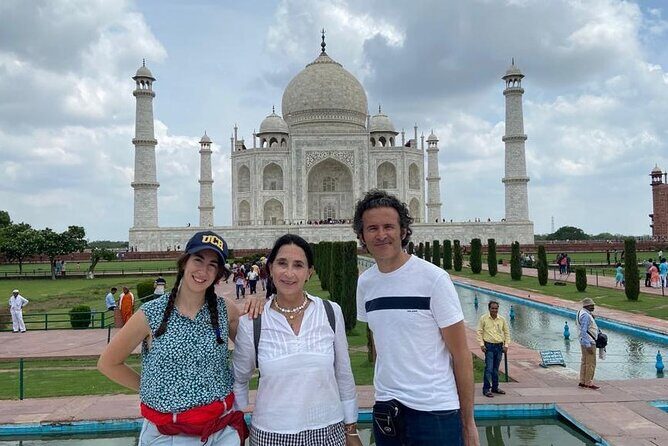
If you do the Golden Triangle and skip sunrise at the Taj Mahal, you’re leaving something big behind. This tour builds the sunrise experience into the plan with an early pickup around 6:00 AM, plus guidance and transport arranged so you can reach the site in time.
At sunrise, the Taj Mahal changes. The white marble doesn’t just look bright—it looks alive, with shadows and tonal shifts across the façade. You also avoid some of the day’s peak crowds, which makes the experience feel more personal even though it’s still a world-famous monument.
There’s one more detail that makes this work in real life: battery bus transfers from the parking area up to the monument zone. That saves your legs for the part that matters—standing where the view hits, looking back at the gardens, and taking your time with the details.
After Taj Mahal, the itinerary moves to Agra Fort (UNESCO-listed). You’re given about an hour here. That’s enough to walk the main areas with context, and also enough time to not feel like you’re sprinting just to check boxes.
Then you get the drive to Jaipur for an overnight stay. This is where you’ll feel the “three cities in three days” reality—plan to use the car time to rest, not to work.
A few more New Delhi tours and experiences worth a look




The drive via Fatehpur Sikri: a worthwhile stop if timing allows
En route to Jaipur, the plan includes a stop at Fatehpur Sikri, described as a historic Mughal capital that once flourished. Even with limited time, it’s a compelling contrast to Agra and Jaipur because it sits in the middle of the story of Mughal ambition.
You don’t get hours and hours here, so you’ll want to go in with the right expectation: treat it as a quick scene-setting. A guide helps a lot because the value isn’t just the buildings—it’s understanding why this place mattered, and why it didn’t stay as the center forever.
If you’re the type who loves architecture, this short pause can feel like a “bridge moment” that makes the rest of the trip click.
Jaipur’s Amber Fort: hilltop views and iconic fort geometry
Jaipur is where the trip becomes more dramatic visually. The day’s plan includes Amber Fort (Amer Fort), one of Jaipur’s most famous landmarks. It sits on a hilltop overlooking Maota Lake, and that location is part of the experience—you’re looking out at the city’s story from above.
Amber Fort is known for its architecture and intricate carvings. You’re given about two hours, which is a solid window to wander through the major spaces without feeling rushed.
A small but important detail: Jal Mahal (Water Palace) is included as a stop, but entry is prohibited. That might sound disappointing, but it’s also honest. You still get the key photo-view perspective and learn why the palace sits where it does in the Man Sagar Lake setting. If you’re a detail lover, the surrounding design and the way it interacts with the water are worth the stop even without entry.
Jaipur’s royal circuit: Gaitore, City Palace, Jantar Mantar, Hawa Mahal
Once you’re in Jaipur’s core sights, the itinerary makes a strong case for seeing different sides of the city instead of repeating the same type of attraction.
Gaitore Ki Chhatriyan is included for cenotaphs with Rajput and Mughal architectural styles. You’re shown highlights like the white marble chhatri associated with Maharaja Sawai Jai Singh II and its carved, floral decoration. This is a good change of tempo: you get artistry and symbolism without the same crowds as the biggest main entrances.
Then comes the City Palace, described as a blend of Rajput, Mughal, and European architecture. City Palace works best when you think of it as living history. You’re there long enough—about two hours—to understand the “why” behind the layout and not just snap photos.
Jantar Mantar follows, a UNESCO World Heritage Site and the world’s largest stone astronomical observatory (as the tour describes). This is where your guide can turn sightseeing into comprehension. Instead of treating it like a monument, it becomes a lesson in how rulers measured time and the sky.
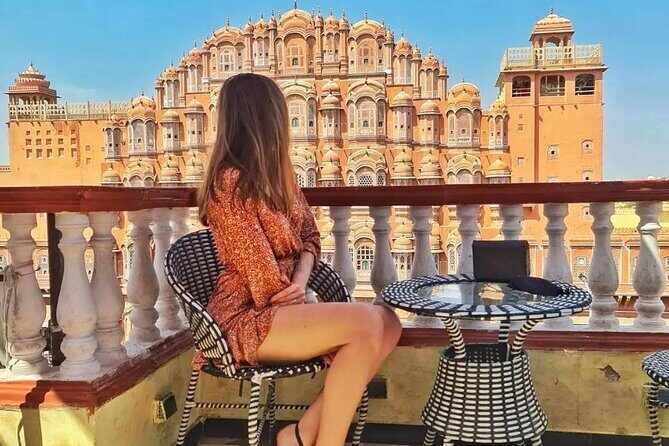
And yes, Hawa Mahal is on the agenda. Built in 1799 by Maharaja Sawai Pratap Singh, it’s famous for its 953 intricately carved jharokhas (windows). The practical magic of Hawa Mahal is that it gives you Jaipur’s face—hour after hour, it looks different as light changes across those carved openings.
Patrika Gate: the modern photo stop that still tells you something
The tour ends with Patrika Gate, located at the entrance of Jawahar Circle Garden. It’s described as one of Jaipur’s most photographed landmarks, with vibrant hand-painted interiors.
This stop might feel like the “fun” part, but it’s also useful. It shows Jaipur isn’t only past glory. The city still uses bold decorative design, and you get a clean contrast to the older palaces and observatories before you head back.
Even if you don’t plan on taking dozens of photos, this final stop helps close the loop. You leave Jaipur with a sense of both heritage and modern style.
Guides and pacing: what “private” feels like on the ground
One of the best parts of this kind of tour is how it feels when you’re not stuck waiting for a group. With a private setup, you can actually use the guide’s expertise in real time.
Past participants have specifically highlighted guide names like Adin in Delhi, Rajesh Singh in Jaipur, and Faizan Hussain in Agra. The consistent thread in feedback is that the guides are quick to answer questions and flexible about priorities, which matters a lot on a short itinerary.
The other pacing win: you get built-in transport support for the heavy legs. You’re not doing Taj Mahal on your own, guessing about parking and shuttles. The plan includes battery bus rides, and the whole day is structured so you can spend energy where it counts—on the monuments themselves, not on chasing directions.
Your takeaway: if you like structured days with a bit of freedom, this tour’s setup matches your style.
Price and value: $105 is the easy part; the real cost is time and tickets
At $105 per person, the price can look like a deal, and the value comes from what you’re actually buying: private air-conditioned transport, a dressed driver, hotel support if you choose that option, and guided interpretation across multiple UNESCO sites.
But it’s not a true all-in-one price. Entrance fees are listed separately at about $65 per person. Meals besides breakfast aren’t included either. Also, hotel cost depends on your chosen star level (3-, 4-, or 5-star options), and the two-night stay with breakfast is included only if you book the accommodation option.
So here’s the honest math you should do: if you already know you want a guided Golden Triangle and you hate logistical guesswork, this format usually pays off. If you’re trying to go ultra-budget or you want to spend long hours unstructured in one place, then the entrance fees plus hotel adds up, and you might find more freedom by building your own plan.
Who should book this 3-day luxury Golden Triangle tour?
This tour fits best if you:
- want a first-time Golden Triangle itinerary with strong guidance
- have limited time and want you-and-your-group pacing
- care about sunrise Taj Mahal timing and comfort between cities
- like a mix of monuments and real local neighborhoods (Old Delhi markets included)
It may not be ideal if you:
- hate early mornings (the sunrise start is a major anchor)
- prefer slow travel and long museum-style stays
- want every stop to be a deep, unhurried exploration (this is a “highlights with context” format)
Should you book it?
I’d book this if you want your three days to feel efficient but not chaotic. The combination of private transport, live guides across all three cities, and the built-in Taj Mahal sunrise timing is the core strength here. Add the Old Delhi rickshaw ride and Khari Baoli spice market, and you get more than post-card history.
If you hate paying extra on the spot, check your entrance-fee expectations first (about $65 per person is listed) and budget for meals beyond breakfast. Otherwise, this is a very sensible way to see Delhi, Agra, and Jaipur without turning your trip into a logistics project.
FAQ
What cities are included in this Golden Triangle tour?
It covers New Delhi, Agra, and Jaipur. You also get a return journey from Jaipur back to Delhi.
How do pickup and transport work?
You’ll be picked up from your hotel, airport, or another desired location in Delhi, Noida, or Gurugram, and travel in a comfortable air-conditioned private car with a uniformed driver. Pickup and drop-off are included.
Is this tour private or shared?
It’s a private tour/activity, and only your group participates.
Do you include a rickshaw ride?
Yes. The tour includes a rickshaw ride in Old Delhi around Chandni Chowk.
Is the Taj Mahal visit included, and do you go at sunrise?
Yes. The plan includes a sunrise visit to the Taj Mahal, with a pickup around 6:00 AM. The tour also includes battery bus rides to and from the parking area up to the Taj Mahal monument zone.
Are monument entrance fees included in the price?
No. Entrance fees are not included, and the tour lists entrance tickets at about $65.00 per person.
Do I get a hotel for the trip?
Hotel accommodation is optional. You can choose 3-, 4-, or 5-star hotels, and the tour includes 2 nights with breakfast if you book the hotel option.
Can the itinerary be customized?
The tour is described as customizable to suit your needs, and various tour options are available to match your budget.
What if my tour’s second day falls on a Friday?
If there is Friday on the 2nd day of the tour, the itinerary is switched into a Delhi–Jaipur–Agra–Delhi order. If you booked your hotel on your own, you’re asked to message for the revised itinerary.
Is free cancellation available?
Yes. You can cancel up to 24 hours in advance for a full refund. Within 24 hours, the amount paid is not refunded.