REVIEW · MUMBAI
4 Day Golden Triangle Tour to Delhi Agra and Jaipur From Mumbai
Book on Viator →Operated by Imperial Holidays · Bookable on Viator
Four days. Three capitals. One efficient route. This private Golden Triangle package strings together Mumbai, Delhi, Agra, and Jaipur with round-trip flights and guided sighting so you don’t spend your trip chasing logistics.
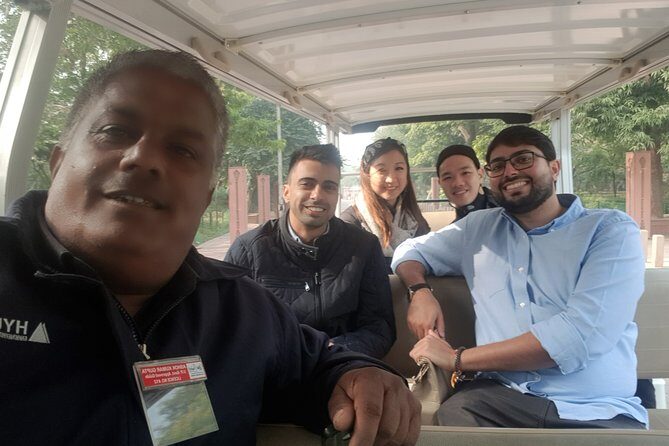
I like two big things right away: the sunrise Taj Mahal visit (with the battery shuttle to save your legs) and the fact you have local guides plus careful drivers in each city. One driver highlighted in past experiences was Mr. Singh, and people also praised guide-and-camera help from Rashid Bhai.
One consideration: the schedule is tight and can feel early and full—and a few past guests noted that some guides’ English accents can be hard to catch.
In This Review
- Key Highlights You’ll Actually Feel
- Four Cities in Four Days: How This Route Works
- Mumbai Before You Fly: Gateway of India to Dhobi Ghat
- Delhi on a Tight Clock: Qutub Minar, Lotus Temple, and Stepwell Shadows
- Agra at Sunrise: Taj Mahal Tickets and the Battery Shuttle
- Jaipur’s Forts and Palaces: Amber Views to Jantar Mantar Geometry
- What You’re Paying For: Value Beyond the Price Tag
- Comfort and Timing Tips (So the Route Feels Good)
- Should You Book It?
- FAQ
- What’s included in this Golden Triangle tour?
- Are flights included?
- Do I need to buy entrance tickets for the monuments?
- What meals are included?
- Is the Taj Mahal visit scheduled for sunrise?
- How are rooms handled for groups of three?
Key Highlights You’ll Actually Feel
- Sunrise Taj Mahal timing, plus a battery shuttle from parking to the entrance and back
- Private guiding in each city, not a mixed group bus rhythm
- A full Mumbai day before you fly to Delhi (Gateway of India, Dhobi Ghat, CST, Marine Drive)
- UNESCO hits across the route: Qutub Minar, Agra Fort, Jantar Mantar
- Amber Fort + City Palace in Jaipur, with multiple viewpoints over the old city
- Strong on-the-ground support, including quick WhatsApp-style communication noted in past experiences
Four Cities in Four Days: How This Route Works
The Golden Triangle is famous for a reason: you’re stacking India’s big-name sights—fast. What makes this version easier is the structure. You’re picked up, dropped off, and moved between cities with private transport, plus domestic flights built in so you’re not burning whole days on trains.
I also like that it’s set up as a true private tour for your group, with licensed local guides. That matters when you’re touring places that are crowded, have layered meaning, or need context to make the time worthwhile. In a tight itinerary, good guidance helps you skip the “I’m here, now what?” feeling.
The pacing is still intense. You’re doing major monuments, then moving to the next city the same day more than once. If you’re the type who wants long museum breaks or lazy afternoon naps, you’ll feel rushed. If you want maximum classic sites with less hassle, this is built for you.
A few more Mumbai tours and experiences worth a look

Mumbai Before You Fly: Gateway of India to Dhobi Ghat

Day 1 is a real intro to Mumbai—less “checklist monuments,” more a snapshot of how the city looks and moves.
You start at the Gateway of India, the iconic arch by the Arabian Sea. It’s tied to the early 20th-century era and the commemoration of a British royal landing. Even if you’re not a history nut, this stop gives you orientation fast: sea views, the promenade energy, and the feeling of arriving in a major port city.
From there, you head to Mani Bhavan Gandhi Museum, Gandhi’s former residence turned into a museum. If you want a calmer moment after being outdoors, this is your reset. It’s also a reminder that India’s story isn’t only monuments on postcards.
Next comes a mix of architecture and everyday life:
- Chhatrapati Shivaji Maharaj Vastu Sangrahalaya (a major museum stop on the route)
- Jain Temple in Mumbai
- Chhatrapati Shivaji Terminus (CST), a UNESCO railway station with Victorian Gothic architecture
- Kamala Nehru Park for panoramic views toward Marine Drive
Then you hit Dhobi Ghat, described as the world’s largest open-air laundry. It’s not a “museum moment.” It’s active, loud, and visual. If you’re sensitive to crowds or prefer controlled lighting for photos, you may want to keep your visit short and focused.
You also stop at Crawford Market, a busy local market, and Banganga, a sacred water tank area that’s more low-key than the headline stops. The value here is variety: you’re seeing Mumbai as a living city, not only tourist scenery.
Finally, after sightseeing, you’re transferred to Mumbai airport for the evening flight to Delhi. That timing is practical. It saves you from an extra night in transit, and it means Day 2 starts fresh.
Delhi on a Tight Clock: Qutub Minar, Lotus Temple, and Stepwell Shadows
Delhi is where the tour balances big landmarks with calmer breathing spaces.
You begin with Qutub Minar, a UNESCO World Heritage site and one of the strongest symbols of Indo-Islamic architecture. The minaret is tall and dramatic, and the surrounding complex gives context for why this area matters. Plan on a full hour here, because you’ll want time for both wide views and close details.
Then you move to the Lotus Temple. It’s famous for the lotus-shaped design and the quiet feel. Even if you’re not religious, you’ll appreciate the shift in pace after Qutub Minar—this is the kind of stop where your mind slows down for a bit.
India Gate follows, a war memorial where you can pause and take in the scale of Delhi’s ceremonial spaces. It’s also a good waypoint for photos, especially when the light isn’t too harsh.
The tour then includes a stop by Parliament House (mostly exterior viewing time). It’s not a deep time sink, but it connects the monuments to the modern face of India.
The standout offbeat stop is Agrasen Ki Baoli, a historic stepwell measuring about 60 meters long and 15 meters wide. This place feels like a pocket—cooler, quieter, and visually different from the big street monuments. If you’re into atmospheric architecture, this is one of the best “stop and slow down” moments of the entire route.
After Delhi sightseeing, you drive to Agra via Yamuna Expressway (about 3.5 hours). The trip time matters because it sets the tone for Agra: you arrive, check in, and don’t try to cram sighting that night.
Agra at Sunrise: Taj Mahal Tickets and the Battery Shuttle
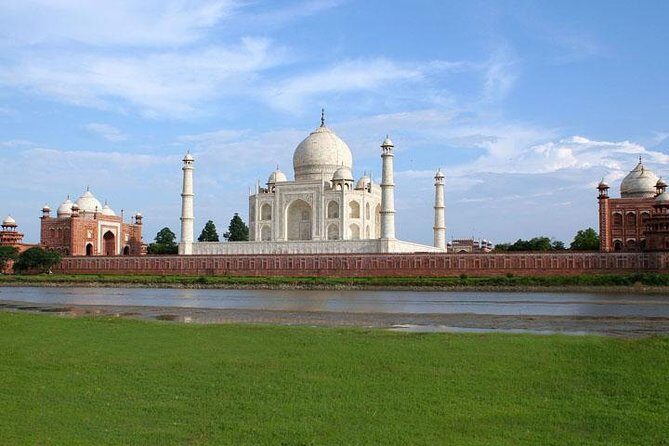
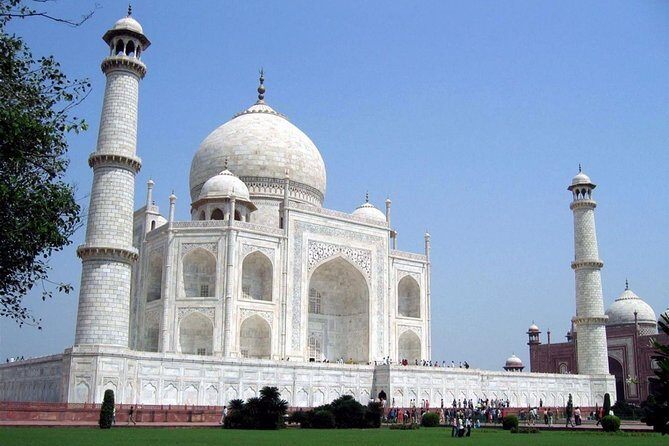
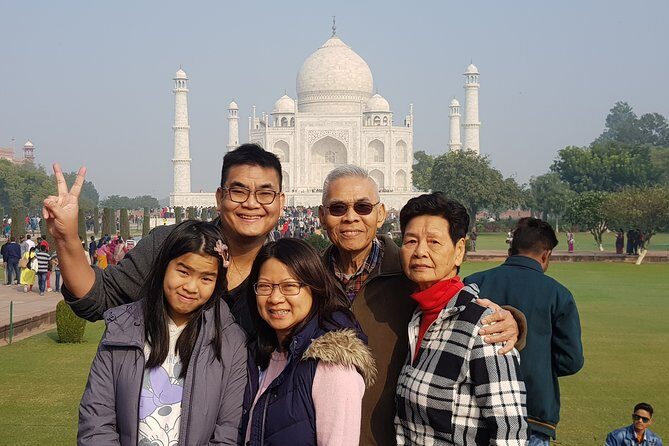
Agra is where the itinerary earns its hype. The tour starts your day at sunrise for the Taj Mahal. That’s not just romantic timing. It’s practical: earlier hours can mean more comfortable temperatures and fewer crowds than later in the day.
The Taj Mahal visit is scheduled for around two hours, and the admission ticket is included. You’ll also get a battery-operated shuttle from the parking area to the entrance and back. That small detail matters in a tour like this because walking time adds up fast across four days.
After the main event, you visit:
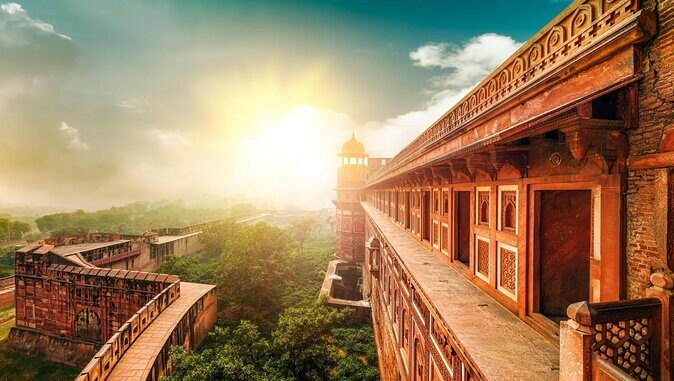
- Agra Fort (about one hour; admission included)
- Itmad-ud-Daula (often considered a draft-like precursor to the Taj Mahal; about 30 minutes; admission included)
Agra Fort adds the story behind the setting—power, walls, and the Mughal era’s military and administrative side. It’s also a chance to see Agra beyond the Taj silhouette.
Itmad-ud-Daula is a favorite for detail lovers. You’re trading some “big wow” for close craftsmanship and a calmer pace. If your brain is overloaded by day-three intensity, this stop helps balance the day.
Then you drive onward to Jaipur (around 4.5 to 5 hours). It’s a long road day, but the route is built to keep you moving without wasting time.
Jaipur’s Forts and Palaces: Amber Views to Jantar Mantar Geometry
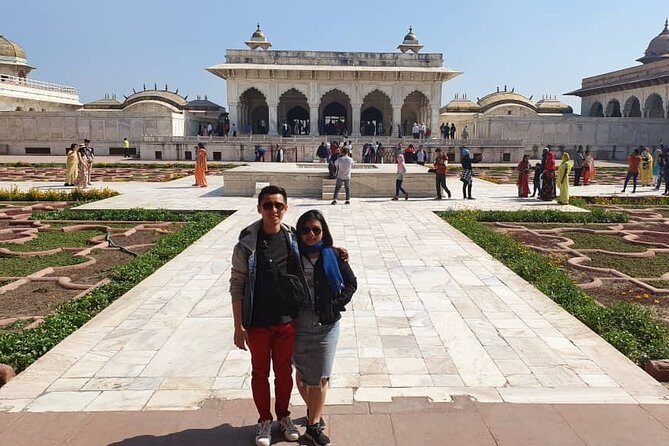
Jaipur is designed like a greatest-hits reel, but it’s not only pretty buildings. Each stop shifts the way you understand the city.
You start with Amber Fort, a hilltop fort and the day’s anchor stop. It’s scheduled for around two hours with admission included. The payoff here is the combination of architecture and altitude: you get wide views and strong photo angles. The fort is also physically bigger than it first looks, so time matters.
Next comes Panna Meena ka Kund, a small stepwell stop (about 15 minutes). It’s compact, but it adds variety after Amber’s scale.
Jal Mahal follows—often photographed because it appears like a palace floating on Man Sagar Lake. This stop is short (about 15 minutes), and it’s mostly for the viewpoint.
Then you move to Gaitore Ki Chhatriyan, royal cenotaphs with intricate carved work. This is where Jaipur’s decorative style becomes more than eye candy; it’s craft.
After that, you visit City Palace of Jaipur, a grand complex mixing Rajasthani and Mughal architecture. This is one of the longest interior stops on Day 4 (about two hours). It helps you understand why Jaipur looked like it did—planned power, palace life, and design language in one place.
You finish with Jantar Mantar, an astronomical observatory and UNESCO site (about one hour). This is geometry made visible. If you’ve ever been curious how people tracked time and celestial motion before modern instruments, this is a satisfying way to connect art and science.
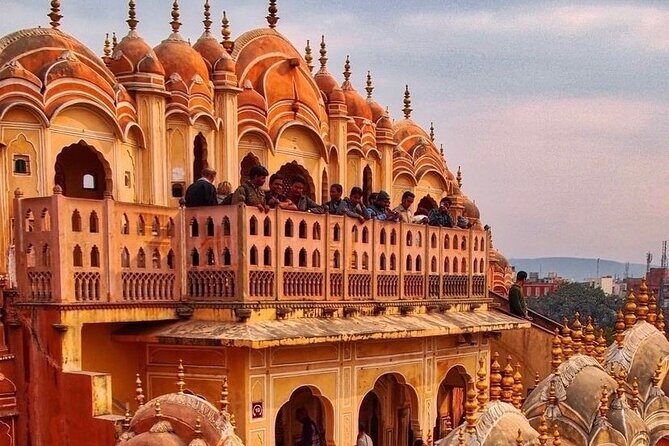
Finally, you have Hawa Mahal, the Palace of Wind. The stop is about 30 minutes. It’s iconic, but it’s also a reminder that Jaipur wasn’t only built for royal residence; it was built for performance, viewing, and climate-era design choices.
At the end of Day 4, you’re transferred to Jaipur airport and then back to Mumbai, with pickup/drop-off in Mumbai at the end.





What You’re Paying For: Value Beyond the Price Tag
The listed price is about $550.27 per person, and the value depends on what you select for hotels. If you choose the option with hotels, this package typically includes three nights of well-rated hotels and daily breakfast (3 breakfasts total), plus entrance fees, private air-conditioned vehicle transfers, and round-trip domestic flights.
Here’s what that package structure really buys you:
- Time savings: Flights replace a full day of land travel.
- Friction removal: Entrance tickets, transfers, and guides are handled.
- Support when things get real: Past experiences highlighted fast communication and on-time meeting points.
In other words, you’re paying for fewer moving parts. In India, that can be the difference between a trip that feels stressful and a trip that feels like a plan you trust.
Also, you get bottled mineral water during road journeys, and the tour includes the Taj Mahal shuttle detail. Those are small items, but they reduce fatigue when your days are already packed.
One more practical note: vehicle type is based on group size (sedan for 1–2, SUV for 3–4, van for 5–10). That matters for comfort and space, especially during longer drive legs like Delhi-to-Agra and Agra-to-Jaipur.
Comfort and Timing Tips (So the Route Feels Good)
This itinerary rewards planning your body like you plan your sights.
Wear comfortable walking shoes. Even with the Taj shuttle, you’ll still walk through big sites and move between stops. Add sunscreen, because you’ll have outdoor time in multiple cities.
Bring your passport/valid ID since domestic flights and hotels require it.
If you care about language clarity, know that at least one past experience noted that a guide’s English accent can be a bit hard to follow. You can reduce that risk by asking your guide to slow down when you need context, and by focusing on visuals plus key facts.
Rooming is usually twin-sharing, and for a group of three it often becomes triple-sharing by default. If you prefer two rooms for three people, there may be an additional charge—worth planning early so nobody is surprised.
Should You Book It?
Book this tour if:
- You’re seeing India for the first time and want the Golden Triangle classics in four days
- You’d rather pay for private guiding, included entrance fees, and flights than handle planning yourself
- You like sunrise-style “big moment” sightseeing, especially for the Taj Mahal
Skip it (or consider adding flexibility) if:
- You need a slower pace with long meals and lots of free time
- You’re sensitive to early mornings and long driving days
- You expect the kind of museum-perfection schedule where every hour is optional—this one is built to cover ground
If you match the first list, this is a strong way to do it: less stress, major landmarks, and guides and drivers who help you stay on track—so your attention stays on the sights.
FAQ
What’s included in this Golden Triangle tour?
It’s a private tour with private air-conditioned transportation, expert local guides, all sightseeing transfers, entrance fees for the listed attractions, bottled mineral water during road journeys, and domestic flights. If you select the with-hotels option, you also get three nights in well-rated hotels with daily breakfast (3 breakfasts total). Lunch and dinner are not included.
Are flights included?
Yes. The tour includes commercial economy-class flights from Mumbai to Delhi and from Jaipur to Mumbai. Each ticket includes 15 kg checked baggage and 7 kg hand luggage.
Do I need to buy entrance tickets for the monuments?
No. Entrance tickets for the monuments and attractions listed in the itinerary are included in the tour price.
What meals are included?
Breakfast is included daily if you select the hotel option (3 breakfasts total). Lunch and dinner are not included.
Is the Taj Mahal visit scheduled for sunrise?
Yes. The Taj Mahal is scheduled at sunrise and the admission ticket is included.
How are rooms handled for groups of three?
Rooms are generally twin-sharing. In a booking of 3 people, rooms are provided on triple-sharing basis by default. If you prefer 2 rooms for 3 guests, an additional charge may apply.