REVIEW · KHAJURAHO
Raneh Waterfalls and Tantalizing Khajuraho Temples Tour
Book on Viator →Operated by Go City Adventures · Bookable on Viator
Two big sights, one Khajuraho morning. This tour pairs Raneh Falls’ 30-meter drop with the 10th-century UNESCO temple group, and it’s a nice way to pack nature and art into one run. The main thing to consider is that waterfall flow can be weak in some months, including November, so you’ll want to go in with flexible expectations.
I like that it’s built for convenience: hotel pickup and drop-off in a chauffeur-driven Wi-Fi private vehicle, plus a small group capped at 12. You’ll also have an English-speaking local guide, which matters at Khajuraho where details can otherwise blur together fast.
For $87 per person, you’re paying for the transport + guidance + entrance fees (only once), which is a fair bundle for a half-day plan. Since meals aren’t included, you’ll want to plan your timing around that so you’re not hungry or rushed.
In This Review
- Key highlights to look for
- Raneh Falls from Khajuraho: geology, spray, and the wildlife angle
- What the guide does at Raneh: how Ghanshyam-style explanations change the stop
- Khajuraho temples next: 25 UNESCO temples and the Nagara-style symbolism
- How the “two-stop in five hours” plan really works
- Value check: is $87 a good deal for this combo?
- Weather and seasonal expectations: what to plan for before you go
- Who this tour fits best (and who should rethink)
- Should you book this Raneh Falls and Khajuraho temples tour?
- FAQ
- What time does the tour start?
- How long is the tour?
- Where do you go during the tour?
- Is hotel pickup and drop-off included?
- Are entrance fees included?
- Is there an English-speaking guide?
- How big is the group?
- Are meals included in the price?
- Is the tour affected by weather?
- What’s the cancellation rule?
Key highlights to look for
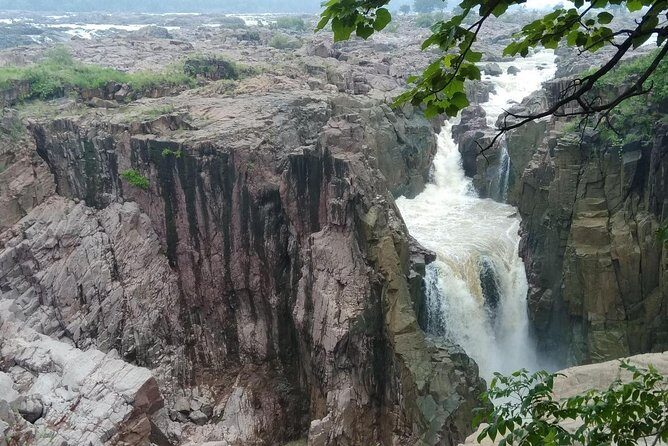
- Five-color granite setting at Raneh Falls: the canyon formation is described as using red, green, white, pink, and grey crystalline granite.
- Wildlife spotting near Ken Gharial Sanctuary: nilgai and gharials were seen and pointed out on this route.
- UNESCO Khajuraho temple cluster: about 25 temples, tied to Hinduism and Jainism and dated to the 10th century.
- Nagara-style symbolism: the guide can help you connect architectural design to religious meaning.
- Small-group comfort: maximum 12 travelers, with pickup and drop-off handled by your driver.
- Seasonal waterfall reality: the tour needs good weather, and waterfall water can be reduced at certain times of year.
Raneh Falls from Khajuraho: geology, spray, and the wildlife angle
The day starts with pickup from your hotel at 8:30 am, then a drive to Raneh Waterfalls. Khajuraho to Raneh is about 20 km, and you’re traveling toward the Ken Gharial Sanctuary area, which gives the outing more than just a pretty stop.
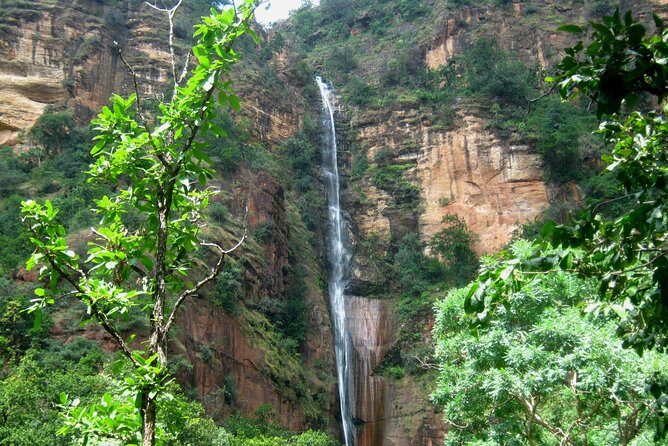
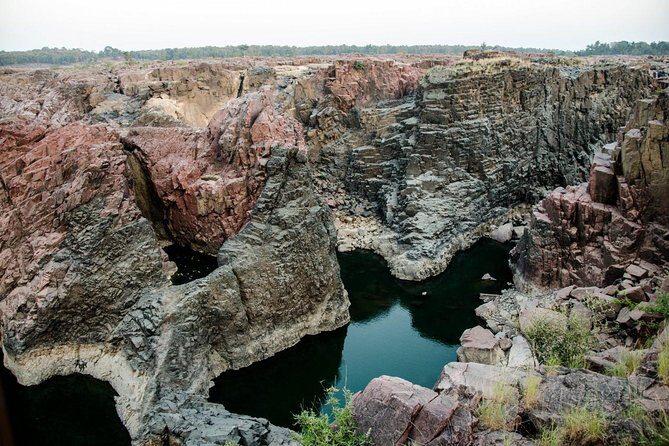
Raneh Falls is on the Ken River, and the site is named for the erstwhile ruler King Rane Pratap. The standout detail is the scale and color of the geology: the falls are described as a 30-meter drop into a canyon-like formation made of five different crystalline granite colors—red, green, white, pink, and grey. If you like places where the story isn’t just about the view but about the rock beneath it, this is the right kind of stop.
This is also one of those spots where water can be close to your face. The information for the tour notes that Raneh Falls can be a real test for eye protection and camera lenses, so treat the outing as a “bring your gear at your own risk” moment. In practice, that means you’ll enjoy the falls more if you’re ready for mist and fast-moving water, not if you’re hoping for perfectly dry photos.
Now the practical part: waterfall flow depends on timing and weather. One earlier experience specifically flagged that in November there could be little or even no waterfalls, which is a reminder to keep expectations flexible. If that happens, the silver lining is that a park ranger’s explanation of fauna, flora, and geology can turn the trip into an educational walk even when the water is toned down.
You can also read our reviews of more tours and experiences in Khajuraho.



What the guide does at Raneh: how Ghanshyam-style explanations change the stop
The best version of this tour is the one where the guide treats Raneh like a living classroom, not just a waterfall photo wall. In at least one case on this route, the guide Ghanshyam was praised for deep local knowledge of geography, plus for showing wildlife like nilgai and gharials that visitors wouldn’t necessarily expect.
That wildlife angle is more than a bonus. It gives you something to look for when the waterfall isn’t running at full strength. So if water is underwhelming for the day, you still have a reason to pay attention to what’s moving around you, and why the river and habitat matter.
Even if you’re more interested in temples than animals, this stop is a good emotional contrast. Temples are about human design across centuries; the falls are about nature working on the rock in front of you, right now.
Khajuraho temples next: 25 UNESCO temples and the Nagara-style symbolism
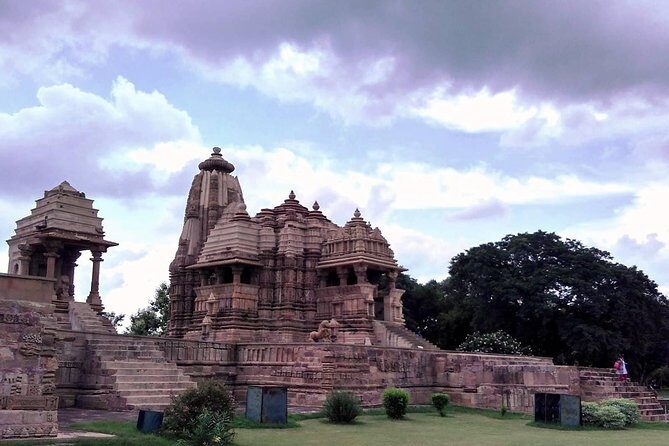
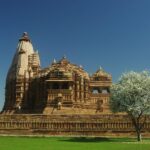
After Raneh, you head to Khajuraho’s UNESCO World Heritage temple group—a key part of the tour that’s often the emotional payoff. The temple cluster is described as having about 25 temples, with construction dating to the 10th century.
What you’re looking at isn’t just Hindu temple architecture. The group is tied to both Hinduism and Jainism, and the tour frames the temples as a place where you can read ideas about love, passion, human imagination, history, and heritage. That’s exactly why a guide matters here: Khajuraho rewards attention, and the symbolism can feel random if you don’t have a thread to follow.
The architectural style mentioned for this tour is Nagara, and the temple design uses symbolism that connects to religious meaning. This is also where one guide name you may hear in connection with these tours—Satyendra Kumar Dwivedi—stands out. His praise came from explaining the culture and the monuments with strong depth, making the art feel understandable rather than just impressive.
A small, practical note: because entrance fees are included (once), you avoid the annoying scramble of paying at each step. That keeps the visit feeling like a single experience instead of a series of mini transactions.
How the “two-stop in five hours” plan really works
The whole tour runs about 5 hours, and it’s designed to keep momentum without turning into a long, exhausting day. Pickup at 8:30 am means you get an earlier start, which is helpful for both driving time and the chance to see Raneh under better conditions.
The group size cap—maximum 12 travelers—also changes the feel. You’re not stuck waiting for a big crowd to move through each moment. At Khajuraho, that matters because you want to hear the guide’s explanations while your attention is still on the carvings and layout.
Your driver handles the in-and-out: after the temples, you’re dropped back at your hotel. That’s one of the quiet advantages of a packaged tour—less time negotiating, and more time actually looking.
The catch is that you’re covering two major sights in one half-day. If you want a slow, linger-everywhere day, this might feel like a compressed rhythm. But if you have limited time in Khajuraho, it’s a strong way to cover the essentials without building an entire schedule from scratch.
Value check: is $87 a good deal for this combo?
At $87 per person, this tour bundles several things that usually cost money separately:
- Hotel pickup and drop-off
- A chauffeur-driven private vehicle
- An English-speaking local guide
- Entrance fees at the required places (only once)
- A mobile ticket
When you price out transport + guide time + entry tickets on your own, the total often climbs quickly. Here, the structure is simple: you pay a single rate and get carried between the two priorities—Raneh Falls and Khajuraho temples—with guidance built in.
The trade-offs are also clear. Meals aren’t included, so you should plan a snack or eat before/after depending on your schedule. Also, gratuities are recommended, which is normal in many guided settings and worth budgeting for.

Weather and seasonal expectations: what to plan for before you go
This experience specifically notes that it requires good weather. That’s not just a technical detail; it affects the quality of the Raneh Falls portion in particular.
One previously mentioned reality check is that water levels in November may be low—sometimes so low that waterfalls can be minimal or absent. If you’re traveling around then, keep your plan flexible. The good news is that when the water disappoints, the ranger and the geology explanations can still make the stop meaningful, especially if you enjoy learning about the connection between river, rock, and habitat.
If the tour is canceled due to poor weather, you’re offered a different date or a full refund, which helps reduce the stress of booking too early.
Who this tour fits best (and who should rethink)
This is a solid match if you:
- Have only part of a day in Khajuraho
- Want a guided explanation at both a natural site and UNESCO temples
- Prefer a small-group setup (max 12 travelers) with pickup and drop-off included
- Like the idea of combining geology and wildlife with temple symbolism
You might want to reconsider if you’re traveling when waterfalls are likely to be weak and you’re only coming for a dramatic, high-volume waterfall show. In that case, you can still enjoy the guide-led storytelling, but the main attraction might not hit the way you imagined.
Should you book this Raneh Falls and Khajuraho temples tour?
I’d book it if you want a practical, high-value day that covers both the big Khajuraho identifiers: the Raneh Falls nature stop and the UNESCO temple cluster. The $87 rate makes sense because you get transport, guide time, and entrance fees grouped together.
The deciding factor is weather and season. If you’re traveling in a month where the waterfalls can run low (November is specifically mentioned), go in knowing that you may need to enjoy Raneh for what’s underneath the water—geology, habitat, and wildlife stories. When the water is strong, you’ll get the full wow factor. When it’s weak, you still have a reason to pay attention.
If you’re the type who likes understanding how and why things were built, the guide component is the real engine of this tour—names like Satyendra Kumar Dwivedi and Ghanshyam are associated with the kind of explanation that turns sights into stories.
FAQ
What time does the tour start?
The tour starts at 8:30 am.
How long is the tour?
It runs for about 5 hours (approx.).
Where do you go during the tour?
You visit Raneh Waterfalls first, then the Khajuraho temple group (UNESCO-listed).
Is hotel pickup and drop-off included?
Yes. The tour includes pickup and drop-off in a chauffeur-driven Wi-Fi private vehicle.
Are entrance fees included?
Yes. Entrance fees at the required places are included, but only once.
Is there an English-speaking guide?
Yes. The tour includes an English-speaking local guide.
How big is the group?
The group size is capped at a maximum of 12 travelers.
Are meals included in the price?
No. Meals are not included.
Is the tour affected by weather?
Yes. The experience requires good weather. If it’s canceled due to poor weather, you’ll be offered a different date or a full refund.
What’s the cancellation rule?
You can cancel up to 24 hours in advance for a full refund. If you cancel less than 24 hours before the start time, the amount paid will not be refunded.