REVIEW · NEW DELHI
3-Day Private Golden Triangle Tour: Delhi, Agra & Jaipur
Book on Viator →Operated by INDIA TAJ TOURS · Bookable on Viator
If you want the Golden Triangle without the stress, this private loop is built for you. It strings together Delhi, Agra, and Jaipur with live guides at the main monuments, plus comfortable air-conditioned driving between stops.
What I like most is the way it treats the big-ticket sights like a real plan, not just a checklist. The standout is the early Taj Mahal sunrise timing (starting around 6 AM), when you can get photos at the best spots with guide help, not just in a rush. I also really appreciate the texture you get in Delhi: Humayun’s Tomb, Qutub Minar, and Jama Masjid in the same day, then a Chandni Chowk ride by tuk-tuk/rickshaw so you feel the market energy up close.
One consideration: this is a tight schedule. You’ll be in the car a lot, and one past traveler noted that in Delhi the guide took them to shops and a restaurant where the guide likely earned a commission. If you don’t want that, set expectations early and politely keep it monument-only.
In This Review
- Key points worth knowing before you go
- The Golden Triangle payoff: Delhi, Agra, Jaipur in one smooth loop
- Day 1 in Delhi: Humayun’s Tomb to Chandni Chowk, plus Gandhi Smriti
- Humayun’s Tomb: the garden-tomb idea
- Qutub Minar: a towering UNESCO landmark
- Swaminarayan Akshardham: modern temple scale
- Jama Masjid and Old Delhi atmosphere
- Chandni Chowk: shop streets and quick ride energy
- Tomb of the Unknown Soldiers and the planned city feeling
- Gandhi Smriti: the human scale of a national figure
- Day 2: Taj Mahal sunrise at 6 AM, Agra Fort, then Fatehpur Sikri
- Taj Mahal at sunrise: best light, best focus
- Agra Fort: the Mughal residence story
- Fatehpur Sikri: a long stop with free admission
- Day 3 in Jaipur: Amber Fort, Jantar Mantar, and photo stops at Jal Mahal and Hawa Mahal
- Amber Palace (Amber Fort): the fort experience
- Jal Mahal: palace-on-lake views, entrance prohibited
- Jantar Mantar: an observatory made of stone
- Hawa Mahal: the famous facade, entrance prohibited
- How the day ends: drive back to New Delhi or depart from Jaipur
- Price and logistics: what $5 per person actually buys
- How to get the most out of it (and avoid common headaches)
- Set your preferences early in Delhi
- Use the sunrise slot properly
- Dress for holy places and hot days
- Pack light, but pack smart
- Should you book this 3-Day Private Golden Triangle Tour?
- FAQ
- What cities does this Golden Triangle tour include?
- Where is pickup available?
- What’s included in the tour price?
- Which monuments have admission included or free access?
- What time does the Taj Mahal visit begin?
- What is the cancellation policy?
Key points worth knowing before you go
- Sunrise Taj Mahal visit starts at about 6 AM, with guide help for photo spots.
- Delhi is packed with UNESCO stops plus major religious sites, ending in Chandni Chowk market time.
- Jal Mahal and Hawa Mahal are photo stops here (entrance is prohibited), so plan to enjoy the views from outside.
- Some monuments are free (Fatehpur Sikri, Amber Palace), while others include admission depending on your option.
- You’ll travel with a driver and live site guides, plus water bottles and umbrellas for comfort.
- It can end around 2 PM in Jaipur, with a drive back to New Delhi arriving around 8 PM if you fly from there.
The Golden Triangle payoff: Delhi, Agra, Jaipur in one smooth loop
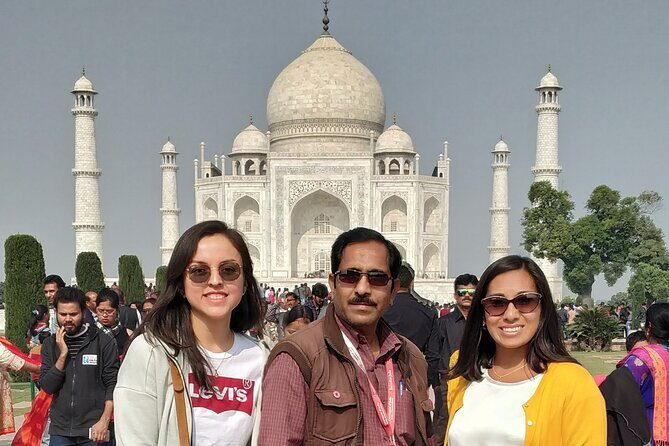
The Golden Triangle is popular for a reason: you’re not just seeing three famous cities, you’re seeing three different styles of India in close distance. This tour is designed to hit the most visited monuments in each city while keeping everything coordinated by a private team.
In practice, that means you’re not trying to wrestle with ticket lines and directions on your own. You get pickups in Delhi/Noida/Gurgaon and air-conditioned transport with a chauffer, and then live guides show you what matters at each stop. It’s a good choice when you want the “greatest hits” without turning your trip into logistics homework.
The other hidden benefit is pace. Yes, the days are full, but each city gets its own spotlight instead of you bouncing around randomly. Delhi focuses on imperial-era architecture and Mughal-era power. Agra focuses on the Taj and the Mughal footprint. Jaipur focuses on fort life and Rajput observatory science.
You can also read our reviews of more private tours in New Delhi


Day 1 in Delhi: Humayun’s Tomb to Chandni Chowk, plus Gandhi Smriti

Delhi day can feel like a whirlwind. That’s the trade. The upside is you get major landmarks across different eras and religions, with plenty of guide context along the way.
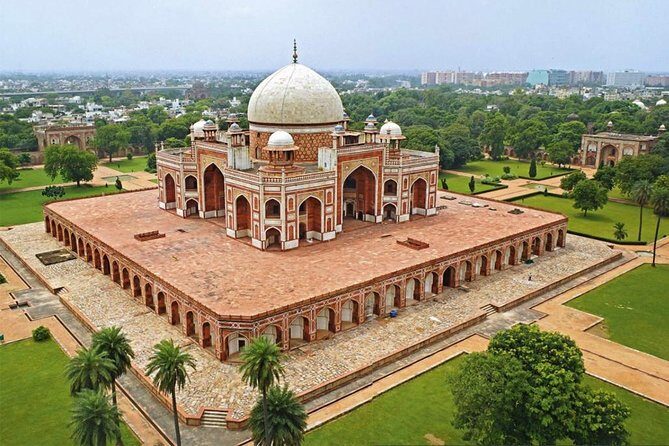
Humayun’s Tomb: the garden-tomb idea
You start at Humayun’s Tomb (UNESCO). It’s described as India’s first garden tomb, built after Humayun’s death at the request of his wife. You’ll spend about an hour here, which is enough time to see the symmetrical layout and get a feel for why this site helped shape later Mughal architecture.
Qutub Minar: a towering UNESCO landmark
Next is Qutub Minar (UNESCO), often remembered for its height and brick construction. The Qutub complex area gives you that “big stone statement” experience, and the timing of about an hour keeps it from dragging.
Tip I’d give you: bring a camera mindset. Both Humayun’s Tomb and Qutub Minar reward a slow look for proportions—columns, arches, and the way the structure sits in its grounds.
Swaminarayan Akshardham: modern temple scale
Then you head to Swaminarayan Akshardham. It opened in 2005, but the architecture is designed to feel timeless, with the guide helping you make sense of the design style. You’ll have about an hour here.
This stop can be a nice breather from the older Mughal sites. If you prefer contrast—old empire, then modern monumental craft—you’ll enjoy the shift.
A few more New Delhi tours and experiences worth a look





Jama Masjid and Old Delhi atmosphere
After that, Jama Masjid arrives as a big visual and emotional moment. It’s one of the world’s largest mosques, built in 1656 with help from thousands of workers. It sits in front of the Red Fort area, and it gives you that classic Chandni Chowk-era view.
You’ll likely spend about an hour. I suggest planning to move with the flow: this is an active religious site and the energy can be intense.
Chandni Chowk: shop streets and quick ride energy
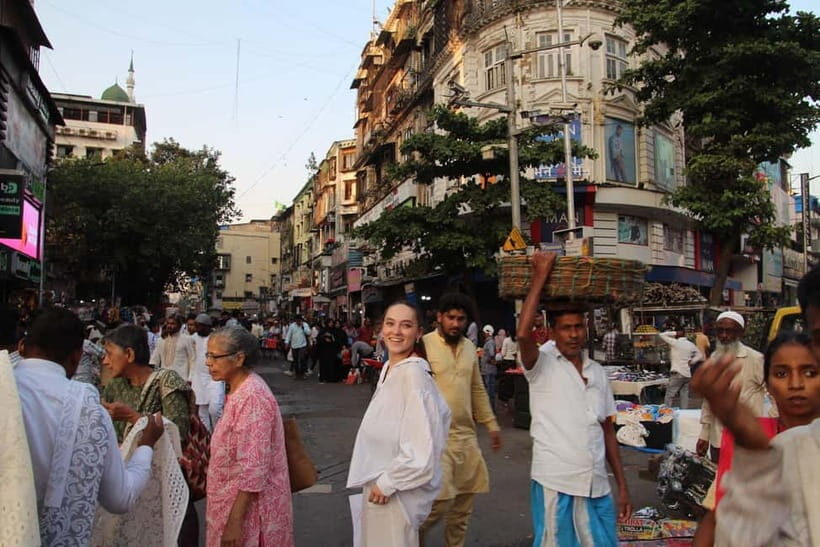
Then comes Pasar Chandni Chowk, which is described as Asia’s biggest and oldest market (from the 17th century). Here’s where the tour adds a fun practical touch: you get a tuk-tuk/rickshaw ride at Chandni Chowk.
It’s also lit all the time, and special flea bazaars are noted on Sundays. Even if you’re not there on a Sunday, you’ll still get the sense that this is a working market, not a theme park.
Tomb of the Unknown Soldiers and the planned city feeling
Later you visit the 1921 Tomb of the Unknown Soldiers, with names of 13,300 Indian army servicemen carved on the wall who died in the First World War. Right after, the tour also includes the 330-acre planned New Delhi architecture area, credited to Sir Edwin Lutyens and Herbert Baker.
That pairing works well: you go from a solemn memorial to the story of how Delhi’s capital city layout was shaped.
Gandhi Smriti: the human scale of a national figure
You end the day at Gandhi Smriti, marking the place where Gandhi spent much of his life and where he was assassinated. You’ll spend about an hour here, and the guide help matters because the site is both personal and historical.
If your day runs long, this is a good stop to slow down. It’s not about chasing photos anymore; it’s about absorbing what the place represents.
Day 2: Taj Mahal sunrise at 6 AM, Agra Fort, then Fatehpur Sikri
Agra day has a clear rhythm: start early, see the icons, then shift into the Mughal expansion story.
Taj Mahal at sunrise: best light, best focus
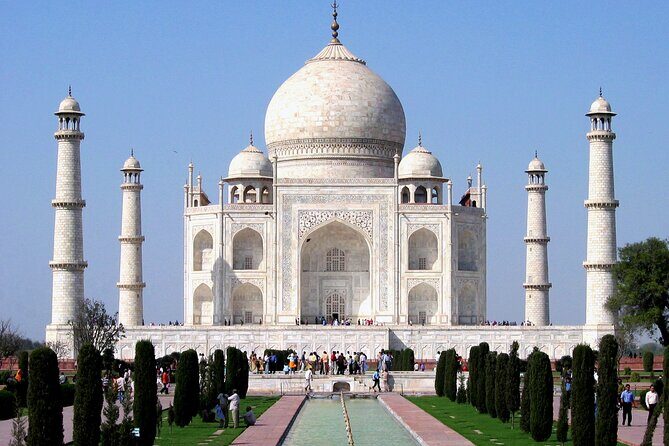
The Taj Mahal visit starts around 6 AM for sunrise. That early departure is not just romantic—it’s practical. The guide helps you with photo spots so you’re not guessing where to stand, and you get about a 3-hour block that feels like enough time to see it properly and not just do a drive-by.
This is the day’s anchor. If you only care about one monument in the Golden Triangle, it’s probably this one. The early timing is a real value add because it affects your photos and your energy.
Agra Fort: the Mughal residence story
Next is Agra Fort (UNESCO). The key detail here is that it was the home base for all early Mughal emperors until 1638, when the capital shifted back to Delhi. You’ll have about an hour, which lets you catch the fort’s main layout without burning half your day.
I like pairing the Taj with Agra Fort. The Taj shows the dream. Agra Fort shows the power and the daily reality.
Fatehpur Sikri: a long stop with free admission
Then you go to Fatehpur Sikri on the way to Jaipur, with about a 4-hour stop. The tour notes admission as free here.
Fatehpur Sikri is described as a small city founded in 1571 by Akbar as the Mughal Empire capital. That’s the kind of detail that makes the place click: you’re not just walking ruins, you’re tracing a capital plan that didn’t last forever.
One more reality check: you’ll still be traveling that day. So treat Fatehpur Sikri as a focused wandering session, not a sprint.
Day 3 in Jaipur: Amber Fort, Jantar Mantar, and photo stops at Jal Mahal and Hawa Mahal
Jaipur is the city where the Golden Triangle shifts from empire tombs to Rajput grandeur and science.
Amber Palace (Amber Fort): the fort experience
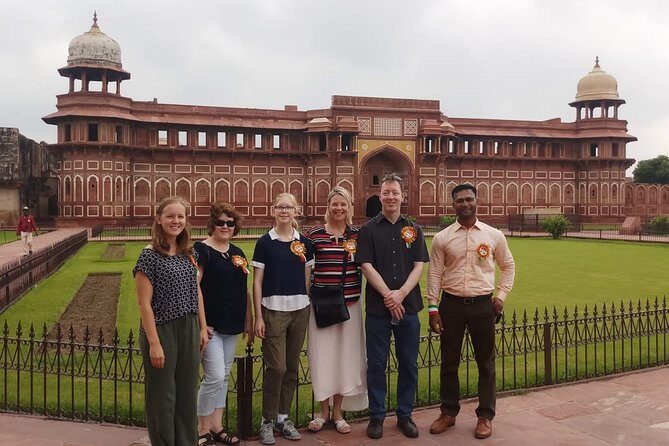
You start with Amber Palace, also known as Amber Fort. The tour gives about 2 hours here, and it lists admission as free.
Amber is 11 km from Jaipur city in Amer, and that distance matters because the fort vibe feels like a world of its own. You’ll get time to experience the fort structures without feeling trapped in a rushed line pattern.
Jal Mahal: palace-on-lake views, entrance prohibited
Next is a stop at Jal Mahal, the Palace on Lake. The tour is explicit that entrance is prohibited, but you can take great pictures from outside.
This is the kind of stop I actually like when it’s done honestly. You get the view without spending energy on a place you can’t go into. Morning versus afternoon light can change the mood, so if your timing allows, keep your camera ready.
Jantar Mantar: an observatory made of stone
Then comes Jantar Mantar, described as an observatory. It features nineteen architectural astronomical instruments built by Sawai Jai Singh II and completed in the 18th century. You’ll spend about an hour here with admission included.
This stop is a nice antidote to the purely visual monuments. It’s science you can walk through. You’ll probably want to lean on the guide here, because the point of the instruments is harder to spot without explanation.
Hawa Mahal: the famous facade, entrance prohibited
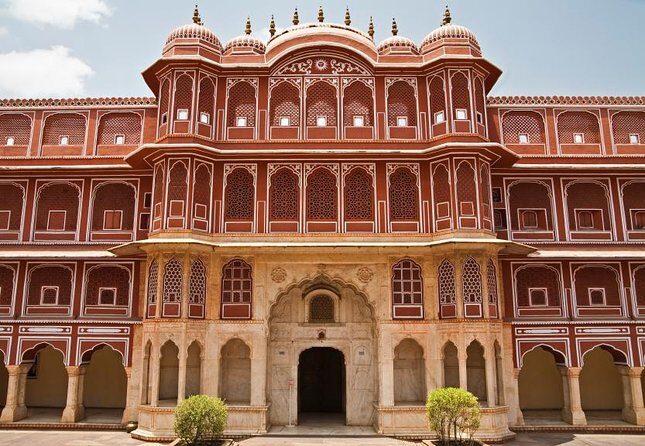
After Jantar Mantar, you stop at Hawa Mahal, the Palace of Winds. Entrance is prohibited, but you can take photos of the exterior. It’s described as built of red and pink sandstone.
This is a classic Jaipur moment: you don’t go inside, but you get to see why the facade is so recognizable and why people line up to frame it.
How the day ends: drive back to New Delhi or depart from Jaipur
The tour says Jaipur sightseeing finishes around 2 PM. If you have departure from Jaipur Airport, you can take it. If your departure is in New Delhi, you’ll drive back and arrive around 8 PM.
That timing is important. If you need the schedule to match your flight exactly, confirm your pickup/return points in advance.
Price and logistics: what $5 per person actually buys
The headline price is listed as $5 per person. With a price that low, you should treat this as a checklist moment and confirm exactly what’s included in your option.
Here’s what the tour data says you do get:
- hotel or airport pickup in Delhi
- air-conditioned transportation with a chauffer
- tuk-tuk/rickshaw ride at Chandni Chowk
- live tour guides at the sites
- complimentary water bottles and umbrellas
- monument entrance fees, depending on the option selected
And what you don’t get:
- accommodations
- meals
- tips and gratuities
Value-wise, the big selling points are the private transport, the live guides, and the fact that many major monument admissions are included (Taj Mahal, Humayun’s Tomb, Qutub Minar, Agra Fort, Jantar Mantar, plus others depending on your option). For a short 3-day window, that’s where your money turns into less time waiting and less time figuring things out.
One more bit of practical help: a past Agra-focused experience noted that the guide was Ishaan and the driver was Amit, with solid direction and good handling between Delhi, Agra, and Jaipur. That kind of smooth coordination is what you want when the schedule is tight.
How to get the most out of it (and avoid common headaches)
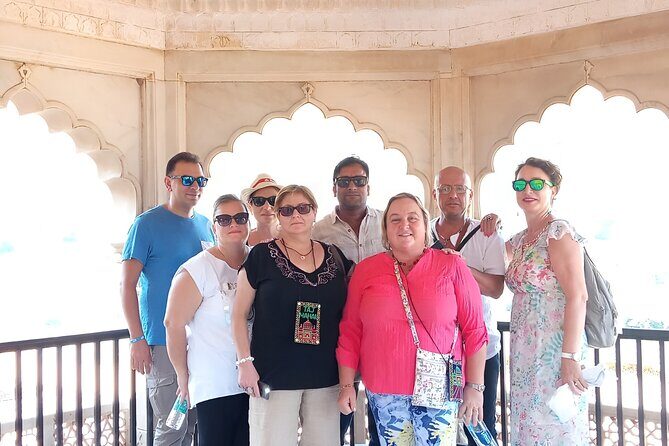
This tour works best if you travel with a mindset of flexibility. You’ll hit a lot of monuments, so you need to keep moving without getting cranky.
Set your preferences early in Delhi
If you don’t want shopping stops, say so right at the beginning. One participant felt the Delhi guide took them to stores and a restaurant where the guide likely earned a commission. You can prevent that awkward feeling by simply being clear: monuments and viewpoints only, then back to the route.
Use the sunrise slot properly
For Taj Mahal sunrise, arrive with your camera setup ready. The guide helps with photo spots, but you’ll still want to be able to move quickly to the right positions once you’re there.
Dress for holy places and hot days
You’ll visit major religious sites (Jama Masjid and Akshardham), plus tomb and fort complexes. I recommend breathable clothes, comfortable shoes, and something to protect you from sun and dust.
Pack light, but pack smart
You’re getting water bottles and umbrellas, so that’s handled. Still, I’d bring your own essentials like sunscreen and a hat, because Delhi and Agra can feel intense in the sun.
Should you book this 3-Day Private Golden Triangle Tour?
Book it if you want a structured Golden Triangle with live guides and air-conditioned transport, and you care about getting the Taj Mahal right at sunrise. You’ll like the balance of Delhi’s architectural variety, Agra’s Mughal centers, and Jaipur’s fort-and-science mix.
Skip or rethink it if you hate packed days or you strongly prefer no shopping stops at all. Also, at the listed price, verify what monument entrance fees are included in your exact option, since the tour notes that admission is dependent on selection.
If you go in prepared—comfortable shoes, clear boundaries in Delhi, and a camera-ready plan for sunrise—you’re likely to end the trip with three cities’ worth of big moments, without spending your time stuck in transit chaos.
FAQ
What cities does this Golden Triangle tour include?
It covers three cities in India: New Delhi, Agra, and Jaipur, with sightseeing across all three during the 3-day schedule.
Where is pickup available?
Pickup is offered in New Delhi and also from areas including Noida, Gurgaon, Ghaziabad, and Faridabad, plus hotel or airport pickup in Delhi.
What’s included in the tour price?
The tour includes air-conditioned transportation with a chauffer, hotel or airport pickup in Delhi, a tuk-tuk/rickshaw ride at Chandni Chowk, live tour guides at sites, complimentary water bottles and umbrellas, and monument entrance fees depending on the option selected.
Which monuments have admission included or free access?
The tour data says admission is included for places like Humayun’s Tomb, Qutub Minar, Swaminarayan Akshardham, Jama Masjid, Taj Mahal, Agra Fort, and Jantar Mantar. It also lists Fatehpur Sikri as free admission and Amber Palace as free admission. Jal Mahal and Hawa Mahal are photo stops with entrance prohibited.
What time does the Taj Mahal visit begin?
The Taj Mahal visit is scheduled early morning at 6 AM for sunrise.
What is the cancellation policy?
You can cancel for a full refund if you cancel up to 24 hours in advance of the experience’s start time. If you cancel less than 24 hours before the start time, the amount paid is not refunded.