REVIEW · NEW DELHI
Golden Triangle Tour 3 Days – Flexible Itinerary with Local Guide
Book on Viator →Operated by Hii~Stories · Bookable on Viator
Three days, three cities, zero hassle. This flexible-feeling Golden Triangle route is built around a private local guide and big-ticket sights, from Old Delhi lanes to the Taj Mahal at sunrise. You’ll move between Delhi, Agra, and Jaipur without wrestling with timings or transport headaches.
I really like two things about how this tour is set up: the airport and hotel pickup approach (with an English-speaking chauffeur waiting for you by name at the airport), and the fact that guides handle your main entries so you don’t sit around. That matters when you’re short on time and need the day to run like a plan.
One consideration: the entrance fees and meals aren’t included. The tour says the total entrance cost is around Rs. 5000 per adult, and you’ll pay the exact ticket cost in cash to the guide at the end of sightseeing, while lunches and other meals are on you.
In This Review
- Key highlights worth marking on your map
- The Golden Triangle rhythm: how 3 days really works
- Delhi Day 1: Chandni Chowk, Jama Masjid, and the rickshaw reality check
- Lotus Temple, Raj Ghat, and India Gate: a balanced Delhi mix
- Agra transfer and your Taj Mahal sunrise: why the early start is worth it
- Taj Mahal plus Agra Fort: what you’ll actually see and do
- Jaipur Day 3: Hawa Mahal, Amber area, and the stepwell stop
- City Palace and Jantar Mantar: culture plus UNESCO science
- Guides, pacing, and the names to watch for
- Price and logistics: what $190.20 gets you, and what it doesn’t
- Who this tour is best for
- Should you book this 3-day Golden Triangle tour with Hii Stories?
- FAQ
- How does airport pickup work for this 3-day tour?
- Are hotel pickups included?
- What entrance fees are included in the tour price?
- Do I pay entrance fees directly during the tour?
- Is the Taj Mahal visit at sunrise?
- Are meals included?
- Is this tour private or shared?
- Is there free cancellation if my plans change?
Key highlights worth marking on your map
- English-speaking chauffeur pickup with a name sign when you arrive in Delhi
- Old Delhi by Chandni Chowk and spice market, plus a rickshaw ride
- Taj Mahal sunrise timing around 5:30 AM, with a guided visit
- Agra Fort + Jaipur’s UNESCO Jantar Mantar in the same 3-day rhythm
- AC vehicle options based on group size, with water bottles included
- Guides arrange entrance tickets in advance, aimed at avoiding line-waiting
The Golden Triangle rhythm: how 3 days really works
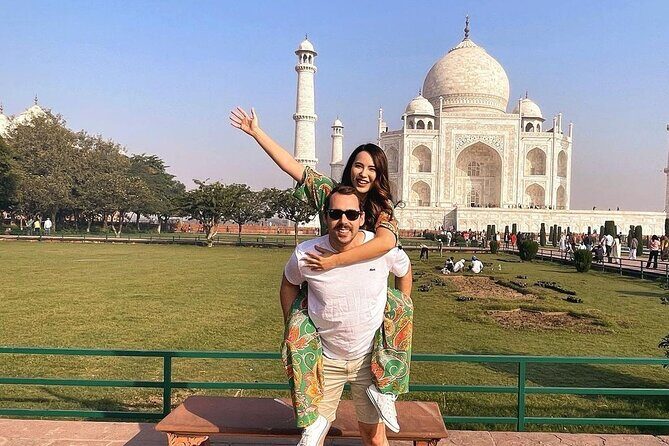
The Golden Triangle is famous for a reason. Delhi gives you both layers: the deep-culture side of Old Delhi and the government-empire side near central landmarks. Agra is your payoff day with the Taj Mahal, and Jaipur is your color-and-craft day with forts, palaces, and markets.
What I like here is the pacing choice. You’re not trying to cram every sight in at once. Day 1 is Delhi-to-Agra travel with a solid Old Delhi run. Day 2 is early-morning Taj Mahal plus Agra Fort, then you roll into Jaipur for an overnight. Day 3 stays focused on Jaipur’s classic hits—Hawa Mahal, the Amber area, City Palace, and Jantar Mantar.
Also, this is a private setup. That usually means the day can run at your pace, which lines up with feedback about guides adjusting and answering questions rather than rushing you through.
You can also read our reviews of more guided tours in New Delhi


Delhi Day 1: Chandni Chowk, Jama Masjid, and the rickshaw reality check
Day 1 starts with airport pickup in New Delhi (your chauffeur is waiting at the airport exit with your name sign, and you’ll drive into the city). Once you’re moving, the first big experience is Old Delhi.
Chandni Chowk is a practical pick for first-time visitors because it’s not just a monument stop—it’s a street-and-market world. You get time to explore the spice market area, and there’s a rickshaw ride included. If you’ve never done a rickshaw ride in a dense market neighborhood, this is one of the better ways to do it because it’s guided and time-boxed (about an hour).
Next is Jama Masjid, one of the largest mosques in India. You’ll have about an hour here with guided sightseeing. The best way to use this stop is simple: slow down. Let the space, the scale, and the everyday flow of the area register before you try to “see it all” with photos.
From here, you’re switching gears from Old Delhi intensity to a calmer, iconic landmark.
Lotus Temple, Raj Ghat, and India Gate: a balanced Delhi mix
After Chandni Chowk and Jama Masjid, the itinerary builds in a lunch break option in Delhi. Then you head to Lotus Temple, known for its flower-like design and tranquil atmosphere. This stop works well after crowded market streets because the vibe changes fast. It gives you that reset moment without skipping a major sight.
After lunch, you visit Raj Ghat, the memorial of Mahatma Gandhi. This is a short stop (about 30 minutes), but it’s meaningful in a way that’s easy to appreciate even if you’re not doing a deep political tour. It also helps anchor the day so it’s not only architecture and photos.
Then comes India Gate, a free stop. It’s described as the All India War Memorial built to honor soldiers who died in World War I and the Third Anglo-Afghan War. Expect a classic Delhi landmark moment: time to stand, scan the surroundings, and take a few key photos.
You also get Rashtrapati Bhavan on the drive toward Agra (about 15 minutes). You’re not doing a long, in-depth visit here, but it’s a nice “you’re in the capital” marker before you move on.
By the time you reach Agra, you’re checked out to your hotel and given leisure time—about 3 hours—so you can recover and plan your next day.
Agra transfer and your Taj Mahal sunrise: why the early start is worth it
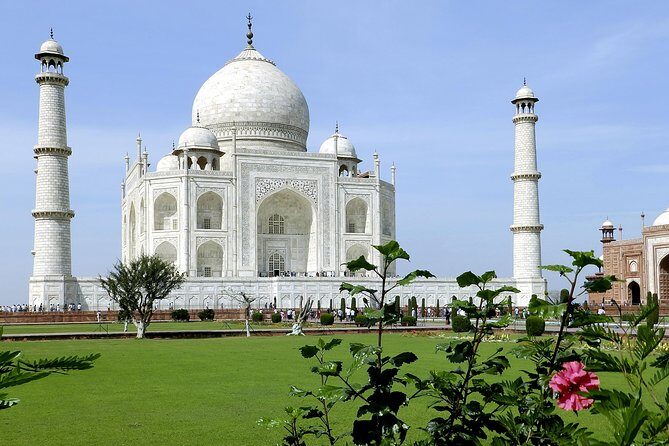
Day 2 begins early: a sunrise Taj Mahal tour around 5:30 AM. You’ll be picked up from your hotel by the chauffeur and guide and driven into Agra for the main event. This is one of the tour’s biggest selling points because sunrise changes the whole feel of the monument.
Your Taj Mahal visit is guided and timed for the morning light, with about two hours at the site. The itinerary also includes breakfast after your Taj Mahal visit, and then you move right into Agra Fort.
There’s a travel logic here that’s easy to appreciate. Starting early means you’re not wasting the best light of the day later, and it keeps the rest of your schedule realistic. You’ll be tired at the end of the day, but it’s the kind of tired that comes from seeing the highlight, not chasing it all day.
If you’re the type who hates rushed tours, this is where a private guide helps. You can ask questions, take breaks, and not feel like you’re being pushed into one perfect photo angle.
Taj Mahal plus Agra Fort: what you’ll actually see and do
After sunrise Taj Mahal, you get that post-visit meal and then transition to Agra Fort. The itinerary has you check out of your Agra hotel after breakfast, and then you’ll enjoy a guided Agra Fort visit (about an hour).
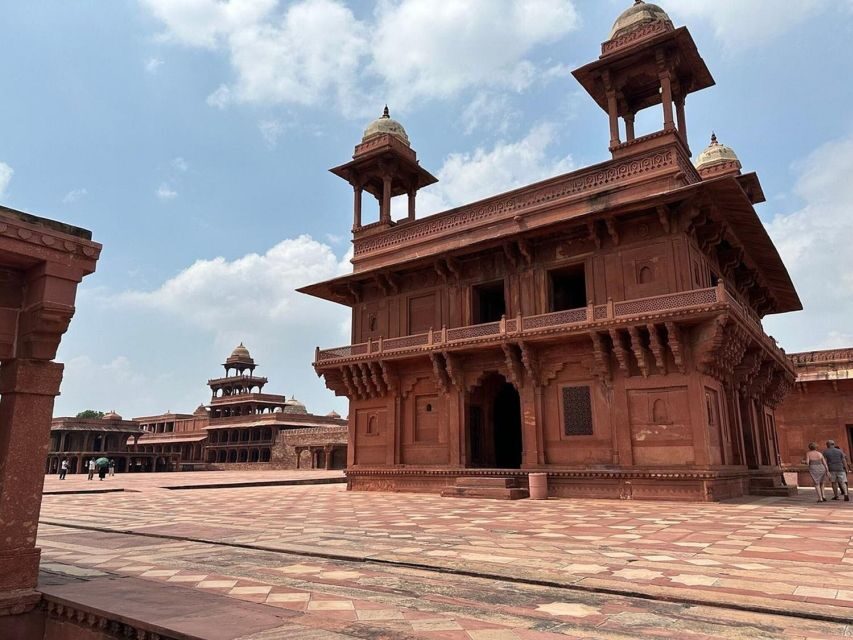
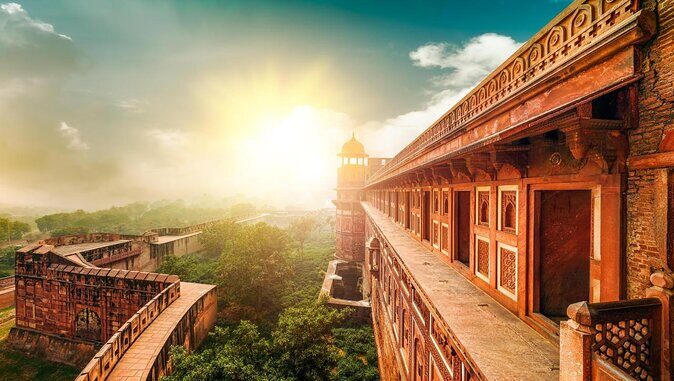
Agra Fort is described as the grand residence of Mughal emperors and one of the largest Mughal-era forts. This second stop is valuable because it adds context. Taj Mahal is one image; Agra Fort is the political and architectural frame around that image. In plain terms: you get the “what” and also the “where it fits.”
Once Agra Fort wraps up, you travel to Jaipur. The itinerary doesn’t treat this as a huge sightseeing block; it’s more of a move-and-arrive day. You’ll check in to your Jaipur hotel for an overnight stay, with about 4 hours for the Day 2 travel/arrival window.
That overnight matters. Jaipur on Day 3 is packed with multiple fort-and-palace stops, and you’ll be happier if you’re not trying to turn this into a nonstop travel day.
A few more New Delhi tours and experiences worth a look





Jaipur Day 3: Hawa Mahal, Amber area, and the stepwell stop
Day 3 starts with breakfast and then hotel pickup for Jaipur sightseeing. The first major stop is Hawa Mahal (Palace of Breeze). It’s about 30 minutes with included admission for this segment. Hawa Mahal is a classic Jaipur landmark, and it’s a good opener because it’s visually distinctive right away.
From there you go toward the Amber Fort area. The itinerary describes it as a stunning example of Rajput architecture. There’s also included time here (the itinerary groups the Amber Fort visit with the Hawa Mahal stop timing). If you’re expecting only a quick look, plan for a slower pace. Fort complex areas usually reward walking and looking at details.
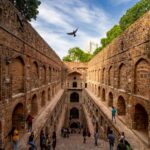
Next is Panna Meena ka Kund, an ancient stepwell established in the 16th century during Maharaja Jai Singh’s reign. You’ll have about an hour and included admission. This stop is genuinely interesting because it’s not the “usual postcard” choice. It’s architecture that shows how people solved daily life challenges, not just how they displayed power.
Then you’ll visit Amber Palace (about an hour, included). The description emphasizes expansive courtyards, shimmering halls, and intricate designs. This is where Jaipur feels like a full-on royal compound rather than a single temple or monument.
After that, you get a photo stop at Jal Mahal, the Water Palace that’s described as a fusion of Rajput and Mughal architectural styles. It’s a short stop (about 15 minutes) and admission-free. Use it for photos and a quick reset, not as a long site visit.
Finally, you head deeper into the city with two more major stops.
City Palace and Jantar Mantar: culture plus UNESCO science
If you want a break, the itinerary explicitly allows for it. Lunch is suggested, and the driver and guide will point you toward good places to eat. That’s a useful detail because Jaipur days can feel long fast, and taking a pause at the right time prevents decision fatigue.
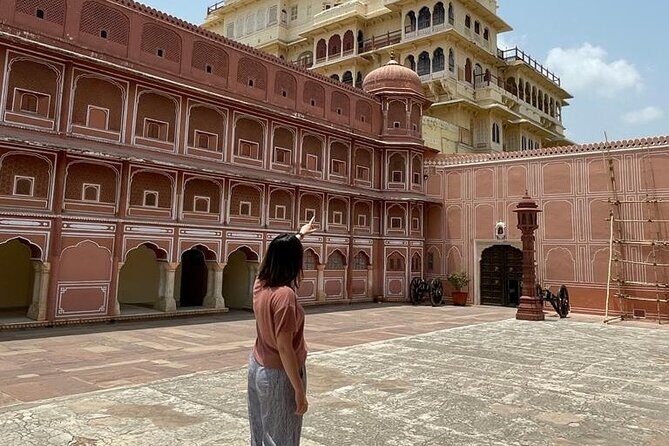
Next is City Palace, described as a grand complex with courtyards and more. You’ll have about an hour and included admission. This stop works best when you treat it like a walking circuit: look at the layout, notice the mix of spaces, and take your time rather than trying to capture every angle.
Then you go to Jantar Mantar, a UNESCO World Heritage Site and described as one of the largest astronomical observatories ever constructed. You’ll have about an hour and included admission here too.
Jantar Mantar can surprise people. It’s not only about “seeing old instruments.” It’s about realizing how measurement and design were part of the same toolkit as architecture. Even if you don’t read every label, the geometry and scale make it click.
If you still have energy after that, the itinerary notes you can enjoy shopping after your Jaipur sightseeing, with time shaped around your day.
Guides, pacing, and the names to watch for

What really stands out in the feedback is the guide quality and how they handle questions. There were specific call-outs for New Delhi and Jaipur, which is a great sign because it suggests the company’s matching process isn’t random.
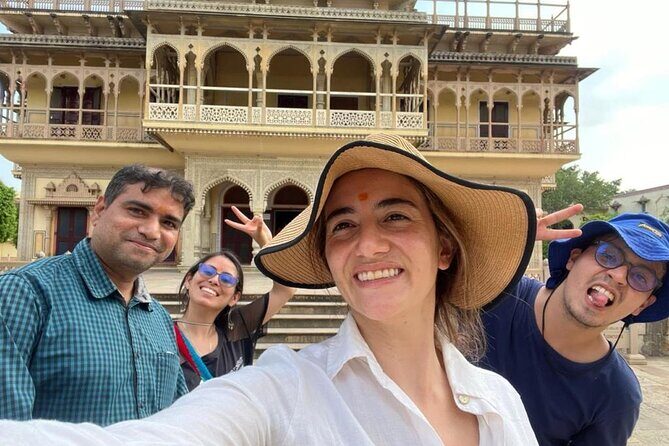
For Delhi, Vimpul is highlighted as a New Delhi guide. In Jaipur, Gaurav Bhatt gets named as an especially strong guide, with praise connected to explanations and also photo help. And the driver Shelondra is mentioned as going out of the way to keep someone comfortable.
Even without the exact same team, the tour is built for conversation: private guides, time for questions, and a pace that can flex. For me, that’s where value lives. A good Golden Triangle tour isn’t just a list of stops—it’s how you understand what you’re looking at while you’re looking at it.
Price and logistics: what $190.20 gets you, and what it doesn’t
This tour is priced at $190.20 per person for the 3-day experience. That price is mainly for the guide service, transport, and included site activities, not for hotel costs or meals.
Here’s what you should expect the price to cover based on the tour inclusions:
- Private local guides in Delhi, Agra, and Jaipur
- A private air-conditioned vehicle (type depends on group size: sedan for 1–2, Kia Carens for 3, Toyota Crysta SUV upgrade options for some groups, and larger vehicles like vans for bigger groups)
- Water bottles throughout the tour
- GST, toll taxes, and parkings
- Included admission tickets only for the listed stops that mark admission as included
Now the parts that aren’t included:
- Entrance fees for the total around Rs. 5000 per adult, and you pay the exact ticket cost in cash to the guide at the end of sightseeing
- Meals, including lunch timing on your own (with suggestions during the day)
This pay-at-the-end entrance setup is both a pro and a heads-up. It can reduce line-waiting because guides arrange tickets in advance. But it also means you should plan for cash on you during the tour days.
If you’re traveling solo, the private format still makes sense because you’re buying time, comfort, and interpretation rather than just transport.
Who this tour is best for
This is a strong fit if you:
- Want a private guide in each city, not a rotating crowd
- Care about seeing the Taj Mahal at sunrise rather than showing up whenever and hoping for good light
- Prefer a clean structure with door-to-door pickup, so you don’t lose half a day figuring things out
- Like a mix of major landmarks plus a couple of more unique stops like Panna Meena ka Kund
It may not be ideal if you:
- Need every meal included, because meals aren’t covered
- Hate early mornings, since Day 2 starts around 5:30 AM
- Don’t want to handle the cash payment for entrance tickets at the end of sightseeing
Should you book this 3-day Golden Triangle tour with Hii Stories?
If you want Delhi, Agra, and Jaipur in 3 days with minimal stress, I think this is worth considering. The combo of private guides, pickup support, AC transport options, and the sunrise Taj Mahal timing makes it a practical way to hit the highlights without turning your trip into a logistics project.
Book it if you’re comfortable planning for entrance fees (about Rs. 5000 per adult) and meals on your own. It’s a especially good choice for first-timers who want context fast, and for people who’d rather ask questions than rush through monuments.
If you’re price-checking, look at the total value: guide time in three cities plus private transport plus key included admissions. That’s the math that makes this itinerary feel fair.
FAQ
How does airport pickup work for this 3-day tour?
You get an airport pickup in New Delhi. An English-speaking chauffeur waits at the airport exit holding a sign with your name, then drives you to Delhi.
Are hotel pickups included?
Yes. You’ll also have hotel pickup for the early morning Taj Mahal start on Day 2, and for Jaipur sightseeing on Day 3.
What entrance fees are included in the tour price?
Some entrances are included for specific stops, but the tour also notes that total entrance fees are around Rs. 5000 per adult and are not included in the base price.
Do I pay entrance fees directly during the tour?
Yes. The guide arranges tickets in advance to help avoid line waiting, and you pay the exact ticket cost in cash to the guide at the end of the sightseeing.
Is the Taj Mahal visit at sunrise?
Yes. Day 2 includes a sunrise Taj Mahal tour with pickup around 5:30 AM, followed by breakfast after the visit.
Are meals included?
No. Meals are not included. Lunch is treated as your break during the Delhi and Jaipur days, with suggestions provided during the Jaipur portion.
Is this tour private or shared?
This is a private tour/activity, and only your group participates.
Is there free cancellation if my plans change?
Yes. Free cancellation is available up to 24 hours in advance of the experience start time for a full refund.