REVIEW · MUMBAI
Mumbai: Dhobi Ghat Laundry and Dharavi Slum Tour with Local
Book on GetYourGuide →Operated by Inside Mumbai Tours · Bookable on GetYourGuide
Dharavi looks different when you walk it. This 3-hour Dharavi Slum and Dhobi Ghat Laundry experience connects you with everyday life, from small workshops to the famous open-air laundry, guided by residents who know the rhythms of the neighborhood.
I really like two things here. First, you get real work up close: plastic recycling, garment/textile work, leather-related industries, and other trades that keep families running. Second, the tour approach aims to erase “movie-in-a-crowd” ideas of Dharavi by walking with locals who can explain what you’re seeing, while staying respectful of people’s privacy. Guides like Bharti, Abi, Ansh, and Alkama have stood out in the details they share and the way they handle questions with care.
One drawback to consider: this is not a quick sightseeing loop. It’s a people-and-work tour through tight streets and active areas, so you’ll want the right mindset, especially if you’re unsure about the ethics of visiting a community like this. Also, it can be hot, and the guides adjust pace for comfort.
In This Review
- Key things to know before you go
- What This Dhobi Ghat and Dharavi Tour Actually Shows
- Meeting Up and Getting There: Trains, Timing, and First Feel
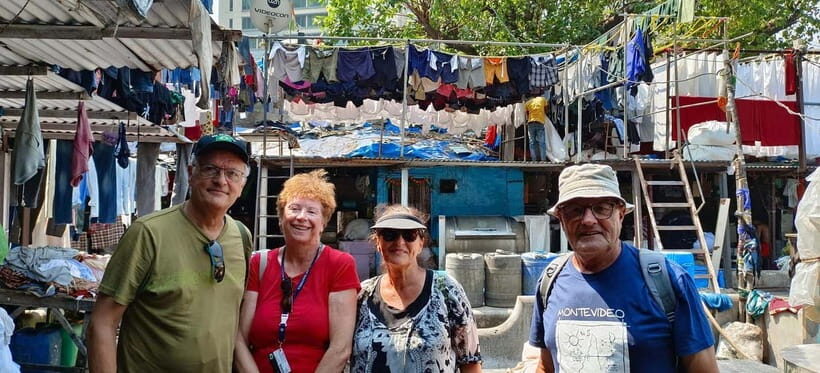
- Dhobi Ghat Laundry: The Open-Air Work You Can Watch
- Entering Dharavi: Homes, Workshops, and the Daily Mix
- The Slumdog Millionaire Spot and Why It Matters
- How the Tour Stays Respectful (and What You’ll Feel on the Walk)
- Guides You Might Get: Bharti, Abi, Ansh, Alkama, and More
- Price and Value for a 3-Hour Mumbai Snapshot
- Who Should Book This Tour (and Who Should Think Twice)
- Quick Practical Tips to Make the Most of Your Walk
- Should You Book Dhobi Ghat and Dharavi With a Local Guide?
- FAQ
- How long is the Dhobi Ghat and Dharavi tour?
- Is this tour private or shared?
- What language are the guides and audio offered in?
- What’s included in the price?
- Is food included?
- Can I cancel for a refund?
Key things to know before you go
- Dhobi Ghat open-air laundry: you’ll see how washing is organized and watch the operation in action.
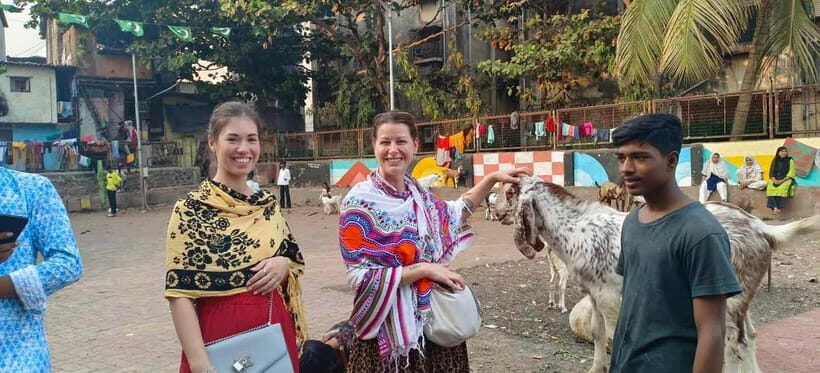
- Dharavi beyond stereotypes: the point is to replace assumptions with lived context—homes, daily routines, and work.
- The local economy in motion: plastic recycling plus garment/textile and leather-related industries, with a scale that’s bigger than most people expect.
- A film connection inside Dharavi: you visit a place associated with Slumdog Millionaire filming.
- Local-led routes: you’re guided by residents, and the format is designed to feel safe and non-voyeuristic.
- A train ride can be part of it: many tours use public transit to make the journey feel real.
What This Dhobi Ghat and Dharavi Tour Actually Shows
Mumbai has plenty of famous sights. This tour’s hook is that it shows a working neighborhood with an economy people don’t usually see up close.
You’re meant to go past the single-story version of Dharavi. Instead of treating the area like one big image, your guide connects the dots between where people live, how families run their day, and what kinds of business operate right there in the community. The goal is clear: dispel misconceptions and show how life and work overlap.
One of the smartest parts is that you’re not only looking at industry. You also get the setting: children playing, people relaxing, and neighbors living near workshops. That’s what makes it feel like a place, not a spectacle.
Then there’s the film angle. Dharavi is tied to Slumdog Millionaire, and your route includes a spot connected to where parts of the movie were filmed. It helps you connect a global pop-culture reference to the actual streets and spaces you’re standing in.
You can also read our reviews of more tours and experiences in Mumbai.


Meeting Up and Getting There: Trains, Timing, and First Feel
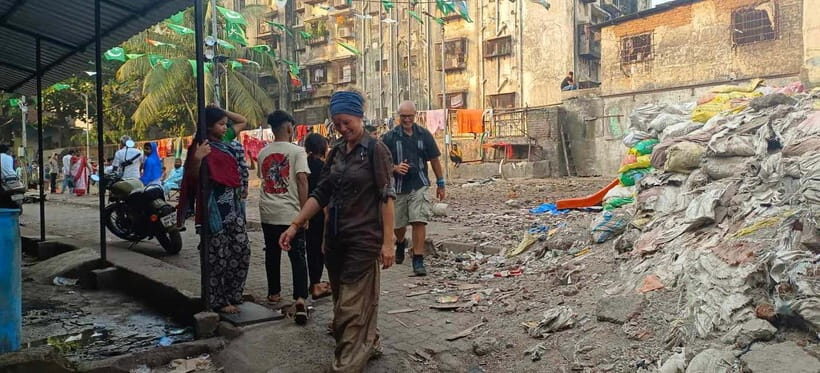
Meeting point can vary by the option you pick. In practice, you’ll want to arrive on time and treat the start like part of the experience, not just a handoff. The tour includes travelling fees, so you’re not hunting down transit costs mid-day.
A common pattern is a train ride as part of the day’s movement. The guides know how to make the transit feel smooth for a small group. In some experiences, people even described riding with the doors open, which turns the journey into part of the Mumbai texture rather than just transportation. If you’re the kind of person who notices small things—how locals commute, how the neighborhood looks from street-level—you’ll probably enjoy this.
Because it’s only 3 hours, the pacing matters. Your guide typically keeps an eye on comfort; one review specifically mentioned adjusting pace because of heat. So if you tend to walk slowly, speak up early. The tour is built around staying with one route and one guide, not darting around solo.
Dhobi Ghat Laundry: The Open-Air Work You Can Watch
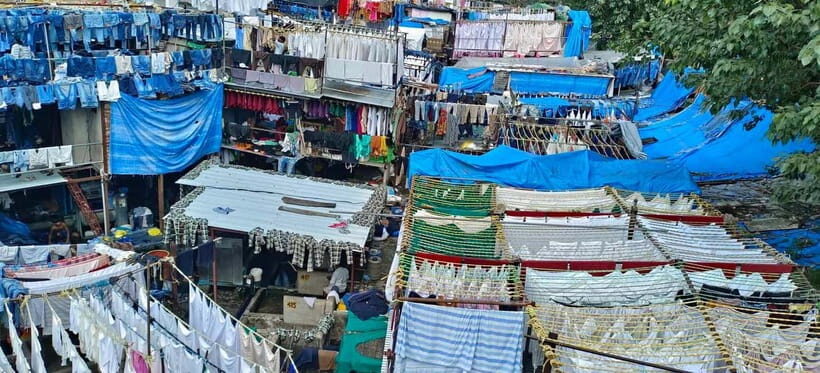
Dhobi Ghat is one of those Mumbai landmarks you can’t fully appreciate from a distance. In this tour, it’s included with entry tickets and a local explanation, and the emphasis is on how the laundry system works.
Your guide will walk you through the basics: how the operation runs, how clothes move through the process, and what Dhobi Ghat means historically and practically in the city. One guide (Ansh) was noted for explaining both the scale and the system in a way that made it click—exactly the kind of context you usually miss when you just wander around.
What I like about this stop is that it turns “laundry” into an actual story of labor and logistics. You’re watching an active industry in an open-air setting. It’s not staged. People are working, and your guide helps you interpret what you’re seeing without turning it into drama.
Practical note: since Dhobi Ghat involves active areas, your time here is best used for questions. Ask how pieces are handled and what role different spaces play in the workflow. That’s where the local explanations really add value.
Entering Dharavi: Homes, Workshops, and the Daily Mix
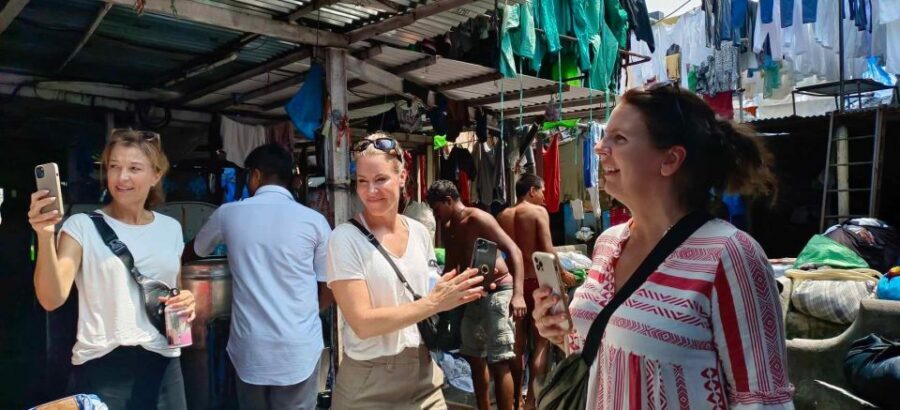
Dharavi is where the tour earns its reputation, because you don’t just point at buildings—you walk through the lived structure of the neighborhood.
You’ll see:
- where families live and how space is organized
- where children play and people relax between work
- where businesses operate, including recycling and manufacturing-style trades
The industrial side gets specific. Your tour focuses on plastic recycling, garment/textile work, and leather-related industries, along with other activities connected to turning waste and materials into usable goods. The information shared also points to the scale of this economy—your tour framing mentions an annual income figure around 1 billion US dollars—which helps explain why Dharavi matters economically, not just socially.
A huge part of the experience is how your guide links the industries to the people. It’s one thing to hear that recycling happens. It’s another to see how daily routines fit beside the work, how neighbors share a street, and how the neighborhood functions as a system.
If you’re worried the tour will feel like a “look at poor people” situation, the format is designed to avoid that. Many guides are born and raised in Dharavi and explain respectfully from inside the community. One guide (Abi) was specifically described as careful about privacy and compassionate in tone, which is exactly what you want for a stop like this.
The Slumdog Millionaire Spot and Why It Matters
That film-location visit could feel like a gimmick in another context. Here, it works better because it’s not the headline—you’re using it as a clue.
Seeing a place tied to Slumdog Millionaire helps you connect a recognizable reference to the real geometry of the neighborhood. It also reinforces the tour’s main message: portrayals can be simplified, but the real place has layers—work, housing, community routines, and businesses operating every day.
In other words, the film reference becomes a bridge from what you’ve seen on screen to what you’re actually walking through.





How the Tour Stays Respectful (and What You’ll Feel on the Walk)
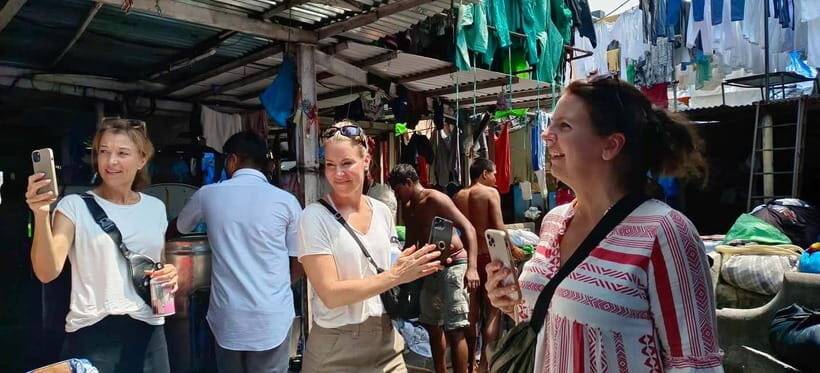
This is the category where you’ll notice whether the operator is serious.
The tour is described as being completely safe to visit inside and around, with visits organized by residents of Dharavi. Guides in the experience set come with credibility and local relationships, which reduces awkwardness and helps keep the focus on learning rather than staring.
In the feedback from guides such as Bharti, Abi, and Faizan, the standout theme is respect:
- privacy is treated as real
- the tour avoids turning people into a photo opportunity
- questions are welcomed without treating visitors like gawkers
If you’re a solo traveler, this kind of structure matters. Multiple experiences specifically mentioned feeling safe throughout, including for solo visitors. That doesn’t mean you should act careless, but it does mean the tour’s social setup is designed to prevent the most uncomfortable versions of a community visit.
Guides You Might Get: Bharti, Abi, Ansh, Alkama, and More
The guide is not a minor detail on this tour. It’s the difference between understanding and just walking.
Here’s what stands out about guides featured in the experience:
- Bharti: repeatedly praised for knowing the Dhobi Ghat and Dharavi details, with calm confidence and strong English.
- Abi / Abhi / Abhishek: described as locally rooted, attentive with pacing, and especially good at answering questions about everyday life and how the local economy works.
- Ansh / Anshika: praised for being informative and respectful, with explanations that connect recycling and the industries to community life.
- Alkama: often mentioned for being strong on local insight and for making the experience feel human, not staged.
- Faizan: highlighted for explaining the economy clearly, without pushing a sensational tone.
You may also notice trainee-guide involvement in some cases, like Anshika training while supporting explanations. That’s a sign the operation invests in local capability, not just quick scripted storytelling.
Also, your tour can include an optional English audio guide. That’s helpful if you want to re-check details while you’re walking, or if you prefer a consistent explanation layer alongside the live guide.
Price and Value for a 3-Hour Mumbai Snapshot
At $4.45 per person for a 3-hour guided experience, the biggest question is value: what do you actually get for the price?
You get several things that add up:
- a local English-speaking tour guide
- private or shared tour depending on the option
- entry tickets
- travelling fees
- water
Food is not included, so budget for a drink or meal outside the tour window. But even with that, the included items matter. Many tours charge separately for transit, site entry, or guide time. Here, it’s bundled, which makes it easier to plan.
The other value lever is what you cover in those 3 hours. You’re not just seeing one site. You’re pairing Dhobi Ghat laundry with Dharavi’s work-and-life mix, plus a film-location stop. If you only have one window to understand Mumbai beyond postcards, this is a strong use of time.
If you want a slow, museum-style experience, this might feel intense. But if you want real context quickly—how a city neighborhood actually functions—this is built for that.
Who Should Book This Tour (and Who Should Think Twice)
This tour is a good fit if you:
- like getting context from local voices
- want to understand the city’s economy, not only its monuments
- are curious about recycling, textiles, and leather-related work as part of everyday life
- prefer tours that try to be respectful rather than sensational
It may be less ideal if you:
- feel uncomfortable visiting a place where people are living their daily lives
- expect a “safe viewing distance” type of tour
- need a lot of downtime, since the walk covers both residential and working areas
That said, one review specifically noted initial hesitation about ethics that turned into appreciation once the guide handled privacy and context thoughtfully. If that’s you, bring a respectful mindset and good questions.
Quick Practical Tips to Make the Most of Your Walk
Since this tour mixes active work areas and walking through Dharavi, your best strategy is simple: focus on understanding, not filming.
- Ask about the systems, not just the sights. Guides do a strong job explaining the laundry workflow and how recycling and other trades function.
- Use your pace wisely. Heat and tight walking routes come up, and guides adjust to keep you comfortable.
- Plan around it being a learning-focused tour. Water is included, but food is not, so don’t treat it like a meal stop.
- Bring curiosity for culture and work. The tone is set by guides like Bharti and Abi—warm, patient, and tuned to questions.
Should You Book Dhobi Ghat and Dharavi With a Local Guide?
I think this is worth booking if you want the kind of Mumbai experience that changes your mental map fast. The pairing of Dhobi Ghat laundry with Dharavi’s homes and industries gives you two sides of the city’s labor story: what’s made visible to visitors, and what usually stays unseen.
Book it if you value local-led explanations and you trust the tour’s respectful approach. If you’re the kind of traveler who needs everything to be comfortable in the usual tourist way, you might struggle with the emotional weight of any real community visit. But if you can handle that responsibly, the experience offers serious insight for the time—and the price is hard to ignore.
If you can, choose the option that matches your comfort level: private if you want quieter questions, shared if you’re okay with a small group dynamic. And whichever guide you get, treat the tour as a conversation with a place, not a performance for your camera.
FAQ
How long is the Dhobi Ghat and Dharavi tour?
The tour lasts 3 hours.
Is this tour private or shared?
It’s available as a private or shared tour, depending on the option you select.
What language are the guides and audio offered in?
The live tour guide is English, and an optional audio guide is also available in English.
What’s included in the price?
Included are the local English-speaking tour guide, private or shared tour option, entry tickets, travelling fees, and water.
Is food included?
No. Food and drinks are not included.
Can I cancel for a refund?
Yes. Free cancellation is available up to 24 hours in advance for a full refund.