REVIEW · NEW DELHI
Delhi Street Art Tour
Book on Viator →Operated by Reality Tours & Travel Pvt Ltd · Bookable on Viator
Street art can surprise you in the least expected way. This half-day walk-and-ride route links Khan Market, Lodhi Garden, and the Lodhi Art District into one smooth morning, with a local English-speaking guide telling you what you’re actually looking at. I really like how the murals get explained piece by piece, and I like that you move via public transport instead of being stuck on one bus. One thing to consider: it’s weather dependent, and you’ll be doing real walking plus short hops on different vehicles.
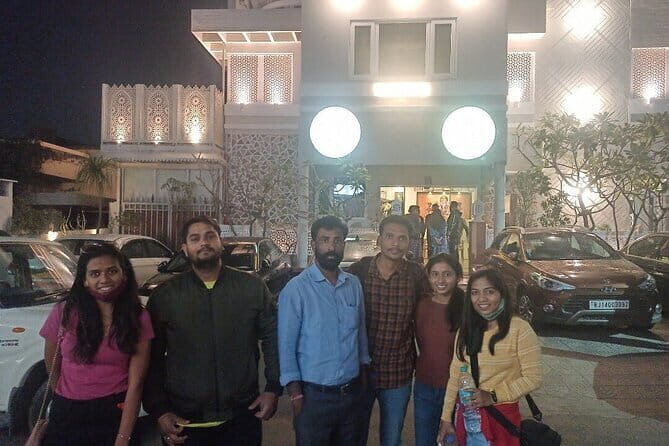
What makes this tour feel manageable is the group size. It’s capped at a small number—listed as a maximum of 18 travelers, and also described as limited to 25—so you’re not shouting over a crowd every time you want to ask a question. The start is 9:00 am at Inner Circle, Connaught Place, and you end near Khan Market, at Sujan Sing Park North.
The guide quality shows in the details. Names you might hear in the group include Rajiv, Naresh, Stanley, and Chitty—each with a style that mixes practical directions with stories that make the neighborhoods feel lived-in instead of staged.
In This Review
- Key highlights and what you’ll actually enjoy
- Why Khan Market, Lodhi Garden, and Lodhi Colony fit together
- The 3-hour flow: what happens from 9:00 am to the final stop
- Khan Market (20 minutes): where you learn the neighborhood mood fast
- Lodhi Garden: 15th-century tombs and the feel of Sayyid and Lodhi design
- Lodhi Art District in Lodhi Colony: murals with names, themes, and context
- Moving like a local: metro, rickshaw hops, and why it feels better than a bus
- The guides: what their style adds to the art and ruins
- Price and value: is $30.21 really a good deal?
- What to bring and how to plan your morning
- Who should book this Delhi street art tour (and who might not)
- Should you book this Delhi Street Art Tour?
- FAQ
- How long is the Delhi Street Art Tour?
- Where is the meeting point, and what time does it start?
- Where does the tour end?
- Which places are included on the itinerary?
- Is admission required for the stops?
- What’s included in the price?
- Is hotel pickup or drop-off included?
- How many people are in the group?
- What is the cancellation policy, and what if weather is bad?
Key highlights and what you’ll actually enjoy
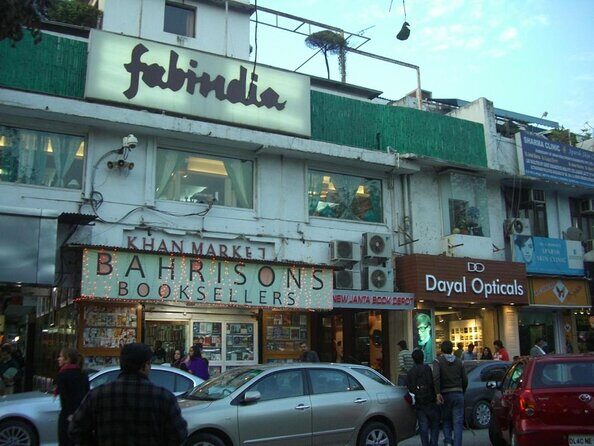
- Three very different areas in one morning: trendy Khan Market, 15th-century garden monuments, and modern street murals in Lodhi Colony
- Mural stories you can follow: you get the who/why behind the art, not just a quick photo stop
- Small-group pacing: short stops where you can look closely, plus time to ask questions
- Local-style transportation: metro and rickshaw or tuk-tuk type hops keep things efficient
- Ticket-free stops: the major sights on this route are admission free
- A calm walk through Lodhi Garden: the green pause helps you reset before the street art section
Why Khan Market, Lodhi Garden, and Lodhi Colony fit together
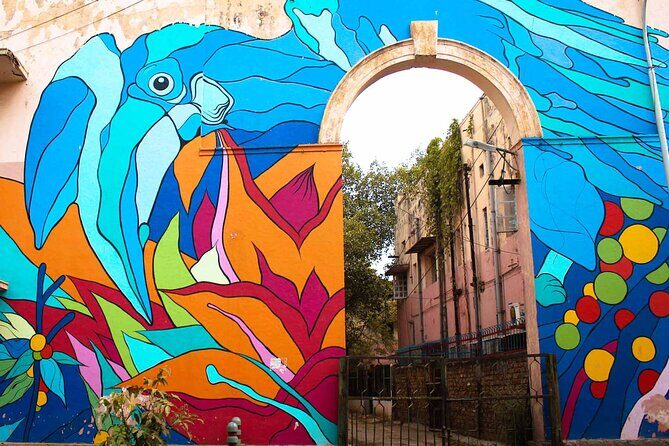
This tour works because it doesn’t treat Delhi like a checklist. It connects three neighborhoods that sit next to each other in your map view, but feel totally different in real life.
Khan Market gives you the modern social side of Delhi—cafes, shops, and people-watching. Lodhi Garden shifts the tempo into a slower, quieter zone with monuments from the 15th century, including structures from the Sayyid and Lodhi periods. Then Lodhi Colony brings you back to the present with street murals that explain what’s on people’s minds now.
That contrast is the whole point. You start in a place where you’ll instantly recognize the city’s everyday rhythm, you pause in a garden where old stone keeps its own schedule, and then you finish in a public art district where the walls are the medium. When you stitch those moments together, you get a better sense of how Delhi layers time.
A few more New Delhi tours and experiences worth a look



The 3-hour flow: what happens from 9:00 am to the final stop
At a glance, the schedule is tight in the best way: about three hours total, with three main blocks.
- Stop 1: Khan Market (about 20 minutes)
- Stop 2: Lodhi Garden (about 1 hour)
- Stop 3: Lodhi Art District / Lodhi Colony (about 1 hour 30 minutes)
There’s no hotel pickup, so plan to arrive at the meeting point on time: Inner Circle, Connaught Place (Inner Cir, Block B, Connaught Place, New Delhi 110001). The tour starts at 9:00 am.
You’ll also end near Khan Market: Sujan Sing Park North, Sujan Singh Park, New Delhi 110003. That matters because it makes it easier to continue your day right after the tour—grab coffee, browse nearby stores, or just head back toward Connaught Place.
Khan Market (20 minutes): where you learn the neighborhood mood fast
Khan Market is often described as upscale, but you don’t need a definition to feel it. In about 20 minutes, you’ll get an overview of how the area functions: people come to eat, talk, shop, and linger. It’s a concentrated slice of modern Delhi life.
Why this stop is worth your time: it sets your visual expectations for the rest of the tour. The Lodhi part is about big ideas expressed in public space—old monuments and newer murals. Khan Market trains your eyes to notice street-level culture, the kind you might otherwise miss when you’re only hunting for obvious monuments.
Practical note: this isn’t a long shopping spree. It’s a short orientation stop, so if you want souvenirs, keep that for later. Use the time to orient yourself, then put your camera away for a minute and watch how people move.
Admission here is listed as free, so you’re not spending time figuring out tickets or entry lines.
Lodhi Garden: 15th-century tombs and the feel of Sayyid and Lodhi design
Then the tone changes.
Lodhi Garden is a large park—about 90 acres—and it’s where the tour slows down enough to actually look. The monuments in the garden connect to the Sayyid and Lodhi periods, with tombs, mosques, and bridges built during the 15th century.
This stop is special for two reasons. First, it’s one of the easiest ways to experience real historic architecture without jumping between multiple far-flung sites. Second, the guide is there to point out design nuances—how Mughal-era influences show up and what makes these buildings distinctive.
What you should expect to do here is simple: walk, pause, and look from different angles. Garden layouts can trick you into thinking everything is the same distance away. Take a few steps, find a new viewpoint, and you’ll start noticing how the structures frame the paths and water features.
One consideration: gardens are great, but you’ll still be walking on park terrain. If you’re sensitive to uneven ground, wear shoes that grip well.
Admission is also listed as free for this stop, which helps keep the experience focused on interpretation rather than logistics.
Lodhi Art District in Lodhi Colony: murals with names, themes, and context
This is the part most people come for—and it’s done in a way that’s more helpful than a standard photo march.
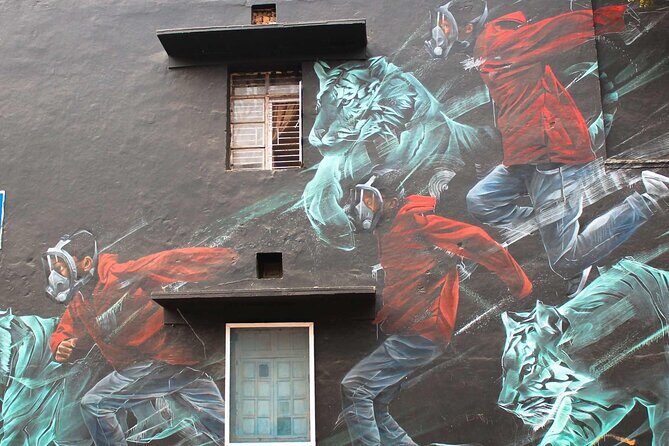
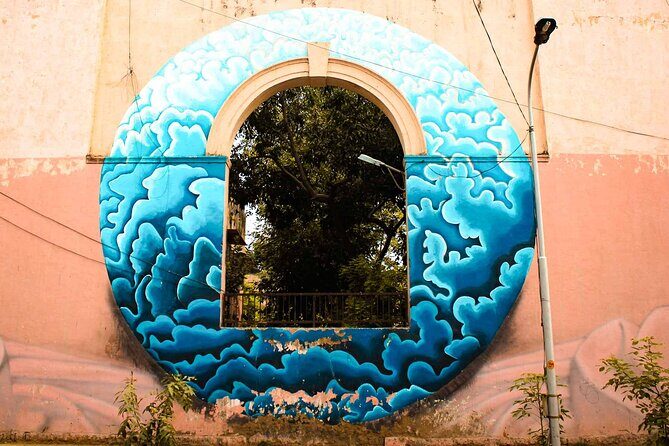
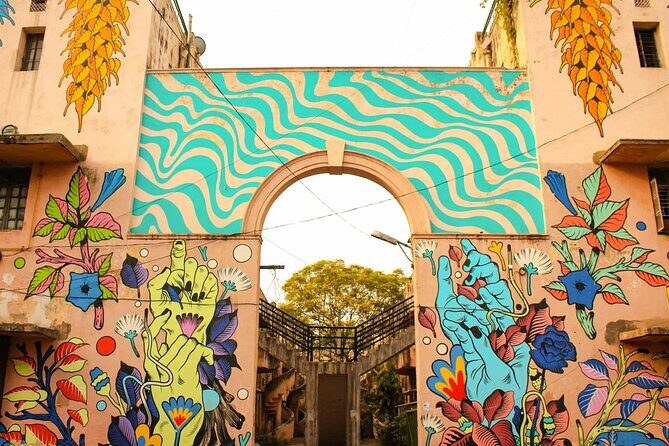
Lodhi Colony is described as the heart of street art in Delhi and India’s first public art district. In plain terms: this is a neighborhood where the walls are part of the conversation. Instead of treating murals as decoration, the guide connects them to the artists and the stories behind the paintings.
You’ll spend about 1 hour 30 minutes here, which is long enough to slow down. The standout value is that you don’t just see a mural; you learn why it exists. That makes a huge difference when you’re standing in front of a complex piece. Without context, street art can feel like random color. With context, it starts reading like a message.
In the group, you’ll probably notice how different murals reward different kinds of attention—some are more about symbols and social themes, and some are about style and technique. If you like art but don’t know the vocabulary, you’re still in good shape. The guide’s job is to translate what you’re seeing into something you can talk about afterward.
Transportation also tends to help here. In this route, you may move between mural clusters using metro and short rickshaw or tuk-tuk style hops. One reason this works well: shorter travel segments mean more time with your eyes on the art.
Admission is listed as free for this area as well.






Moving like a local: metro, rickshaw hops, and why it feels better than a bus
This tour includes public transport, and the route often uses a mix of metro and last-mile rides. Depending on the day and the guide’s approach, you may get bicycle rickshaws and other small vehicles between stops, plus walking where it makes sense.
Here’s the value for you: it’s not just about saving time. Public transport and short rickshaw-style hops keep the experience grounded. You’re moving through real streets at neighborhood speed, not just watching cities from the window of a tour vehicle.
It also makes the pacing easier. A three-hour tour doesn’t leave room for a long commute at the start. Using public transportation keeps the day from feeling like a transit project.
Included drinks help, too. You’ll get a water or cold drink, and the overview also describes a complimentary coffee, tea, or cold drink. In a Delhi morning, that small comfort matters.
The guides: what their style adds to the art and ruins
A street art tour lives or dies on the guide. You can’t fake this kind of explanation, because you’re talking about images that people designed to be interpreted.
The guides you might meet—Rajiv, Naresh, Stanley, and Chitty—show up in the way they handle questions and pacing. The best guides here do two things at once: they make you understand the piece and they make you feel calm while you’re looking at it.
That balance is important because Delhi can feel intense, especially if your day is packed with plans. On this tour, the garden break helps, and the guide’s tone helps too. You’re not constantly rushed toward the next spot. You’re given time to stop, look, and ask why the mural looks the way it does.
If you speak up, you’ll likely get solid answers rather than vague pointing. That’s one reason this kind of tour gets such high marks.
Price and value: is $30.21 really a good deal?
At $30.21 per person, this tour is priced in the “small experiences that actually matter” category. The value comes from what’s bundled, not just from the low headline number.
You’re getting:
- a local English-speaking guide
- public transport support
- a water or cold drink (and coffee/tea options in the description)
- entry listed as free for the stops
- a planned route across three meaningful areas
For many Delhi half-day tours, you end up paying extra for transportation or tickets. Here, the route is built around free-access sites and public movement, which keeps your costs predictable.
Also, the group size helps the price feel fair. When the group is capped low—listed as up to 18 and also described as up to 25—you get a better chance of interaction. You’re not one face in a line of 40.
One more angle: the tour includes interpretation. If you’re the type who likes to learn rather than just take pictures, the guide time is where your money goes.
What to bring and how to plan your morning
A street art tour is simple, but Delhi mornings have their own rules. Plan for walking, heat swings, and keeping your hands free for photos.
Bring:
- comfortable shoes for park paths and neighborhood sidewalks
- a light layer, since mornings can feel cooler and then warm quickly
- water (even if drinks are included, extra is smart)
- a phone with enough battery for maps and photos
Also, since the experience is weather dependent, keep an eye on the forecast for your day. If conditions are off, the operator may move you to another date or offer a full refund (that approach is mentioned in the tour notes).
If you’re traveling with a tight schedule, this timing is ideal: you start at 9:00 am, finish at Khan Market, and still have the rest of your day.
Who should book this Delhi street art tour (and who might not)
I’d point you toward this tour if you:
- want an art-focused Delhi experience that includes real historical context
- like small groups and guided interpretation
- enjoy public-transport travel and short rickshaw rides
- want a half-day plan that doesn’t swallow your whole morning
You might skip it if you:
- want a long, slow museum-style visit. This is structured around three neighborhoods and time limits
- dislike walking on uneven park ground
- prefer tours that don’t depend on weather at all
But for most people, this is a smart mix: art plus architecture plus neighborhood life, all in about three hours.
Should you book this Delhi Street Art Tour?
Yes, if you want something different from the usual monument route. This tour is built for people who like learning what they’re looking at, and it does it without making the day feel academic or heavy.
If your travel style is: see, ask, walk, repeat—this fits. You’ll start in Khan Market to get your bearings, reset in Lodhi Garden with 15th-century sites tied to the Sayyid and Lodhi periods, then end in Lodhi Colony where street murals are treated like public storytelling.
If you’re choosing between a generic art walk and a route that includes both Mughal-era ruins and contemporary murals, the combination is the reason to book. It’s not just street art. It’s the city showing you how different eras share the same streets.
FAQ
How long is the Delhi Street Art Tour?
The tour lasts about 3 hours.
Where is the meeting point, and what time does it start?
You meet at Inner Circle, Connaught Place (Inner Cir, Block B, Connaught Place, New Delhi 110001) and the start time is 9:00 am.
Where does the tour end?
The tour ends at Khan Market, at Sujan Sing Park North, Sujan Singh Park, New Delhi 110003.
Which places are included on the itinerary?
The tour includes Khan Market, Lodhi Garden, and Lodhi Colony / the Lodhi Art District.
Is admission required for the stops?
Admission is listed as free for each of the stops.
What’s included in the price?
The tour includes a local English-speaking guide, public transport, and water or a cold drink (the overview also mentions a complimentary coffee, tea, or cold drink).
Is hotel pickup or drop-off included?
No, hotel/residence pickup and drop-off are not included.
How many people are in the group?
The tour is described as limited to a maximum of 18 travelers in the tour details, and also described as limited to a maximum of 25 participants.
What is the cancellation policy, and what if weather is bad?
You can cancel for a full refund up to 24 hours in advance. The experience requires good weather, and if it’s canceled due to poor weather, you’ll be offered a different date or a full refund.