REVIEW · MUMBAI
Dharavi Slum tour in Mumbai by local resident
Book on Viator →Operated by Beautiful Bombay Tours · Bookable on Viator
A guided look at Dharavi’s daily industry. This Dharavi slum walking tour gives you a structured way to understand life and work in Asia’s largest slum, including both commercial spots and residential lanes. I really like that the experience is led by a local English-speaking guide from Dharavi, so the explanations feel grounded in how people actually live and earn.
I also like the very specific trade-focused route: you’ll pass through areas connected to plastic recycling, soap and plastic-bag production, and even leather drying. One thing to consider: this is a walking tour through tight, busy spaces, so expect dense streets and up-close views that can feel emotionally heavy for some people—plan on comfortable shoes and a calm mindset.
In This Review
- Key points before you go
- Why this Dharavi tour works better than wandering
- Meeting at Third Wave Coffee: how the logistics actually feel
- The main stop: Dharavi’s mix of work zones and residential lanes
- Plastic recycling and the value chain you can see
- From soap making to plastic bags: small production, real skills
- Narrow alleys and leather drying: noticing the details
- The shop stop: browsing without a push
- Price and value: how $4.46 makes sense (and when it might not)
- Group discounts, mobile tickets, and moving as one
- Who should book this Dharavi experience
- Should you book Beautiful Bombay Tours’ Dharavi slum tour?
- FAQ
- FAQ
- How long is the Dharavi slum tour?
- Is pickup available?
- Where does the tour meet?
- What’s included in the tour?
- Do I need to print a ticket?
- Are group discounts available?
- What language is the guide?
- How big is the group?
- Is there free cancellation?
- Is the area easy to reach by public transport, and can most people participate?
Key points before you go
You get a local English-speaking guide from Dharavi, which keeps the tour practical and human.
You’ll see both commercial and residential areas, not just one side of the neighborhood.
The walk is anchored in real work areas, including plastic recycling, soap and bag making, and leather drying.
You can browse a production shop without pressure to buy, so it stays respectful.
It’s a short time commitment (about 2–3 hours) with an admission ticket included.
Groups stay controlled, with a maximum size of 99 and a mobile ticket for easier entry.
Why this Dharavi tour works better than wandering
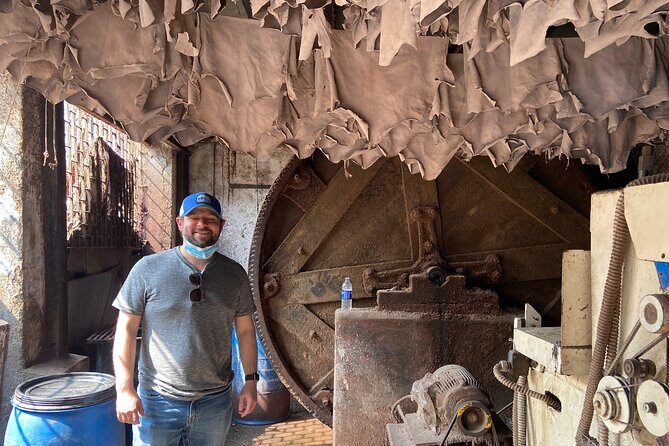
Dharavi is the kind of place where curiosity is real, but self-guided wandering can be frustrating. There are lanes, workshops, and small storefronts that make sense only after someone explains what you’re seeing. This tour fixes that with a guided circuit that’s built for understanding, not just photo stops.
What I like about the approach is that it treats Dharavi as a place with functioning systems: recycling work, small-scale manufacturing, and daily home life in the same general area. Instead of giving you a single headline about poverty, you get multiple “how does this work?” moments. That’s why it’s so much more meaningful than reading facts online and then trying to interpret the streets on your own.
It’s also worth noting the guide is local to Dharavi. That matters. You’ll tend to get straightforward explanations about how jobs connect to materials, customers, and neighborhood routines. The tone is typically practical rather than dramatic, which helps the experience feel less like spectacle and more like education.
You can also read our reviews of more tours and experiences in Mumbai.



Meeting at Third Wave Coffee: how the logistics actually feel
The tour meets at Third Wave Coffee on Tip Road, Unit 58, Ground floor, Ram Mahal, along Senapati Bapat Marg, in Marinagar Colony near Mahim (Mumbai). Ending is simple: it finishes back at the meeting point.
If you’re choosing this tour as part of a sightseeing day, the format is friendly. It’s about 2 to 3 hours, and it’s close to public transportation, so you won’t need a long commute to start the walk. You may also have pickup offered, which is useful if you want less stress before you enter a busy neighborhood.
The experience runs with a maximum of 99 travelers. That cap matters more than it sounds: it usually means you’re not shoulder-to-shoulder with hundreds of people, and it helps the guide keep the route moving while still providing explanations.
Bring a bit of patience too. This isn’t a quiet museum route. You’re walking through working areas, so people are moving, tools are in use, and the environment is active. You’ll get the most from it if you go in with the mindset of watching processes and asking questions.
The main stop: Dharavi’s mix of work zones and residential lanes
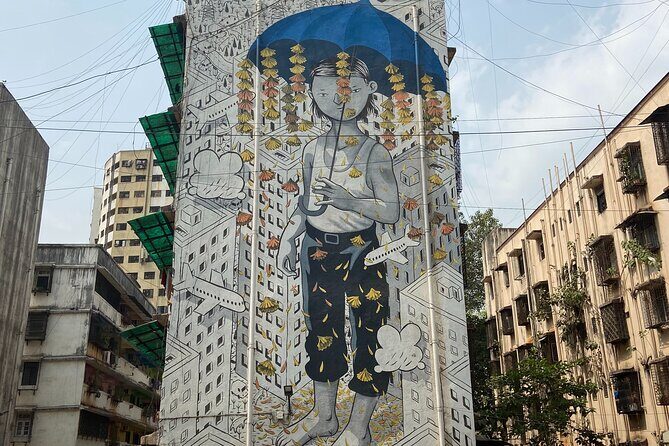
The tour centers on Dharavi itself, with a walking route that shows both the commercial side and the residential side. That combination is the point. In a lot of visitor experiences, you only see the “industry” portion or only see the “homes” portion. Here, you see them braided together.
You’ll be shown areas connected to factory-like production—where materials are processed and goods are made—then the route shifts to narrow lanes that feel more like everyday neighborhood life. Even if you don’t know much about Mumbai beforehand, you can quickly understand one key idea: work and home are intertwined.
There’s also an admission ticket included in the tour time window, which helps explain why the experience is structured rather than just a free stroll. You’re not wandering around randomly. You’re following a planned path that guides your attention toward how people make products and how those products support livelihoods.
Plastic recycling and the value chain you can see
One of the most memorable parts of this tour is the focus on plastic recycling. This isn’t a vague mention of recycling. You’ll actually move through the part of Dharavi where plastic-related work happens and get a sense of the steps involved before materials turn into usable goods.
Why this is so powerful: it shows the neighborhood as a real part of the city’s production system. Recycling in places like Dharavi isn’t just an eco topic—it’s income, jobs, and a chain of work that connects raw material to finished products.
The walk through these work spaces also helps you notice something most people miss. You’ll likely see how production depends on sorting, cleaning, and repurposing. Those steps are easy to understand when you’re standing near them and watching the process rather than reading about it later.
And because it’s guided, you’re not stuck guessing. A local guide can explain what you’re looking at in plain terms, which turns a chaotic-looking environment into something you can actually follow.
From soap making to plastic bags: small production, real skills
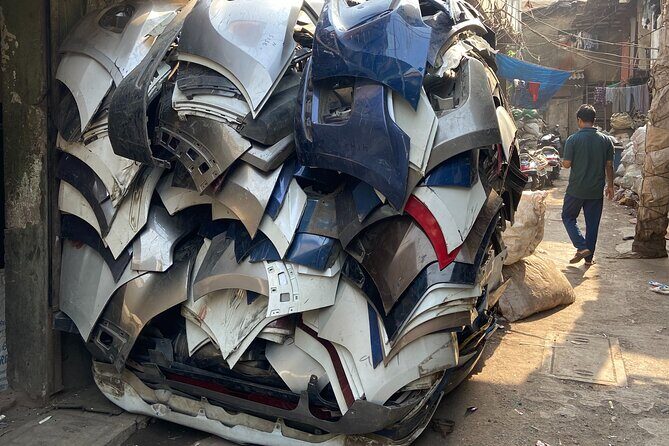
After the recycling focus, the route continues toward production areas connected to soap and plastic bag creation. In practical terms, it’s like watching “how stuff becomes goods” in a compact walk.
This section of the tour tends to leave people with a better understanding of skills and specialization. Dharavi’s economy is built from small workshops and repeatable tasks. Even without technical background, you can see how roles fit together: materials come in, work happens, and products come out.
It also helps that the route includes quick transitions between different types of work. You’re not stuck in one room for the entire tour. The movement creates context, so the whole neighborhood starts to feel like a system rather than a collection of random stalls.
One of the best outcomes of seeing multiple production steps back-to-back is that you’ll walk away with an answer to the question I always ask in places like this: how does it all connect? Here, the tour structure makes those links visible.






Narrow alleys and leather drying: noticing the details
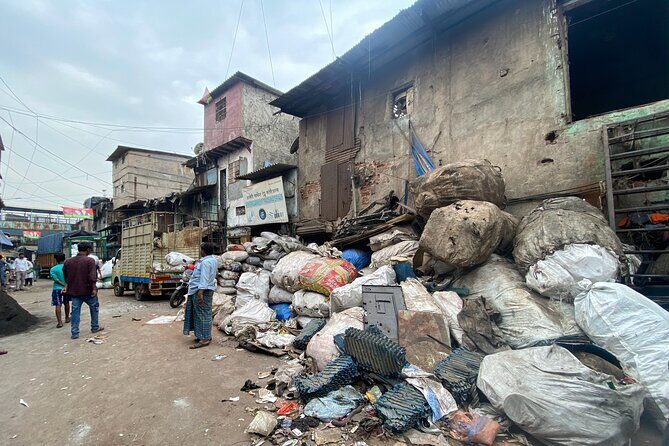
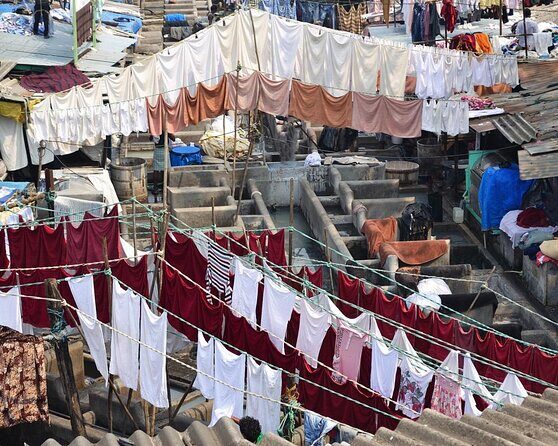
You’ll also pass through a part of the route tied to leather drying. That stops a lot of visitors in their tracks because it’s so different from the plastic work you saw earlier. It reminds you that Dharavi’s industries are varied, and the working environment changes depending on the material and the process.
Along the way, you’ll walk through narrow alleys and tight lanes. That’s not just a setting detail—it affects how you experience the neighborhood. Streets here can feel close and busy because people live and work within the same walking space. When you understand that, it becomes easier to interpret what you’re seeing.
If you’re sensitive to close-up smells, noise, or the intensity of industrial activity, be prepared. This tour is not designed to sanitize reality. It’s designed to show how daily life works in a place where work happens in the open and homes sit close to production.
The good news: the guided pace helps. You don’t just get dropped into chaos. You get context so you can connect the visuals to explanations.
The shop stop: browsing without a push
At some point, the tour includes a shop selling items produced in Dharavi. This is a helpful finishing touch because it gives you a direct visual link between the work you saw and the objects you can buy.
The key detail is how shopping is handled. You won’t be pressured. The visit is more about understanding the product side of the story than about forcing sales.
I like this kind of ending because it keeps the experience grounded. You can treat it like a small field note: yes, these are the kinds of items made from the processes you just witnessed. If you want something, great. If you don’t, you still leave with a clearer picture.
Also, it’s a practical moment to take a breath. By this stage of the walk, you may feel mentally “full.” The shop gives you a calmer pause while still staying connected to the theme of production and livelihood.
Price and value: how $4.46 makes sense (and when it might not)
At $4.46 per person, this Dharavi tour is priced in a way that’s hard to ignore. Low cost is great, but value isn’t just the number—it’s what you get for the time.
For this price point, you’re buying:
- a local English-speaking guide from Dharavi
- a route that covers both commercial and residential areas
- time-efficient access to multiple work zones
- an included admission ticket
- a short 2–3 hour structure that doesn’t require you to plan an itinerary on your own
That combination is the core value. You’re not paying for a long day of transport or complicated logistics. You’re paying for guided meaning in a concentrated amount of walking.
One situation where value might feel different: if you hate walking or dislike crowded streets, the low price won’t change the physical reality. This tour is best when you’re comfortable on your feet and willing to view daily work closely.
But if you want an authentic, guided look at Dharavi’s industries and neighborhood life, the cost-to-content ratio here is strong.
Group discounts, mobile tickets, and moving as one
The tour includes a mobile ticket, which typically makes check-in simpler and reduces paper chaos. That might sound small, but when you’re in a busy city and meeting at a café, convenience adds up.
You can also get group discounts. Even if you’re not traveling in a big group, it’s a nice perk if you’re pairing up with friends or family.
The route is designed for group walking within a cap of 99 travelers. That cap matters because it influences how the guide can speak and how often the group can pause for explanation. You’ll still feel the energy of Dharavi, but the tour isn’t meant to be a free-for-all.
For smooth participation, go in with the expectation that the guide will keep you moving and focused. Your best strategy is to stay attentive during explanations and not drift into wandering mode.
Who should book this Dharavi experience
This tour is a good match if you:
- want a guided view into how work and daily life connect
- appreciate trade-focused stops like plastic recycling, soap, plastic bag production, and leather drying
- like walking tours with a local voice and practical context
- can handle close-up reality without needing the experience to be overly polished
It may not be ideal if you’re very uncomfortable with dense neighborhoods, narrow lanes, or the intensity of active industrial work. Also, if you dislike guided structure and prefer independent exploring with lots of time off the route, you might find the pace too “follow-the-guide.”
On the other hand, if you want one strong, meaningful activity in Mumbai that doesn’t feel like a generic landmark loop, this is a solid choice.
Should you book Beautiful Bombay Tours’ Dharavi slum tour?
If your goal is to understand Dharavi as a living neighborhood with real production and real homes, this booking makes sense. The strengths are clear: a local English-speaking guide, a guided walk through commercial and residential areas, and specific work zones you can recognize as a production chain (plastic recycling → soap and bags → leather drying).
I’d book it if you’re curious, respectful, and comfortable walking in busy spaces. I wouldn’t book it if you’re looking for a relaxed, scenery-only tour or if you need a highly cushioned experience.
FAQ
FAQ
How long is the Dharavi slum tour?
The tour runs about 2 to 3 hours.
Is pickup available?
Yes, pickup is offered.
Where does the tour meet?
The meeting point is Third Wave Coffee, Tip Road, Unit no. 58, Ground floor, Ram Mahal, Senapati Bapat Marg, Marinagar Colony, Station, Mahim, Mumbai, Maharashtra 400016, India.
What’s included in the tour?
An admission ticket is included as part of the experience.
Do I need to print a ticket?
No. You’ll use a mobile ticket.
Are group discounts available?
Yes, group discounts are available.
What language is the guide?
The tour is described as having a local English-speaking tour guide.
How big is the group?
The tour has a maximum of 99 travelers.
Is there free cancellation?
Yes. Free cancellation is offered, and you can cancel up to 24 hours in advance for a full refund.
Is the area easy to reach by public transport, and can most people participate?
It’s near public transportation, and most travelers can participate.