REVIEW · GOA
Traditional Indian Cooking Class in Goa, Anjuna [vegetarian]
Book on Viator →Operated by Project Tres · Bookable on Viator
Cooking smells better than sightseeing. This traditional vegetarian cooking class in Anjuna is a real home-kitchen experience led by local women, with a 5-dish menu and hands-on spice lessons tied to Ayurveda. I especially like the relaxed, welcoming vibe and the fact that you share the meal together at the end. One thing to plan for: it’s traditional, so expect to sit on the floor, though chairs and bench seating are available if you ask.
Project Tres is also doing something concrete here: the class supports women’s economic development in India and Kenya. It’s a small group format (up to 6), so you get more interaction than you would in bigger tour setups, even if the pace can move fast in a real kitchen. Responsible tourism is built into the experience, not tacked on.
In This Review
- Key Highlights You’ll Notice Fast
- Anjuna’s Hidden-Kitchen Feel (Without the Pretend Vibes)
- Project Tres: Cooking as Community Support
- Your 3:30 PM Start: How the Class Actually Plays Out
- 1) Arrive and get oriented in a home kitchen
- 2) Learn about spices and Indian cooking culture
- 3) Cook a 5-dish vegetarian menu with local ingredients
- 4) Taste and share the meal together
- Floor Seating, Chairs, and the Reality of Hands-On
- Spices and Ayurveda: The Part That Makes It Stick
- Food Details That Matter: Mineral Water and Allergies
- Price and Value: Why This Costs What It Costs
- Who This Cooking Class Is Best For
- Should You Book This Vegetarian Class in Anjuna?
- FAQ
- How long is the cooking class?
- Is this cooking class vegetarian?
- Where does the class start, and what time?
- Is this class small or crowded?
- Will I sit on the floor?
- Are mineral water and drinks provided?
- What if I have allergies or dietary requirements?
- Does it change with weather?
- Is there a seafood option?
Key Highlights You’ll Notice Fast
![Traditional Indian Cooking Class in Goa, Anjuna [vegetarian] - Key Highlights You’ll Notice Fast](https://9.theindiatraveller.com/wp-content/uploads/traditional-indian-cooking-class-in-goa-anjuna-vegetarian-1.jpg)
- Small group size (max 6) means you can jump in without feeling like a spectator.
- 5 vegetarian dishes on the menu gives you variety without overwhelming cooking time.
- Ayurvedic spice talk helps you understand why spices are used, not just what to add.
- Mineral water is used for prep and served during the class.
- Local village setting behind Anjuna’s busy streets keeps the experience grounded in everyday life.
- Charity-through-cooking: your class contributes directly to the community project and women involved.
Anjuna’s Hidden-Kitchen Feel (Without the Pretend Vibes)
![Traditional Indian Cooking Class in Goa, Anjuna [vegetarian] - Anjuna’s Hidden-Kitchen Feel (Without the Pretend Vibes)](https://9.theindiatraveller.com/wp-content/uploads/traditional-indian-cooking-class-in-goa-anjuna-vegetarian-2.jpg)
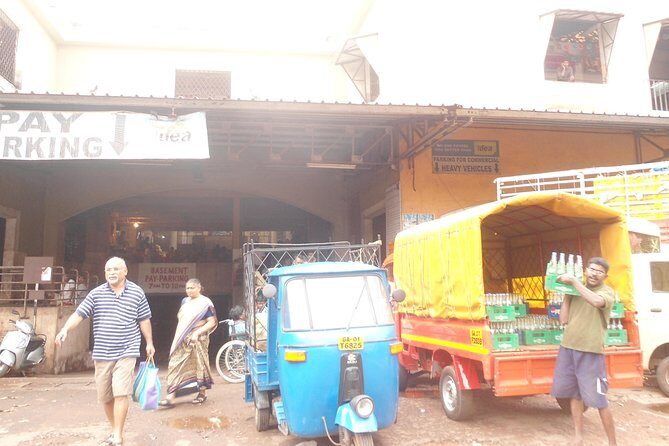
Anjuna has a distinct, very visible energy—shops, traffic, people moving in all directions. This class takes you to the quieter side of that story: a small village community setting, behind the main bustle, where cooking is part of daily rhythm, not a staged performance.
That matters because the experience is less about chasing a checklist and more about learning food the way locals actually do it—step-by-step, with spices in focus, and with a real meal at the end. The price is also easier to justify when you see it as a compact food workshop plus cultural exchange, rather than just a recipe demo.
You’re there for about 3 hours, and it stays centered around one goal: cooking a full 5-dish vegetarian menu with local ingredients. After that, you end back at the same meeting point, so you don’t have to worry about sorting out transport afterward.
You can also read our reviews of more cooking classes in Goa

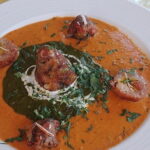
Project Tres: Cooking as Community Support
Project Tres is an initiative supporting the economic development of women in India and Kenya, and the cooking class is part of how that support happens. That’s not abstract. It’s tied to the people cooking with you and the project’s day-to-day work.
In practice, this tends to shape the tone of the session. The women leading the class aren’t presenting like trained entertainers; they’re working and teaching like home cooks. You should expect warmth and patience more often than formality.
If you care about where your tourism money goes, this is one of those activities where it’s hard to pretend you’re just buying a ticket. The class is built to feed into the project that employs and empowers the women involved.
Your 3:30 PM Start: How the Class Actually Plays Out
![Traditional Indian Cooking Class in Goa, Anjuna [vegetarian] - Your 3:30 PM Start: How the Class Actually Plays Out](https://9.theindiatraveller.com/wp-content/uploads/traditional-indian-cooking-class-in-goa-anjuna-vegetarian.jpg)
The session starts at 3:30 pm at the Project Tres Centre, at HPPW+MM, Dmello Vaddo, Anjuna, Goa 403509. The class runs for about 3 hours, and it ends back at the meeting point.
Here’s the flow you can expect, based on how the experience is designed:
1) Arrive and get oriented in a home kitchen
You’ll walk into a smaller, community-style cooking space where things feel close-up. The vibe is straightforward: you’ll be told what you’ll cook, then you’ll get positioned for the food work.
A key detail: the class is prepared quite traditionally, and that means sitting on the floor is part of the setup. If you need seating higher than the floor, mention it early—there are chairs and bench seating options.
2) Learn about spices and Indian cooking culture
Before you hit every step, you’ll get an explanation of local flavors and aromas and how Ayurvedic properties of spices fit into the way Indian cooking is thought about. Ayurveda isn’t just decorative here; you’ll hear the logic behind ingredients and why certain spices show up again and again.
Even if you’ve cooked before, this part can be useful because it helps you understand patterns: how spices behave, what they add beyond taste, and how home cooks build layers.





3) Cook a 5-dish vegetarian menu with local ingredients
All dishes in this class are vegetarian, using local ingredients. You’ll work as part of the group while the women cook and guide.
What you’ll do depends on the dish and on how fast the kitchen moves that day. Some tasks are hands-on like chopping and prep. Other tasks may happen mainly with the women doing the heavier cooking while you watch the process closely. Either way, the goal is that you leave knowing what you cooked and why.
4) Taste and share the meal together
The class ends with everyone enjoying what was made. It’s not just take-home food or a quick bite. You sit, eat, and connect the flavors back to the spice and culture lessons you got earlier.
For a lot of people, that shared meal is the memory that sticks. It’s the moment where everything you were doing stops being workshop mode and turns into food you actually want to eat slowly.
Floor Seating, Chairs, and the Reality of Hands-On
This is a practical heads-up: the format is traditional. You may end up sitting on the floor for part of the class, and that’s not something you can ignore if you have limited mobility.
The good news is that there are seating options. If you need a chair, let the women running the class know so they can plan around you.
Now, about participation: this is often described as hands-on, and it usually includes tasks like chopping and helping prep vegetables. But it’s still a real home kitchen, which means the women leading the class may move quickly and handle some steps themselves.
So here’s the balanced expectation I’d set for you:
- If you want to actively cook, you’ll likely get prep roles and opportunities to join in.
- If you’re hoping for a slow, highly coached one-dish-at-a-time cooking lesson with constant narration, you might find you do more observing than you expected.
The group size (up to 6) helps, because it makes the experience easier to manage and more personal, even if the pace is kitchen-real.
Spices and Ayurveda: The Part That Makes It Stick
A regular cooking class can teach you recipes. This one tries to help you understand spices as a system.
You’ll hear about aromatic, ayurvedic spices, and you’ll connect them to flavor and to the cultural reasons they’re used. Even if you don’t follow Ayurveda strictly, learning the reasoning behind ingredient choices can make your future cooking easier—especially if you start building your own spice mixes or thinking in layers.
And because the menu is vegetarian, the spice logic matters even more. Without meat as the main driver, spices and aromatics do a lot of the heavy lifting for depth, warmth, and complexity.
If you’re a food hobbyist who likes to know the why behind techniques, this is one of the strongest reasons to book it.
Food Details That Matter: Mineral Water and Allergies
![Traditional Indian Cooking Class in Goa, Anjuna [vegetarian] - Food Details That Matter: Mineral Water and Allergies](https://9.theindiatraveller.com/wp-content/uploads/traditional-indian-cooking-class-in-goa-anjuna-vegetarian-4.jpg)
Small kitchen details often separate a smooth experience from a stressful one, and here the basics are clearly communicated.
- Mineral water is used for preparations and served to guests.
- The menu uses local ingredients.
- You’re asked to share dietary requirements or allergies ahead of time.
Because this is a community-run home-style setup, it’s especially important that you speak up early about allergies. If something triggers you, don’t wait until you’re already in the kitchen. The earlier you tell them, the easier it is for the class to adapt.
Also, be ready for the reality that food prep methods can differ from what you’re used to. That’s part of the authenticity. It’s also why sharing restrictions clearly is so important.
Price and Value: Why This Costs What It Costs
At $39.27 per person, this class sits in the mid-range for a cooking experience in Goa. What makes it feel like good value is the combination of:
- a full 3-hour session,
- a 5-dish vegetarian menu,
- a small group setting (max 6),
- and direct support for a women-focused project.
A cheaper class might offer fewer dishes, larger groups, or less of a link to local community work. A more expensive class might feel more polished, but you’re often paying for presentation instead of learning.
Here, the value is in the connection: local women teaching in a home setting, with spice education and a shared meal.
Who This Cooking Class Is Best For
This class fits best if you want:
- a hands-on experience where food is the focus,
- spice learning tied to culture,
- and a small-group setting over a big, scripted tour.
It’s also a strong choice if you’re already in Anjuna and want something that isn’t another beach or nightlife detour. The timing—mid afternoon into early evening—works well when the morning crowds feel too much and you want a calmer plan.
If you’re someone who needs lots of accessibility accommodations beyond standard seating, you’ll want to communicate needs clearly in advance because the kitchen is traditional. If communication in your preferred language is important, you should be ready to use gestures, point to ingredients, and ask simple questions as needed.
Should You Book This Vegetarian Class in Anjuna?
If you want a real Goa food moment—spices explained, cooking done with local women, and a meal you eat together—this class is an easy yes. The small group size and the structured 5-dish vegetarian menu help make the experience feel substantial without being exhausting.
Book it if you’re flexible about traditional seating and you’re excited to learn by doing, even if not every step is taught with slow, detailed narration.
Skip it only if you’re looking for a highly formal, fully scripted cooking workshop where you personally do every action step-by-step with constant instruction. This is home cooking. Sometimes you’ll chop and prep; sometimes you’ll watch and learn. Either way, you’ll come away with flavors, methods, and spice sense that you can use again later.
FAQ
How long is the cooking class?
The class runs for approximately 3 hours.
Is this cooking class vegetarian?
Yes. The menu for this experience is all vegetarian, with a 5-dish format.
Where does the class start, and what time?
It starts at Project Tres Centre, HPPW+MM, Dmello Vaddo, Anjuna, Goa 403509, India, with a start time of 3:30 pm. It ends back at the meeting point.
Is this class small or crowded?
It has a maximum group size of 6 travelers.
Will I sit on the floor?
The class is described as prepared traditionally, so you should expect floor seating. If you need a chair, you can let the women running the class know.
Are mineral water and drinks provided?
Yes. Mineral water is used for preparations and served to guests.
What if I have allergies or dietary requirements?
You should advise them of any dietary requirements or allergies so they can plan accordingly.
Does it change with weather?
The experience requires good weather. If it’s canceled due to poor weather, you’ll be offered a different date or a full refund.
Is there a seafood option?
The session you’re looking at is vegetarian, and there is also a seafood option offered separately.