REVIEW · CHENNAI
Traditional Cooking Class in Chennai in a Local Home with Sundari
Book on Viator →Operated by Traveling Spoon · Bookable on Viator
Food at a Tamil Brahmin table feels personal. This private Chennai class with Sundari is hands-on from the first minutes, focused on practical skills for South Indian vegetarian favorites. I love that you cook several dishes yourself (not just watch), and I also like how the meal is served in a traditional way on banana leaves or stainless steel.
The main trade-off is simple: this is strictly Tamil Brahmin vegetarian cooking, so it won’t fit if you want non-veg dishes or a general, mixed-style Indian menu. If you’re okay with that, you’ll likely come away with real techniques you can repeat at home.
In This Review
- Key reasons this cooking class works
- Meeting Sundari: what makes the home-host setup special
- The menu you’ll learn: Tamil Brahmin vegetarian, 4–5 dishes
- How the session flows in Sundari’s kitchen (and why it’s efficient)
- Lunch or dinner: how the experience changes by time of day
- Eating the meal the traditional way: banana leaves and hands-on dining
- The setting: why a converted in-laws’ house beats a restaurant class
- Price and value: what $78 really buys you
- Practical tips so you enjoy it fully
- Who should book this class (and who might skip it)
- Should you book Traditional Cooking Class in Chennai with Sundari?
- FAQ
- How long is the cooking class?
- Where does the experience start and end?
- Is this a private experience or a shared group?
- What kind of food will I cook?
- How many dishes will I prepare?
- What meal options are available?
- Are beverages included?
- Is the menu the same every time?
- What’s the cancellation policy?
Key reasons this cooking class works
- Sundari teaches Brahmin vegetarian food with family tradition behind it
- You cook 4–5 dishes hands-on, then eat them as a full meal
- Lunch or dinner options shape the vibe, including meeting her husband Krishna on some sessions
- Banana leaves vs. metal plates for a more traditional dining experience
- A home setting with fruit trees and traditional decor makes the whole evening feel like a visit, not a performance
Meeting Sundari: what makes the home-host setup special
What you’re really paying for here isn’t just recipes. It’s access—to a real Chennai home and a real cook who’s doing this the way her family did it.
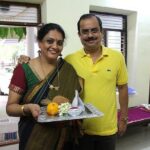
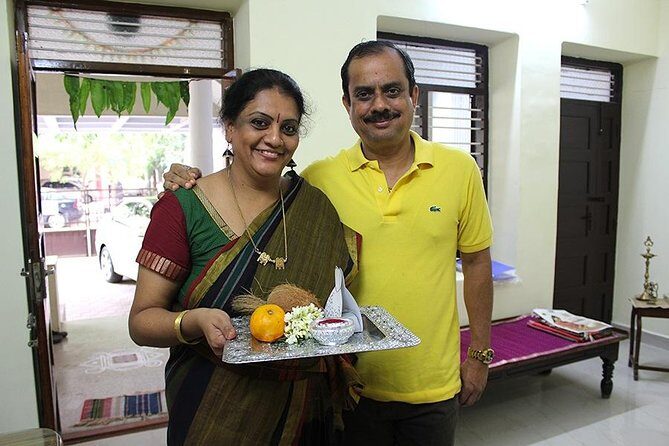
Sundari welcomes you in a converted in-laws’ house that’s been made cozy and welcoming for guests. Think traditional art and decor, plus the feeling of stepping into someone’s everyday life. There are lush fruit trees around the home, and the setting matters because it changes how the class feels. Instead of a clockwork factory of tourists, you get warmth, conversation, and a relaxed pace that still stays structured enough to get through 4–5 dishes in about three hours.
The teaching style stands out too. From the descriptions of her approach, she’s approachable and friendly, with a “you can do this” energy. That’s exactly what you want in a cooking class—especially if you’re not used to South Indian tempering, grinding, or balancing flavors for sambar and rasam.
You can also read our reviews of more cooking classes in Chennai
The menu you’ll learn: Tamil Brahmin vegetarian, 4–5 dishes
This class centers on Tamil Brahmin vegetarian fare, and the focus is tight. You’re not doing a random sampling of whatever sounds good. You’re building a traditional South Indian vegetarian meal step by step.
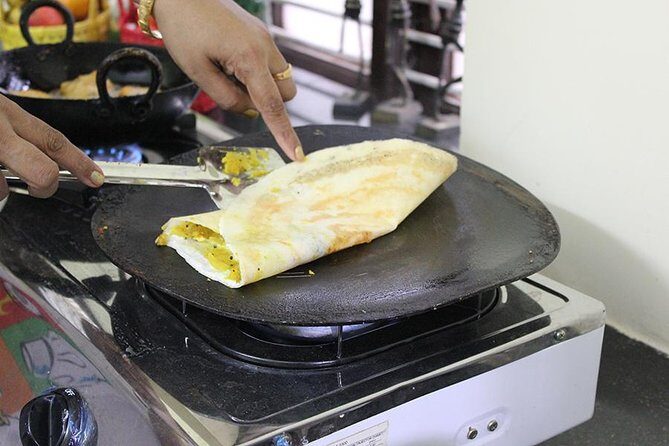
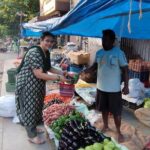
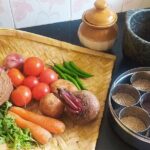
You can expect to cook 4–5 dishes, with examples often including vegetable curry, sambar, rasam, and dosas. The exact menu can vary by season, which is normal for home cooking in India. The practical benefit for you: you learn core methods that still apply even when specific ingredients change.
Here’s what that tends to mean in real terms:
- You’ll practice how sauces and gravies are built for South Indian vegetarian dishes, not just how to “assemble” a plate.
- You’ll see how sambar and rasam fit into the larger meal—thinner, spicier, and tangier profiles that balance richer curries and crisp textures like dosa (when that’s on the menu).
- You’ll pick up the logic behind vegetarian Tamil cooking: layering flavors through aromatics, lentils, and spice blends.
If you’re a foodie who likes technique, this is a big plus. You’re getting instruction that matches how people actually cook at home, not how recipes are forced into a classroom script.
How the session flows in Sundari’s kitchen (and why it’s efficient)
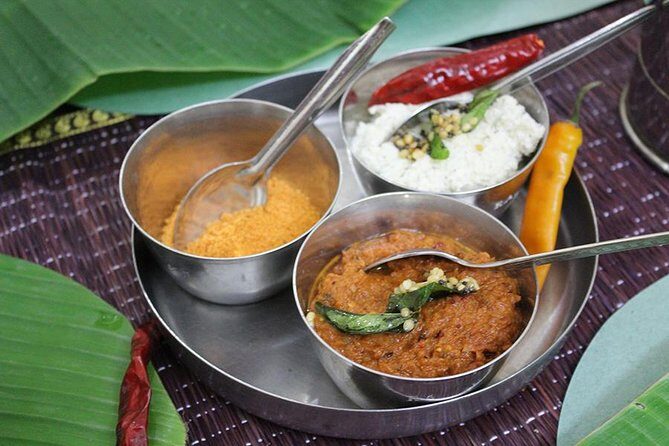
The class starts with a tour of Sundari’s home, where she introduces what you’ll be preparing. That intro isn’t just small talk. It gives you the map in your head before you start chopping and cooking, so you understand where each dish fits and how the timing works.
Then it’s straight into the kitchen. You’ll roll up your sleeves and cook with Sundari in a hands-on format. With a private, personalized setup, it’s easier to ask questions—like why something is simmered longer, what to watch for in texture, or how to adjust a component as it comes together.
You also get a clear endpoint: a group meal where you eat what you made. That matters because many cooking classes turn into a half-demo, half-snack situation. Here, the structure pushes you to finish dishes as part of a full plate-meal experience, which is a better use of your three hours.
Lunch or dinner: how the experience changes by time of day
You can choose dinner or lunch, and that choice does more than change the clock.
For dinner (and for weekend sessions), you may also get to meet Sundari’s husband, Krishna. Based on how the experience is described, Krishna is a foodie who enjoys talking and meeting new people. That can add a slightly more social feel to the meal, where the cooking becomes part of a broader family conversation rather than just a class ending in polite goodbyes.
Even if Krishna isn’t around for your specific session, you’ll still get that home-host atmosphere. The meal and conversation style is part of the reason this class gets high praise: it doesn’t feel like you’re being processed.
Eating the meal the traditional way: banana leaves and hands-on dining
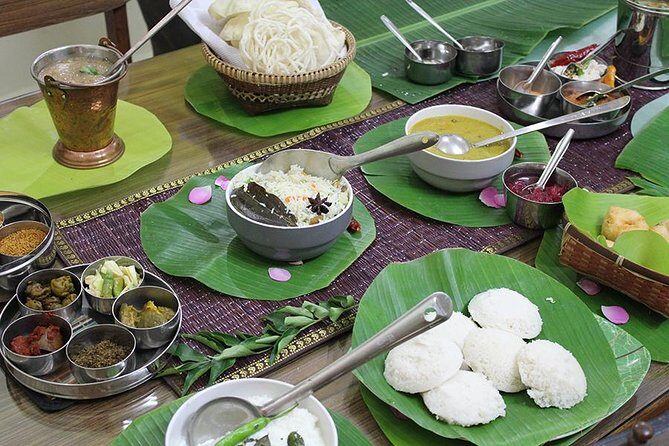
One of the most memorable parts is the dining setup. Your dishes are served in the traditional way: eating with your hands on stainless steel plates or on fresh banana leaves.
That detail isn’t gimmicky. Banana leaves change the eating rhythm and the feel of the meal. They also fit the South Indian tradition of serving food in a way that’s meant to be eaten together, as a complete course meal rather than separate items.
If you’ve never eaten this way, don’t worry. The format is the point: you taste the food the way it’s meant to be tasted, with the textures and sauces designed to be scooped and mixed as you go. And because you cooked the dishes yourself, you’ll have an easier time understanding what each part contributes—like how sambar’s depth complements vegetable curry, or how rasam brings brightness.
For many people, this is the “ah, that’s why” moment. You stop thinking of the dishes as disconnected items and start seeing them as a system.
A few more Chennai tours and experiences worth a look

The setting: why a converted in-laws’ house beats a restaurant class
I like that this isn’t staged like a commercial kitchen experience. Sundari’s home—converted in-laws’ house, traditional decor, fruit trees outside—creates a calm, personal vibe.
A restaurant cooking class can be loud and rushed. A home class usually isn’t trying to impress you with equipment. Instead, it focuses on the flavors and methods that matter, and Sundari’s background in family cooking since childhood is part of what you’re absorbing.
Also, because it’s private for your group, you’re not competing for attention, space, or time with other schedules and personalities. That usually leads to better teaching and a more relaxed learning pace.
Price and value: what $78 really buys you
At $78 per person for about three hours, this is not a budget street-food deal. But it also isn’t a “pay for the tour bus” price tag. What you’re getting is a private, in-home lesson that includes:
- A cooking class focused on Tamil Brahmin vegetarian dishes
- Preparation of 4–5 dishes
- A full meal experience
- Nonalcoholic beverages included
When you compare it to the alternative—eating at local restaurants—you’re paying for instruction and for the ability to recreate techniques later. When you compare it to more impersonal cooking school formats, you’re paying for warmth, attention, and authenticity.
Also, several write-ups highlight that Sundari goes out of her way to fix problems and make things right if something goes wrong on the logistics side. That kind of care affects real value. It’s not just the food; it’s the sense that you’ll be taken care of.
Practical tips so you enjoy it fully
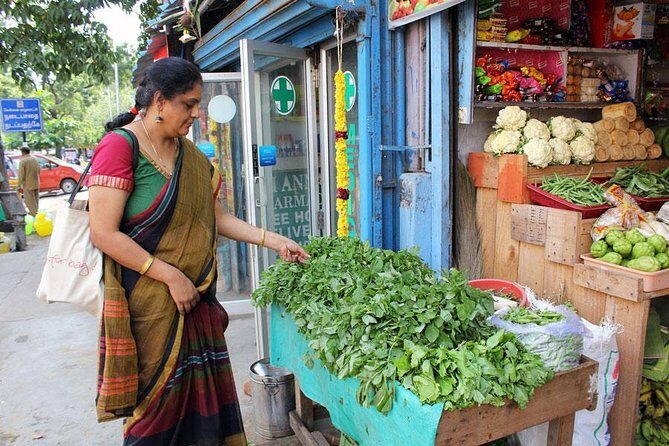
A few things will make your experience smoother:
- Go in with an open mind about vegetarian Tamil Brahmin cooking. If your ideal food vacation includes meat or non-Brahmin regional styles, this won’t match.
- Expect seasonal menu changes. If dosas, sambar, rasam, or vegetable curry are on your must-cook list, assume the plan can shift slightly depending on what’s available.
- If you have allergies, dietary restrictions, or specific preferences, tell Sundari at booking. The class notes that you should advise ahead of time so they can plan accordingly.
- Bring curiosity more than culinary confidence. This class is built for learning, and the tone is friendly and approachable.
Who should book this class (and who might skip it)
This fits best if you:
- Want South Indian vegetarian cooking with real home-style technique
- Like meal-based learning (cook, then eat what you made)
- Enjoy cultural context through food, conversation, and a family-style setting
- Prefer a private experience rather than a crowded group format
You might skip it if you:
- Want non-vegetarian dishes or a broader Indian menu beyond Tamil Brahmin vegetarian fare
- Only want a quick tasting experience with minimal cooking
- Are hoping for a restaurant-style environment with standardized presentation
Should you book Traditional Cooking Class in Chennai with Sundari?
If you’re looking for a class that feels like a genuine visit and teaches you more than surface-level cooking, I think it’s a strong choice. The biggest wins are the combination of hands-on instruction and a truly traditional meal format—especially when served on banana leaves.
The decision comes down to one question: are you excited about Tamil Brahmin vegetarian food and ready to cook 4–5 dishes in a real home kitchen? If yes, book it. If you want a mixed menu or non-veg cooking, choose a different style of class.
FAQ
How long is the cooking class?
It runs for about 3 hours.
Where does the experience start and end?
It starts in Adyar, Chennai, Tamil Nadu, India, and ends back at the meeting point.
Is this a private experience or a shared group?
It’s private. Only your group participates.
What kind of food will I cook?
You’ll cook Tamil Brahmin vegetarian dishes, typically including items such as vegetable curry, sambar, rasam, and dosas.
How many dishes will I prepare?
You’ll cook about 4–5 dishes.
What meal options are available?
You can choose lunch or dinner.
Are beverages included?
Yes, nonalcoholic beverages are included.
Is the menu the same every time?
No. The menu may vary depending on the season.
What’s the cancellation policy?
You can cancel for a full refund up to 24 hours in advance. If you cancel less than 24 hours before the start time, the amount paid isn’t refunded.