REVIEW · CHENNAI
Mahabalipuram and Pondicherry trip from Chennai with 01 Night Accommodation
Book on Viator →Operated by Wonder tours · Bookable on Viator
A two-day escape from Chennai feels surprisingly complete. You’ll cover Pallava-era Mahabalipuram monuments and Pondicherry’s French-and-Tamil blend without messing with public transport, thanks to pickup, private rides, and included major entry fees.
What I like most: the tour runs as a private experience, so the day moves at your group’s pace instead of waiting around. I also like that the core costs are controlled, with no hidden charges for entry fees and one night of accommodation built into the price.
The main thing to consider is that this is a tight schedule: two full sightseeing days, plus the drive between places, so you’ll want comfy shoes and some flexibility if you’re sensitive to heat and long days.
In This Review
- Key things that make this tour a smart choice
- Two days from Chennai: why Mahabalipuram + Pondicherry works
- Price and logistics: what you’re actually buying for $299
- Day 1 in Mahabalipuram: Pallava stonework in human scale
- Wonder tours and travels pickup in Chennai
- Mamallapuram (about 1.5 hours): what to notice first
- Pancha Rathas: the monolithic temples you can walk between (30 minutes)
- Arjuna’s Penance: a bas-relief that tells a whole story (45 minutes)
- Krishna’s Butter Ball: the rock that makes you pause (30 minutes)
- Shore Temple: when stone meets the sea (45 minutes)
- Transfer to Pondicherry and check-in (overnight)
- Day 2 in Pondicherry: French streets, Ashram calm, and Auroville’s big idea
- Pondicherry introduction: French-and-Tamil without the museum vibe (8 hours)
- Sri Aurobindo Ashram: where meditation and memorial meet (45 minutes)
- Pondicherry Lighthouse and a French heritage walk (40 minutes)
- Sri Aurobindo Handmade Paper factory (40 minutes)
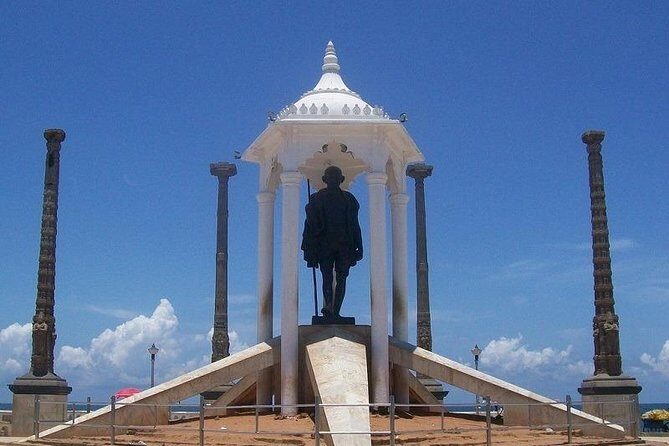
- Statue of Gandhi on the promenade (30 minutes)
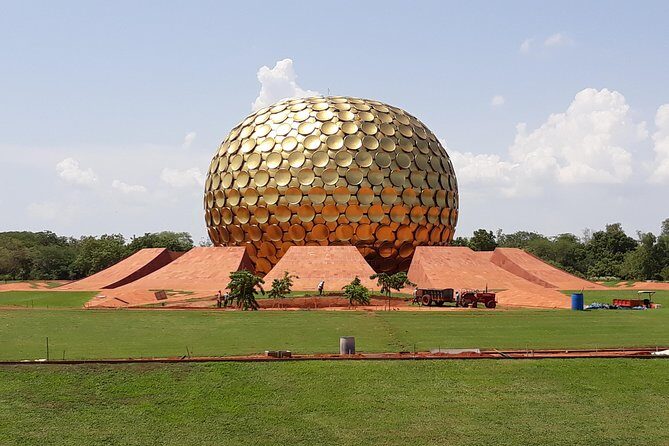
- Auroville after lunch: global citizen experiment, Matri Mandir (1 hour)
- Accommodation in Pondicherry: the overnight that keeps Day 2 enjoyable
- What to pack (and what to plan for) in Tamil Nadu coastal heat
- Who this private tour suits best
- Should you book this Mahabalipuram and Pondicherry tour?
- FAQ
- How long is the Mahabalipuram and Pondicherry tour?
- What is included in the tour price of $299.00 per person?
- Are entry fees included?
- Do you get pickup and drop-off in Chennai?
- Is this tour private?
- What is the cancellation policy?
Key things that make this tour a smart choice
- Pickup and drop-off from Chennai: you start and end with less hassle
- Private transportation for 2 days: smoother timing between sites
- Entry fees handled up front: the tour states all entry fees are included
- One night accommodation in Pondicherry: you get an actual overnight break
- English-speaking guide support: the experience is explained clearly
- A mix of monuments and ideas: Pallava temples plus Auroville’s global-citizen concept
Two days from Chennai: why Mahabalipuram + Pondicherry works
Chennai is the perfect springboard for coastal Tamil Nadu. This tour uses that advantage well: you get the UNESCO-classic monuments of Mahabalipuram on Day 1, then the coast-city mood of Pondicherry on Day 2. The pacing is structured so you’re not spending your trip just figuring out buses, timing, and ticket lines.
Mahabalipuram (also called Mamallapuram) is one of those places where the stone carvings feel instantly readable even if you don’t know the mythology details. Pondicherry adds a different flavor: French colonial architecture and street design, layered with everyday Tamil life. The result is a trip that feels like two different chapters, without needing extra travel days.
The private setup matters. When you’re touring temples, bas-reliefs, and heritage walks, small timing changes add up. A group transfer you don’t have to manage lets you spend more energy looking closely.
You can also read our reviews of more evening experiences in Chennai

Price and logistics: what you’re actually buying for $299
At $299.00 per person for about 2 days, you’re not just paying for sightseeing. You’re paying for the parts that usually slow down South India trips: coordinated pickup, private driving, and a full overnight stay included.
Here’s what the package covers based on the tour details:
- Breakfast
- Private transportation for 02 days
- 01 night accommodation
- Cultural evangelist as host and guide
- Pickup and drop-off in Chennai
- Mahabalipuram entry ticket
- Entry fees are described as included with no hidden charges
What’s not included: beverages. That’s normal for most tours, but it’s worth planning for if you like iced tea, coffee, or bottled water.
Also note: you’ll receive a mobile ticket, which is handy because it reduces the back-and-forth of printing and paper confirmations.
Value verdict: If you want a clean, guided way to do Mahabalipuram and Pondicherry together—especially with an overnight in between—this price structure is reasonable. You’re paying for convenience and for the fact that the tour handles the “ticket and transport friction.”
Day 1 in Mahabalipuram: Pallava stonework in human scale
You start with morning pickup from your hotel or the airport in Chennai. After that, the tour focuses on Mahabalipuram’s big-name monuments in a logical sequence, with short stops that help you keep your energy up.
Wonder tours and travels pickup in Chennai
The day begins at a Chennai pickup point before the drive south. This is the part you’ll appreciate later, because you don’t want to be negotiating transport while your day is already heating up.
Mamallapuram (about 1.5 hours): what to notice first
Mahabalipuram was a 7th-century port city of the Pallavas, about 60 km south of Chennai. The key thing here is that it isn’t only about a single temple. The region became a center for stone carving for centuries, and that legacy shows in temples, bas reliefs, and mandapas carved into rock overhangs.
When you arrive, take a moment to orient yourself visually. Look for repeating patterns: carved columns, narrative panels, and how the stonework sits within the landscape. Even without a guide going line-by-line, the scale and the storytelling style pull you in.





Pancha Rathas: the monolithic temples you can walk between (30 minutes)
Pancha Rathas means five chariots—rock-cut monolithic temples built in the 7th century. Each ratha is tied to a character from the Mahabharata: Draupadi, Arjuna, Nakul, Sahadeva, Bhima, and Yudhister. Next to the ratha of Nakul-Sahadeva, there’s also an elephant sculpture.
Here’s a fun way to experience it: the monument invites you to change your viewpoint. The tour description notes an uncanny resemblance between the rear of one chariot and the elephant when you stand toward the back. That’s the kind of detail you’ll miss if you rush.
Practical note: This stop is short. If you love close-looking, ask your guide if you can take 5 extra minutes to circle one section.
Arjuna’s Penance: a bas-relief that tells a whole story (45 minutes)
Arjuna’s Penance is a long bas-relief monument, about 100 feet long and 45 feet tall, depicting vivid Mahabharata scenes. The story centers on Arjuna performing austerities to obtain Lord Shiva’s weapon.
What makes this worth your time is how you read it in layers:
- From a distance, you see the overall carving composition.
- Closer up, you start recognizing figures and events.
- As you move along the length of the relief, the narrative becomes clearer.
Don’t try to read every scene. Pick two or three sections and let those be your focus.
Krishna’s Butter Ball: the rock that makes you pause (30 minutes)
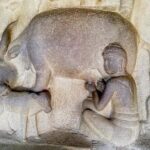
Krishna’s Butter Ball is a granite boulder perched on a slope, seeming like it should slide but not having moved “an inch” for more than a thousand years. That’s the kind of myth-meets-geology moment that grabs attention fast.
If you’re the type who likes puzzles, this stop is for you. Spend time at eye level from different angles. It’s one of those places where photography can help, but your eyes will do most of the work.
Shore Temple: when stone meets the sea (45 minutes)
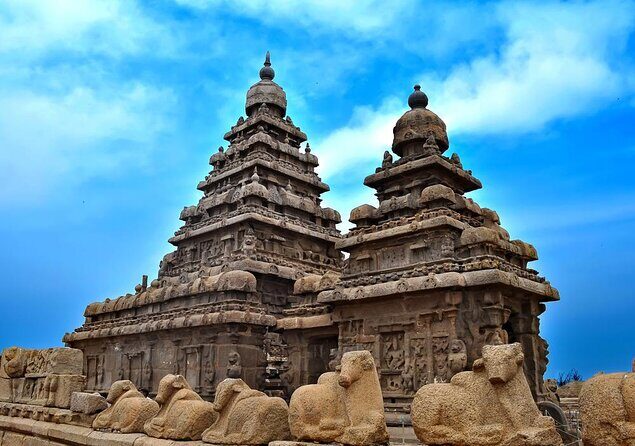
The day ends at the Shore Temple, built in the early 8th century by King Raja Simha. It overlooks the Bay of Bengal and was a landmark for sea travelers. The description also notes that Marco Polo referred to the site as the seven pagodas, with multiple temples once standing there.
At this stop, timing matters. Even though your visit is scheduled for about 45 minutes, plan for pauses. The temple’s setting turns it into more than a carved monument—you’re also looking at the coastline context it was built to face.
Transfer to Pondicherry and check-in (overnight)
After Mahabalipuram sightseeing, you’ll transfer to Pondicherry and check in for your night stay. That overnight is a real advantage. Instead of trying to squeeze French quarter wandering into a single late-day push, you’ll have a fresh start for Day 2.
Day 2 in Pondicherry: French streets, Ashram calm, and Auroville’s big idea
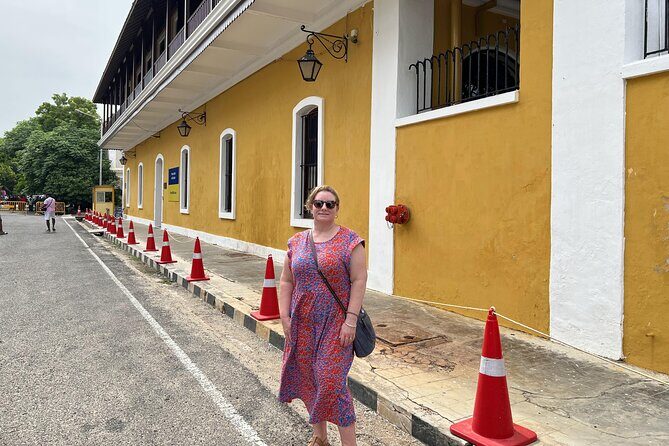
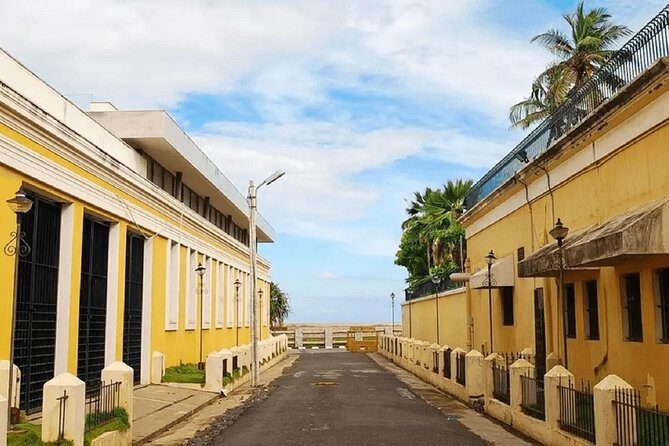
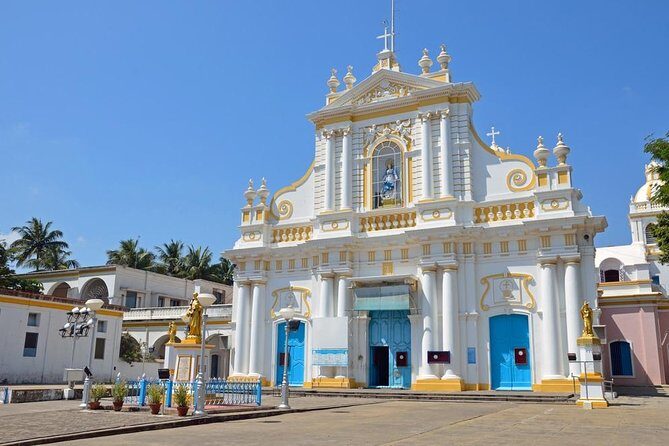
Day 2 is built around Pondicherry’s two identities: the French side and the Tamil side. The French East India Company influence shows in European classical style structures, while the Tamil quarter keeps local vernacular character. This mix shows up not only in buildings, but in the way neighborhoods feel.
You’ll spend about 8 hours around Pondicherry stops, then go to Auroville after lunch for about 1 hour.
Pondicherry introduction: French-and-Tamil without the museum vibe (8 hours)
The tour frames Pondicherry as a place where French architecture sits alongside Tamil life, with wide boulevards (with French names) and a seafront promenade. That’s the essential context: you’re not only visiting sights; you’re moving through a living city.
A practical tip: plan to slow your pace here. Pondicherry rewards foot movement—just not too fast. You’ll appreciate the architecture more when you’re not racing from one photo spot to the next.
Sri Aurobindo Ashram: where meditation and memorial meet (45 minutes)
The Ashram visit focuses on Sri Aurobindo Ghosh’s memorial. The tour mentions a brief experience of his life and philosophy, plus a section about Mirra Alfassa.
Even if you’re not on a spiritual pilgrimage, this stop works because it’s a calm, structured space. You get context instead of just walking past walls.
What I’d watch for: how quiet the space feels compared to the surrounding city. That contrast is often the point of including an Ashram on a sightseeing itinerary.
Pondicherry Lighthouse and a French heritage walk (40 minutes)
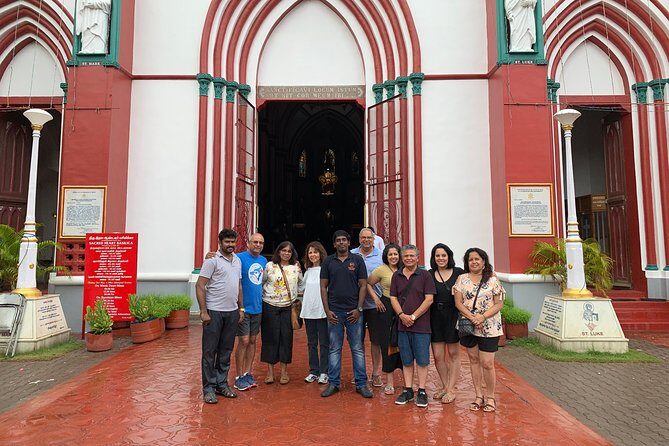
A French heritage walk goes through the heart of the city with glimpses of French-style architecture. The lighthouse stop is part of that walking-based appreciation.
This is one of the best parts for people who like streets. Temples are visual, but street design is where you understand how the city grew. You’ll likely spend more time looking at facades, balconies, and street geometry than reading plaques.
Sri Aurobindo Handmade Paper factory (40 minutes)
This stop is a change of pace. You’ll visit a factory that makes hand made paper from 100% cotton rag pulp. The tour notes techniques like silk screen printing and marbling.
If you like crafts, this is satisfying because you see the practical process. It’s not just a “look how pretty” factory stop. It’s also a window into how industrial creativity can still feel handmade.
What to expect: the tempo is more workshop than monument. If you want to sit down with something visual and hands-on (even if you’re only watching), you’ll probably enjoy it.
Statue of Gandhi on the promenade (30 minutes)
Then you’ll walk through the promenade facing the Bay of Bengal, ending at the Statue of Gandhi. Even though it’s a short stop, it helps anchor your Pondicherry day in the waterfront setting.
This is a good moment to take in sea air and reset before Auroville.
Auroville after lunch: global citizen experiment, Matri Mandir (1 hour)
Post lunch, the tour goes to Auroville, described as a global village where people gave up nationalities and live as global citizens under one authority: supreme truth. The tour also notes sustainable ways of life.
You’ll get to see Matri Mandir, a giant dome used for silent meditation.
This part helps the trip feel less like “only temples and colonial buildings.” Auroville is about an idea: how a community might organize life. Even if you don’t fully agree with the concept, it’s the kind of place that makes you think.
Practical consideration: You’ll have less time than you’d need for a long exploration. So treat it as a first look rather than a final word.
Accommodation in Pondicherry: the overnight that keeps Day 2 enjoyable
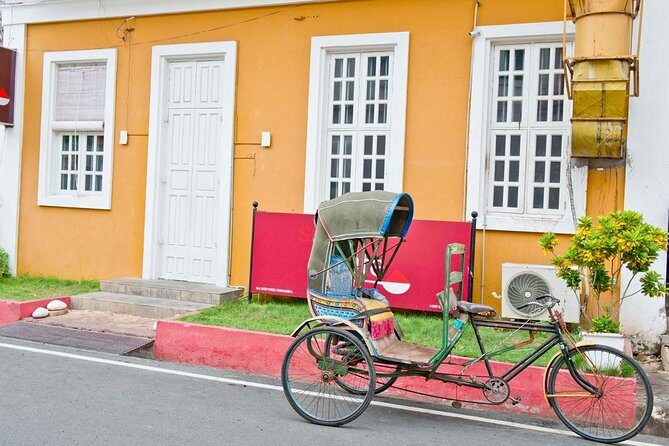
The tour includes one night accommodation in Pondicherry. You’ll check in after your Day 1 sightseeing, and that matters because Pondicherry is best when you’re not arriving exhausted at night.
One review specifically noted a 3-star level stay being nice. The details beyond that aren’t listed, so I can’t promise the exact hotel category for every departure. Still, the important point is that you’re guaranteed a night of rest inside the package, instead of trying to book last-minute rooms on the fly.
What to pack (and what to plan for) in Tamil Nadu coastal heat
Since the tour combines coastal Mahabalipuram with Pondicherry promenade walking, you’ll feel the weather. Based on the structure and walking-heavy stops, pack for comfort rather than style.
Bring:
- Comfortable walking shoes (rock-cut areas and promenades)
- Sun protection (hat/sunglasses/sunscreen)
- A light layer for indoor spaces like heritage stops or ashram areas
- Your own beverages if you’re picky, since beverages aren’t included
Plan for:
- Heat and sun during open-air stops.
- Short visits that move quickly, so you’ll want to stay ready to look and then move on.
Who this private tour suits best
This tour fits best if you want:
- A guided way to see Mahabalipuram’s major carvings and Pondicherry’s major cultural stops without managing transport
- An easy structure with pickup and private transportation
- A blend of monuments and lived-in places (French streets, promenade, Ashram, and Auroville)
It may not be ideal if you want slow travel with deep time at one site. Two days is enough for a strong overview, but not for weeks of return visits and extended reading.
Also, if your group values English explanations, the guide format is designed for that, and that clarity seems to be part of what people enjoy.
Should you book this Mahabalipuram and Pondicherry tour?
If you’re deciding between DIY and a packaged approach, I’d lean toward booking this one if you want:
- Less hassle (pickup, private rides, and a real overnight)
- Clear coverage of top monuments like Pancha Rathas, Arjuna’s Penance, and Shore Temple
- Pondicherry stops that cover both heritage and atmosphere, including Sri Aurobindo Ashram and Auroville
Skip it (or consider a longer trip) if you know you get impatient with tight schedules or you want more time in just one place—Mahabalipuram or Pondicherry.
For most people trying to do both cities from Chennai efficiently, this looks like a solid, convenience-forward way to get the best of the coast.
FAQ
How long is the Mahabalipuram and Pondicherry tour?
The tour is listed as 2 days (approx.), with sightseeing on Day 1 in Mahabalipuram and Day 2 covering Pondicherry and Auroville.
What is included in the tour price of $299.00 per person?
The tour includes breakfast, private transportation for 2 days, one night accommodation, a cultural evangelist as host and guide, pickup and drop-off in Chennai, and Mahabalipuram entry ticket.
Are entry fees included?
Yes. The tour highlights that there are no hidden charges and that all entry fees are included, with the schedule showing admission tickets as included or free where marked.
Do you get pickup and drop-off in Chennai?
Yes. Pickup is offered from your hotel or airport in Chennai, and there is also pickup and drop-off in Chennai included in the tour.
Is this tour private?
Yes. It is described as a private tour/activity, meaning only your group participates.
What is the cancellation policy?
You can cancel up to 6 days in advance for a full refund. For a 50% refund, cancellation must be 2–6 days before the experience. If you cancel less than 2 days before the experience, the amount paid is not refunded.