REVIEW · CHENNAI
Mahabalipuram tour by Tourism Ministry approved company
Book on Viator →Operated by 5 Senses Walks · Bookable on Viator
Rock-cut temples make Mahabalipuram addictive. This private, narrated day trip from Chennai is built for a stress-free UNESCO day, with entrance fees and lunch included so you can focus on the stonework. It’s also the kind of tour where a guide like Kannan (among others) can switch from big-picture Pallava context to stop-by-stop storytelling when you ask questions.
The main thing to consider is that it’s a packed, fixed-day circuit in about 7 hours, so if you’re after lots of free time for wandering or beach hangs, you’ll want to plan for a tighter schedule than an all-day independent trip.
In This Review
- Quick take: what you’ll remember
- A Full Day of Pallava Carvings from Chennai
- Price and What’s Included (and What’s Not)
- Getting There and Back: Pickup, Private Car, and Pace
- Pancha Rathas: Five Monolithic Temples to Set the Stage
- Arjuna’s Penance and Pancha Pandava Cave: Epic Reliefs and Pillared Sculpture
- Krishna’s Butter Ball, Varaha, and Trimurti Caves: Weird Rocks and Serious Craft
- Ganesha Ratha and the Old Light House: Chariots and a 7th-Century Beacon
- Mahishasuramardini Cave and Shore Temple: Coastal Finishing at Bay of Bengal
- Lunch, Guide Style, and Comfort Tips for a Smooth Day
- Who This Tour Fits Best (and Who Should Skip It)
- Should You Book This Mahabalipuram Day Trip?
- FAQ
- FAQ
- What is the duration of the Mahabalipuram tour from Chennai?
- What is the price per person?
- Does the tour include pickup and drop-off from Chennai hotels?
- Are entrance fees included?
- Is lunch included?
- Are beverages included?
- Is this a private tour?
- How many UNESCO sites are included?
- What sites are included in the route?
- What is the cancellation policy?
Quick take: what you’ll remember
- Entrance fees are included, so you spend less time at ticket counters and more time looking closely at carvings.
- Lunch is included, and multiple guide-led accounts highlight it as a comfort-food win after a temple-heavy morning.
- Pace is adjustable, and guides are praised for going at the speed that fits your questions and photo stops.
- Local guides bring the stories alive, with names like Kannan and Ramesh often called out for clear, detailed explanations.
- The driver experience matters, and safety and courtesy show up repeatedly in the feedback.
A Full Day of Pallava Carvings from Chennai
Mahabalipuram (often called Mamallapuram) is one of those places where the details matter. Up close, you start noticing how Pallava-era artisans turned plain granite and rock faces into scenes from epics and everyday sacred life.
This tour is designed around that reality: you get door-to-door transport from Chennai, a local guide who narrates in a way that’s easy to follow, and a sequence of major monuments that lets your eyes “learn” as you go. If you like architecture, mythology, and big visuals you can’t get from photos, this is a solid way to spend a single day.
Also, it’s not just temple stops in theory. The route includes cave temples, monolithic chariots (rathas), large bas-reliefs, and the coastal context at the end—so you get a fuller picture of why Mahabalipuram mattered as a port and cultural center.
You can also read our reviews of more tours and experiences in Chennai.
Price and What’s Included (and What’s Not)
At $115 per person for a roughly 7-hour private tour, the value comes from what’s bundled. You’re getting:
- a professional guide
- lunch
- entrance charges
- pick and drop to your Chennai hotel
- a fully narrated experience
That “included” part is the big deal. In India, site entry and small fees can quietly add up fast, and coordinating multiple tickets on your own can eat your energy. Here, the plan is to remove those friction points so you can spend your attention where it belongs: the monuments.
What’s not included is beverages. That’s normal for a half-day-ish food plan, but do yourself a favor and plan on buying water or drinks during breaks rather than assuming they’re included.
Getting There and Back: Pickup, Private Car, and Pace
This is a private tour for your group, with travel by private car. That matters more than people think. You’re not sharing a bus with strangers, and you’re not stuck dealing with delayed meetups. In the feedback, the combination of a courteous, safe driver and an organized day is repeatedly mentioned.
Travel time is part of the deal. One guide-led account notes the drive itself is about an hour each way, so you’ll feel the schedule “pull” toward the day’s start and finish. The upside: you avoid the mental load of arranging transport and timing.
The tour style also leans flexible within reason. Guides are praised for adjusting the pace so you can take pictures when you want, ask questions, and linger where something catches your eye. That’s especially useful in Mahabalipuram, where reliefs and cave details reward slow looking.
Pancha Rathas: Five Monolithic Temples to Set the Stage
You start at Pancha Rathas, the five monolithic temples sometimes translated as five chariots. These are rock-cut structures connected with the Pallavas and date to the 7th century. The “chariot” label helps you imagine the temples as sculpted forms of movement—part architectural object, part myth-shaped monument.
This stop works well as a warm-up because it calibrates your eye. Early on, your brain learns what kind of carving styles to look for—edges, levels, and how sculptors used the rock surface as both canvas and boundary. It’s not just a collection of shapes; it’s a lesson in how Pallava builders made stone look almost like it could shift position in time.
Downside to plan for: monolithic doesn’t mean small. You might want a few extra minutes to circle and compare angles, especially if you’re into stone details. The stop length here is short, so if you want more time, ask your guide at the start for extra minutes at the sites that interest you most.
Arjuna’s Penance and Pancha Pandava Cave: Epic Reliefs and Pillared Sculpture
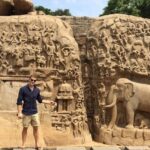
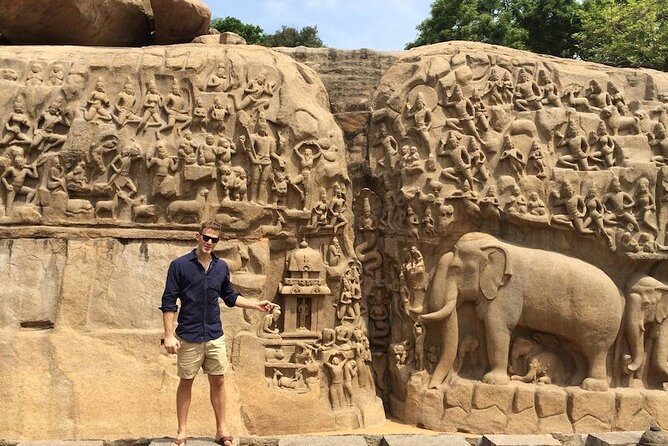
Next is Arjuna’s Penance, one of Mahabalipuram’s most dramatic works. It’s a bas-relief monument considered a standout example of ancient Indian art, measuring roughly 100 feet long and 45 feet tall. It depicts scenes from the Mahabharata, with the scale doing a lot of the “wow work” before you even interpret a single figure.
When a guide narrates this stop well, you stop treating it like a wall of carvings and start seeing it like a story panel. You begin to track compositions and repeated motifs, which is exactly what makes relief sculpture satisfying instead of overwhelming.
From there, you go to Pancha Pandava Cave, described as the largest cave-temple at Mahabalipuram. It’s supported on six pillars and two pilasters, and a key visual feature is the Yali figures carved on the pillars—mythical creatures that add motion and bite to the architecture.
Practical note: caves can be visually tricky if the lighting is inconsistent. Your guide can help you position yourself for the best viewing angle and explain what to look for at pillar level. If you’re serious about photography, tell your guide early so they can help time the best viewing moments.



Krishna’s Butter Ball, Varaha, and Trimurti Caves: Weird Rocks and Serious Craft
Mahabalipuram has a sense of humor, and Krishna’s Butterball is part of that. It’s a granite boulder perched on a slope, seemingly defying gravity. It’s brief, but it’s memorable because it mixes curiosity with the local legend vibe—something you can point to and say, yes, I saw the famous rock.
Then you shift to deeper craft at the cave temples. Varaha Cave Temple is carved out of a huge granite piece and dates to the 7th century. The work reportedly took several decades to complete, and you’ll notice squatting lions adorning the pillars that support parts of the structure. Those lions aren’t just decoration; they also help you read the building’s “load-bearing” logic and how humans made a heavy sacred object feel intentional.
After that comes Trimurti Cave, dedicated to the holy trinity of Hindu gods: Brahma, Vishnu, and Shiva. This cave is known for Pallava-era rock-cut architecture and fine carvings, including elephant figures.
These caves are a good trio because they show different carving strategies:
- a scene-driven relief-like atmosphere,
- an animal-and-structure emphasis,
- and a multi-deity, symbol-forward approach.
If you’re the kind of visitor who wants to understand what you’re seeing instead of just photographing it, this portion is where the narrated format pays off.
Ganesha Ratha and the Old Light House: Chariots and a 7th-Century Beacon
Ganesha Ratha is next, and the style is striking. This is an imposing chariot carved out of a single stone. Originally dedicated to Lord Shiva, it’s now associated with Lord Ganesh. It dates to the 7th century and is linked with King Mahendravarman I.
What I like about starting with rathas and then returning to “single-stone” monuments is how your eye stops treating them as separate categories. You start to see shared design logic across the sites: proportion, repeating motifs, and how artists made the rock behave like carved metal or wood.
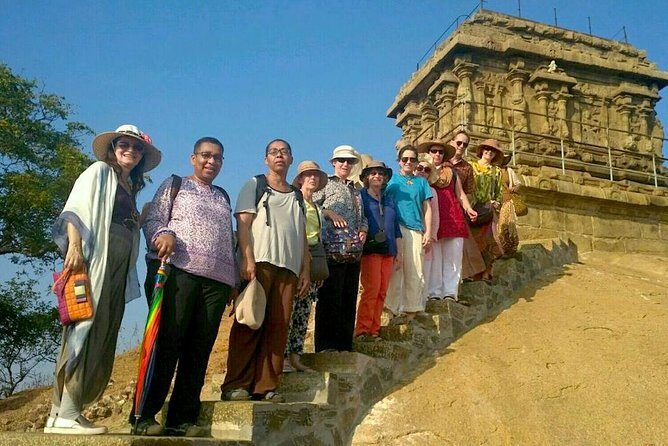
Then you shift from temple symbolism to coastal function at the Old Light House, built around 640. It’s described as India’s oldest lighthouse and among the world’s oldest. The story here is the port angle: Mahabalipuram was a busy port from the 7th century, and the lighthouse helped keep mariners safe.
This is a smart placement in the day. After hours of stone stories, you get reminded that these monuments weren’t made in isolation. They sat in a working coastal region, shaped by trade, arrivals, and movement.
If you’re short on time for photos, use the Old Light House moment for one wide view rather than many tight shots. Your brain will thank you later when you compare the coastal context with the final temple panorama.
Mahishasuramardini Cave and Shore Temple: Coastal Finishing at Bay of Bengal
The day continues with Mahishasuramardini Cave, another highlight for bas-reliefs. The cave features two major bas-reliefs, including one showing Lord Vishnu sleeping on coils of a serpent. The second relief is described as another dramatic scene from Hindu mythology (the details given focus most clearly on the Vishnu panel, so you should rely on your guide’s explanation for the rest).
This is one of those stops where a guide matters a lot. Relief sculpture is layered: you need the key themes explained so you know what you’re looking at. With narration, you can move from “I see figures” to “I understand why this arrangement exists.”
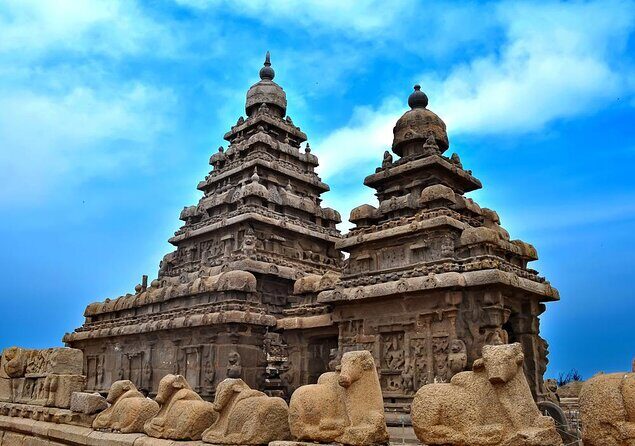
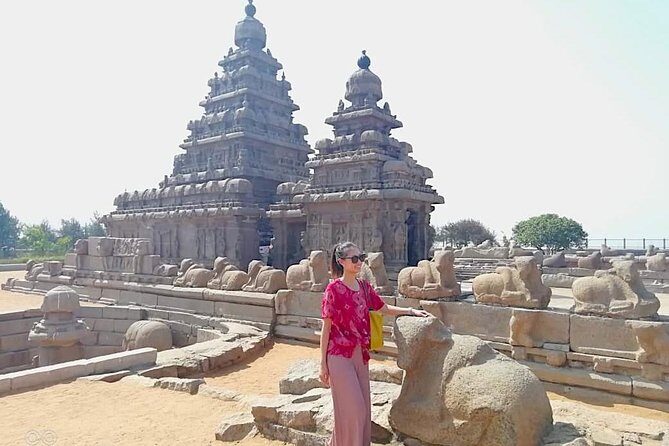
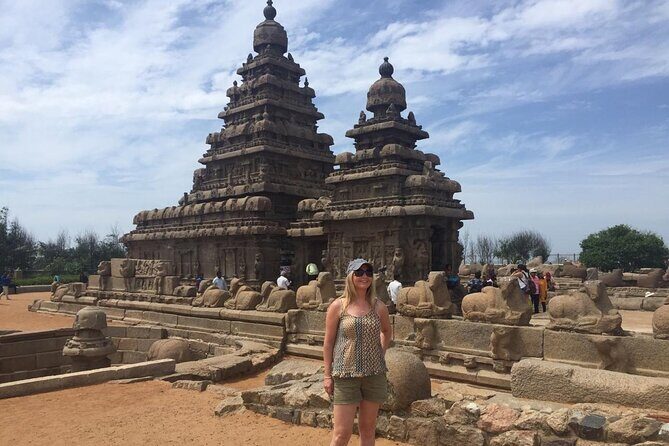
Finally, you reach Shore Temple. It’s the last stop and it’s a fitting finale. The temple overlooks the Bay of Bengal and was an important center during the Pallavas’ reign when Mahabalipuram was their main port.
The Shore Temple stop tends to land emotionally for a simple reason: your brain connects the site to the coastline. You’re not just looking at carvings anymore. You’re looking at the place those carvings were meant to “watch over,” tied to water, weather, and arrivals.
If you care about photos, consider asking your guide when they recommend stepping back for the best temple-with-sea framing. Even with short time windows, a little positioning advice can turn a generic snapshot into a keeper.
Lunch, Guide Style, and Comfort Tips for a Smooth Day
Lunch is included, and it’s frequently described as a strong part of the day—especially after a sequence of cave and relief stops. I like included meals on temple-heavy days because it reduces the chance of getting stuck hunting for food mid-tour.
Guide style is a major part of this experience. Multiple praised guides (for example, Kannan and Ramesh) are described as friendly, approachable, and able to explain each stop with clear detail. A recurring theme is that the tour feels stress-free and not sales-driven. In fact, several accounts mention guides staying polite and not pushing tourist souvenirs.
That matters if you want the focus on the monuments, not on a shopping detour. It also means you’ll likely spend your time asking questions like:
- What scene am I seeing?
- Why is this creature carved here?
- How did Pallava builders organize temple space?
Comfort is mostly about small choices. Since beverages aren’t included, carry cash or a card for water, and wear shoes you’re okay with getting dusty in outdoor areas. Bring sunscreen, especially if your day aligns with strong midday light.
Who This Tour Fits Best (and Who Should Skip It)
This day trip is a strong fit if:
- you want a structured UNESCO day with minimal planning
- you care about meaning, not just checking off stops
- you prefer door-to-door convenience from Chennai
- you’d rather let a guide handle entry charges and pacing
It might be less ideal if:
- you want long free time without a set sequence
- you’re looking for a beach day first and temples second
- you want a low-effort “just drive me around” setup without narration or explanations
The good news is that the tour’s pace is described as flexible by multiple accounts, so even within a set route, it’s often possible to linger where you’re most interested.
Should You Book This Mahabalipuram Day Trip?
If you’re visiting Chennai and you have one day for Mahabalipuram, this is the kind of tour that makes the choice easy. The combo of private transport, fully narrated local guidance, lunch included, and entrance fees covered is a rare balance of comfort and substance for a price point of $115.
I’d book it if you want the monuments explained clearly, you like efficient planning, and you prefer not to deal with ticket logistics. I might skip it only if you’re the type who wants to wander for hours on your own and you’re okay paying a bit extra in time (and likely money) for that freedom.
FAQ
FAQ
What is the duration of the Mahabalipuram tour from Chennai?
It lasts about 7 hours (approximately).
What is the price per person?
The price is $115.00 per person.
Does the tour include pickup and drop-off from Chennai hotels?
Yes. Pick and drop to your Chennai hotel is included.
Are entrance fees included?
Yes. Entrance charges are included.
Is lunch included?
Yes. Lunch is included.
Are beverages included?
No. Beverages are not included.
Is this a private tour?
Yes. It’s described as private, meaning only your group participates.
How many UNESCO sites are included?
The tour highlights visiting UNESCO World Heritage Sites in Mahabalipuram, with major stops including Pancha Rathas and Shore Temple.
What sites are included in the route?
The listed stops include Pancha Rathas, Arjuna’s Penance, Pancha Pandava Cave, Krishna’s Butter Ball, Varaha Cave Temple, Trimurti Cave, Ganesha Ratha, Old Light House, Mahishasuramardini Cave, and Shore Temple.
What is the cancellation policy?
You can cancel for free up to 24 hours in advance for a full refund.