REVIEW · MUMBAI
Private Half-Day Mumbai Sightseeing Tour by Public Transportation
Book on Viator →Operated by Mystical Mumbai · Bookable on Viator
Mumbai feels different from the ground. This private 4-hour ride uses public transit so you see Mumbai’s real rhythm, not just photo stops. I especially liked how the route links iconic landmarks like Chhatrapati Shivaji Terminus with everyday work scenes like Dhobi Ghat.
The other big win is the guide. On my tour, Dev’s conversation style made the trip feel personal and easy to follow, and I liked that transport costs are handled as part of the tour. One consideration: there’s no hotel pickup, so you’ll need to get yourself to the start near Regal Cinema.
In This Review
- Key highlights worth waking up for
- Why Mumbai by bus, train, and taxi feels more real
- Regal Cinema and Chhatrapati Shivaji Terminus: quick, iconic, and actually interesting
- BB Dadar Market: the “buying flowers” stop that explains the city
- Dhobi Ghat: the working laundromat that turns a photo into understanding
- Chor Bazaar: flea-market chaos with a local legend twist
- Churchgate Railway Station and the lunchbox delivery system
- Price and value: how $80 works when transport is included
- What it’s like with Dev as your guide
- Who this tour suits best
- Should you book this private Mumbai public transport tour?
- FAQ
- What is the duration of the tour?
- Is this tour private?
- What does the tour price include?
- Is hotel pickup provided?
- Where does the tour start and end?
- Which stops are included?
- What type of transportation do you use?
- Are admission tickets required?
- Is there a mobile ticket?
- What is the cancellation policy?
Key highlights worth waking up for
- Public transportation, done smart: you’ll ride buses and trains with your guide and use cabs when needed
- Dev’s guide energy: he shares stories and keeps the trip flowing with real talk, not just dates and directions
- CSMT in context: you see Chhatrapati Shivaji Terminus up close and learn what makes it distinctive
- Dhobi Ghat, the working laundromat: watch Mumbai’s dhobis clean linens used by hotels and hospitals
- Chor Bazaar, plus the legend: it’s a flea-market stop with a local myth about lost items
- Time-efficient tour: a 4-hour loop that hits several different sides of the city
Why Mumbai by bus, train, and taxi feels more real

Mumbai is huge, and traffic can make everything slow. This tour cuts through that problem by using the city’s own transportation system, with your guide translating how it all works. You’re not just sightseeing from the window of a car. You’re moving with the city, so you get a better sense of how people actually commute, shop, and manage daily life.
I also like that the plan is a private format. Only your group goes, so your guide can adjust the pace when a street is crowded or when you want an extra minute at a stop. And because the tour includes the fares for the transportation used, you’re not constantly asking what’s next or paying as you go.
That’s the core value here: less friction, more time looking around. You’ll see parts of Mumbai that don’t belong in a polished brochure—yet you’ll still get a clean, organized flow for a short visit.
You can also read our reviews of more private tours in Mumbai



Regal Cinema and Chhatrapati Shivaji Terminus: quick, iconic, and actually interesting
You start at Regal Cinema near Colaba Causeway. It’s an Art deco movie theater on a busy stretch, and the details matter. The cinema is connected to an early film milestone: the first film aired there included Laurel and Hardy’s The Devil’s Brother back in 1933. Even if you don’t care about film trivia, that kind of fact helps you look at the building as more than a landmark.
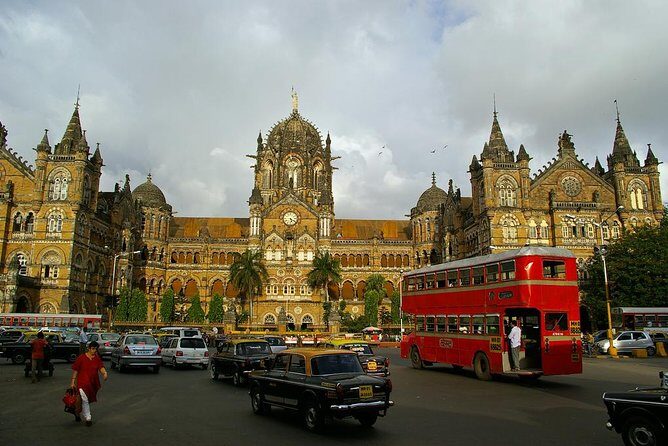
Then you head to Chhatrapati Shivaji Terminus (CSMT). This isn’t just a station you pass through. It’s one of India’s busiest rail hubs, and the architecture is a big deal. The station was designed by British architectural engineer Frederick William Stevens in a Victorian Italianate Gothic Revival style, with construction beginning in 1878.
Here’s why this stop works on a half-day tour: the station keeps the city moving, so the place feels alive even when you’re standing still. You’ll get a sense of scale fast. Also, the stop is short on purpose—about 10 minutes—because the point is to get your bearings and then keep moving to other parts of Mumbai.
A practical note: stations are active. Wear comfortable shoes and plan to keep your phone secure when crowds swell.
BB Dadar Market: the “buying flowers” stop that explains the city
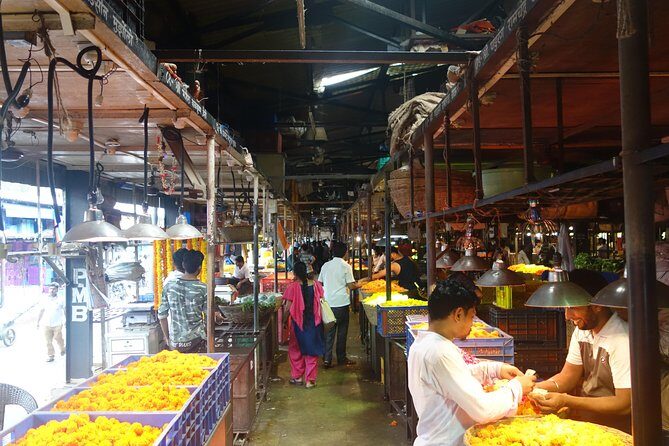
Next up is BB Dadar Market, a fresh flower market where auctions and colorful varieties of blooms are part of the rhythm. This is the kind of stop many city tours skip because it sounds too niche. But in Mumbai, markets are a language. They show how commerce works at street level.
Even in a brief 30-minute visit, you can notice the systems: people sorting, selling, and moving quickly, often with practiced efficiency. It’s a window into the supply chain behind everyday life—temples, homes, events, and hospitality all depend on this kind of market activity.
Is it the most dramatic sight? Not necessarily. But it’s a useful one. It helps you connect what you see later at Dhobi Ghat and Chor Bazaar, because both are also about labor and buying/selling in a very hands-on way.
If you’re sensitive to strong smells or tight spaces, go in expecting that markets can be close and intense. If you’re fine with that, you’ll enjoy how real it feels.
Dhobi Ghat: the working laundromat that turns a photo into understanding
Dhobi Ghat is one of the most memorable stops on this route. It’s an open-air laundromat where dhobis (launderers) work outside. The site was constructed in 1890, and the work is tied to Mumbai’s service economy. Dhobis clean clothes and linens from hotels and hospitals.
This is where the tour earns its keep. A typical sightseeing itinerary might point at laundry and move on. Here, you’re given enough time—about 25 minutes—to watch the process and understand the purpose. You’ll likely come away thinking about the city differently, because you’re seeing a major behind-the-scenes service that most visitors never notice.
A couple of practical tips help a lot at Dhobi Ghat:
- Expect people working around you, not a staged exhibit.
- Keep your pace respectful. If a worker is mid-task, slow down rather than hovering.
- Bring a watchful eye for details, like the tools and the way the work is organized in an open environment.
One more thoughtful angle: this stop also shows how Mumbai manages large needs without relying on a single centralized facility. For many travelers, it’s a reality check in the best way.
Chor Bazaar: flea-market chaos with a local legend twist
Chor Bazaar is known as one of the largest flea markets in India. The word chor means thief in Marathi and Hindi, and there’s a playful local legend attached to it: if you lose something in Mumbai, you can supposedly buy it back from the Chor Bazaar.
You’ll have about 30 minutes here, which is just enough time to walk through and get a feel for the market. It’s not a “shop until you drop” situation. It’s more about atmosphere and context—seeing how people browse, bargain, and search for odd, useful items.
If you like markets, you’ll probably enjoy the contrast with Dhobi Ghat. One is hands-on labor producing clean linens; the other is a marketplace turning lost, used, and traded goods into something new to someone else. Both are part of Mumbai’s everyday survival and creativity.
If you don’t like crowds or the constant motion, you might want to keep your browsing quick and focus on observing. Either way, it’s a stop that adds color and local flavor to the route.
A few more Mumbai tours and experiences worth a look





Churchgate Railway Station and the lunchbox delivery system
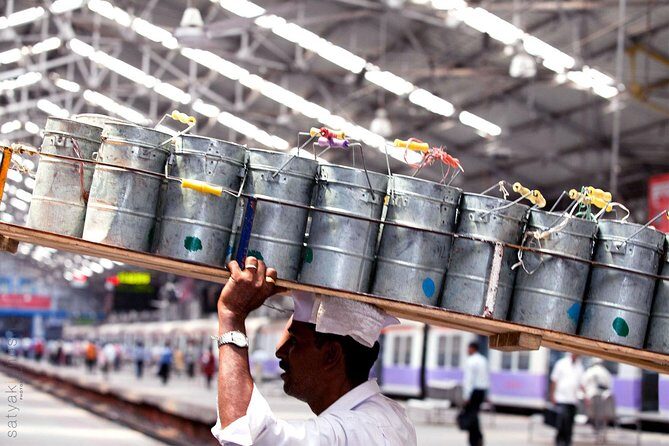
The tour ends at Churchgate Railway Station area, with a highlight on the dabbawallas—people who organize lunchbox delivery. The guide shows you how they coordinate a daily system, with the important detail that it involves about 200,000 lunchboxes every single day.
This kind of stop can be surprisingly satisfying because it turns “I saw a lot of places” into “I understand how daily life is managed.” You’re not only looking at buildings or markets. You’re learning how coordination works when everything has to run on time.
You’ll have about 20 minutes here. That’s enough to see what’s happening around the station and connect the dots with what you already saw earlier: markets supplying goods, workers doing service jobs, and organized systems helping people get what they need.
Also, this stop is a nice finishing point because it’s close to the end location. You don’t get stranded far from public transit, which matters when your tour finishes and you still want to keep exploring.
Price and value: how $80 works when transport is included
At $80 per person for about 4 hours, this tour sits in the mid-range for a private guided experience in a major city. The big reason it can feel like good value is that transport fares are included for the public transportation and cabs used during the tour. That removes a lot of guesswork.
You also get:
- A local guide
- Tea and bottled water
- A mobile ticket
- Free admission noted for the listed stops
What you should keep in mind is that this isn’t a luxury ride with hotel pickup. You’re starting at Regal Cinema and ending near Churchgate, both accessible by public transit. So the price is paying for guide time plus organized movement, not for convenience like door-to-door pickup.
If you’re the kind of traveler who enjoys getting your bearings and learning how the city runs, the format makes sense. If you want long stops, museum-style pacing, or time for big meals, you may find the half-day structure a bit tight. But for an efficient snapshot of Mumbai seen from the street and the rail system, it’s strong.
What it’s like with Dev as your guide
One of the most praised parts of this tour is the guide experience—Dev, specifically. People liked his conversation and how he shared personal details during the day. That matters more than you might think. In a city like Mumbai, information isn’t just factual. It’s also about comfort and flow. A good guide makes it easier to navigate crowded areas, choose the right moment to move, and understand what you’re looking at.
Dev also seems to balance “tell you what’s important” with “keep it human.” If you enjoy guides who talk like real people and not like walking audio tours, this is likely a good match.
Who this tour suits best
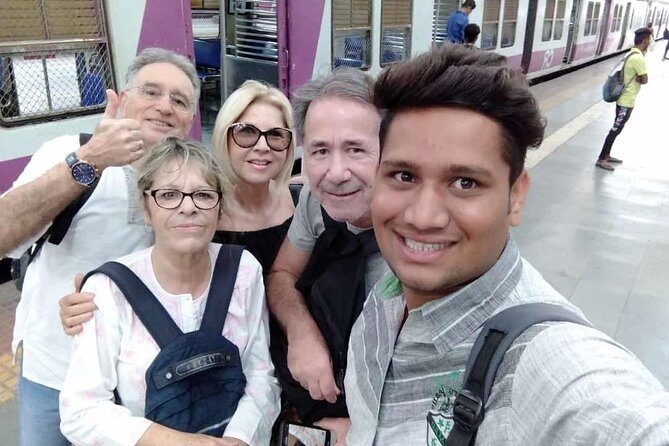
This private half-day experience fits well if you:
- Want to see Mumbai in motion using local transport rather than only from a car window
- Prefer a short, well-paced route with several distinct stops
- Like a guide who adds context through conversation, not just facts
- Are comfortable moving through markets and active public spaces
It’s also a solid choice for first-time visitors who want a practical overview. You’ll cover architecture (CSMT), daily work (Dhobi Ghat), markets (BB Dadar and Chor Bazaar), and a real coordination system (dabbawallas).
If you’re traveling with limited time and you want a guide to handle navigation and timing, you’ll appreciate the structure. Just remember: you’re not being picked up, so plan your arrival to the meeting point accordingly.
Should you book this private Mumbai public transport tour?
If you want Mumbai that feels lived-in—rails, taxis, markets, and working spaces—then yes, this tour is a good bet. The standout strength is the mix: big recognizable sites paired with “this is how the city functions” stops like Dhobi Ghat and the lunchbox delivery system.
I’d especially recommend it if you:
- Like public transit as a travel tool
- Enjoy short stops that still tell you something meaningful
- Want a private format and value including transport costs
I’d think twice if you:
- Need hotel pickup to make your day easy
- Don’t enjoy crowded market areas or working sites
- Prefer longer time at fewer places instead of a packed 4-hour loop
Overall, this is a practical, human-scaled way to understand Mumbai beyond the headlines. You’ll come away with a clearer sense of how the city moves—and what keeps it running.
FAQ
What is the duration of the tour?
It runs for about 4 hours.
Is this tour private?
Yes. It’s private, so only your group participates.
What does the tour price include?
The tour includes the fare for all transportation used during the tour, a local guide, tea, and bottled water.
Is hotel pickup provided?
No, hotel pickup and drop-off are not included.
Where does the tour start and end?
It starts at Regal Cinema Building on Chhatrapati Shivaji Maharaj Marg in Colaba, and it ends on Maharshi Karve Rd in Churchgate.
Which stops are included?
The tour includes Regal Cinema, Chhatrapati Shivaji Terminus, BB Dadar Market, Dhobi Ghat, Chor Bazaar, and Churchgate Railway Station.
What type of transportation do you use?
You ride local buses and trains, and you also use taxis/cabs with your guide as needed.
Are admission tickets required?
Admission is listed as free for the stops included on the route.
Is there a mobile ticket?
Yes. The tour includes a mobile ticket, and you’ll receive confirmation at booking.
What is the cancellation policy?
Free cancellation is available up to 24 hours in advance for a full refund. If you cancel less than 24 hours before the start time, the amount paid is not refunded.