REVIEW · JAIPUR
2 Days: Guided Jaipur Tour With Hotel, Lunch & Entry Fee
Book on Viator →Operated by Rudraa India Tours · Bookable on Viator
Pink City, packed into two days.
This guided Jaipur plan is interesting because it mixes major monuments with big-fort viewpoints, all with an English guide and an AC vehicle to keep you comfortable between stops. Two things I like right away: you get lunch on both days, and the key monument entry fees are handled as part of the package. One consideration: the schedule is full, so some stops are short, which means you’ll need to move with the group.
What makes it work in practice is how the guide turns famous sights into a story you can actually follow. You’ll hit places like City Palace and Jantar Mantar, plus the pink-sandstone drama of Hawa Mahal, and you’re not just snapping photos—you’re getting context for what you’re seeing. On this kind of tour, that sort of guidance is what saves your time, especially when you’re learning Jaipur fast.
The tradeoff is pacing. You’ll cover a lot of ground—forts, palaces, and a museum—so if you like long, slow wandering, you might feel slightly rushed, particularly at shorter stops like the Albert Hall Museum visit.
In This Review
- Key highlights at a glance
- A two-day Jaipur plan that actually covers the classics
- AC comfort + an English guide who connects the dots
- Day 1: Amer Fort, City Palace, Jantar Mantar, and Hawa Mahal
- Amer Fort: a fort with palace energy (1 hour 30 minutes)
- Panna Meena ka Kund: the symmetry stepwell break (15 minutes)
- City Palace: where Jaipur’s rulers shaped the city (40 minutes)
- Jantar Mantar: UNESCO sky-math in stone (30 minutes)
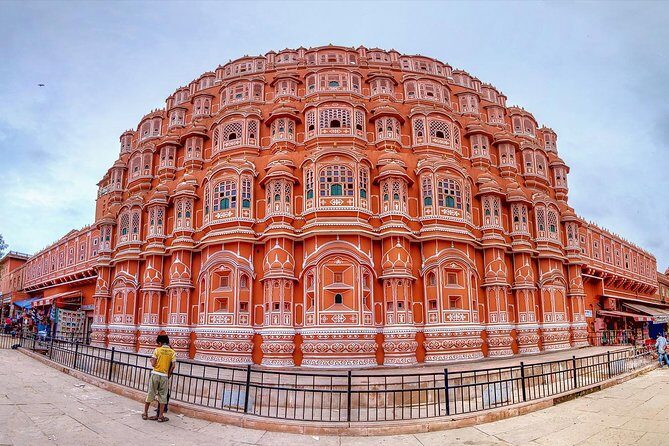
- Hawa Mahal: the pink façade and the zenana connection (15 minutes)
- Day 2: Galtaji, Jaigarh Fort, Nahargarh Fort, and Albert Hall Museum
- Monkey Temple (Galtaji): temples in the hillside crevice (40 minutes)
- Jaigarh Fort: built to protect Amer Fort (1 hour 30 minutes)
- Nahargarh Fort: another wall around the city (1 hour 30 minutes)
- Albert Hall Museum: a quick Indo-Saracenic stop (15 minutes)
- Hotel stay option: when one night helps (and when it doesn’t)
- Lunch and tickets: the real value of the all-inclusive structure
- Price and logistics: does $216 per person make sense?
- Who this Jaipur tour is best for
- What to do before you go: small prep that pays off
- Should you book this two-day Pink City tour?
- FAQ
- FAQ
- What is included in the 2-day Jaipur tour?
- Is hotel accommodation included or optional?
- Does the tour include lunch?
- Are monument entry fees included?
- Are any stops free to enter?
- Is pickup available?
- Is this a private tour?
- What kind of transportation is used?
- Is dinner included?
- What is the cancellation policy?
Key highlights at a glance
- All-in basics: AC car, English guide for 2 days, lunch both days, and monument entry fees
- Hotel option: one-night stay available in 3- or 4-star hotels
- Fort ring views: Jaigarh and Nahargarh add the skyline + defense-ring perspective
- Big-name Jaipur landmarks: Amber Fort, City Palace, Jantar Mantar, and Hawa Mahal
- Good variety: a stepwell (Panna Meena ka Kund), Monkey Temple (Galtaji), plus Albert Hall Museum
- Guides with real command of Jaipur: guides like Mr Sharma, Mr Singh, and Mr Vijay are known for sharing stories and details
A two-day Jaipur plan that actually covers the classics
If you’re trying to get the most out of Jaipur without building your own day-by-day route, this is the kind of structure that helps. You start with the must-see palaces and observatory, then pivot to the hills where the forts sit like a protective wall around the city. The result is a balanced overview: Jaipur’s ceremonial power up close, then the “how this city defended itself” view from above.
Because the tour is private, you’re not stuck waiting for strangers to decide where to go. That matters in Jaipur, where tight sight lines and busy entrances can eat time. Add hotel pickup/drop-off (optional for station/airport as well), and you avoid the stress of organizing transport while you’re still adjusting to the city.
You can also read our reviews of more guided tours in Jaipur


AC comfort + an English guide who connects the dots
This package is built around convenience: you travel by an air-conditioned sedan or SUV with a driver, and you have an English guide for both days. That setup is practical in Rajasthan—especially when the sun is doing its thing and your energy is limited.
The biggest advantage of guided time is not just answering questions. It’s knowing what to look for while you’re standing there. With guides such as Mr Sharma, Mr Singh, or Mr Vijay, the experience tends to be story-driven and organized, so landmarks don’t feel like disconnected photo stops.
Also pay attention to how the tour handles the “boring but important” parts:
- Monument entries are included for the listed paid sites
- Water bottles are provided
- You carry a mobile ticket, which helps reduce back-and-forth at entrances
Day 1: Amer Fort, City Palace, Jantar Mantar, and Hawa Mahal
Day 1 is your deep dive into central Jaipur’s royal core and the iconic pink-city skyline. It’s also the day that most people remember most clearly because the visuals are so different stop to stop—fort walls, palace courtyards, scientific instruments, then that delicate grid façade at Hawa Mahal.
Amer Fort: a fort with palace energy (1 hour 30 minutes)
You begin at Amber Fort (Amer Fort), located in Amer, about 11 km from Jaipur. The time slot—about 1 hour 30 minutes—is long enough to see the main areas without feeling like you’re just rushing past gates and arches.
Amber is special because it isn’t only defensive architecture. It’s also a royal residence style of space, so you’ll naturally notice a shift from “fort” to “palace.” If you’re the type who likes to read buildings like clues, this is a good first stop because it sets the tone for everything else you’ll see the next 24 hours.
Panna Meena ka Kund: the symmetry stepwell break (15 minutes)
Next you visit Panna Meena ka Kund, a historic stepwell and rainwater catchment known for its symmetrical stairways. This stop is only 15 minutes, and that’s exactly the point. You get a quick, photogenic contrast from the heavier royal sites—plus it’s admission free.
Practical tip: stepwell lighting can be tricky. If photos are a priority, give yourself a minute or two to position for angles where the stairs show clean lines.
A few more Jaipur tours and experiences worth a look





City Palace: where Jaipur’s rulers shaped the city (40 minutes)
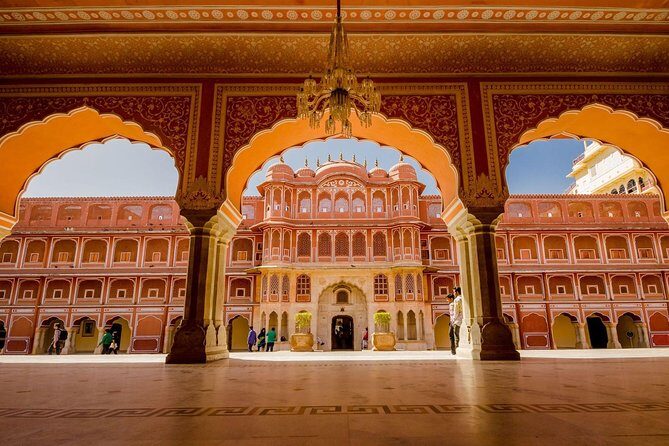
City Palace of Jaipur is next, and it’s a key anchor for understanding the city’s royal timeline. It was established when Maharaja Sawai Jai Singh II moved his court to Jaipur in 1727.
You get about 40 minutes, which is enough to take in the scale and major structures without turning it into a half-day project. The value here is direction: the guide’s context makes you notice why these spaces are arranged the way they are, instead of treating it like a set of separate buildings.
Jantar Mantar: UNESCO sky-math in stone (30 minutes)
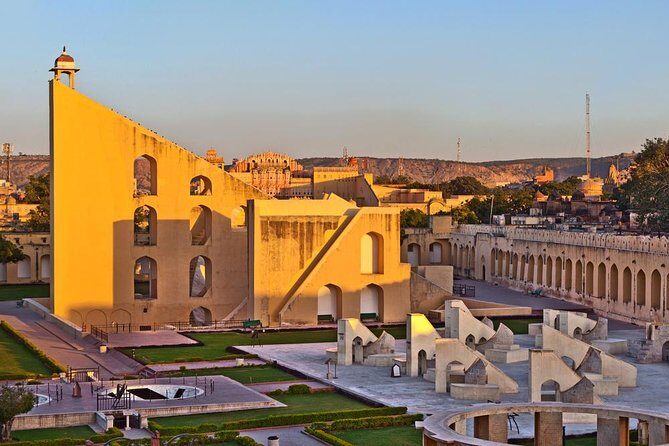
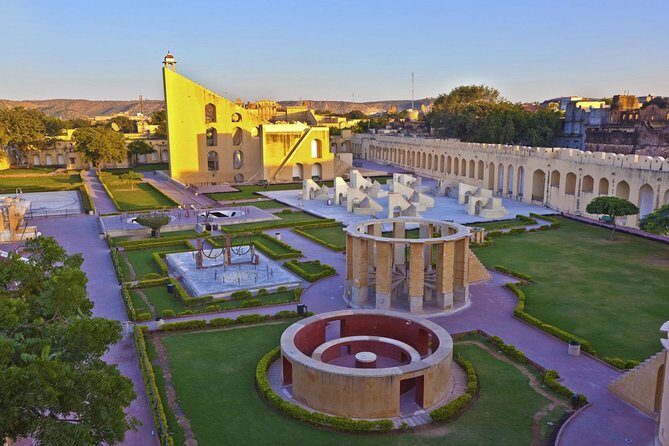
Then it’s Jantar Mantar, a UNESCO World Heritage site featuring nineteen astronomical instruments built by Sawai Jai Singh II. The monument was completed in 1734, and it includes the world’s largest stone sundial.
A 30-minute visit can feel short, but the guide helps you focus on what’s worth your time. If you like science or just enjoy a satisfying explanation, this stop is a strong payoff—because it’s not just a “pretty monument,” it’s math you can point to in real life.
Hawa Mahal: the pink façade and the zenana connection (15 minutes)
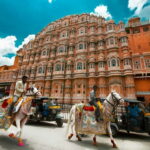
Finally on Day 1 you reach Hawa Mahal (Palace of Wind), built in 1799 by Maharaja Sawai Pratap Singh. Made of red and pink sandstone, it sits on the edge of the City Palace and extends to the Zenana, the women’s chambers.
Your visit here is about 15 minutes, and admission is free. The main thing to know before you go: this is a photo-first stop. You’ll want to plan your viewing angles quickly, because the structure is most dramatic when you catch it from the right side and height.
Day 2: Galtaji, Jaigarh Fort, Nahargarh Fort, and Albert Hall Museum
Day 2 shifts from the city core up toward the hills, which changes the whole mood. Instead of palace courtyards, you get defensive walls, viewpoints, and a different kind of Jaipur scale.
Monkey Temple (Galtaji): temples in the hillside crevice (40 minutes)
You start at Monkey Temple, also called Galtaji, about 10 km from Jaipur. The site is described as temples built into a narrow crevice in the hills surrounding the city, and it’s associated with the name Monkey Temple due to what’s present on site.
It’s about 40 minutes with free admission, so you’re not rushed. Expect a short “walk through the setting” feel rather than a long indoor museum visit. If you’re sensitive to crowds or active animals, go with patience and keep your belongings secure.
Jaigarh Fort: built to protect Amer Fort (1 hour 30 minutes)
Next is Jaigarh Fort, which overlooks Amer Fort and the Maota Lake. It was built by Jai Singh II in 1726 to protect the Amer Fort palace complex, and the fort is named after him.
You get about 1 hour 30 minutes, which is the right amount of time for a place like this. Jaigarh adds something you don’t fully get from Amber: a strategic vantage, and a “defense ring” perspective that helps the whole fort story click.
Nahargarh Fort: another wall around the city (1 hour 30 minutes)
Then you go to Nahargarh Fort on the edge of the Aravalli Hills. It’s described as part of the defensive ring around Jaipur, along with Amer Fort and Jaigarh Fort. You’ll spend about 1 hour 30 minutes, and that extended time matters because you’ll likely want to linger at viewpoints to understand the geography.
This is one of those experiences where pictures are only half the benefit. What you really gain is understanding where things sit relative to each other—forts, city lines, and the way the hills frame Jaipur.
Albert Hall Museum: a quick Indo-Saracenic stop (15 minutes)
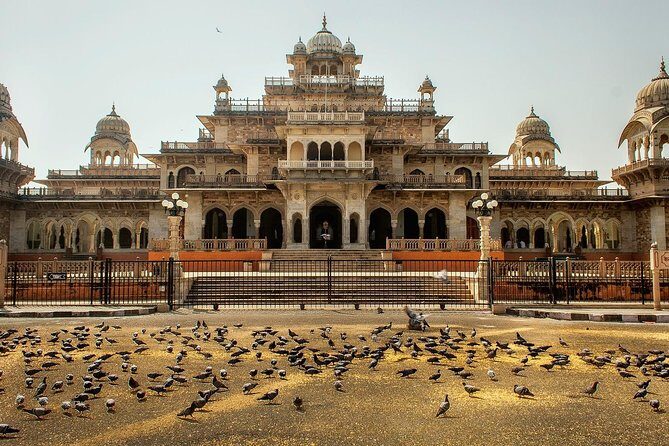
To close, you visit Albert Hall Museum, described as the oldest museum in Rajasthan. The building is noted for Indo-Saracenic architecture, and it’s also called the Government Central Museum.
Your time here is about 15 minutes, and admission is free. That means it’s not a deep dive museum day. It’s more of a “finish strong with a culturally different interior” moment before you head back and rest.
Hotel stay option: when one night helps (and when it doesn’t)
The tour can include one night accommodation in a 3- or 4-star hotel. That’s a big deal because it lets you sleep properly between two days of sites, especially if you’re coming from a long journey or your hotel location is far from the pickup route.
One caution: a hotel option is great for comfort, but it won’t change the fact that you’re still touring through a tight schedule. If you like very slow mornings, you may prefer a longer stay in Jaipur and use this as a focused “greatest hits” sprint.
Lunch and tickets: the real value of the all-inclusive structure
This package is worth considering because it removes friction. You get lunch included on both days, and you’re provided water bottles. You also cover monument entry fees for the listed paid stops, while a few key stops are free admissions (like Panna Meena ka Kund, Hawa Mahal, Monkey Temple, and Albert Hall Museum).
For planning, that means you spend less mental energy figuring out what to buy and when. You can focus on the experience itself.
One small practical note: dinner isn’t included, so you’ll still want to plan an evening meal on your own. That’s not a problem—just don’t assume the tour handles everything beyond lunch.
Price and logistics: does $216 per person make sense?
At $216 per person for roughly 2 days, this sits in the “worth it if you value time” category. You’re not just paying for transport—you’re paying for:
- AC vehicle + driver
- English guide for 2 days
- Lunch twice
- Monument entries (for the paid sites)
- Optional one-night hotel stay in 3- or 4-star hotels
- Pickup/drop-off (optional for airport/station, plus hotel pickup/drop)
If you were to DIY this on short notice, you’d spend time coordinating guides, entrances, and transport. The hidden cost is your time and stress, especially if you’re trying to fit Jaipur highlights into a tight window. This tour reduces that friction.
The tradeoff is flexibility of pacing. Because the plan is designed to cover major sites, you may not get the long, slow browsing that some travelers prefer. If you accept a structured day, the value tends to work well.
Who this Jaipur tour is best for
This is a strong fit if you:
- Want a 2-day overview without designing a route
- Prefer having an English guide explain what you’re seeing
- Like mixing palace/city sights with fort viewpoints
- Want lunch and entries handled so you can focus on visiting
If you’re the type who loves lingering in one place for hours—especially in museums or detailed craft markets—this might feel too schedule-driven. But for most people doing a first (or quick) Jaipur visit, it lands in a useful sweet spot.
What to do before you go: small prep that pays off
You’ll be walking and moving between very different settings—fort areas, palace courtyards, and museum interiors. The package gives water bottles, but you should still plan for Jaipur’s sun and long daylight hours.
Bring:
- Comfortable shoes for uneven fort paths
- Sunscreen and a hat
- A small day bag for water/snacks (even though lunch is provided)
Also, if you care about photos, remember that some stops are only 15 minutes. That doesn’t mean you can’t enjoy them—it means you should prioritize angles quickly.
Should you book this two-day Pink City tour?
Book it if you want Jaipur in two packed days with real structure, lunch included, and entry fees covered for the key sites. The strong guide element—often led by people like Mr Sharma, Mr Singh, or Mr Vijay—is a major part of why the experience works, because it helps you connect the dots between Amber Fort, City Palace, Jantar Mantar, Hawa Mahal, and the hillside forts.
Skip or consider a different plan if you hate time pressure or want long museum-style visits. Here, you’re seeing a lot, not stretching out every location.
If your schedule is uncertain, you’ll likely like the free cancellation up to 24 hours before start time. That gives you room to adjust without losing your money.
FAQ
FAQ
What is included in the 2-day Jaipur tour?
The tour includes an AC vehicle and driver, an English guide for 2 days, hotel pickup and drop-off, monument entry fees for the given monuments, water bottles, lunch on both days, and optional one-night hotel accommodation.
Is hotel accommodation included or optional?
Hotel accommodation is optional. If you select the hotel option, you’ll get one night in a 3- or 4-star hotel.
Does the tour include lunch?
Yes. Lunch is included on both days.
Are monument entry fees included?
Yes. Monument entry fees for the given monuments are included in the package.
Are any stops free to enter?
Yes. Some stops listed as free include Panna Meena ka Kund, Hawa Mahal, Monkey Temple (Galtaji), and Albert Hall Museum.
Is pickup available?
Yes. Hotel pickup and drop-off are included, and there is also optional pickup and drop at the airport or station.
Is this a private tour?
Yes. It’s a private tour/activity, and only your group will participate.
What kind of transportation is used?
You travel in an air-conditioned sedan or SUV.
Is dinner included?
No. Dinner and personal expenses are not included.
What is the cancellation policy?
You can cancel for free up to 24 hours in advance for a full refund. If you cancel less than 24 hours before the start time, the amount paid won’t be refunded.