REVIEW · MUMBAI
Primmum Mumbai Sightseeing With Local Train Ride Experience
Book on Viator →Operated by Young Tours And Travel · Bookable on Viator
First ride, then realities. This 7-hour Mumbai tour mixes iconic landmarks with a local train ride and a Dharavi slum tour guided by residents. You’ll start near the rail heartbeat of the city, then work your way through seafront views, hilltop gardens, and major Gandhi history stops.
I especially like the way the day is paced: you get quick hits at major sights, but you’re not stuck staring at bus windows. I also like that the experience leans practical, with pickup, bottled water, and an English-speaking guide who can turn Mumbai details into plain, memorable stories (I met guides like Rahul and Kevin on different bookings).
One thing to consider: Dharavi and the Dhobi Ghat area are hands-on and can feel noisy and intense. If you prefer slow, quiet sightseeing only, you may find parts of the day a bit much.
In This Review
- Key highlights you will actually feel
- The value: why this costs about $40 and what you get for it
- Getting oriented at Chhatrapati Shivaji Maharaj Terminus (CST) from the inside
- Gateway of India and Rajabai Clock Tower: classic stops with quick context
- Marine Drive’s Queen’s Necklace: seafront views with a story attached
- Malabar Hill: Hanging Gardens and Kamala Nehru Park for skyline views
- Mani Bhavan Gandhi Museum: one of the day’s most meaningful cultural anchors
- Dhobi Ghat: a working place, not a staged attraction
- Mahalaxmi and the local train ride: the most practical thrill of the day
- Dharavi slum tour with local residents: personal, not generic
- What makes the guides so important here (Rahul, Kevin, and your first good impression)
- Practical tips to make the day smoother (and more enjoyable)
- Who this tour fits best
- Should you book Primmum Mumbai Sightseeing with Local Train Ride?
- FAQ
- How long is the tour?
- What is included in the price?
- Is there a pickup?
- Do I need to buy tickets for major stops?
- What is the group size?
- Is there a local train ride?
- Is the Dharavi portion guided?
- What should I bring or plan for?
- Is tipping included?
- Can I cancel for a full refund?
Key highlights you will actually feel
- Inside Chhatrapati Shivaji Maharaj Terminus with time focused on the station experience, not just a photo from outside
- Marine Drive’s Queen’s Necklace viewpoint moments without rushing through the seafront
- Malabar Hill viewpoints with Hanging Gardens and nearby elevated park time for big city views
- A real Mumbai local train ride that changes the feel of the tour from sightseeing to daily life
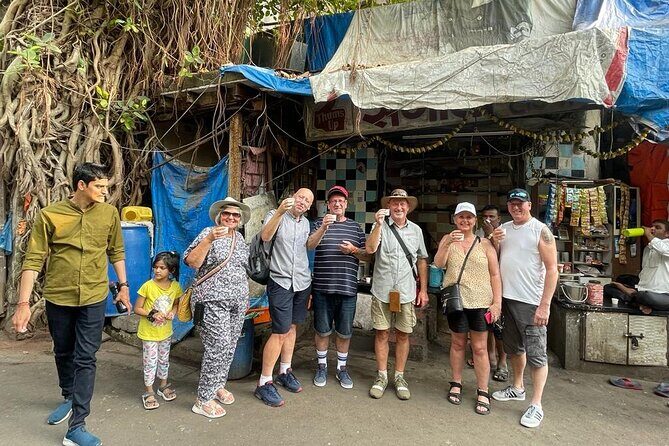
- Dharavi slum tour guided by local residents for a more personal, lived-in perspective than a standard walk-by
The value: why this costs about $40 and what you get for it
At about $39.62 per person for roughly 7 hours, this sits in a price zone that can feel either like a bargain or like a question, depending on what you expect. Here’s the honest way to think about it: you’re not just paying for a checklist of landmarks. You’re also paying for transport, an English-speaking guide, and the most logistically tricky parts—getting you into the flow of Mumbai’s public spaces and running the Dharavi portion as a guided visit.
The tour caps at 12 people, which matters. In a larger group, the train and neighborhood walking usually turn into a bottleneck. In a smaller group, you’re more likely to hear the guide, keep up at street speed, and actually interact when the moment calls for it.
Also, the included bottled water and private transportation take a lot of friction out of the day. You’re still doing a full loop, but you’re not scrambling for logistics while you’re trying to take in the sights.
You can also read our reviews of more tours and experiences in Mumbai.


Getting oriented at Chhatrapati Shivaji Maharaj Terminus (CST) from the inside
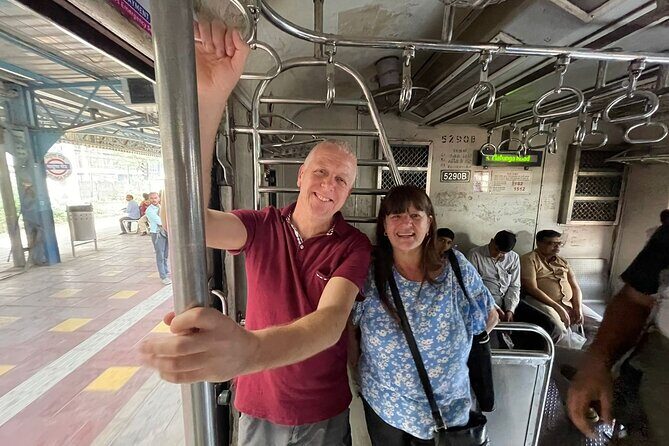
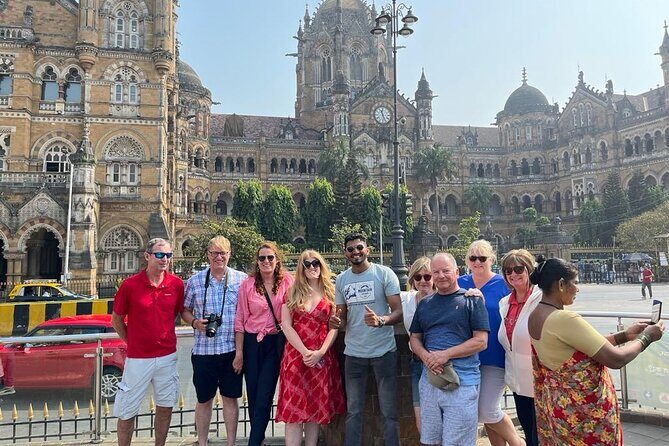
Your first meaningful stop is Chhatrapati Shivaji Maharaj Terminus. The big selling point here is simple: you’re taken to the side of the station where you can feel it from inside, rather than only seeing the exterior from the curb.
That’s a useful difference. CST is not only a landmark; it’s a working railway hub. When you step into the station experience, you get the scale and energy right away—like seeing Mumbai’s engine room in person. It’s also a great “base” stop for the rest of the day, because the tour later shifts into local train life.
Time here is short—about 15 minutes—so come ready to look fast. If you’re the type who takes 30 photos of one ceiling detail, you might feel rushed. If you like getting oriented quickly and moving on, this works.
Gateway of India and Rajabai Clock Tower: classic stops with quick context
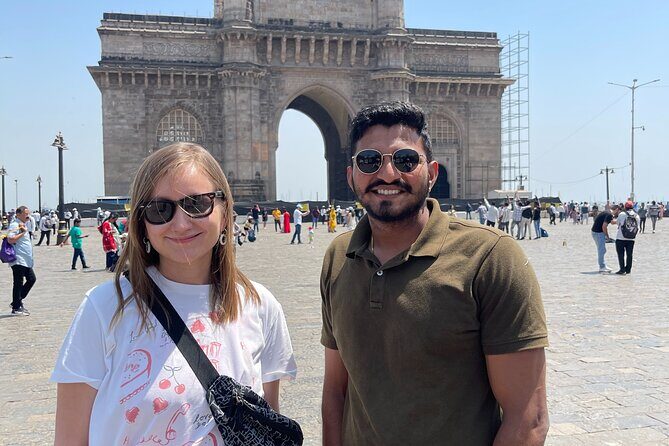
Next is the Gateway of India, watching the Arabian Sea from the iconic arch viewpoint. The guide’s role matters at this stop. Mumbai landmarks can become postcard-flat if you only look. With a real guide, you’re more likely to understand what this place meant and why it still pulls people in.
Then you move to Rajabai Clock Tower. The standout here is the Gothic architecture rising in the middle of a city that never slows down. You don’t need a long lecture to appreciate it—you just need the right framing, and the guide provides that.
Both stops are brief (around 10 to 15 minutes), which keeps the tour moving. The trade-off is you won’t have hours to wander. Think of these as you getting your bearings and your photos, then earning the more “alive” parts of the day later.
Marine Drive’s Queen’s Necklace: seafront views with a story attached
Marine Drive is where the city gets cinematic. The tour highlights the stretch known as the Queen’s Necklace, the line of lights and sea-facing promenade that makes Mumbai look like it’s dressed up even on ordinary days.
The value of having a guide here is that you’re not only noticing the view. You’re learning what makes this area iconic and what role it plays in local life. It’s the difference between seeing lights and understanding why locals care.
Time is about 10 minutes. That’s enough for a quick walk-in-your-mind moment, not enough for long lingering. If you want more time, you can pair Marine Drive with extra hours later on your own day. But as part of this tour, it’s a smart stop.
Malabar Hill: Hanging Gardens and Kamala Nehru Park for skyline views
This is a calmer patch in the schedule, and you’ll feel it. The tour includes Hanging Gardens (on Malabar Hill) with terraced green space and panoramic views of the city. It’s not just pretty plants; it’s a change in perspective. Mumbai can feel flat from street level, and here you get height.
Then you head to Kamala Nehru Park, also elevated. Expect more greenery, more wide-angle views, and a chance to reset before the day turns more intense.
The time is short at each stop—about 10 to 15 minutes—so don’t plan to picnic or fully explore the gardens like you would on a solo visit. Use it for photos, viewpoints, and a quick inhale. Then get ready for museums and street-level realities.





Mani Bhavan Gandhi Museum: one of the day’s most meaningful cultural anchors
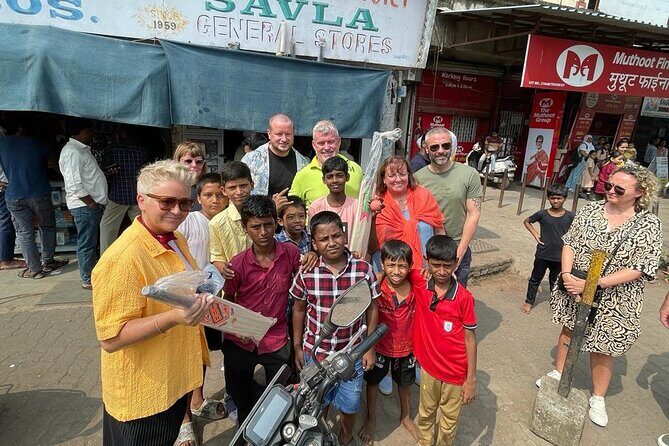
Next is Mani Bhavan Gandhi Museum. The tour includes admission here, and the time is the longest for an indoor stop besides Dharavi—about 25 minutes.
This is a solid choice for pacing. After seafront and viewpoints, you get a historical site connected to Mahatma Gandhi. The tour framing focuses on his life and legacy, including significant events connected to the house-residence setting.
This is the stop where your guide’s storytelling really pays off. Without context, museums can become quick photo stops. With the right narration, you start to connect Mumbai history to modern identity.
Dhobi Ghat: a working place, not a staged attraction
Then you get to Dhobi Ghat, where laundry work happens outdoors—often described as the world’s largest outdoor laundry. Expect to see workers washing clothes by hand along the steps and water channels.
This isn’t a “hands-off photo zone,” so it helps to go in with the right mindset. It’s a real working area. That means the experience can feel busy and very practical.
Time is around 10 minutes. That’s usually enough to watch for a minute, understand what you’re seeing, and move on without getting emotionally stuck or overstimulated.
Mahalaxmi and the local train ride: the most practical thrill of the day
Now we get to the signature: a local train ride. The itinerary includes Mahalaxmi as the anchor point for this part, and this is where the day stops feeling like a sightseeing tour and starts feeling like Mumbai moves.
Why this matters: Mumbai local trains aren’t a theme park. They’re how people actually commute. You’ll notice how fast the city tempo is, how close the movement feels, and how quickly you start understanding why locals talk about daily life in terms of trains.
The tour does include private transportation before/around the train and keeps the group small (max 12), which helps. Still, you should be ready for crowded conditions and quick boarding rhythms. Wear shoes you can stand in and keep your phone secured.
If you’ve only ever seen cities from sidewalks and cars, the train ride is the moment you’ll remember most. It’s a sensory shift, and it changes the rest of the day’s context.
Dharavi slum tour with local residents: personal, not generic
The final—and most talked-about—part of the day is a Dharavi slum tour guided by local residents. It’s included and runs about 1 hour 30 minutes.
This is where the tour’s value becomes more than logistical. The guide approach matters: the visit is organized by locals from the community, which means you’re more likely to hear how people describe their own neighborhood—what businesses exist, how daily routines work, and what the area means beyond the stereotypes.
From the tone of past experiences with guides like Rahul, the best moments tend to be when questions are welcomed and explanations are practical: how work happens, how people organize services, and what residents want visitors to understand.
A reality check though: this part of Mumbai can feel hectic, noisy, and emotionally intense. That doesn’t make it bad—it makes it real. If you’re sensitive to discomfort or disruption, go prepared with patience. If you show respect, this portion can be one of the most human parts of your trip.
What makes the guides so important here (Rahul, Kevin, and your first good impression)
The tour experience depends heavily on how your guide narrates the day. In real bookings, guides like Rahul and Kevin show up as examples of the kind of tour leadership people remember: friendly, punctual, and able to connect the dots between places.
Here’s what that means for you:
- You’ll get clearer why-not-just-what stories at places like Gateway of India and Rajabai Clock Tower
- You’ll know what to focus on during short stops, because time is limited
- You’ll be better prepared for the feel of the local train and the community tour
Also, the day is designed with pacing in mind. Quick landmark stops keep you energized, and the heavier cultural segments land when you’re ready to pay attention.
Practical tips to make the day smoother (and more enjoyable)
Mumbai can be warm, crowded, and fast-moving. A few habits will make your day easier.
- Bring a light layer. Indoor museum stops and air-conditioned transport can swing temperatures.
- Wear closed-toe shoes with traction. You’ll do walking at multiple stops.
- Keep your phone secure for the train ride. Movement happens quickly.
- Go easy on the bags. Small is good when you’re managing rail life and street-level crowds.
- Ask your guide for the focus at each stop. In short visits, that’s how you get the most out of 10 minutes.
And remember: if you expect a calm, staged tour, Dharavi and working areas like Dhobi Ghat may not match that mood. If you want a “this is how the city works” day, you’ll be in the right frame.
Who this tour fits best
I’d point you toward this experience if you want:
- A full-day overview of Mumbai highlights without hopping between too many separate tours
- The local train ride as a must-do, not an optional extra
- A final visit to Dharavi led by residents, rather than a vague sightseeing version
- A guided day with English-speaking support, pickup, and included water
It may be less ideal if:
- You dislike intense, crowded, or noisy environments
- You need slow, unstructured time at viewpoints and gardens
- You want zero “real-world” contact and only polished, quiet attractions
Should you book Primmum Mumbai Sightseeing with Local Train Ride?
If your top priority is experiencing Mumbai like it lives—landmarks plus daily transit plus a resident-led Dharavi visit—then yes, you should strongly consider booking this. The price makes sense because you’re getting transport, an English guide, included admission at key stops, and the locally tricky parts handled for you.
The only real reason not to book is if you want a calm, low-stimulation sightseeing day. This isn’t that. It’s a hands-on city day with real street energy, and that’s exactly what makes it memorable.
If you’re on the fence, decide based on one question: do you want the story of Mumbai from the ground up, not only from picture-perfect viewpoints? If the answer is yes, book it and plan to go with a curious, respectful mindset.
FAQ
How long is the tour?
The tour is about 7 hours long.
What is included in the price?
The tour includes bottled water, private transportation, and an English speaking tour guide. Admission is included for Mani Bhavan Gandhi Museum and Dharavi.
Is there a pickup?
Yes, pickup is offered.
Do I need to buy tickets for major stops?
Admission tickets are free for several stops, and Mani Bhavan Gandhi Museum and Dharavi have admission included.
What is the group size?
The tour has a maximum of 12 travelers.
Is there a local train ride?
Yes, the experience includes a local train ride in Mumbai.
Is the Dharavi portion guided?
Yes. The Dharavi slum tour is guided by local residents.
What should I bring or plan for?
Plan for a full day with walking across multiple stops, including working and active areas like Dhobi Ghat and a local train ride. Comfortable shoes help.
Is tipping included?
No. Tips are not included.
Can I cancel for a full refund?
Yes. You can cancel up to 24 hours in advance for a full refund.