REVIEW · MUMBAI
Mumbai Temple Tour in Private Vehicle
Book on Viator →Operated by Shreeji Tours n Travels · Bookable on Viator
Mumbai’s faiths sit side by side. This private, air-conditioned day tour threads together major sacred spots and the people behind them, with front-door pickup and an English-speaking guide who explains what you’re seeing as you move through the city. You get bottled water, a mobile ticket, and a driver who handles the traffic so you can focus on the sights instead of the stress.
I really like how the day is built around actual places of worship, not just photo stops. You’ll spend time at temples and a church long enough to feel the atmosphere, notice details like offerings and rituals, and ask questions without feeling rushed. And I also like that guides on this tour tend to be the calm, on-the-ground type—people like Siddhi and Sameer show up ready to interpret the symbols and routines as you arrive.
The main drawback is simple: you’re doing a lot of sacred stops in one day. Even with a private car and planned time windows, some buildings are busy and you’ll likely want comfortable shoes, modest clothing, and patience for crowds—especially if your date lands on a major festival like Diwali.
In This Review
- Key points to know before you go
- Why this private Mumbai temple route works (and feels human)
- Start at Shree Siddhivinayak Ganapati Mandir in Prabhadevi
- Mahalakshmi Temple: goddess of wealth and a stop that feels old
- Babulnath Temple: ancient Shiva worship near Girgaum Chowpatty
- ISKCON Chowpatty (Radha Gopinath): when faith looks peaceful
- St. Thomas Cathedral: Christianity in Mumbai’s older layers
- Jain temple and Walkeshwar area: devotion with a different rhythm
- Nipponzan Myohoji: a Japanese Buddhist temple in the middle of Mumbai
- Mumba Devi Temple: the local mother-goddess feel
- Getting the timing right: what a 6 to 8 hour day feels like
- Price and value: $98 for up to 2 people, and what that buys you
- What to bring, and how to get the most from rituals
- Who this tour suits best
- Should you book this Mumbai temple tour?
- FAQ
- How much does the Mumbai Temple Tour cost?
- What is the duration of the tour?
- Where does pickup and drop-off happen?
- What type of transportation is used?
- Is there a guide, and what language do they speak?
- Are temple admissions included?
- Are meals included?
- Is this tour private?
- What happens if the weather is poor?
- What is the cancellation policy?
Key points to know before you go
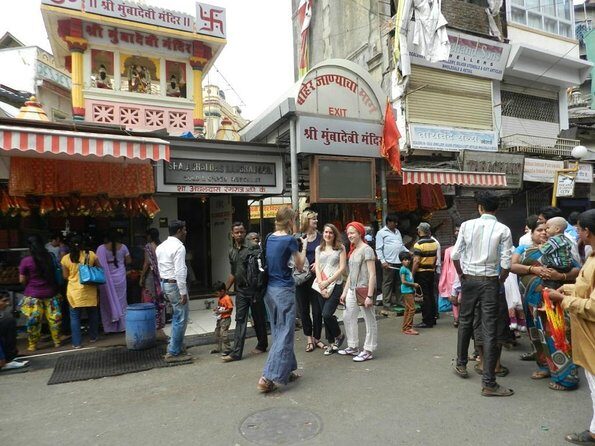
- AC private vehicle plus bottled water keeps the day comfortable in Mumbai heat
- Free admission is listed for the main stops, so you’re not paying on top of the tour price
- A guide helps you read what you’re seeing at each site, from Ganesh to Jain worship to ISKCON routines
- You get a true multi-faith day with Hindu temples, a Jain temple, a Hare Krishna temple, and a Christian cathedral
- The route is designed for a 6 to 8 hour day, so wear shoes you can walk in
- Good weather matters; the tour may shift dates if conditions are poor
Why this private Mumbai temple route works (and feels human)
Mumbai can feel like sensory overload fast. This tour offers a different pace: you get a quiet bubble inside an air-conditioned car, then step out for short, focused visits where you can actually look, listen, and understand. The idea is straightforward. Rather than hop between random landmarks, you follow a religious theme through real neighborhoods.
The private setup matters more than most people expect. With pickup and drop-off from your hotel, airport, or train station, you save the time and coordination that can turn a good day into a messy one. Once you’re on the route, tolls and parking are handled, so your day doesn’t get derailed by little logistics.
Then there’s the guide. An English-speaking guide is included, and the strongest feedback centers on guides who explain what’s coming next at each stop. That means you’re not just staring at architecture. You’re learning the meanings behind names and rituals, from Ganesh at Prabhadevi to the goddess worship at Mahalakshmi to the devotion you’ll see at ISKCON Chowpatty.
One more practical note: this is built for a group of up to 2 people. That can be a sweet spot for couples, small families, or solo travelers who want privacy without paying for a bigger vehicle.
You can also read our reviews of more private tours in Mumbai



Start at Shree Siddhivinayak Ganapati Mandir in Prabhadevi
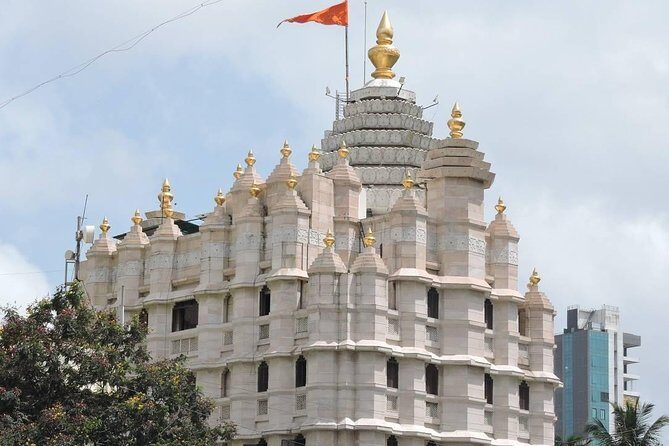
Your day opens at Shree Siddhivinayak Ganapati Mandir, dedicated to Lord Shri Ganesh. This is one of the city’s most well-known Ganesh temples, and it’s easy to see why. Ganesh worship is all about beginnings, removing obstacles, and welcoming good fortune, so it’s a strong starting point for a multi-faith day.
You’ll have about an hour here, and that’s enough time to take in the temple frontage, observe the flow of devotees, and notice the details people bring with them. The practical win is this: your guide can frame what you’re seeing before you get caught up in the crowd rhythm.
Because this is a Hindu temple, you’ll want to plan for the kinds of rules and etiquette that usually come with places of worship. Dress modestly, keep your phone use respectful, and follow whatever staff and devotees are doing. You’re not trying to perform as a tourist. You’re trying to witness with care.
If your date lines up with a major festival, you might see extra energy. Even outside big occasions, you’ll often notice repeated gestures—devotees moving with purpose, praying in their own way, and taking time to reflect. That’s the tone the tour keeps repeating throughout the day.
Mahalakshmi Temple: goddess of wealth and a stop that feels old
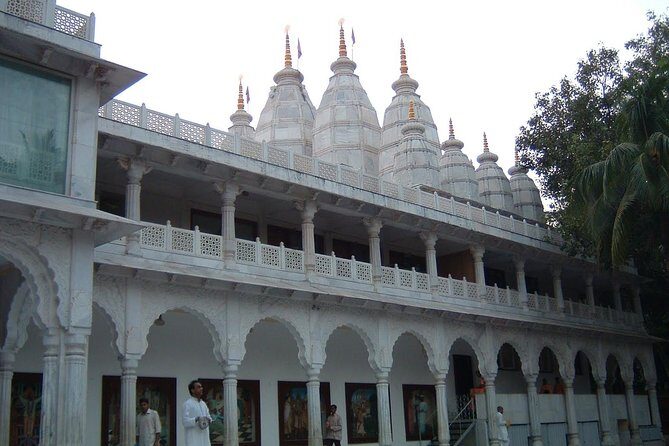
Next up is Mahalakshmi Temple, dedicated to Goddess Mahalaxmi, often described as the goddess of wealth. The temple is known as one of the oldest in Mumbai, so even before you learn anything, you can feel the sense of continuity. People have been coming here for a long time, and that changes your experience from seeing a building to understanding a relationship.
You’ll have about an hour at this stop. That time is useful because Mahalaxmi worship isn’t just visual. You’ll likely see offerings and ritual patterns that repeat, and your guide can connect the symbolism to daily life in India—why wealth is not only money, but also stability, luck, and the ability to live well.
As with many major temples, this is also a spot where crowds can build. The good news is that the private format helps. You arrive with a plan, and you’re not stuck trying to coordinate with buses and other random groups.
One small consideration: if you’re sensitive to busy spaces, plan to take breaks during the day. The tour has built-in car time between stops, which helps you reset.
Babulnath Temple: ancient Shiva worship near Girgaum Chowpatty
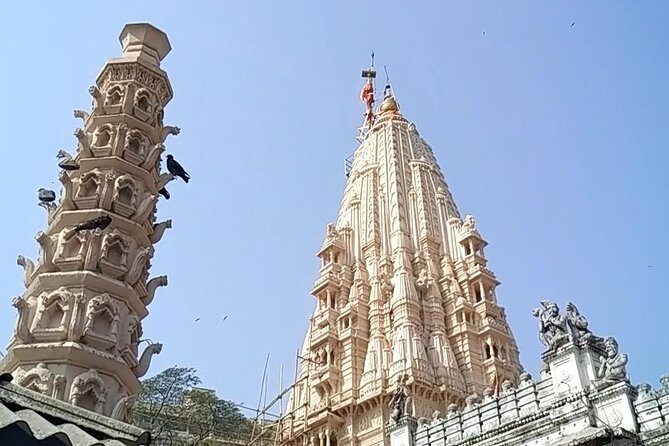
After Mahalakshmi, the tour heads to Babulnath Temple, an ancient Shiva temple near Girgaum Chowpatty. What makes this stop interesting is how it connects devotion to place. The main deity is Shiva in the form associated with the Babul tree, and that plant-and-place connection is the kind of detail that makes temples feel local rather than generic.
You’ll spend about an hour here too. This stop is a classic example of why the guide matters: you’ll learn what Shiva represents, how devotees show respect, and why this hillock setting shapes how people approach the temple.
You might also get a feeling of stillness even when the area around you is active. Temples often create a mental boundary. People slow down. They focus. It’s a small pause in a big city, and that’s a huge part of the value of doing a temple day properly instead of doing it in ten-minute chunks.
ISKCON Chowpatty (Radha Gopinath): when faith looks peaceful
Then comes Sri Sri Radha Gopinath Temple at ISKCON Chowpatty, dedicated to Lord Krishna. This is one of those stops that often surprises people in a good way. The atmosphere can feel calmer than you expect, and the rituals you’ll see are structured and easy to follow once your guide explains them.
The time window is shorter here—about 30 minutes. Use it well. Watch how people enter, where they gather, and how the service routines are organized. If you’re lucky with timing, you may catch aarti, the devotional practice that often involves coordinated movement and singing. Even if you miss a specific moment, you can still learn a lot by observing how the space is used.
The strongest reason I’d recommend this stop is that it adds contrast. You’re moving from Shiva and goddess worship to Krishna devotion, and your guide can help you understand why these traditions feel distinct while still sharing the same basic idea: devotion, community, and daily practice.
If you’re traveling with kids or you’re new to Indian temples, this is often the easiest transition point. The rituals tend to be clear to watch, and the mood is usually respectful and orderly.



St. Thomas Cathedral: Christianity in Mumbai’s older layers
Next is St. Thomas Cathedral Mumbai, described as a 300-year-old cathedral church. It’s named for Saint Thomas the Apostle, believed to have brought Christianity to the region. This is a key stop because it broadens the day from temple-centered worship to cathedral-centered worship.
You’ll have about 15 minutes here. That’s not long, so treat it like a quick orientation. Look at the building’s facade and interior elements, then let the guide connect it to Mumbai’s Christian community. In a day full of Hindu temples, this church stop helps you see that religious identity in Mumbai isn’t only one tradition—it’s a citywide pattern.
Practical tip: even in short stops, keep your pace slow. Cathedrals usually have rules about where you can stand, and staff may ask you to be quiet. The best way to enjoy this part is to be observant and respectful, not to rush for photos.
If you’re the type who likes architecture and symbolism, you’ll probably enjoy the contrast: strict geometry and church iconography versus the temple-focused visuals you’ve seen earlier.
Jain temple and Walkeshwar area: devotion with a different rhythm
The tour then visits a Jain temple—specifically Babu Amichand Panalal Adishwarji Jain Temple—located around Malabar Hills on Walkeshwar Road. Jainism has its own distinct approach to worship, and even if you don’t know the traditions yet, you can often sense the difference in how devotees move and pray.
This stop is short on the schedule (around 10 minutes), but it can still be meaningful. The goal here is exposure, not a deep course. With guidance, you can pick up core ideas—how Jain communities organize their sacred space and how devotion expresses itself in daily ritual.
Then you move to Banganga, a sacred water tank dating back to the 12th century. It’s part of the Walkeshwar temple complex. Water tanks like this are more than scenic features. They connect religious meaning to geography, and they often link older legends to present-day practice.
You’ll spend about 20 minutes at Banganga. That’s usually enough time to walk around, see how the area is used, and learn why this kind of landmark matters in Mumbai’s religious landscape.
If you enjoy the small details—stone textures, the way people approach steps, and the quiet purpose of a place—this stretch is often where the day starts to feel grounded.
Nipponzan Myohoji: a Japanese Buddhist temple in the middle of Mumbai
Next comes Nipponzan Myohoji Budha Temple. It was established in 1956, and its origins are linked to a prophecy attributed to Nichiren, a Japanese Buddhist monk from the 13th century. That origin story matters. It explains why this temple belongs to a global Buddhist thread, even though it sits firmly in Mumbai.
You’ll likely spend about 15 minutes. Again, this is an exposure stop, but it can still be powerful. The best way to enjoy it is to watch how devotion looks across traditions. You’ll see how prayers and reverence translate into a space designed by a different culture, then adopted locally by a community.
This is also where the multi-faith theme becomes real in your mind. You’re not just ticking off religion types. You’re watching how Mumbai becomes a crossroads for different ways of expressing faith—sometimes across centuries and continents.
Mumba Devi Temple: the local mother-goddess feel
Finally, the day ends at Mumba Devi Temple, dedicated to the goddess Mumba, described as the local incarnation of Devi, associated with Durga. This stop gives you a more place-based Hindu devotion story. It’s not only a pan-Indian deity concept; it’s connected to Mumbai’s own local identity.
You’ll have about 20 minutes here. That time works well because it’s often enough for you to see how people enter, where they focus, and what kinds of offerings are common. The guide’s job is to connect the symbolism to why local devotion stays strong.
In a city that’s always moving, ending at a temple that feels rooted can be a good way to close the day. It leaves you with the sense that you didn’t just visit famous sites. You encountered ongoing belief.
Getting the timing right: what a 6 to 8 hour day feels like
The tour runs about 6 to 8 hours, starting at 9:00 am. That early start is smart in Mumbai. The heat can build quickly, and temple visits can be more comfortable when the day is still fresh.
You’re rotating between about an hour at some stops and shorter visits at others. The shorter stops are still worthwhile, but you’ll get the most out of the day if you treat them like mini-orientations: look first, listen second, then ask one good question.
Comfort matters. Plan for walking and standing. Even if the total time on your feet isn’t huge, sacred sites often involve steps, queues, and uneven surfaces. Wear shoes you trust.
One more thing: you’re in a private car, but you’re still doing a full day of religion. If you’re easily overwhelmed by crowds, it helps to keep your expectations realistic. You’ll see busy moments. You’ll also see calmer moments, especially around prayer spaces.
Price and value: $98 for up to 2 people, and what that buys you
At $98 per group for up to 2 people, this tour can be good value if you care about comfort and interpretation. The price is not just about transportation. It includes an air-conditioned vehicle, bottled water, pickup and drop-off, a local English-speaking guide, and tolls and parking fees.
Where the math can work well for you: if you’re traveling as a couple or small group, the private format often gives you better value than trying to cobble together separate taxis plus a guide plus entry fees. Here, many stops list free admission, which helps your overall spend stay predictable.
Where the price may feel less worth it: if you love doing things on your own and you already have a good guidebook plus local contacts. If you’re a solo traveler who plans to hop around independently, you might spend less on transport alone. But the guide-driven context and the organized route are the big selling points.
In short, you’re paying for a stress-free, air-conditioned, question-friendly day. If that’s your style, the price makes sense.
What to bring, and how to get the most from rituals
You’ll get bottled water, but you still should bring your own basics. Pack sunscreen, a hat, and a light layer for air-conditioned rides. Also bring a small amount of cash or a card for incidental needs, since meals and personal expenses are not included.
Clothing should be respectful. For temples and churches, modest dress is the safe play. If you’re unsure, choose something that covers shoulders and knees.
The biggest tip for rituals is timing and mindset. Don’t try to capture everything on your phone. Instead, watch the repeated actions devotees make. If you’re lucky with your date, you may witness extra celebration moments—Diwali has been known to bring extra light and energy to temple visits, and ISKCON services can include moments like aarti when schedules align.
Who this tour suits best
This is a strong fit if you want a structured, multi-faith introduction to Mumbai without navigating the city yourself. It’s also great for travelers who like explanations and want to ask questions in real time.
It’s especially good for:
- Couples or small families who want privacy
- First-timers who feel overwhelmed by Mumbai’s scale
- Travelers who want more than architecture and want to understand living faith
It may feel like a lot if you dislike busy religious sites, want long stays at only one place, or prefer slow, neighborhood-only sightseeing.
Should you book this Mumbai temple tour?
Book it if you want a guided, comfortable way to see multiple religions in one day, with free admission at most stops and enough time at each location to notice details. The private car and pickup/drop-off make a big difference in a city where traffic can eat your day.
Skip or rethink it if you’re hoping for a relaxed, slow-paced itinerary with lots of free time, or if you’re sensitive to crowds and short walking segments.
If you’re the kind of traveler who likes to understand what you’re seeing, this tour is a smart bet. It turns a list of temples into a story you can actually follow.
FAQ
How much does the Mumbai Temple Tour cost?
The tour costs $98.00 per group for up to 2 people.
What is the duration of the tour?
The tour lasts about 6 to 8 hours.
Where does pickup and drop-off happen?
Pickup and drop-off are offered from your hotel, airport, or train station.
What type of transportation is used?
You travel in an air-conditioned vehicle with a private driver/transport provided.
Is there a guide, and what language do they speak?
Yes. A local English-speaking guide is included.
Are temple admissions included?
The stops listed for the tour show free admission tickets for the sites included.
Are meals included?
No. Meals are not included.
Is this tour private?
Yes. It’s a private tour/activity, and only your group participates.
What happens if the weather is poor?
This experience requires good weather. If it’s canceled due to poor weather, you’ll be offered a different date or a full refund.
What is the cancellation policy?
You can cancel for free up to 24 hours in advance for a full refund. If you cancel less than 24 hours before the start time, the amount paid is not refunded.