REVIEW · MUMBAI
Mumbai: Slum Tour Dharavi & Dhobi Ghat Laundry with a Local
Book on GetYourGuide →Operated by Inside Mumbai Tours · Bookable on GetYourGuide
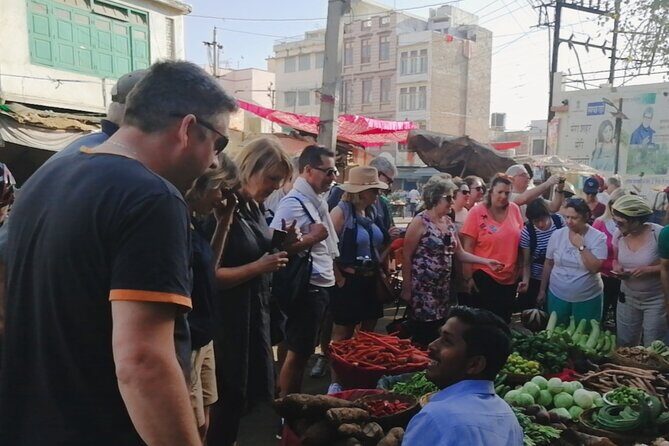
Dharavi looks nothing like the movies. On this small-group walk, I like how the Dharavi tour turns an intimidating topic into everyday life—thanks to a local guide who can explain what people actually do, where they live, and how work fits around family. Guides such as Fazim and Faizan are known for turning questions into real answers, not just a script.
I also love the contrast with Dhobi Ghat, the city’s open-air laundry system, where you can watch work happening in plain sight. The tour also makes space for the cultural pop moment of the Slumdog Millionaire filming location inside Dharavi, which adds context beyond headlines. One drawback to consider: the total time is only 2.5 hours, so you might wish Dhobi Ghat had a longer viewing window.
In This Review
- Key things that make this Dharavi + Dhobi Ghat tour work
- Entering Dharavi Through Local Eyes, Not Assumptions
- Dhobi Ghat: Watching the World’s Largest Open Laundry at Street Level
- Meeting at Third Wave Coffee, Mahim: A Simple Start
- The Dharavi Walk: Life, Work, Family, and the Small Industries
- Industries You’ll Hear About: Recycling, Leather, Textiles, and Metal
- The Slumdog Millionaire Filming Location: Why a Movie Set Feels Different Here
- Timing and Group Size: Why 2.5 Hours Feels Tight
- Price and Value: Paying $4.64 for Access (and What’s Included)
- What to Expect From the Guide Style
- Is It Safe and Respectful to Visit?
- Who Should Book This Tour (and Who Should Pause)
- Should You Book This Dharavi + Dhobi Ghat Tour?
- FAQ
- How long is the Dharavi and Dhobi Ghat tour?
- How big is the group?
- Where do we meet in Mumbai?
- What language is the tour guide?
- What’s included in the price?
- Is there free cancellation and flexible booking?
Key things that make this Dharavi + Dhobi Ghat tour work
- Local access inside working neighborhoods: You visit Dharavi through a resident’s perspective, not from behind a fence.
- Dhobi Ghat in real time: See how an open-air laundry operates at street level.
- Stereotypes get challenged fast: The goal is to dispel common misconceptions about slums.
- You get the business picture: Expect stories about industries like plastic recycling, leather, garment/textile, and metal work.
- A film-location moment that feels grounded: Slumdog Millionaire was filmed in Dharavi, and it’s tied back to place, not just trivia.
- Small group pacing (max 9): It’s easier to ask questions and move at a human speed.
Entering Dharavi Through Local Eyes, Not Assumptions
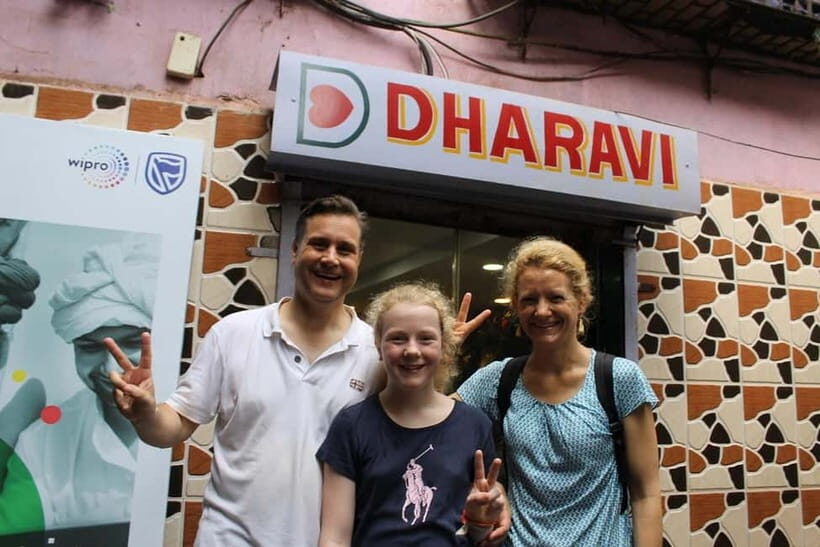
The biggest shift with this tour is attitude. Dharavi is often reduced to one word and one image, but here you’re guided through the area as a place people live and earn money every day. The tour’s approach is clear: it aims to break stereotypical depictions and show the inspiring, practical side of Dharavi.
What that means for you, in real terms, is that you’re not just looking at buildings. You’re learning how daily routines connect to work. You’ll see where families live and where children play and relax, then you’ll move into the working zones where the neighborhood runs like a small city with its own rhythm.
A good part of the value is the guide’s ability to explain without turning the whole thing into a lecture. In the accounts shared by past visitors, guides like Fazim or Abi are praised for taking time to explain origins, life, work, and family life. That’s exactly what you want here: clarity, not shock value.
You can also read our reviews of more tours and experiences in Mumbai.


Dhobi Ghat: Watching the World’s Largest Open Laundry at Street Level
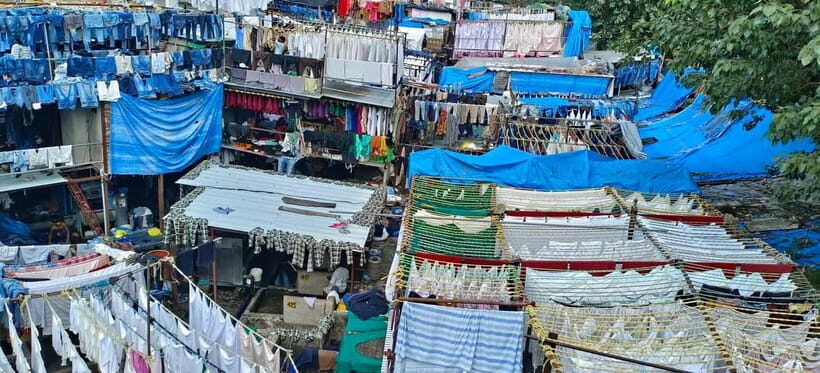
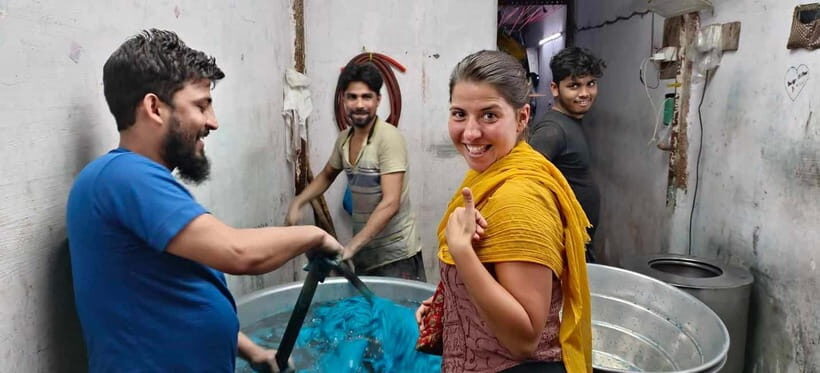
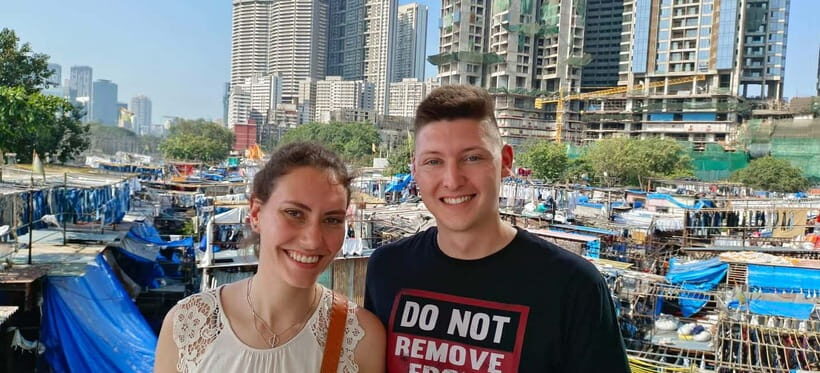
After Dharavi, the scene changes—but the logic stays the same: work is public here. Dhobi ghat is described as the world’s largest open laundry and Asia’s biggest laundry, and the tour is built around helping you understand the daily activities, not just take photos.
Dhobi Ghat is famous with foreign visitors for a reason. It’s the kind of place where you can feel the scale quickly. Your guide helps connect what you’re seeing to how the laundry system functions, so it becomes more than watching people wash and hang.
One realistic consideration: Dhobi Ghat can stir complicated feelings. If you’re the type who needs to reconcile tourism with labor, you may walk away thinking about how visible work becomes when a place turns into a destination. And because the whole tour is only 2.5 hours, some people wish there were a bit more time inside the laundry area to watch longer and ask more questions.
Meeting at Third Wave Coffee, Mahim: A Simple Start
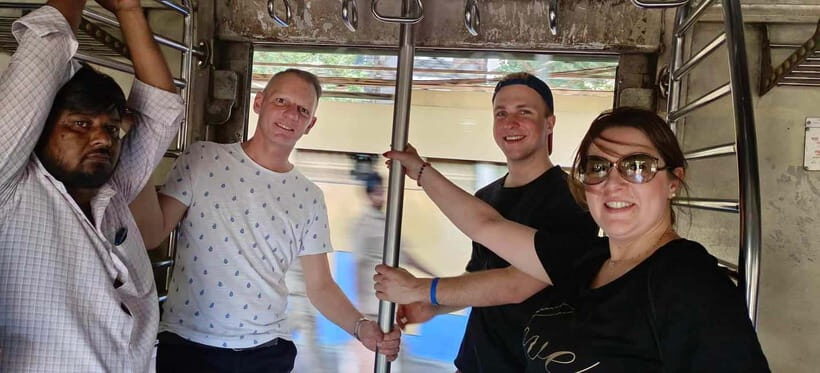
Logistics matter, especially when you’re heading into busy neighborhoods. The meeting point is Third wave coffee Mahim, directly opposite Mahim junction/station west. The instructions are straightforward: you can arrive by Uber or local transport and then either sit inside the café or stand outside while you wait.
The guide is set up to find you easily. They meet you, ask your name, and introduce themselves. That small detail matters when you’re traveling in a place where signage and crowds can make it hard to spot your group.
One more practical note: tuk tuk rikshaw isn’t allowed at this meeting point. If you’re planning to be dropped off by a driver, plan around Uber or public transport so you don’t end up stuck trying to connect on foot.
The Dharavi Walk: Life, Work, Family, and the Small Industries
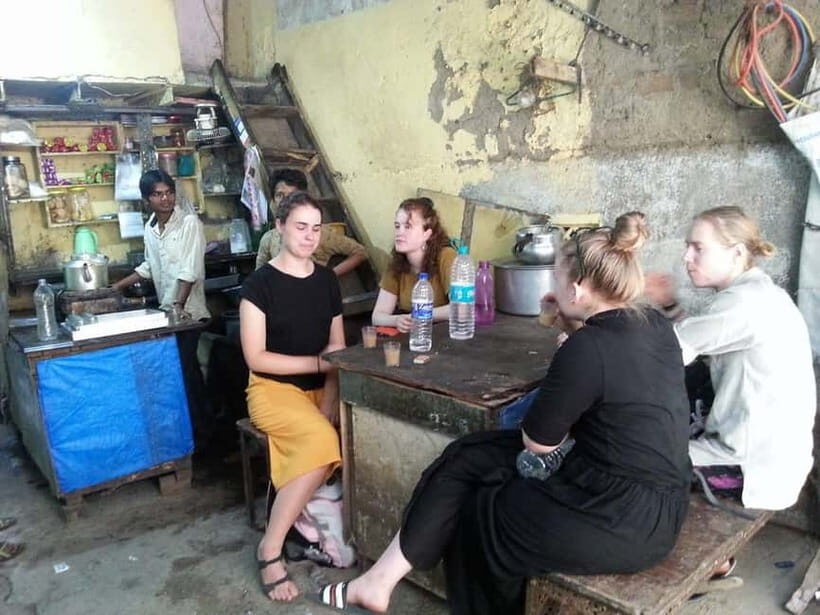
This tour’s Dharavi portion is the core of the experience. You’re taken to see real life inside Dharavi by someone who lives there—so the story is about people, not postcards. Expect to learn how residents organize space for family life and how work happens close to home.
Here’s what the tour focuses on inside Dharavi:
- Where people stay and how families live: You’ll see residential life in a neighborhood setting, with attention to how families carve out daily space.
- Where children play and relax: The tour aims to show continuity of life, not only labor.
- How businesses operate inside the community: You’ll learn about industries such as plastic recycling, leather industry, garment/textile, and metal industry.
- The money picture, explained in plain terms: The tour claims yearly income connected to these activities is around 1 billion US dollars, which helps you understand scale beyond impressions.
This is where the guide’s role really matters. A local can point out the practical logic behind the scene—why certain work is done in certain areas, how families adapt, and how the neighborhood’s mix of trades creates opportunity.
And this is also where the tour’s “dispel notions” promise shows up. If you’re coming with anxiety or a fixed idea of what you’ll see, the tour is designed to change your mental model quickly. You don’t just witness hardship; you also witness organization, effort, and ongoing work that supports families.
Industries You’ll Hear About: Recycling, Leather, Textiles, and Metal
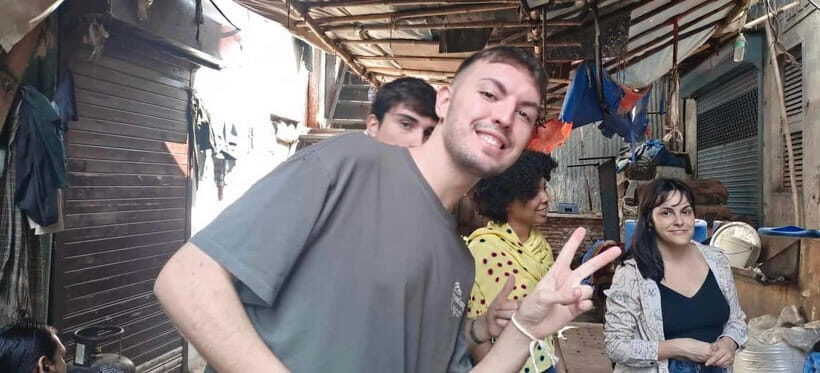
If you’re curious about how “informal” work actually becomes a real economy, this tour gives you talking points you can carry home. The industries named for the Dharavi part aren’t random. They help explain what kinds of skills and supply chains keep parts of Dharavi moving.
In particular, you’ll likely hear about:
- Plastic recycling
- Leather industry
- Garment/textile work
- Metal industry
The value here is not memorizing a list. It’s understanding how a neighborhood’s economy can be built from specialized tasks, repeated daily. When you’re walking, you can connect what you see to what you’re hearing, which makes the whole thing click.
Past visitors have praised guides for showing the reality of people living and working there. That focus is important, because it keeps the conversation anchored in human work instead of turning it into a vague concept of poverty.





The Slumdog Millionaire Filming Location: Why a Movie Set Feels Different Here
The tour includes a stop tied to Slumdog Millionaire, filmed inside Dharavi. This could sound like gimmick territory, but it works better when it’s used as context for place—what filming captured, and how it relates to the neighborhood you’re standing in.
For you, the benefit is simple: you’ll have a concrete location to connect to the story you might already know. Instead of remembering a film scene as an image floating in your head, you’ll have a physical sense of why certain streets and areas were used.
There’s also a subtle emotional effect. Film locations can make you rethink what you saw on screen. The tour’s goal is to make you see the area as living space, not a backdrop.
Timing and Group Size: Why 2.5 Hours Feels Tight
The tour runs for 2.5 hours and keeps the group small—limited to 9 participants. That small-group size is more than a comfort detail. It changes the whole feel of the walk. You’re less likely to get swept along, and you can actually ask questions and get answers.
Still, 2.5 hours means you’re seeing highlights, not everything. Dhobi Ghat is the kind of place where you can keep watching longer once you understand what you’re looking at. So if you’re the type who wants prolonged time in one area, plan for the fact that the schedule is compact.
A smaller schedule can also affect how the guide manages questions. One account notes that a guide can be strict about where people stand, what is said, and when questions happen—more like a teacher than a casual chat. If you prefer a relaxed, improvisational vibe, that’s worth keeping in mind.
Price and Value: Paying $4.64 for Access (and What’s Included)
At $4.64 per person, this is priced like a bargain. But don’t treat it like a “cheap tour” that cuts corners. The inclusions matter: you get a local English-speaking tour guide from the slums, plus traveling fees, and all entrance, entry tickets, and tax.
So you’re not just paying for information. You’re paying for local access and the mechanics of getting around with permissions and tickets handled. In a city like Mumbai, those small logistics pieces can add up fast.
And because the group is limited to 9, the experience doesn’t feel like a mass attraction. You’re paying for a guided walk designed to be personal enough for questions while still structured enough to cover Dharavi and Dhobi Ghat.
What to Expect From the Guide Style

This tour’s success hinges on the guide. The data you have shows a pattern: guides like Fazim and Faizan are praised for explaining origins and daily life clearly, and for knowing the area deeply as locals.
At the same time, one visitor mentioned that a guide’s sarcasm could feel offensive at times, though not enough to ruin the trip. That’s a helpful caution for you. If you’re sensitive to dry humor, keep your own expectations flexible and assume the guide’s communication style may be direct.
Also, because this is a resident-led experience, the guide sets the boundaries. You’ll follow those cues, including where to stand and when to ask questions. That structure is part of keeping the flow respectful and safe.
Is It Safe and Respectful to Visit?
The tour description is explicit: it says it’s completely safe to visit inside and around, and that you’ll visit by a residence of Dharavi because the guides are locals.
Safety and respect work together on tours like this. A local guide isn’t just there for facts. They’re there to manage behavior, timing, and routes in places that are active communities—not staged attractions.
If you come with a respectful mindset, this is the kind of tour that can change how you look at a neighborhood. You’re not there to judge from a distance. You’re there to understand from the ground up.
Who Should Book This Tour (and Who Should Pause)
This tour is a great fit if:
- You want real-life context for Dharavi, not a one-sided image.
- You’re interested in how industries connect to daily life.
- You’d like to see Dhobi Ghat and understand what you’re watching.
- You’re curious about the Slumdog Millionaire filming location and how film relates to real place.
It might be less ideal if:
- You’re expecting lots of time wandering Dhobi Ghat slowly. The schedule is short.
- You strongly prefer a casual, no-rules question style. The guide may be strict about standing and timing.
- You’re likely to be thrown by complicated emotions when a working area is also a known stop for visitors.
Should You Book This Dharavi + Dhobi Ghat Tour?
If you’re deciding between skipping Dharavi or going with a structured local guide, I’d book this. The combination is rare: Dharavi life through local access, then Dhobi Ghat’s open-air laundry system in the same compact window. You get the contrast that makes the learning stick.
This tour is also good value for what’s included. At $4.64, with a local English guide and tickets/fees covered, you’re paying for access and guidance rather than just reading about a place.
One last practical point: keep your expectations aligned with the time limit. If you want longer observation at Dhobi Ghat, this tour may feel fast. But if you want an eye-opening, well-explained overview that challenges stereotypes and connects people to work, it’s an excellent choice.
FAQ
How long is the Dharavi and Dhobi Ghat tour?
The tour lasts 2.5 hours.
How big is the group?
It’s a small group limited to 9 participants.
Where do we meet in Mumbai?
You meet at Third wave coffee Mahim, opposite Mahim junction/station west. The guide will meet you there.
What language is the tour guide?
The tour includes a live English-speaking guide.
What’s included in the price?
The tour includes the local English-speaking tour guide from the slums, traveling fees, and all entrance/entry tickets and tax.
Is there free cancellation and flexible booking?
Yes. You can cancel up to 24 hours in advance for a full refund, and you can reserve now and pay later.