REVIEW · MUMBAI
Mumbai by Dawn: Market Tour of Flowers, Fish, and More
Book on GetYourGuide →Operated by Cityscape Mumbai Tours · Bookable on GetYourGuide
Dawn in Mumbai hits fast. This morning circuit around Dadar Flower Market and Dhobi Ghat turns early hours into real people-watching, plus landmark sight time like CSMT. I like how the tour wraps shopping streets, working waterfront scenes, and an iconic station into one smooth route, with an English-speaking guide.
Two things I especially like: first, the guides (often mentioned by name, like Sharon and Abhi/Abhishek) explain what you’re seeing, from market routines to the buildings around it, in clear English. Second, hotel pickup/drop-off plus a local train ride means you’re not stuck guessing how to stitch the stops together at dawn. One drawback: foods and drinks aren’t included, so you’ll want to plan your own breakfast or snacks.
In This Review
- Key Points Before You Go
- Why the Dawn Start Makes This Tour Worth It
- Hotel Pickup, a Local Train Ride, and a Route That Actually Makes Sense
- Dadar Flower Market: Colors, Smells, and a Fast-Moving Trade
- Vegetable Market: The Everyday Supply Side of Mumbai
- Sasson Dock Fish Market: Where the Waterfront Energy Shows
- Dhobi Ghat: Seeing Laundry Work Without Turning It Into a Spectacle
- CSMT: A Landmark Station With Architecture You Can Actually Read
- The Best Part: Guides Who Make the Whole Morning Click
- Price and Logistics: What $17 Really Buys
- Timing, Comfort, and How to Get the Most From the 3-Plus-Stop Morning
- Who This Tour Suits (and Who Might Want Something Else)
- Should You Book Mumbai by Dawn?
- FAQ
- How much does the tour cost?
- Where does the tour take place?
- What’s included in the tour price?
- Is food or drink included?
- What language is the guide?
- Which markets and sights are part of the itinerary?
- Does the tour include a train ride?
- Is hotel pickup and drop-off included?
- Can I pay later?
- What is the cancellation policy?
Key Points Before You Go
- Early wake-up, real payoff: the markets look and move differently before the day gets going.
- An English-speaking local guide: the explanations are built for first-timers and non-Hindi speakers.
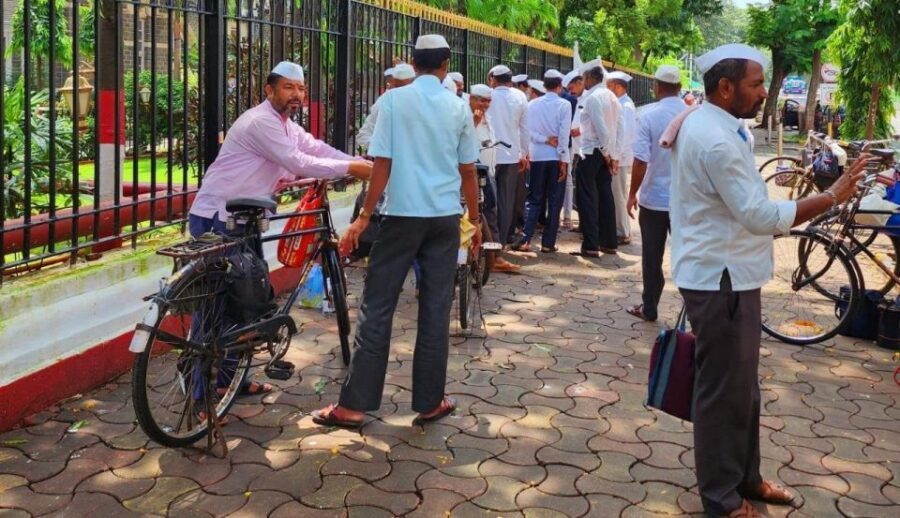
- Working Mumbai, not museum Mumbai: you’ll watch commerce at Dadar, Sassoon Dock, and Dhobi Ghat.
- CSMT is more than a photo stop: you’ll get context while you see the rail-station architecture.
- All-in transport basics: hotel pickup and drop-off are handled, and a local train ride is included.
- Plan for your own food: you’re sightseeing through peak working hours, not stopping for included meals.
Why the Dawn Start Makes This Tour Worth It

Mumbai’s markets change minute by minute, and dawn is when the action feels most direct. If you only visit later, you often see leftovers—stalls partially set, crowds thicker, and the story less clear.
This tour takes you through places that are active workplaces: flower trading, vegetable supply, fish handling, laundry work, and train-station flow. That’s why the timing matters. Dawn is when you get the rhythm, not just the snapshot.
You can also read our reviews of more shopping tours in Mumbai



Hotel Pickup, a Local Train Ride, and a Route That Actually Makes Sense

One reason this experience feels easy is the logistics are folded in for you. You get hotel pickup and drop-off, which saves time and reduces the stress of figuring out early-morning transport.
Then there’s the local train ride included in the package. That matters because it’s not only about markets—you also get a quick, practical taste of how people move through the city. It’s a good way to connect the sights by real transit instead of only by car.
A practical note: you’ll be on the move for the morning, so comfy shoes and a light layer are smart. You’ll likely spend more time standing and walking than you expect.
Dadar Flower Market: Colors, Smells, and a Fast-Moving Trade
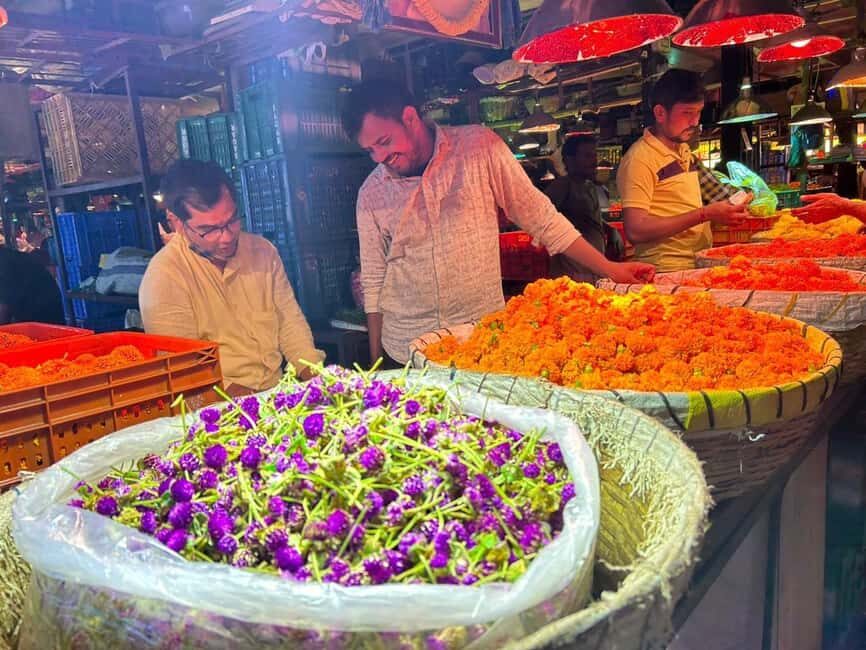
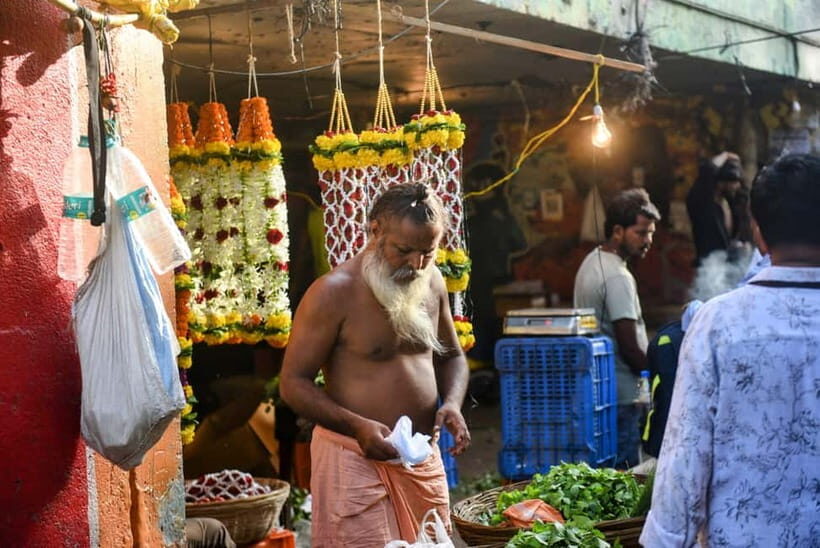
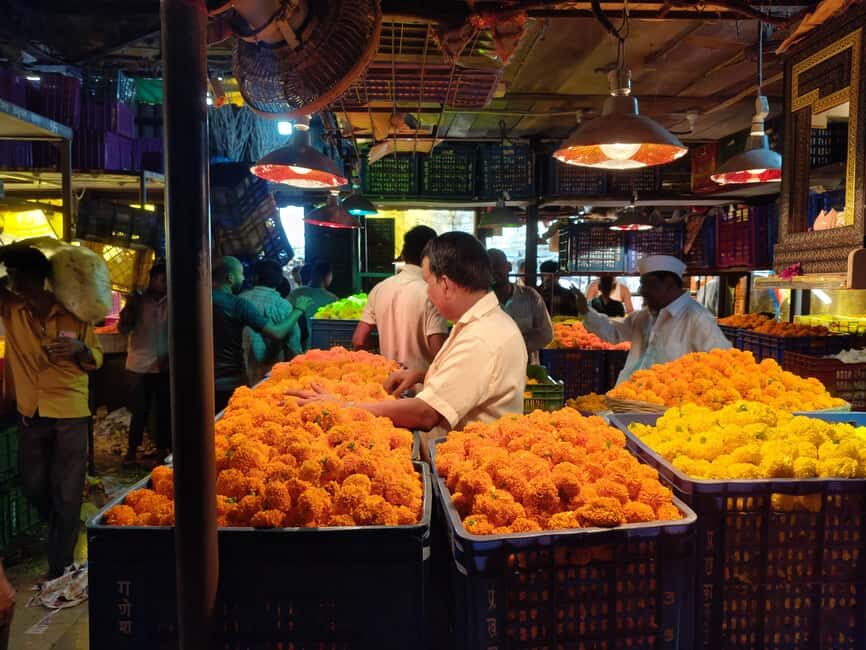
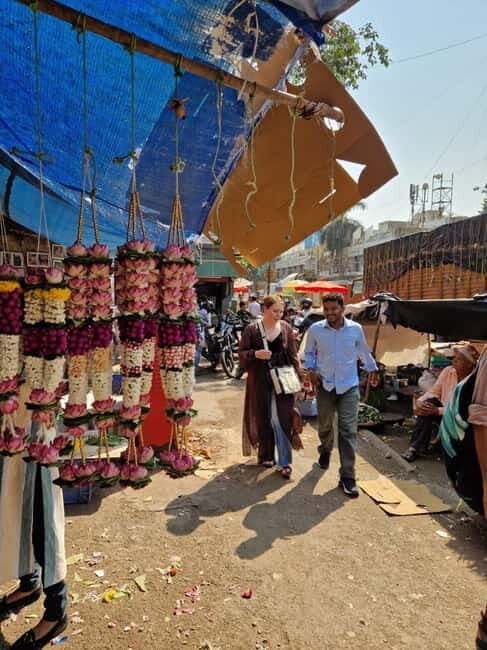
Dadar Flower Market is one of those places that grabs you immediately—color on color, bunches stacked close, and workers moving with purpose. Flowers don’t sit around for long here, so you’ll see the pace of trading up close.
What I like about this stop on the tour is that you’re not just looking. You get guidance on what’s happening and how the market fits into daily life in Mumbai. The result is that photos feel less random. You understand the flow.
The only consideration: flowers are fragile and the sidewalks can be narrow. Move carefully, keep your space, and avoid blocking workers or paths while you take pictures.
Vegetable Market: The Everyday Supply Side of Mumbai

After flowers, the scene shifts to vegetables—less perfume, more practicality, but still fascinating. You get a clearer view of how food supply chains show up at street level, with produce displayed for fast sorting and pickup.
This is also a good moment to ask your English-speaking guide questions. The best guides in this tour lineup—people like Sharon, Ayan, and Chirag are repeatedly highlighted—are strong at explaining daily routine and the meaning behind what you’re seeing.
If you’re sensitive to strong smells, vegetables are usually easier than fish, but markets still have real-world aromas. A quick tip: keep your time focused at your stops, and don’t linger in crowded corners.
Sasson Dock Fish Market: Where the Waterfront Energy Shows

Sasson Dock Fish Market brings a different kind of intensity. Fish markets run on speed and routine, and the waterfront setting adds an extra layer of sensory input.
This stop is worth it because it’s not staged. You see how tradespeople handle deliveries and how the work continues even while visitors watch. The guide can help connect the visual chaos into something you can follow.
Consider packing a simple strategy: bring a small layer of protection like a scarf or something for your face if you’re bothered by odors. The tour includes sightseeing, not a break for included refreshments, so plan your comfort accordingly.
A few more Mumbai tours and experiences worth a look



Dhobi Ghat: Seeing Laundry Work Without Turning It Into a Spectacle
Dhobi Ghat is one of those stops you remember because it’s real labor, in open view. You’ll be able to observe laundry activity and understand how this part of Mumbai functions as a daily service.
What makes this stop meaningful on the tour is the explanation you get while you’re there. Guides mentioned in the feedback—such as Subhan and Abhishek—are praised for connecting what you see to the larger story of Mumbai’s built environment and daily life.
The main consideration is respect. Treat the area like a workplace. Keep your distance when needed, don’t crowd workers for photos, and let the guide set the pace.
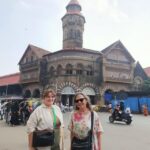
CSMT: A Landmark Station With Architecture You Can Actually Read
Chhatrapati Shivaji Maharaj Terminus (CSMT) is the kind of place that looks impressive even if you don’t know the details. The value here is that the tour gives you context while you’re standing there, so you can see the architecture as more than a backdrop.
Multiple guides are singled out for explaining history of the markets and the buildings, not just reciting facts. If you’ve ever felt like train stations are just transit points, this stop can flip that view quickly.
The station area also works well for people who want a break from street markets. It’s still busy, but the experience shifts toward landmark viewing and story-time from your guide.
The Best Part: Guides Who Make the Whole Morning Click
It’s easy to list stops. The stronger story is how they’re connected through a good guide.
In the feedback you can see a pattern: English ability matters, and the guides also handle questions well. Names that come up again and again include Sharon, Ayan, Chirag, Subhan, and Abhishek, and drivers like Deepak, Wasim, and Satyam are also credited for smooth, calm handling.
You’ll feel that on the ground. When a guide explains why a market looks the way it does, you stop thinking in terms of checkboxes. You start noticing patterns: how tradespeople work, how crowds flow, how landmarks anchor the route.
Price and Logistics: What $17 Really Buys
At $17 per person, the value is in the package structure. You’re not just paying for a walk through one market. You’re getting:
- hotel pickup and drop-off
- an English-speaking guide
- multiple market/sight stops (flowers, vegetables, fish, laundry work, and CSMT)
- a local train ride included
This is the kind of deal that can be worth it even if you don’t love crowds. The alternative is DIY planning: transit, timing, and finding your way across several different zones at dawn.
One clear trade-off: because food and drinks aren’t included, you should budget for your own breakfast or a snack. For me, that’s a normal cost for an early morning in markets. Just don’t count it as part of the ticket price.
Timing, Comfort, and How to Get the Most From the 3-Plus-Stop Morning
This is a dawn tour, meaning you should treat it like an early-work schedule day. You’ll want to be ready to move quickly, stand for periods, and adapt to crowds.
A few practical choices that help:
- Wear closed-toe shoes with grip.
- Bring water or plan to buy it yourself, since food/drink isn’t included.
- If you’re sensitive to smells, be ready for fish-market odor and keep a simple personal option handy.
Also, go with the mindset of learning how things work. The real win is understanding the city’s systems: trading, labor, and rail transit.
Who This Tour Suits (and Who Might Want Something Else)
This tour is a great fit if you’re:
- going to Mumbai for the first time and want a structured morning route
- curious about everyday work—how goods move and how people earn a living
- comfortable with busy streets and active workplaces
It may not be ideal if you want a quiet, low-activity experience, or if you’re expecting included meals or a relaxed museum-style pace. Since the stops are active and mostly outdoors, you’ll be on your feet and surrounded by the real rhythms of the city.
Should You Book Mumbai by Dawn?
I’d book this tour if you want one morning that connects multiple sides of Mumbai: flower trading, vegetable supply, fish-market waterfront work, Dhobi Ghat laundry activity, and CSMT’s architectural presence.
It’s especially worth it when you value a strong guide and don’t want to solve early-morning logistics alone. If you can handle an early start and you’re fine paying for your own food, this is a solid choice.
If you’d like, tell me your travel dates and whether you prefer fewer stops or a faster pace, and I’ll help you decide if this morning route matches your style.
FAQ
How much does the tour cost?
The price is $17 per person.
Where does the tour take place?
It’s in Maharashtra, India, around Mumbai’s morning-market areas.
What’s included in the tour price?
Hotel pickup and drop-off, a local English-speaking guide, visits to Dadar Flower Market, the Vegetable Market, Sasson Dock Fish Market, Dhobi Ghat, and CSMT, plus a local train ride experience.
Is food or drink included?
No. Foods and drinks are not included.
What language is the guide?
The tour is conducted in English.
Which markets and sights are part of the itinerary?
Dadar Flower Market, the Vegetable Market, Sasson Dock Fish Market, Dhobi Ghat, and Chhatrapati Shivaji Maharaj Terminus (CSMT).
Does the tour include a train ride?
Yes. A local train ride experience is included as part of the tour package.
Is hotel pickup and drop-off included?
Yes. Hotel pickup and drop-off are included.
Can I pay later?
Yes. It offers reserve & pay later, where you book your spot and pay nothing today.
What is the cancellation policy?
You can cancel up to 24 hours in advance for a full refund.